• Our new ticketing site is now live! Using either this or the original site (both powered by TrainSplit) helps support the running of the forum with every ticket purchase! Find out more and ask any questions/give us feedback in this thread!

Signaller Geographical Knowledge

Status
Not open for further replies.

BestWestern

Established Member
Joined
6 Feb 2011
Messages
6,736
One for the NR staff this;

I've always wondered at the level of non-railway geographical knowledge that Signallers need to have in order to deal with incidents, when directing the emergency bods to a location and so on. Whilst train crew are able to give a location based on their route knowledge, this obviously won't always translate into something useful to 'outsiders', for example if a train comes to grief near a foot crossing or if the landmark given to the Bobby is a signal number. Do Signallers undergo training to familiarise themselves with strategic access points on their patch, or is this handed over to somebody 'on the ground' such as the MOM??
 
Sponsor Post - registered members do not see these adverts; click here to register, or click here to log in
R

RailUK Forums

142094

Established Member
Joined
7 Nov 2009
Messages
8,789
Location
Newcastle
There should be some sort of track access map/system which shows the nearest point to access the line with a road vehicle. If the driver of the train can pinpoint their location (either using a signal number, bridge number or something else), then the signaller can direct the emergency services.
 

cdonnigan

Member
Joined
15 Jan 2011
Messages
156
Do they not have some sort of overlay system they they have a road type map and then overlay that with a line map sort of thing then work a route out from there.
 

Metroland

Established Member
Joined
20 Jul 2005
Messages
3,212
Location
Midlands
One for the NR staff this;

I've always wondered at the level of non-railway geographical knowledge that Signallers need to have in order to deal with incidents, when directing the emergency bods to a location and so on. Whilst train crew are able to give a location based on their route knowledge, this obviously won't always translate into something useful to 'outsiders', for example if a train comes to grief near a foot crossing or if the landmark given to the Bobby is a signal number. Do Signallers undergo training to familiarise themselves with strategic access points on their patch, or is this handed over to somebody 'on the ground' such as the MOM??

Yes, going out by passenger, with the MOM and cab rides route learning is the norm. There are also maps available, and local knowledge passed down by other people at the location.

Knowing landmarks, where the signals are (to a great extent), locations of crossings, linespeeds and other information in the sectional appendix is part of the job - very helpful in emergencies.
 

9K43

Member
Joined
1 May 2010
Messages
558
If there is a problem, along the railway there are mile posts broken up into 1/4 miles eg 45...
(45 3/4miles)
If under the wires on each upright structure is a code which identifies where you are. EG
Route B x kms from start of route B structure xxx, which identifies what distance that structure is from the start of route B.
The electric control room with know to the cm where the train/obstruction is located.
In Standage Tunnel there are tablet markers to show you where you are, and how to cross over the canal into the redundant tunnel.
 
Last edited:

Schnellzug

Established Member
Joined
22 Aug 2011
Messages
2,926
Location
Evercreech Junction
One for the NR staff this;

I've always wondered at the level of non-railway geographical knowledge that Signallers need to have in order to deal with incidents, when directing the emergency bods to a location and so on. Whilst train crew are able to give a location based on their route knowledge, this obviously won't always translate into something useful to 'outsiders', for example if a train comes to grief near a foot crossing or if the landmark given to the Bobby is a signal number. Do Signallers undergo training to familiarise themselves with strategic access points on their patch, or is this handed over to somebody 'on the ground' such as the MOM??

Wouldn't they quote distances to the nearest milepost? And bridges are identified by number, they have notices on them, saying "in the event of an incident, notify Railtrack (it usually still says) quoting the number: BML 123" or whatever.
 
Joined
17 Apr 2011
Messages
190
There is no structured training for signallers learning the geography of the area. We are just expected to pick it up as we go along. The only maps I have to hand (other than the sectional appendix which is not particularly helpful) that relate specifically to the railway is a route learning map given to us by a TOC several years ago. Without that you are taking distances and landmarks from the driver, eg "half a mile from signal xxx". As much information as possible is passed to Control. We do have civilian maps like Ordnance Survey and A-Z which can help pin point roads if needed.

If we're lucky we might get a cab ride as part of our training, but there is not a great deal of local information you can pick up at 100mph+
 

9K43

Member
Joined
1 May 2010
Messages
558
On Saturday nights we were given ballast pro formers which gave traincrew and idea as to what the job was and at what location where the worksite was located.
This was always shown between a particular mile post to another mile post.
EG At Man Vic there is a 0000 mile post on the platform. If you were working at MP 42 this was just out side the mess room at Healey Mills to MP 45 which is at Horbury Junction on the Down road towards Wakefield Kirkgate.
If there is a problem in the Signal box, then Network Rail have mobile supervisors they can call in to go to the location where the problems lies.
This supervisor would make arrangements for any safety critical action from the first instance.
 

Toots

Member
Joined
24 Oct 2009
Messages
275
Yes, going out by passenger, with the MOM and cab rides route learning is the norm. There are also maps available, and local knowledge passed down by other people at the location.

Knowing landmarks, where the signals are (to a great extent), locations of crossings, linespeeds and other information in the sectional appendix is part of the job - very helpful in emergencies.

Well I can only say that 'Metroland' must be an independent republic in Signalling world!.'Going out by passenger with the MOM and cab rides route learning' may be the norm there but it certainly isn't here or most other locations.Location specific maps are not issued as a regular procedure and the SA doesn't show signals etc. (although to be fair,I did get a route map following a request to my LOM,but they are certainly not easy to obtain)
I agree with your sentiments that it is very helpful in incidents or even just knowing what is occurring and where,but you imply these 'tools' and facilties to garner that knowledge are readily accessible and in most parts of the country that simply isn't the case......
 

Metroland

Established Member
Joined
20 Jul 2005
Messages
3,212
Location
Midlands
Well I can only say that 'Metroland' must be an independent republic in Signalling world!.'Going out by passenger with the MOM and cab rides route learning' may be the norm there but it certainly isn't here or most other locations.Location specific maps are not issued as a regular procedure and the SA doesn't show signals etc. (although to be fair,I did get a route map following a request to my LOM,but they are certainly not easy to obtain)
I agree with your sentiments that it is very helpful in incidents or even just knowing what is occurring and where,but you imply these 'tools' and facilties to garner that knowledge are readily accessible and in most parts of the country that simply isn't the case......

Emergency procedures, which contain maps are part of everyday equipment and should be present. Most areas also have maps with signals, access points, and hazards which area freely available. The Sectional appendix obviously doesn't contain signals, but does contain line speeds and local rules - which are an essential part of any rules examination and therefore are part of knowledge.

On the subject of being taken around by the MOM, cab rides etc, that is more common in some areas than others. Good local managers recognise train crew and signalling staff work closely together, and should have some common understanding of problem areas along routes, getting out and about for a few days was a part of my training at every location I worked.

I agree much is picked up and passed down as you go along, and remains somewhat informal. It is part of the training when you taken on a location, but a lot is learnt 'as you go along'. However, what I initially described is quite common in many areas, though I do recognise some locations are less progressive than others in these matters.
 
Last edited:

Toots

Member
Joined
24 Oct 2009
Messages
275
It's not so much a case of being progressive,as having the budget to allow for such things.We simply do not have the available cover for such luxuries,so there simply isn't the opportunities that you have mentioned.
Of course you learn things as you go along but when you have sections of over ten miles each way with many crossings,quicks of infrastructure etc then it takes time,and as you will be aware the SA changes constantly,as does signalling and methods,which given the recent announcements is only going to get far more intense...
 
Joined
17 Apr 2011
Messages
190
Emergency procedures, which contain maps are part of everyday equipment and should be present. Most areas also have maps with signals, access points, and hazards which area freely available.

Not here they are not. My route maps are from 2003 and were pilfered from a local TOCs route learning programme. They are quite good with bridges and access points but are now a little out of date. We also have some schmatic diagrammes but don't cover all line and are a bit unwieldy.

The only other maps that cover some main lines date back to the 1970s. I've also not been out with a MOM to cover my area.
 

Toots

Member
Joined
24 Oct 2009
Messages
275
I'm beginning to think Metroland works in Sodor,or perhaps London,they get free teaspoons I've been told....:roll:,as for covering the area with a MOM?,apparently they threatened industrial action when the subject of taking you out came up....
 

GB

Established Member
Joined
16 Nov 2008
Messages
6,553
Location
Somewhere
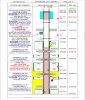
There are documents for each route published by Network Rail called Emergency Plans which lists access points and directions, signal and point numbers, mileage and grid references etc etc.

If you havent got access to them at your location you should get your LOM on the case.

Excerpt from one of the documents..
 

Attachments

  • ex.jpg
    ex.jpg
    312.3 KB · Views: 54

Metroland

Established Member
Joined
20 Jul 2005
Messages
3,212
Location
Midlands
I'm beginning to think Metroland works in Sodor,or perhaps London,they get free teaspoons I've been told....:roll:,

I don't know why you think it is necessary to be sarcastic, when there are clear deficiencies in some of the training processes in your area. It is essential you understand the area you control, and have a clear understanding or at least access to much of this information which is a necessary part of your equipment. As GB says, you should see your line manager ASAP.
 

O L Leigh

Established Member
Joined
20 Jan 2006
Messages
5,609
Location
In the cab with the paper
I find it endlessly frustrating having to explain to a signaller over the CSR some clearly defined georgrapical feature of the line. I once reported a member of the public loitering on a footpath crossing using it's correct name. The signaller didn't know what I was talking about. When I then explained to him precisely where this crossing was he told me that no crossing existed at that location. It got quite heated until I pointed out an express was coming the other way at 80+mph and shouldn't he really alert the driver.

Given that the signaller is the main point of contact it would be a great help if they had a better understanding of the geographical layout of the railway. Operational staff on the ground are going to make reference to known landmarks in order to identify precisely a location, so it would be useful to have confidence that this information actually means something to the signaller so that it gets passed on correctly. We've just had a problem with incorrectly laid out ESR/TSR boards, and just getting the signaller to understand the issue and direct the gangs to the correct locations to rectify the problems has been a battle in itself. It doesn't help that signaller clearly use grid reference numbers to identify a location, as I've been asked for just such a piece of information on more than one occasion.

It surely doesn't need much in the way of route learning. A signaller surely doesn't need to know the route in the same level of detail as a driver, but it would be a great benefit if they had at least some mental picture to go with the diagrams, schematics and maps available to them.

O L Leigh
 

TheBigD

Established Member
Joined
19 Nov 2008
Messages
2,043
Well I can only say that 'Metroland' must be an independent republic in Signalling world!.'Going out by passenger with the MOM and cab rides route learning' may be the norm there but it certainly isn't here or most other locations.

I got a day's cab riding and a day with the MOM as part of my training. So did the other signallers that started at the same time as me. Got a visit to adjacent boxes and to Control and one of the TOC's controls as well.
 

Toots

Member
Joined
24 Oct 2009
Messages
275
I don't know why you think it is necessary to be sarcastic, when there are clear deficiencies in some of the training processes in your area. It is essential you understand the area you control, and have a clear understanding or at least access to much of this information which is a necessary part of your equipment. As GB says, you should see your line manager ASAP.

Apologies,I didn't mean to be sarcastic,as I'm sure you don't mean to be patronising,it's just how these things sometimes come across on a forum.The point I was making is that some areas have far bigger budgets than others,that's not a complaint,it's a fact and some Signallers from other parts of the country seem unaware of the fact.The 'teaspoons' reference was down to the fact a Signalman on another forum from Liverpool St IECC got them,along with free tea and coffee and when I pointed out that we would be happy with an inside toilet,he sent me the spoons.Anyhow I digress.The fact is,as Big D will find out,you do indeed get a cab trip and a day out with the MOM and a look at the adjacent boxes,but I will be interested to see in five years time how many subsequent visits and trips he's had.
As you say the geographical knowledge comes with experience but as I say,don't make the mistake of thinking that all areas enjoy the same staffing and logistics budgets as yours obviously does,because they don't.
 

Metroland

Established Member
Joined
20 Jul 2005
Messages
3,212
Location
Midlands
Apology accepted! As you say, the picture seems to be mixed!

I suppose for me, I'm a huge believer in getting better understanding between signallers and drivers, both ways. It's good for when things go wrong, it's good for teamwork, it's good for saving valuable minutes which have cost and safety implications. It would be interesting to hear from other drivers, if they have experiences similar to OL Leigh.

What worries me, is with NR's projects to centralise signalling further (which is a good thing operationally) will they scrimp on structured operational training to familiarise staff with remote areas they control?

In a recent incident on the B&H line near Westbury, an HST hit a tree, and the signaller and driver took over 40 minutes to actually ascertain where they were! This was after signalling had recently been centralised at the new Thames Valley signalling centre.

It's nothing new. When Motherwell PSB was commissioned in the early 70s, veteran railway writer OS Nock noted the regulating had suffered remarkably as it was clear the signalmen did not have a clear geographical knowledge on their new, much larger, patch.
 

Toots

Member
Joined
24 Oct 2009
Messages
275
Again I'm afraid we must disagree.Your assertation that centralisation is a good thing operationally doesn't hold up,in fact you contradict yourself by making the point of familiarity.It may be an advantage to the company in financial terms eventually,but as far as running the railway itself,I cannot see it being much better than an IECC that already exists,or a signalbox on a rural branchline.
The fact is that the small boxes that are currently being closed and their responsibility being transferred to PSB's and IECC's,does not result in timings being dramatically reduced.It did when the high speed lines were AB,but now it won't make an awful lot of difference to those lines that still operate that system,apart from the fact it will save money over time.This is at the cost of,as you point out ,local knowledge being lost,a situation exacerbated when the PSB's in turn transfer to the new signalling centres.
 

The Planner

Veteran Member
Joined
15 Apr 2008
Messages
19,661
Depends, remove one AB signalbox and automatically you have the ability to remove 2 minutes from closely following schedules.
 

Toots

Member
Joined
24 Oct 2009
Messages
275
That's my point,apart from perhaps the Fylde line,routes with closely following scheduled have already been turned over to PSB's and IECC's.
 

Metroland

Established Member
Joined
20 Jul 2005
Messages
3,212
Location
Midlands
Again I'm afraid we must disagree.Your assertation that centralisation is a good thing operationally doesn't hold up,in fact you contradict yourself by making the point of familiarity.It may be an advantage to the company in financial terms eventually,but as far as running the railway itself,I cannot see it being much better than an IECC that already exists,or a signalbox on a rural branchline.
The fact is that the small boxes that are currently being closed and their responsibility being transferred to PSB's and IECC's,does not result in timings being dramatically reduced.It did when the high speed lines were AB,but now it won't make an awful lot of difference to those lines that still operate that system,apart from the fact it will save money over time.This is at the cost of,as you point out ,local knowledge being lost,a situation exacerbated when the PSB's in turn transfer to the new signalling centres.

Please let me clarify, when I say operational advantages, I mean overview and ability to regulate traffic over a wide area. Mechanical boxes have a very limited view of 'the big picture' - okay there are modern aids like TRUST, but it's not as good as bringing control of say 10 mechanical signalboxes under the control of one person and having him in the same building as someone else that controls another 20-100 miles or so, and maybe several hundred miles projected around the room.

There's also advantages in 24 hour operation, perhaps closure of long signal sections which can allow more trains to run. Pretty as mechanical boxes are, they don't really belong in the modern internet age and are very labour intensive.

Having said that, I will concede that NR need to find ways to preserve local knowledge. There is no technical or training reason why this cannot be done, it's simply a matter of management.
 

Toots

Member
Joined
24 Oct 2009
Messages
275
Once again we disagree.You say Mechanical boxes boxes have a limited view of the big picture,and then point out TRUST,which is the bigger picture,so much so I had a train looped many miles away when I realised it was going to cause a problem at this location if it ran in the slot it was occupying.It makes very little difference on the types of line that still have mechanical boxes whether we are in the same room or not.
Boxes do 24 hours due to operational requirements not because of the type of signalling they have.This nonsense about mechanical boxes in the internet age?,mechanical boxes have the equipment they need for the job they do,let's put it this way,you don't go out and buy a car with all the gadgets and sat nav if you are only going to drive to the shops everyday do you?.
Labour intensive?,Signalling centres have SSM's on each shift and meal break Reliefs all at a much higher rate than their small box counterparts,so whilst they may need fewer people,the cost is not that much cheaper.
If the job goes wrong at a small box,we go out and clip the points or take whatever action is necessary,obviously a Signalman miles away simply cannot do this.
 

Metroland

Established Member
Joined
20 Jul 2005
Messages
3,212
Location
Midlands
Toots, you make some excellent comments but I respectfully disagree, having working at all sorts of locations.

On the issue of 24 hour working for instance, as it is significantly cheaper employing 1 person (albeit on a higher rate of pay) than say 10 sat around being not all that productive in many cases. Network rail have already acknowledged, for example, pathing constraints on the ECML exist because the joint line through Lincolnshire has such long sections/has limited opening hours which significantly limit it's ability to carry freight, which could be diverted off the ECML for instance.

Railway companies have long realised centralisation of signalling reaps many benefits in 'at a glance' views of very wide areas and saving expensive manpower, which is why the process of closing small mechanical signalboxes goes back at least 100 years - initially with replacing block posts with IBS signals, usually motor operated semaphores or colour lights. For instance, the LNER were very keen to centralise signalling at York before the war (although the OCR panel that replaced many mechanical boxes wasn't commissioned to the 50s) because of the problematic nature of mechanical signalling to deal with complex traffic situations, as well as the number of people it took to operate the area.
 

Toots

Member
Joined
24 Oct 2009
Messages
275
When you talk of 'Mechanical' boxes are we talking about small boxes per se or one's with semaphores?.There is a world of difference.Many small boxes are equipped with NX or other types of panel,and many have levers with colour lights.If you take the closure of the three boxes in East Manchester,with a total of twelve people plus Relief,the box replacing them has already got eight training and I'm assuming that the SSM's and Reliefs will come later,so with the increase in grade,again,there will be very little change in manpower costs and indeed very little change in technology,and remember you have a a significant cost when you undertake these schemes.
I agree that it's not practical to have many manual boxes in a small area,but as I've said we are talking about now,and that scenario is a rarity,ironically the existing areas with the type of situation you describe are the last to go on the new operating centres plan.
As for all singing, all dancing, high tech signalling schemes?..Ansaldo anyone?.
 

Metroland

Established Member
Joined
20 Jul 2005
Messages
3,212
Location
Midlands
Well a lot of these places are coming up for renewal, not just tiny Victorian mechanical boxes, but large relay installations of the 60s. BR was closing 100 signal boxes a year in the 60s and 70s, the NR plan is less ambitious than that, possibly reflecting the size of box closing.

As NR has to save money, it seems only sensible that manpower is reduced, and the number of locations (that need heating, lighting, furniture etc).

I agree some areas are going to produce bigger returns than others, depending on what is being replaced. On the Ely-Norwich line, many signalboxes are simply passing places, with maybe one level crossing. Centralising that into 1 desk will save many jobs. On the Leamington - Banbury line, the likelihood is an SSI workstation will be replaced, which replaced 2 boxes (one an SSI panel that replaced several mechanical boxes in the 80s). As well as a box with a lever frame [Banbury North] and another one with a lever frame and another SSI panel [Banbury South]. The whole lot could be done by 1 person with ARS. So the latter saving is not as great, but it continues a process. Likewise, when some of the large relay PSBs are replaced, I suspect it will save few jobs, but will offer responsive computer aided regulating.

NR expect to save £1 billion per year eventually.

This has always been the problem with signalling, anyone going into that role has to expect to move jobs because of the march of technology meaning 1 person can control more. As I said, this has been going on for some time with IBS signals, even the automatic semaphore signalling of the 1920s, and from the 30s, relay based power signal, and from the 80s SSI with ARS.
 

Toots

Member
Joined
24 Oct 2009
Messages
275
My point is,'it's horses for courses'.It's all very well saying that NR expect to save £1 billion per year eventually,but it's that word 'eventually',the millions being spent now are at today's values and as you well know a billion in several years will be nowhere as significant as they are today,in other words it's sounds great,until you really start looking into it.
You cite some areas,I could cite others,you are correct about the IB's but ironically there has recently been significant investement in that very technology on the S&C and the Branch,so again it's what is suitable for some areas may not be suitable for others.
You appear to be espousing the company line verbatim and I'm assuming you are a Manager,but you mentioned the big picture earlier,and that is what I am looking at,not just agreeing with a scheme for dogma's sake.
TDA is also a huge cost to the company and as you know a simple points failure in an IECC can cost thousands at a time,whereas we go outside,sort it out and voila!,little or no delay,because of the type of line we run...so you see,before you simply quote the company line,take into consideration each location and the needs and demands of that location.It's like saying unman every station or deGuard every train,it doesn't make sense,you take each item on it's merits and then decide....
 
Status
Not open for further replies.

Top