zwk500
Veteran Member
Given the presence of the I278 sounds like it might have been related to a possession and different parts referenced in the WON as a guess.

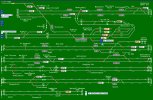
They are the possession reference numbers imposed in the TD berths from last Friday night/Saturday morning (26/27th July) to show the possession limits. They're aren't there now on TMV, and suspect the data has failed to clear from whichever 3rd party real time viewer you are watching on.Wondering if anyone can explain the code P278 between Wallyford and Musselburgh here?
thanks

Strange one, both M844 (Musselburgh side) or M841 (Wallyford side) were P278 as your diagram shows but I don't have records from the Train Describer feed of either being cancelled and I also don't have any indication of an outage.They're aren't there now on TMV, and suspect the data has failed to clear from whichever 3rd party real time viewer you are watching on.

I think you’re a day out there, Item 278 was from late Saturday night to Sunday morning.They are the possession reference numbers imposed in the TD berths from last Friday night/Saturday morning (26/27th July) to show the possession limits. They're aren't there now on TMV, and suspect the data has failed to clear from whichever 3rd party real time viewer you are watching on.

Yes, many TD systems have "hidden"/"blind" or "semi-blind" berths. These are not normally shown on signallers displays. But may be shown on technicians displays. Sometimes also shown on additional displays used by other operations staff.In slightly easier to understand language, the signal berths shown on various open data feeds don’t always match exactly what signallers can see or can use, because they are built by reverse engineering in lots of cases.
There are often ‘hidden’ berths in the system which are either shown only on small monitor displays but not on panels themselves, or even never visible anywhere but present to help the Train Describer system function better.
Either way, if these end up showing data (often during engineering work where trains can move in unusual ways, or during unsignalled movements, or just a signaller mistyping) they often don’t properly get cleared out by signallers or normal trains, sometimes for a very long time.
There were a few like this in one of my boxes which I messaged and got removed from Tracksy to hide these sorts of issues.
To reiterate what others have said above, it's the shunt signal berths which have the possession notice in them (you can tell this because the little arrow on the ends of the berth is pointing towards the un-filled circle). Many shunt signals don't have berths attached to them at all in the signalling systems, and where they do appear they are sometimes absolutely awful at clearing, to the point where I've excluded a lot of them from the diagram.Wondering if anyone can explain the code P278 between Wallyford and Muselburgh here? It doesn't seem tangible as trains appear in the same berth as shown here with 1E12 approaching from Edinburgh (on the left) passing Musselburgh.
Also what might I278 on the Leith branch be? Couldn't see anyone on site while passing, even when "DETS" flashed up on the northern loop of the Leith branch.
a) 1E12 passing Portobello Jn
View attachment 185091
b) 1E12 approaching Monktonhall Jn
View attachment 185092
c) 1E12 joining entity P278
View attachment 185093
thanks
They also appear on the Elizabeth Line core. The train appears in a berth with the yellow dotted lines creeping their way across until suddenly the train jumps forward 2-3 berths. I don't know if it's based on track circuits or GPS or some other kind of data, or if it's even the same system as in Eastborne.I think those are track circuit indications, i.e. showing you there's a train in that section (or something shorting the circuit).
Having watched how they perform as trains arrive and depart, I think the yellow indications actually show that the track is clear. So no yellow indications means there is a train there. Each platform has two sets of indications, one for the inner half of the platform, and one for the outer half of the platform.I think those are track circuit indications, i.e. showing you there's a train in that section (or something shorting the circuit).
Without specific examples to go on, I think these are main aspect signal, stop board, shunt signal, and main aspect signal with a subsidiary shunt signal. On the line toward Moorgate, there are also some ETCS arrow marker boards (effectively ETCS stop boards).Off topic, but thanks to members highlighting the site, I've spent many happy hours watching various diagrams on opentraintimes. The Kings Cross-Cambridge choreography is a personal favourite as the Ely/Lynn fast (1Txx) chases the (too rarely on time) Thameslink (9Sxx), with both hoping to pass the Cambridge/Letchworth stopper (2Cxx) just before the Welwyn 2-track, the fast in turn passing the Thameslink which stops at Stevenage/Hitchin. It then needs the previous stopper to be on time as both close in on Cambridge.
What puzzles me are the various signal representations. Could anyone explain the differences between:
* the standard "lollipop"
* the right-angled "lollipop"
* the right-angled quadrant "lollipop"
* the double "lollipop" (standard + quadrant)
* other variations towards Moorgate or on the Lizzy Line
Thanks.
Edit: do you have some examples of the double lollipop? On a quick scan, many of the signals that I am sure are colour-lights with a subsidiary are just shown as a single lollipop. The only double lollipops that I can quickly see are where there is an ETCS arrow board on the same post as a colour light.
The shunts are used heavily for shunting moves of passenger units as well as freight. As far as I'm aware, there's only 3 tracks available for passenger service at the goods junction which are the top 3 (Down, Up, and one marked L which I don't know the name of). I've never seen the fourth one used by passenger trains, even for shunting moves.On the Ipswich map many of the station's signals are shown as doubles (circle + quadrant). Main + subsidiary shunt makes sense. Thank you.
Gloster - thanks for confirming my undeclared guess re the square + red dot.
The way the Felixstowe line recovers from freight delays, sometimes needing to cancel a passenger train also interests me!
AIUI, the right angled ones without berths tend be repeaters or signals protecting level crossings. Right angled shunt signals are usually just because there is no berth (see CO804 at Ipswich). I'm not entirely sure the reason for this, but it tends to be for short sidings with only one set of points.What puzzles me are the various signal representations. Could anyone explain the differences between:
* the standard "lollipop"
* the right-angled "lollipop"
* the right-angled quadrant "lollipop"
* the double "lollipop" (standard + quadrant)
* other variations towards Moorgate or on the Lizzy Line
Thanks.
What puzzles me are the various signal representations. Could anyone explain the differences between:
* the standard "lollipop"

Not sure what you mean by the right-angled version, but this:* the right-angled "lollipop"

* the right-angled quadrant "lollipop"

* the double "lollipop" (standard + quadrant)

* other variations towards Moorgate or on the Lizzy Line


Point of Obstruction (Working to and From)It's back. Does this actually stand for something?
It’ll be to remind them of One Train Working of some sort, but I’m not familiar with the location.I noticed one earlier just east of Swanley with 1TRN as a code. Does anyone know what this is? Possibly a shunt (TuRNback)?
If its in a siding it probably means 1 train. Often would be 1*in to say the same thingI noticed one earlier just east of Swanley with 1TRN as a code. Does anyone know what this is? Possibly a shunt (TuRNback)?
The ones for this that I see are UNIT, WAGN/WAGS, LOCO, STBL, a class number, or just an old headcode.If its in a siding it probably means 1 train. Often would be 1*in to say the same thing
I noticed one earlier just east of Swanley with 1TRN as a code. Does anyone know what this is? Possibly a shunt (TuRNback)?
Or sometimes a time, presumably used during degraded workingThe ones for this that I see are UNIT, WAGN/WAGS, LOCO, STBL, a class number, or just an old headcode.
A time can be lots of things. In Didcot it tends to be the opening time for the yard. It's often the scheduled end time for a possession. In station platforms it's usually the time that train is due out in the morning (since that's more useful than the headcode overnight). I would have thought the same applies to sidings.Or sometimes a time, presumably used during degraded working
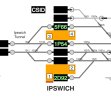
Carriage sidings.Anyone have a clue what “CSID” could possibly mean at Ipswich?


Most likely just to clear the previous trains headcode and avoid confusion. Same reason you see FUEL, JUBI, SHNT in Norwich for the respective Sidings a lot of the time.As in “If it’s not too much trouble, would the signaller please route this train to the Carriage Sidings?” In four letters.