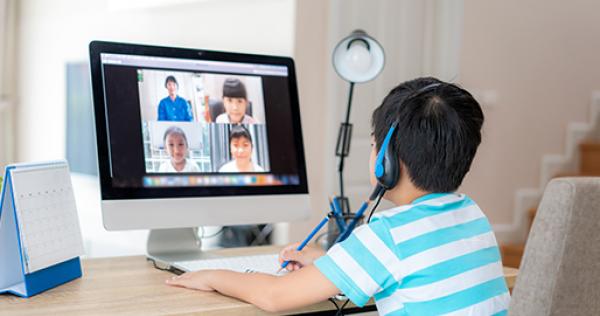
By the time the pandemic is over, most children across the UK will have missed over half a year of normal, in person schooling. That’s likely to be more than 5% of their entire time in school. Absent a substantial policy response, the long-run effects of this learning loss are likely to be slow-moving and substantial. We will all be less productive, poorer, have less money to spend on public services, and we may be less happy and healthy as a result. We will probably also be more unequal, with all the social ills that come with it.
So far, there has been a large focus on how to approach GCSE, A-level and other exams given the large average and differentiated loss in learning time. This makes sense as these exams matter. The potential devastating effect of the crisis on educational inequalities and mental health are starting to be
recognized. In what follows, I set out the economic case for a massive national plan to address this crisis. It’s likely to be expensive and hard, but it’s also worth the time and money.
The scale of the problem
By February half-term, the total loss in face-to-face schooling time will amount to around half a normal school year for children right across the UK. That’s before accounting for lower-than-normal attendance rates in the 2020
autumn term, especially in disadvantaged areas. If most schools don’t go back till after Easter, then children will have lost about two thirds of a normal school year.
The difficulties and inequalities in accessing high-quality remote learning are well
documented. Pupils from more disadvantaged backgrounds often lack the required digital equipment and study space to participate in effective remote learning. Younger pupils have found it more difficult to engage in remote learning. Schools, teachers and charities – not to mention parents – have gone to huge efforts to do what they can, but there is no substitute for time with a qualified teacher.
The unprecedented nature of the current crisis makes it hard to predict the actual effects. Some high-quality, yet depressing, evidence is already beginning to emerge. The best study comes from the Netherlands, where schools closed for 8 weeks last Spring. Despite some of the best digital infrastructure in the world for home learning, the empirical
evidence shows that the test scores of Dutch primary school children were significantly lower than previous cohorts. The magnitude is almost exactly equivalent to 8 weeks of normal educational progress, suggesting little educational progress was made during the period of school closures. The negative effects are over 50% larger for disadvantaged children.
Reviews of the relevant literature and early evidence on test scores in England also point to big losses from missed schooling and widening
inequalities.
Further testing and data will be required to fully understand the scale, geography and inequalities in lost learning. The initial evidence already suggests this could be enormous.
The negative effects are also likely to extend beyond educational attainment. We are already seeing clear
evidence of reductions in mental health among young people, with 27% of young women showing potential mental health problems. Such evidence has already led to
calls for an inquiry into the impact of the pandemic on children’s welfare.
What will be the long-run economic consequences?
An extensive
review of the returns to schooling finds that a year of schooling increases individuals’ earnings by 8% per year, on average, across advanced and high-income countries. By the time children go back to school, most will have lost at least half a year of normal schooling. The lifetime costs of this could be very large indeed. Imagine someone earning £1 million over their working life (not far off the likely
average in the UK). For this person, losing half a year of schooling will mean losing £40,000 in income over their lifetime.
This equates to an astronomical £350bn in lost lifetime earnings across the 8.7 million school children in the UK. Whilst this is just an illustration, rather than a precise prediction, it is important to be clear on the mechanisms that could drive such an effect. All learning is dynamic and builds on skills and knowledge gained at previous stages. Without sufficient catch-up, children will leave school with less knowledge and skills that can be applied in their job or a lower ability to gain further skills. With reduced skills and knowledge, there is also a risk that technological progress and innovation will slow.
Even much weaker assumptions about the returns to schooling still result in enormous estimated costs. If by some miracle we managed to mitigate 75% of the long-run effects of learning loss, the total loss would still be nearly £90bn. Getting a precise estimate of the likely long-run economic cost would be practically impossible, but such illustrations do help show the massive scale of the problem. The long-run costs are likely to be in the hundreds of billions.
There are very good reasons to believe that the effects will not be equal across children either. Remote learning has been particularly hard for young children and children from disadvantaged backgrounds. Parents with higher levels of education are likely to have been better able to help their children and, potentially, pay for expensive tutors to help them catch-up.
There is therefore the clear possibility that the effects of lost learning could be neutralized for those from well-off families and the long-run negative effects could be concentrated amongst those from disadvantaged backgrounds. The net result would be a widening of existing inequalities. These are hard and costly to close once children reach adulthood.
The long-run risks to the public finances are also severe. If 30-40% of future lifetime earnings ends up as taxes, then lost earnings of £350bn would mean over £100bn less tax revenue over the long-run to spend on public services or paying down the debts we are currently accumulating.
The inescapable conclusion is that the lost schooling represents a gigantic long-term risk for future prosperity, the public finances, the future path of inequality and well-being.