
-
Our new ticketing site is now live! Using either this or the original site (both powered by TrainSplit) helps support the running of the forum with every ticket purchase! Find out more and ask any questions/give us feedback in this thread!
You are using an out of date browser. It may not display this or other websites correctly.
You should upgrade or use an alternative browser.
You should upgrade or use an alternative browser.
Restarting HS2a
- Thread starter Elecman
- Start date
- Status
- Not open for further replies.
Sponsor Post - registered members do not see these adverts; click here to register, or click here to log in
R
RailUK Forums
As a casual observer, what you suggest in your last paragraph seems to have a lot going for it. Perhaps combine with a connection from 1 to the existing line to Derby/Sheffield/Leeds, with some upgrading)?There are certainly a range of options that exist for dealing with the bottleneck of Colwich / Shugborough and releasing capacity for more passenger and freight traffic.
The original 2a plan is the best - it would drive a high-speed, slab track line all the way from the end of phase 1 into Crewe station. It unlocks significant journey time savings to everywhere north on HS2, Bhm->Man services and provides loads of new capacity for freight. It’s also the most ££. For both political and economic reasons, this probably isn’t coming back.
The re-named 2a-lite or ‘Cheshire Connector’ is the 2a alignment, but de-spec’ed with ballast tracks, smaller loading gauge and slightly slower. Still a great option, but some say not enough money saved / substantially different enough to make it politically possible.
Given that the 2a route basically follows the (already 4-track) WCML from Baldwin’s Gate, another, cheaper option would be to build 2a as far as here, then connect onto the WCML fasts, take these lines over exclusively for HS2 and upgrade their line speed to 140mph. Crewe is therefore reached via a mix of new and existing line but in a financially beneficial way - the most expensive bit of 2a is all the viaducts on the approaches into Crewe, the line south of here is basically open countryside with no major civils (relatively speaking). You get much of the benefit for less cost.
Next up as would be to build 2a only as far as Hixon and join onto the line to Stone / Stoke. This misses Crewe but is even less new line and gets you to Manchester. Doesn’t benefit other northern places though. A variant of this could see a further line divert from this and connect into Crewe to unlock these.
Finally, there is the old Colwich bypass scheme which would see a line divert from the WCML north of Handsacre, cut the corner off and merge with the line to Stone, north of the bottleneck.
All these have way more complex details and have many pros and cons.
Personally I think Crewe is important and given the powers are there to build it, the 2a alignment should be used to get past Colwich. But I think there’s a very real possibility of a significant cost saving by not going all the way into Crewe on new line. The ideas of connecting into the existing lines somewhere south of Crewe should be weighed against the do-nothing and original schemes. Also looking at the prospect of releasing funds to pay for this by abandoning Handsacre.
There are certainly a range of options that exist for dealing with the bottleneck of Colwich / Shugborough and releasing capacity for more passenger and freight traffic.
The original 2a plan is the best - it would drive a high-speed, slab track line all the way from the end of phase 1 into Crewe station. It unlocks significant journey time savings to everywhere north on HS2, Bhm->Man services and provides loads of new capacity for freight. It’s also the most ££. For both political and economic reasons, this probably isn’t coming back.
The re-named 2a-lite or ‘Cheshire Connector’ is the 2a alignment, but de-spec’ed with ballast tracks, smaller loading gauge and slightly slower. Still a great option, but some say not enough money saved / substantially different enough to make it politically possible.
...
Next up as would be to build 2a only as far as Hixon and join onto the line to Stone / Stoke. This misses Crewe but is even less new line and gets you to Manchester. Doesn’t benefit other northern places though. A variant of this could see a further line divert from this and connect into Crewe to unlock these.
...
Personally I think Crewe is important and given the powers are there to build it, the 2a alignment should be used to get past Colwich. But I think there’s a very real possibility of a significant cost saving by not going all the way into Crewe on new line. The ideas of connecting into the existing lines somewhere south of Crewe should be weighed against the do-nothing and original schemes. Also looking at the prospect of releasing funds to pay for this by abandoning Handsacre.
Maybe... However building any of "son of 2a" but with a smaller loading gauge would seem to be very short-sighted to me. I imagine that would be the most expensive and disruptive bit to upgrade in the future (if found to be justified.) Replacing ballasted with slab track ought to be do-able, but I doubt it would be needed. Wasn't it only needed for super-high speed trains, now dropped?As a casual observer, what you suggest in your last paragraph seems to have a lot going for it. Perhaps combine with a connection from 1 to the existing line to Derby/Sheffield/Leeds, with some upgrading)?

Peter Mugridge
Veteran Member
I agree, and it makes very little difference to the cost to build to the larger loading gauge if you're building it anyway. One thing this country is not very good at is future proofing like that...Maybe... However building any of "son of 2a" but with a smaller loading gauge would seem to be very short-sighted to me. I imagine that would be the most expensive and disruptive bit to upgrade in the future (if found to be justified.)

HSTEd
Veteran Member
- Joined
- 14 Jul 2011
- Messages
- 20,407
Going to Hixon eliminates the Colwich bottleneck, indeed it might outright elimination the junction - certainly in operational terms even if the track remains in situ.Next up as would be to build 2a only as far as Hixon and join onto the line to Stone / Stoke. This misses Crewe but is even less new line and gets you to Manchester. Doesn’t benefit other northern places though. A variant of this could see a further line divert from this and connect into Crewe to unlock these.
If that is done it allows major improvements for Manchester-Birmingham (and by extension, Birmingham-Leeds) journeys.
To a first approximation it probably gets almost as many paths as going to Crewe for a fraction of the cost.
I think using the HS2 Phase 2a powers would be very risky politically and in cost terms.Personally I think Crewe is important and given the powers are there to build it, the 2a alignment should be used to get past Colwich. But I think there’s a very real possibility of a significant cost saving by not going all the way into Crewe on new line. The ideas of connecting into the existing lines somewhere south of Crewe should be weighed against the do-nothing and original schemes. Also looking at the prospect of releasing funds to pay for this by abandoning Handsacre.
I don't think cutting all the fast London-Manchester via Stoke trains is hardly going to go down well with anyone.
In any case, I don't think cutting Handsacre is going to get you a significant distance towards Crewe.
Last edited:
The Planner
Veteran Member
- Joined
- 15 Apr 2008
- Messages
- 19,751
Handsacre and the link to it is easily a Billion.Going to Hixon eliminates the Colwich bottleneck, indeed it might outright elimination the junction - certainly in operational terms even if the track remains in situ.
If that is done it allows major improvements for Manchester-Birmingham (and by extension, Birmingham-Leeds) journeys.
To a first approximation it probably gets almost as many paths as going to Crewe for a fraction of the cost.
I think using the HS2 Phase 2a powers would be very risky politically and in cost terms.
I don't think cutting all the fast London-Manchester via Stoke trains is hardly going to go down well with anyone.
In any case, I don't think cutting Handsacre is going to get you a significant distance towards Crewe.
HSTEd
Veteran Member
- Joined
- 14 Jul 2011
- Messages
- 20,407
And HS2's last estimate for the line to Crewe was up to £7bn back in 2022. It will be pushing £10bn or more now.Handsacre and the link to it is easily a Billion.
Technologist
Member
- Joined
- 29 May 2018
- Messages
- 471
And HS2's last estimate for the line to Crewe was up to £7bn back in 2022. It will be pushing £10bn or more now.
Be interesting to see how much it would be if contracted more sensibly than HS2 has been to date and whether some of the gold plating can be removed.

Nottingham59
Established Member
Construction cost inflation has eased off in the past couple of years, since 2023, and is now around 2.5% over the past 12 months.Be interesting to see how much it would be if contracted more sensibly than HS2 has been to date and whether some of the gold plating can be removed.
The Infrastructure cost index is here:
Construction output price indices - Office for National Statistics
Construction Output Price Indices (OPIs) from January 2014 to June 2026, UK.
www.ons.gov.uk
Do you mean:Be interesting to see how much it would be if contracted more sensibly than HS2 has been to date and whether some of the gold plating can be removed.
1. Reduced (eg in size, scope, timescale, ...) or
2. Process by which a contract is set up (tendering, procurement, risk apportionment, assessment, 'value engineering', ...) ?
Maybe both?

PrincesWinsdor
On Moderation
The UK has always invested heavily in London, but often neglecting large cities outside London. Leeds is a prime example of this. No wonder why the UK is often called a country with just one city. Since 2010, London had the East London Line extension, Northern Line Extension, Barking Riverside extension and Crossrail, whereas other cities barely had any major extensions to their rail network. The only way to change this is to invest more in other cities.
Technologist
Member
- Joined
- 29 May 2018
- Messages
- 471
Do you mean:
1. Reduced (eg in size, scope, timescale, ...) or
2. Process by which a contract is set up (tendering, procurement, risk apportionment, assessment, 'value engineering', ...) ?
Maybe both?
I mean:
1: The commercial arrangements where for example the contractors we asked to guarantee works for decades into the future which resulted in civils over specced by massive margins (the infamous deeper pilings on a road bridge than were used on the Shard and deeper pilings on OHLE towers than found on a typical road bridge). The structure of the "business" with layers of subcontracting and the managing organisation being so under powered that it is buying in design and project management. The DFT and Treasury ****ing things up by various mechanisms and how they phased the work to meet arbitrary funding periods.
2: The general over specification of the line due to planning issues and environmental protections.
3: (This one I'm less sure about) The way the build was structured in the UK broke the line up into penny packets with access all along which massively increased land take and number of work camps. The French solution is to start the line at each end and then use the rail line to transport equipment and materials from tow fixed camps at either end.
I would have thought that item 1 would be more in the gift of a near term decision maker as new contracts would need to created anyway, I would assume that we could value engineer out the odd new bat tunnel but we aren't going to be able to turn it into a Shinkansen/China high speed railway on a single standardised viaduct without excessive delays due to re-design.
The most basic thing to make it cheaper would be to give the regional mayors the mandate to build it and give them the powers to raise the tax revenue to pay for it and the powers to rule what is and is not reasonable environmental protections. This way you align the costs with the people who get the benefits, and stuff like all the gold plating for NIMBYS goes on their tax bills rather than general taxation.
While l don't disagree with your last sentence l would note that London funds a big chunk of its infrastructure. It also funds a big chunk of everyone else's.The UK has always invested heavily in London, but often neglecting large cities outside London. Leeds is a prime example of this. No wonder why the UK is often called a country with just one city. Since 2010, London had the East London Line extension, Northern Line Extension, Barking Riverside extension and Crossrail, whereas other cities barely had any major extensions to their rail network. The only way to change this is to invest more in other cities.
Technologist
Member
- Joined
- 29 May 2018
- Messages
- 471
Construction cost inflation has eased off in the past couple of years, since 2023, and is now around 2.5% over the past 12 months.
The Infrastructure cost index is here:
Construction output price indices - Office for National Statistics
Construction Output Price Indices (OPIs) from January 2014 to June 2026, UK.www.ons.gov.uk
See above, I'm talking about changing the scope and methods rather than just doing it in the same manner as HS2 would have. Given HS2 is substantially more expensive than other lines even after you account for UK land prices and the specification of the line (tunnels, cuttings, bridges) there should be plenty of scope to beat HS2's cost estimate even accounting for construction inflation.
HSTEd
Veteran Member
- Joined
- 14 Jul 2011
- Messages
- 20,407
Giving regional mayors some sort of dictatorial powers outside their elected areas is obviously a complete non-starter.The most basic thing to make it cheaper would be to give the regional mayors the mandate to build it and give them the powers to raise the tax revenue to pay for it and the powers to rule what is and is not reasonable environmental protections. This way you align the costs with the people who get the benefits, and stuff like all the gold plating for NIMBYS goes on their tax bills rather than general taxation.
There would be no environmental protections at all, because the impacts wouldn't hit their voters. The local people in these areas are obviously not going to stand for this.
The only way to meaningfully reduce the cost would be a total redesign that would take years.
At which point, the existing alignment is not really preferable to any other.
Technologist
Member
- Joined
- 29 May 2018
- Messages
- 471
While l don't disagree with your last sentence l would note that London funds a big chunk of its infrastructure. It also funds a big chunk of everyone else's.
This is because London has all of the tax raising powers and it profiting from decades/hundreds of years of enhanced infrastructure spending.
Until devolution comes with proper tax raising powers our second tier cities will continue to under perform.
Trainbike46
Established Member
A redesign of something that needs to do fundamentally the same thing isn't going to make anything cheaper. It didn't work at Euston, and it isn't going to work for phase 2a.There would be no environmental protections at all, because the impacts wouldn't hit their voters. The local people in these areas are obviously not going to stand for this.
The only way to meaningfully reduce the cost would be a total redesign that would take years.
A redesign is costly in and of itself, both in design costs, and in delay time (and the inflation that comes with that), so there needs to be a very large cost reduction in the design itself. And that won't happen in the UK, because the politicians and the NIMBY brigade will not allow it.
HSTEd
Veteran Member
- Joined
- 14 Jul 2011
- Messages
- 20,407
I don't think we have sufficient evidence to say that the redesign failed to reduce the cost of Euston.A redesign of something that needs to do fundamentally the same thing isn't going to make anything cheaper. It didn't work at Euston, and it isn't going to work for phase 2a.
Euston's cost continued to increase after each redesign, but given how rapidly the costs were spiralling before the redesigns, we can't be sure the cost would not have been even higher without them.
The problem with Euston is likely not frequent redesigns, but that their station concepts are largely undeliverable.
A redesign is costly in and of itself, both in design costs, and in delay time (and the inflation that comes with that), so there needs to be a very large cost reduction in the design itself. And that won't happen in the UK, because the politicians and the NIMBY brigade will not allow it.
In which case we should achieve cost reductions, and thus increase likelihood of funding, by reducing the amount of work needed to achieve our objective.
ie. Cancel Crewe and proceed to Hixon.
Last edited:
Technologist
Member
- Joined
- 29 May 2018
- Messages
- 471
Giving regional mayors some sort of dictatorial powers outside their elected areas is obviously a complete non-starter.
There would be no environmental protections at all, because the impacts wouldn't hit their voters. The local people in these areas are obviously not going to stand for this.
The only way to meaningfully reduce the cost would be a total redesign that would take years.
At which point, the existing alignment is not really preferable to any other.
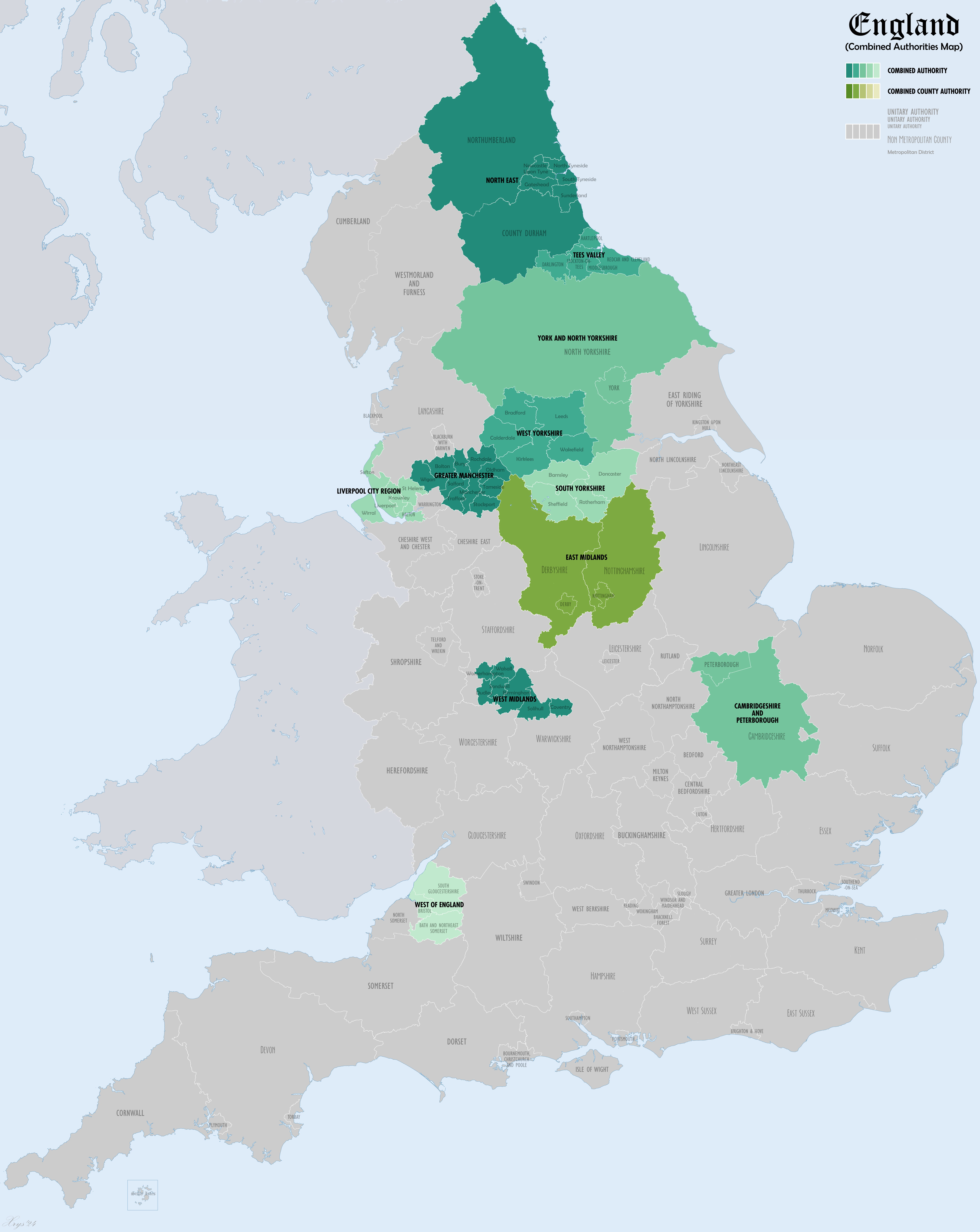
We have Metro Mayors in West Midlands and Greater Manchester, we have a Mayor for the East Midlands and South and West Yorkshire and we have a Mayor for Warrington and Cheshire in advanced stages of consultation. We'd need the process for Staffordshire to get going and then we'd have Mayors covering the entire route of a Birmingham to Manchester and Birmingham to Leeds railway.
Ministers already have to power to call in planning decisions and to decide that bodies like natural England need to be overruled. If there is one thing that HS2 and the debacle of Spiders in Ebbsfleet have taught us is that laws are dumb and that people can be smart. The Mayor is in a good position to decide whether or not environmental protections are worth the cost when building infrastructure in their own patch, they own the cost and the NIMBYS.
Our motorway network was built mostly by the counties that it ran through rather than the DFT and it was built at a pretty searing pace, the entire M1 took less than 9 years. 100 miles of the M6 was completed in 4 years.
Trainbike46
Established Member
While I think it would be better to accept higher costs (in the region of £7bn), building a shorter section such as to Hixon is one of the few situations where I could see a redesign lead to genuinely lower cost.In which case we should achieve cost reductions, and thus increase likelihood of funding, by reducing the amount of work needed to achieve our objective.
ie. Cancel Crewe and proceed to Hixon.
However, I think HS2 phase 2A should never have been cancelled and should be reinstated with basically the existing design, but better management as proposed by @Technologist, is the best option.
Nottingham59
Established Member
There are plenty of improvements to the design that could be made while keeping the same overall shape. For instance, the current design specifies massive earthworks and viaduct in the vicinty of Whitmore to provide 8m of clearance above the Stoke-on-Trent to Market Drayton railway line, which as far as I can tell hasn't been used for years.A redesign of something that needs to do fundamentally the same thing isn't going to make anything cheaper. It didn't work at Euston, and it isn't going to work for phase 2a.
This cross-section (Bent Lane to Manor Road) is taken from the 2021 maps here:

HS2 Phase 2a plan and profile maps: West Midlands to Crewe (2021)
These are the plan and profile maps for Phase 2a of HS2 between the West Midlands to Crewe, updated following completion of the House of Commons Select Committee process in 2019.

Trainbike46
Established Member
I'm sure there are many elements where some savings are possible in a redesign, however, given the (pretty enormous) costs of a redesign, both in actual design work and in delay costs (through inflation), the changes need to bring very signifcant savings to lead to actual lower costs.There are plenty of improvements to the design that could be made while keeping the same overall shape. For instance, the current design specifies massive earthworks and viaduct in the vicinty of Whitmore to provide 8m of clearance above the Stoke-on-Trent to Market Drayton railway line, which as far as I can tell hasn't been used for years.
This cross-section (Bent Lane to Manor Road) is taken from the 2021 maps here:
HS2 Phase 2a plan and profile maps: West Midlands to Crewe (2021)
These are the plan and profile maps for Phase 2a of HS2 between the West Midlands to Crewe, updated following completion of the House of Commons Select Committee process in 2019.www.gov.uk
View attachment 188857
Having said that, looking at the diagrams you cite, it isn't at all obvious that dropping that design requirement would actually lead to a solution with less earthworks, as you'd still have to deal with the WCML crossing, the local topography, and the limited ability to deal with slopes. You probably could lower the embankment, but that would then require more cuttings, and I don't think that is at all obvious that would be cheaper.
Yes, I want to know more about why the government offloaded risk for this project in a different way to before.The commercial arrangements where for example the contractors we asked to guarantee works for decades into the future
No and no. It’s a giant project, it has to be a parliament bill. Law is inevitable, and written by those same people. The mayors are writing local orders and directives of the same quality as the law you have oversight of.If there is one thing that HS2 and the debacle of Spiders in Ebbsfleet have taught us is that laws are dumb and that people can be smart. The Mayor is in a good position to decide whether or not environmental protections are worth the cost when building infrastructure in their own patch, they own the cost and the NIMBYS.
InTheEastMids
Established Member
- Joined
- 31 Jan 2016
- Messages
- 1,416
Not directed as a criticism of this post, more that it helped me draw out something that has me scratching my head a bit.I'm sure there are many elements where some savings are possible in a redesign, however, given the (pretty enormous) costs of a redesign, both in actual design work and in delay costs (through inflation), the changes need to bring very signifcant savings to lead to actual lower costs.
Various experts, commentators and/or random people on internet forums say two apparently contradictory things.
1. "We must stick with the designs we have because redesign will lead to significantly increased cost"
2. "Costs have significantly increased, because the designs we had were insufficiently mature/detailed"
If you apply the same logic to Schrodinger's cat, you are saying "We don't know whether the cat is dead or alive, but as soon as we open the box we know it's going to be expensive".
10 years ago the designs were too immature. Now they have spent several billion pounds making necessary changes, refining the designs, buying the property abd generally replanning to take in the additional expenses. It's like Schrödinger's box if it was open, but you only looked at it at 10 year intervals.Not directed as a criticism of this post, more that it helped me draw out something that has me scratching my head a bit.
Various experts, commentators and/or random people on internet forums say two apparently contradictory things.
1. "We must stick with the designs we have because redesign will lead to significantly increased cost"
2. "Costs have significantly increased, because the designs we had were insufficiently mature/detailed"
If you apply the same logic to Schrodinger's cat, you are saying "We don't know whether the cat is dead or alive, but as soon as we open the box we know it's going to be expensive".
Technologist
Member
- Joined
- 29 May 2018
- Messages
- 471
No and no. It’s a giant project, it has to be a parliament bill. Law is inevitable, and written by those same people. The mayors are writing local orders and directives of the same quality as the law you have oversight of.
How is that going for the country?
This is precisely how countries in Europe who build infrastructure for a fraction of the UKs do it.
The local authorities with tax raising powers put “build a metro” into their manifesto and are then directly on the hook for its development. They don’t need say so from central government and need to deal with treasury brain.
Replacing ballasted with slab track ought to be do-able, but I doubt it would be needed. Wasn't it only needed for super-high speed trains, now dropped?
According to Professor MacNaughton, slab track was required for the tonnage expected on phase 1, not really the speed. Phase 2a was designed for fewer trains per hour, but specced with slab as they could share the phase 1 contract. He reckons ballast would be fine up to 225mph.
InTheEastMids
Established Member
- Joined
- 31 Jan 2016
- Messages
- 1,416
10 years ago the designs were too immature. Now they have spent several billion pounds making necessary changes, refining the designs, buying the property abd generally replanning to take in the additional expenses. It's like Schrödinger's box if it was open, but you only looked at it at 10 year intervals.
HS2 Ph1 managed to spend several years and a lot of money on design work and buying property, only to find that they started construction with immature designs and was a (not the only) factor in HS2 Ltd's gradual loss of control of the cost and schedule project.
Or to put it another way, if so much money has been invested in refining the Ph2a designs, then people are going to look a bit silly if construction was approved, work runs over budget and schedule, and "immature designs" are put forward as part of the explanation!
I am surprised to hear that, aren't foreign dedicated heavy haul railways laid with very heavy rails and quite closely-spaced sleepers? 40-T axle loads in Australia...According to Professor MacNaughton, slab track was required for the tonnage expected on phase 1, not really the speed. Phase 2a was designed for fewer trains per hour, but specced with slab as they could share the phase 1 contract. He reckons ballast would be fine up to 225mph.
Or does "the tonnage expected" actually mean [quite light] passenger trains at a high frequency? Seems odd to me. Ballast being sucked up by the turbulence from extreme speed I can understand!
Trainbike46
Established Member
AIUI, it's about maintenance needs, which depends on frequency and train length, as well as how heavy individual trains areI am surprised to hear that, aren't foreign dedicated heavy haul railways laid with very heavy rails and quite closely-spaced sleepers? 40-T axle loads in Australia...
Or does "the tonnage expected" actually mean [quite light] passenger trains at a high frequency? Seems odd to me. Ballast being sucked up by the turbulence from extreme speed I can understand!
- Status
- Not open for further replies.