
I think there are a few factors in play - for some, home working doesn’t suit at all. For me, I can do it, but don’t like doing it for more than the odd day here and there and find getting on a lot easier in the office much of the time.I certainly think there's a future for them, I just don't think that future involves people commuting to them to work 7.5 hours per day, 5 days per week, the future is a much more flexible one in my view.

-
Our new ticketing site is now live! Using either this or the original site (both powered by TrainSplit) helps support the running of the forum with every ticket purchase! Find out more and ask any questions/give us feedback in this thread!
You are using an out of date browser. It may not display this or other websites correctly.
You should upgrade or use an alternative browser.
You should upgrade or use an alternative browser.
Remote working preferences (in the longer term)
- Thread starter yorkie
- Start date
- Status
- Not open for further replies.
Sponsor Post - registered members do not see these adverts; click here to register, or click here to log in
R
RailUK Forums
I think there are a few factors in play - for some, home working doesn’t suit at all. For me, I can do it, but don’t like doing it for more than the odd day here and there and find getting on a lot easier in the office much of the time.
Indeed, and I expect that you would not be alone in that regard.
I've heard of one company who was totally WFH during Lockdown who have opened up their offices for the circa 30% of their staff who would like to work in the office.
There's many reasons, homes with no space to work, people who live alone and their primary weekly social interactions are at work, those who house share and need some time away from their housemate(s), and so on.
It's one of the reasons that the death of the railways is likely to be greatly exaggerated.
Whilst 50% of the railways business is commuting and 40% of all work could be done at home (20% of total), by the time you allow for 20% of people choosing to work in the office and for 40% of working days to be office related (even those 100% WFH actual would end up needing to be in 5% of the time, 12 days a year). Meaning the maximum fall would likely be around 10-15%.
That would likely mean a return to 2015, maybe as far back as 2013, passenger numbers.
It would also be likely that it would impact London more, especially those metro lines within the M25.
However given that some peak services into London are running at 150% of capacity a reduction of 40% would mean that there would be 10% of seats free, making travel a lot nicer and therefore attracting people who previously wouldn't do it because it was so overcrowded.
The other thing to bear in mind is that you may get some crazy long commutes happing for those who primarily WFH. I know of someone who works for a US firm (did so from pre Covid-19) who "commutes" to the States a few times a year for a week at a time.
If that's possible then why not live in Truro rather than Twickenham, Bournemouth rather than Basildon, Ipswich rather than Islington, Peak District rather than Peckham?
I suspect that a lot of second homes may well suddenly become main homes and then have a London flat for when you and/or your family visit.
With a mixed use block you could even have the ability to commute to work the days you're in the office by using a lift!
I could certainly see some companies looking into having corporate lodgings within their office space with them being able to be booked much like meeting rooms are. Depending on your grade depends on what allowance you are given, although I'm aware of one company which gives staff a set number of employee points which they can use for what they like (more holiday, company car, more pension contributions, etc.) and so use of lodgings could be added to that list.
Chances are they would be fairly basic, maybe even just a private bedroom with shared wash facilities (using those available to all staff).
However such a setup could result in less weekend ghost towns in certain areas of towns and cities as there would be people around in those areas dominated by offices and could go some way to reverse the losses of those places which exist to serve the office workers. In that there would be more custom for them from those staying in their offices, with breakfast and dinner likely to be needed to be brought rather than prepared.
Whilst such sleeping spaces would require extra floor space, this would likely be just floor space which was previously needed to provide desk space for your staff and is now surplus as there's a greater level of WFH.
If expect that it would be fairly basic, a small 2m X 2m box with a bed some draws and a hanging rail. No need for a TV (as people would just use their own devices, although one with the ability to cast the content from your device to it could be provided - so Apple TV/Chromecast) nor a need for a desk (as they could just use one of the office ones).
If that's possible then why not live in Truro rather than Twickenham, Bournemouth rather than Basildon, Ipswich rather than Islington, Peak District rather than Peckham?
And I've said this until the cows come home, but if you're an 'agile' worker with laptop, you get a decent train ride from those places and back (say) once a week to bank up some hours working on the journey and maybe buy an early finish on the Friday.
So crudely speaking then the idea is that most people working in hospitality and retail at the very least in central cities in this country will get the sack, but we trust that we can magic up the same jobs elsewhere (maybe they can feature in Robocop: London when all of zone 1 goes to pot), but if not oh well too bad they were on the way out anyway. Add to this everybody else who gets managed out of declining industries which cannot survive in the new home-based economy. If this is such a great idea do you think we could have a vote on it to make sure we all think so?
My point here would be that the world is work is constantly evolving - Industries that previously employed millions of people get impacted by changes in technology or consumer habits that mean that the workforce demand changes as different sectors or jobs become more important.
I don't think the aim should be to replicate the existing economy elsewhere but harness the skills that these people have and use them elsewhere if it becomes clear that we no longer need all these people selling coffee to each other.
In the long term I don't think there is going to be a massive problem of finding things that people can be doing - With Brexit there are going to be an awful lot of jobs available that we have always relied on migrants to do as well as all those lovely jobs filling in customs forms. Add to that the ever expanding demand in things like Care and I am sure there will be jobs available.
It doesn't mean the transition will be easy and for those involved it will be awful but there may be opportunities - and perhaps doing things that are more useful to society than making lattes.
Bletchleyite
Veteran Member
I think there are a few factors in play - for some, home working doesn’t suit at all. For me, I can do it, but don’t like doing it for more than the odd day here and there and find getting on a lot easier in the office much of the time.
Part of that flexibility will no doubt include some people who do prefer it for whatever reason. I suspect the majority won't go for 5 days a week, though.

Johnnie2Sheds
Member
Latterly, I was working from home for 60% of the time anyway. Whilst office bods are rejoicing in the new found freedom of "working from home", I wonder if they have cottoned on to the fact that employers may be thinking that "home" is Tashkent or Jaipur, or in fact anywhere they like. It does seem that, having given away all our manufacturing work, we are now about to give away all our subsequent, invented, suited, office jobs too. Myself, I could not give a fig, but I am fearful for the young folk, who seemingly are being lined up for a very hard time (again).
Bletchleyite
Veteran Member
Latterly, I was working from home for 60% of the time anyway. Whilst office bods are rejoicing in the new found freedom of "working from home", I wonder if they have cottoned on to the fact that employers may be thinking that "home" is Tashkent or Jaipur, or in fact anywhere they like. It does seem that, having given away all our manufacturing work, we are now about to give away all our subsequent, invented, suited, office jobs too. Myself, I could not give a fig, but I am fearful for the young folk, who seemingly are being lined up for a very hard time (again).
This is not how it's actually happening in already-WFH industries like IT. Cultural understanding and "language barrier" is important, so while you can give a spec to someone in India and get them to build it (just like manufacturing), what doesn't work well is analysts and the likes from India or China working with teams over here.
Foreign call centres were a 2000s fad. They worked badly and aren't a big thing to the same extent any more.

And I've said this until the cows come home, but if you're an 'agile' worker with laptop, you get a decent train ride from those places and back (say) once a week to bank up some hours working on the journey and maybe buy an early finish on the Friday.
Indeed, there's plenty of work (even if it's just reply to emails or reading around subjects related to your job) which would otherwise eat into your key tasks which you could save up to do when you know you've got a long trip upcoming.

brad465
Veteran Member
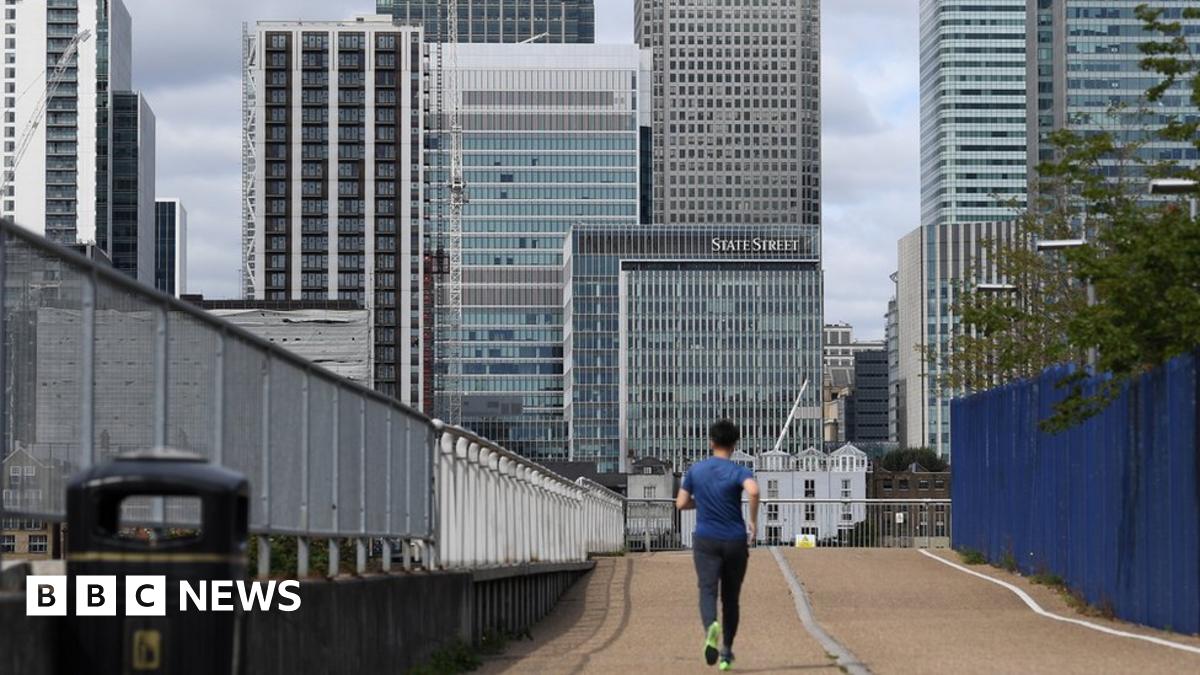
This may fit here or possibly in its own thread if not directly related to remote working preferences, but the Government seem very keen to get people back in offices with this upcoming ad campaign:
 www.bbc.co.uk
The way I see it, ignoring all the general home working benefits long term, as long as social distancing remains in place returning to offices for many won't happen fully, due to reduced capacity and the reduced ability to meet other colleagues defeats the purpose of going in somewhat. My office is returning partially next week for priority stuff, but I haven't yet pursued permission to go in.
Coronavirus: Campaign to encourage workers back to offices
It follows warnings that city centres could become "ghost towns" if more staff do not return.
www.bbc.co.uk
People will again be encouraged to go back to the workplace in a government ad campaign starting next week.
Employers will be asked to reassure staff it is safe to return by highlighting measures taken to prevent the spread of Covid-19.
Business leaders have warned of damage being done to city centres as people stay away from offices.
And Transport Secretary Grant Shapps said some things were "impossible" to do remotely.
But Health Secretary Matt Hancock said he cared more about how employees performed than where they were working.
The way I see it, ignoring all the general home working benefits long term, as long as social distancing remains in place returning to offices for many won't happen fully, due to reduced capacity and the reduced ability to meet other colleagues defeats the purpose of going in somewhat. My office is returning partially next week for priority stuff, but I haven't yet pursued permission to go in.

LSWR Cavalier
Established Member
Less contact to those one does not choose, that is the thing I think, I like meeting and learning from people different to meI worry about the effect on society if large scale WFH is imposed.
Most of the incidental contact is lost - the chat at the drinks machine/printer and the gossip at someone’s desk after a work discussion. A lot of social contact will also be lost - meeting up for drinks/lunch will be a big effort and more strictly invited , no “oh we are going for lunch/a pint after why don’t you join us?”
People won’t really know their workmates and managers won’t see some of the issues - the stuff you pick up overhearing other conversations, or from catching an expression, that they won’t tell you by email/messaging.
On a big scale it will worsen the social divisions - you won’t be nearly so exposed to those you don’t choose to spend time with. The well off and comfortable will be even less aware of how others are struggling or how they think - they will go to uni with similar people, socialise with similar people from their immediate neighbourhood, and not hear the stories in the workplace.
And all those relationships that start in the workplace won’t happen......
Plenty of people do not have many contacts outwith the workplace
Mind, I had colleagues I just could not get along with, glad to avoid them
Two big groups that could not work from home: trainees, new colleagues, one would still need an office to induct them
Is working from home more or less efficient? If the former, hours could be reduced
Reliablebeam
Member
- Joined
- 14 Jun 2017
- Messages
- 272
There's been a very sudden drive in my public sector science outfit to get people back in. At the last two Director pep talks he has been pushing the line about getting us all back in, in some form, at least once a week starting September. Many of us scientists have in fact been in, to varying degrees for, the last month. I think most of our technicians are in at least a few days a week. I'm not sure whether BEIS, the level above us, have delivered a kicking or not, but our director listed a number of valid reasons to get us back on site. It essentially boils down to Director level believing, correctly in my view, that they are not getting those creative 'sparks' due to people being at home.
From a personal point of view, I haven't altered my vote on the attached poll, I see myself in about three days a week, which would take in experiments, internal collaboration, and pinning down management. Then two days at home/travelling dealing with PhD student supervision, running training courses and other things you need not annoy your office mate with.
Edit - From the questions at our management seminars, there are clearly some not happy with the thought of returning to work, although the few that I know personally have an 'agenda', rather than a strict fear of the virus.
From a personal point of view, I haven't altered my vote on the attached poll, I see myself in about three days a week, which would take in experiments, internal collaboration, and pinning down management. Then two days at home/travelling dealing with PhD student supervision, running training courses and other things you need not annoy your office mate with.
Edit - From the questions at our management seminars, there are clearly some not happy with the thought of returning to work, although the few that I know personally have an 'agenda', rather than a strict fear of the virus.
There's been a very sudden drive in my public sector science outfit to get people back in. At the last two Director pep talks he has been pushing the line about getting us all back in, in some form, at least once a week starting September. Many of us scientists have in fact been in, to varying degrees for, the last month. I think most of our technicians are in at least a few days a week. I'm not sure whether BEIS, the level above us, have delivered a kicking or not, but our director listed a number of valid reasons to get us back on site. It essentially boils down to Director level believing, correctly in my view, that they are not getting those creative 'sparks' due to people being at home.
From a personal point of view, I haven't altered my vote on the attached poll, I see myself in about three days a week, which would take in experiments, internal collaboration, and pinning down management. Then two days at home/travelling dealing with PhD student supervision, running training courses and other things you need not annoy your office mate with.
Edit - From the questions at our management seminars, there are clearly some not happy with the thought of returning to work, although the few that I know personally have an 'agenda', rather than a strict fear of the virus.
Indeed, trainees need to be able to shadow other staff to see what those staff do (with the non training time just as important as the official training time with regards to their development), as well as the ability to have some informal conversations which may well help with the understanding of the junior staff (those almost insignificant conversations which which can just resolve understanding confusion or provide a key bit of missing understanding).
Also those sparking conversations where someone had a thought discusses it, with then the other in the conversation then being able to apply that to something they've been struggling with which can the help the first person with a broader use for the thought. Whilst possible remotely, they tend to be at times like at lunch, walking out of the office, whilst grabbing a coffee, etc.

MonsooN
Member
Before all this started, I already had a good balance of working in the office and working from home. My job requires a lot of travel all over the country to train people on computer systems. A typical week might see me travelling Mon-Wed and working from home on Thursday and Friday. I was happy with this balance and I hope I can return to something like this in the future.
What is funny is that Grant Shapps announced this from his home!This may fit here or possibly in its own thread if not directly related to remote working preferences, but the Government seem very keen to get people back in offices with this upcoming ad campaign:
Coronavirus: Campaign to encourage workers back to offices
It follows warnings that city centres could become "ghost towns" if more staff do not return.
The way I see it, ignoring all the general home working benefits long term, as long as social distancing remains in place returning to offices for many won't happen fully, due to reduced capacity and the reduced ability to meet other colleagues defeats the purpose of going in somewhat. My office is returning partially next week for priority stuff, but I haven't yet pursued permission to go in.
Personally I can see my office staying the same for a while where I have to book to come in via the office manager to ensure that the numbers are monitored and kept below the maximum, which is less than a third of the full capacity of the office. I have been going in about once a week since May and every time I have got in when I wanted. Typically I have found the start of the week to be busy and then numbers will drop off later on in the week.

birchesgreen
Established Member
"Encourage workers" but i suspect with most firms it is the employer who needs to be encouraged not the employee who usually has little say in matters like this. Unfortunately a lot of the propaganda so far has been aimed at scaring workers "if you can work can home so can someone do your job in the third world!!!" et cetera and they can do nothing about it anyway! All this does is increase the anxiety and uncertainty in many people and needs to be stopped.

"Encourage workers" but i suspect with most firms it is the employer who needs to be encouraged not the employee who usually has little say in matters like this. Unfortunately a lot of the propaganda so far has been aimed at scaring workers "if you can work can home so can someone do your job in the third world!!!" et cetera and they can do nothing about it anyway! All this does is increase the anxiety and uncertainty in many people and needs to be stopped.
Alternatively, the Government needs to recognise the costs that such outsourcing places on society and tax it so that there is a level playing field between home and off shore workers.
birchesgreen
Established Member
Alternatively, the Government needs to recognise the costs that such outsourcing places on society and tax it so that there is a level playing field between home and off shore workers.
Well i wouldn't hold my breath on that happening any time soon.
Well i wouldn't hold my breath on that happening any time soon.
True.
You know it makes sense though.
- Status
- Not open for further replies.