• Our new ticketing site is now live! Using either this or the original site (both powered by TrainSplit) helps support the running of the forum with every ticket purchase! Find out more and ask any questions/give us feedback in this thread!

Railway water towers

Taunton

Veteran Member
Joined
1 Aug 2013
Messages
12,218
The water tower at Taunton East Yard is quite well known, and appears in the background of many photos taken at Taunton.
The water tower is Grade II listed as it sits on top of two lime kilns adjacent to Firepool Lock on the Bridgwater and Taunton Canal.
The water tower at Taunton was slowly built up in various adaptations through the 1800s, not even ending with placing the tank on top as more continued afterwards. It used to have a steam pumping engine, with a fireman supplied by Taunton shed, but was converted to an automatic electric pump some time around 1930 I believe.

It supplied all the water columns around the station and shed, with a very substantial water head (someone once said the flushing toilets in the station, too), and pipework buried well below ground level as frost protection, a right nuisance when defects developed. It pumped water up from the adjacent Bridgwater Canal, which the railway bought in early times, not so much for the transport as for the water. The same canal supplied the water troughs out at Creech St Michael, where the two ran alongside and there was a comparable but smaller pumping station, now a house.
 
Sponsor Post - registered members do not see these adverts; click here to register, or click here to log in
R

RailUK Forums

zwk500

Veteran Member
Joined
20 Jan 2020
Messages
18,398
Location
Northampton
Wasn't the brick tower at St Pancras moved as part of the HS1 works? I have always thought it surprisingly small for a major terminus.
I think you are correct - it was moved. Listed structure IIRC.
Correct, the Water tower from St Pancras was moved in to the grounds of St Pancras Cruising Club, and it now serves as their clubhouse. I've been up on the roof of the tank in it's new position.

Separately, I think Northampton may have clung onto one at the north end of King's Heath Depot (although I expect it's not in serviceable condition!).
 

WesternLancer

Veteran Member
Joined
12 Apr 2019
Messages
14,944
Correct, the Water tower from St Pancras was moved in to the grounds of St Pancras Cruising Club, and it now serves as their clubhouse. I've been up on the roof of the tank in it's new position.

Separately, I think Northampton may have clung onto one at the north end of King's Heath Depot (although I expect it's not in serviceable condition!).
Thanks for the added info
 

Merle Haggard

Established Member
Joined
20 Oct 2019
Messages
3,850
Location
Northampton
/snip

Separately, I think Northampton may have clung onto one at the north end of King's Heath Depot (although I expect it's not in serviceable condition!).

Another recent survivor at Northampton was one of LNWR design just North of Spencer Bridge on the Up side - i.e.,just about apposite the Academy. It was a small circular tank on a column presumably originally for locos. on trains waiting to leave the Up Side sidings.
Situated between several wired roads and obviously made of steel it was regarded as too big a challenge to rescue, but this did indeed happen recently - though I'm not sure where it went.
 

Big Jumby 74

Established Member
Joined
12 Feb 2022
Messages
2,217
Location
UK
Anybody here a railway water tower enthusiast, like me?
Not specifically, but...
I am not a water tower enthusiast either, but do appreciate old bits of railway architecture.
Ditto!

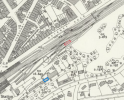
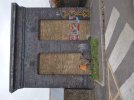
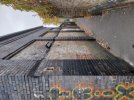
My main interest from my old day job revolves around Waterloo, station layout, structures, etc from the earliest days through LSWR/SR etc. until today. But during my commuting days I use to see what appeared to be the brick structure of a water tower (without the steel tank atop) on the Down side, London end of Woking. It seemed strange as it was at a higher ground level than the track/station.

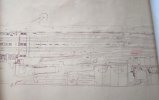
Have over the years been researching same, and it did have a water tank on top, although when this was removed I have no idea. What it served I can only guess, but on the same higher level there were a row of stables in one old building (long gone), which I remember seeing, but never took any pics of, but also in Victorian times there was a single road loco shed (and a turntable in later years) complete with a water column at the country end of the shed (East end of the station), not forgetting the other water columns at the ends of the main line platforms which lasted until 1967 I presume?

A few images attached with dated maps that I have highlighted (in red) the approximate position of the loco shed, and (blue) the position of the water tower on one map. The water tank is clearly marked as such on one map attached.

I believe the loco shed was demolished early 1900s, as I have images which show LSWR liveried carriages stabled on the 'shed road' in the open, with no sign of the shed!

On the 1960's map the location occupied by the railway cottages (which I remember well) is the site of todays ASC.

Any further info appreciated.
 

Attachments

  • BJ-Woking East End - Loco shed site - 1934.png
    BJ-Woking East End - Loco shed site - 1934.png
    324.8 KB · Views: 12
  • BJ-Woking East End - Loco shed site - 1960's. - Copy.jpg
    BJ-Woking East End - Loco shed site - 1960's. - Copy.jpg
    1.2 MB · Views: 12
  • BJ-Woking East End Water Tower1.jpg
    BJ-Woking East End Water Tower1.jpg
    3.5 MB · Views: 12
  • BJ-Woking East End Water Tower2.jpg
    BJ-Woking East End Water Tower2.jpg
    3.8 MB · Views: 11

EbbwJunction1

Established Member
Joined
25 Mar 2010
Messages
1,758
Location
Newport, South Wales
The Water Tower at Cardiff Central Station is a Grade II listed building located next to the western end of Platform 0, overlooking the River Taff.
https://en.wikipedia.org/wiki/Water_Tower,_Cardiff_Central_Station This one hasn't been used for many years and almost certainly won't be used again.

The Water Tower above the Coaling Stage at Didcot Railway Centre has recently been restored and is, I think, able to be used, although in practice it isn't.
 

Man of Kent

Member
Joined
5 Jul 2018
Messages
903
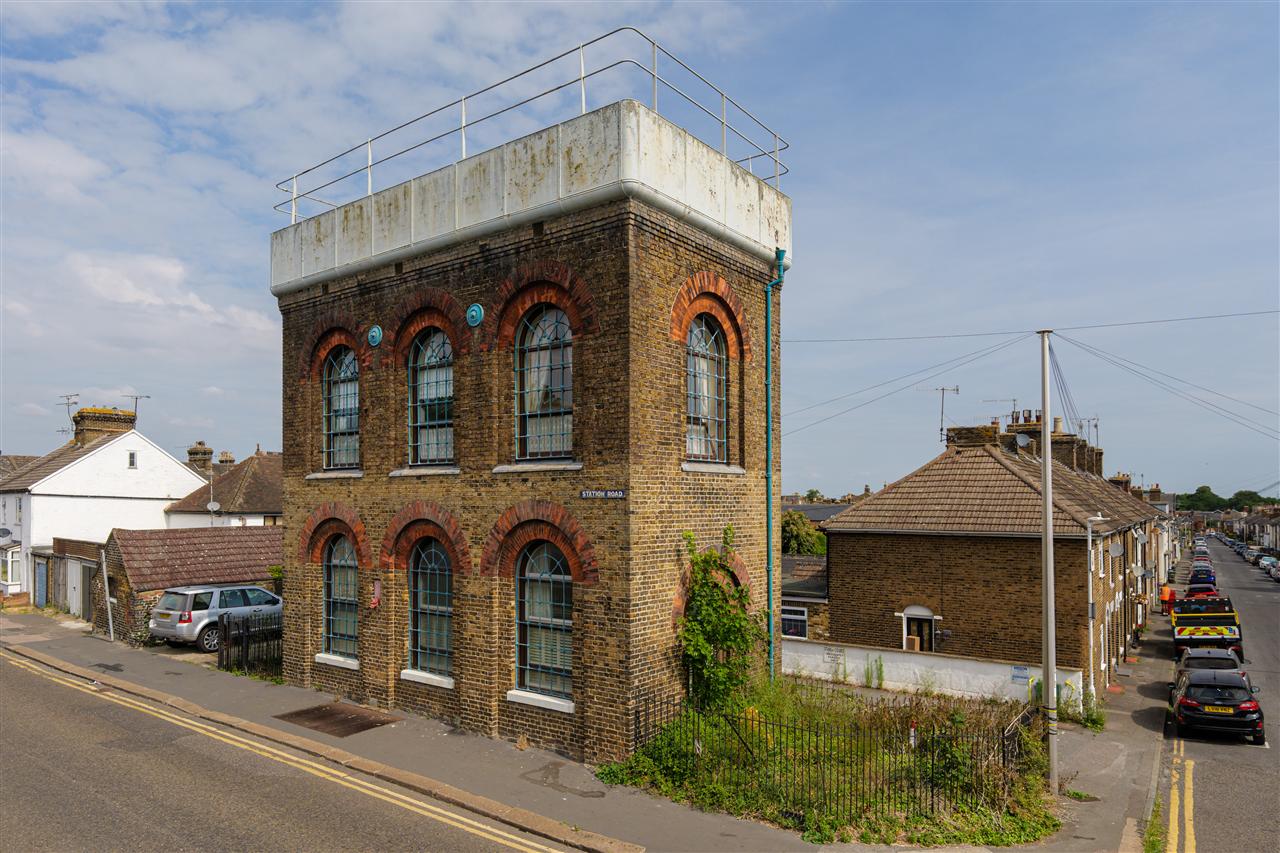
The (presumably LCDR) water tower at Faversham is listed and was converted to a residence around 40 years ago. By coincidence, it is for sale at the moment - there are photos, including from the tank, on the agent's website
 

SargeNpton

Established Member
Joined
19 Nov 2018
Messages
1,704
Picture shows a water tower a few hundred yards north of Northampton station, as seen back in 2021.

It's a bit rusty and I'd assumed that it had long-since fallen out of use, however one of the pipes that leads to it looked quite new at the time.

I can only recall seeing it being used once, back in the late 60s, when it was used to top up the cooling water in the Class 08 shunter.
 

Attachments

  • 2021 Water Tower NMP.jpg
    2021 Water Tower NMP.jpg
    722 KB · Views: 17

Merle Haggard

Established Member
Joined
20 Oct 2019
Messages
3,850
Location
Northampton
Picture shows a water tower a few hundred yards north of Northampton station, as seen back in 2021.

It's a bit rusty and I'd assumed that it had long-since fallen out of use, however one of the pipes that leads to it looked quite new at the time.

I can only recall seeing it being used once, back in the late 60s, when it was used to top up the cooling water in the Class 08 shunter.

That'a the one I mentioned in my post (no 34). Traffic cone was there for years.

I don't know where it is now, but it's definitely gone for preservation. Removed probably a year or so ago when there was a blockade and isolation. Qite an achievement.

Someone I know slightly through the Manchester Loco Society was very proud of making it happen so possibly now in that area.
 

Merle Haggard

Established Member
Joined
20 Oct 2019
Messages
3,850
Location
Northampton
Checking through this thread the water-tower and softening plant at Castlethorpe hasn't been mentioned. It served the troughs and is said to be listed.

Tommy Tomalin, a very adventurous Northampton Railway photographer, took photos from the top of the tower and the results were available through Colour-raii. Like some of his other photos, taken for instance from the top of signals or coaling-towers, they give me vertigo just looking at them ...

There's a public footpath that runs from the site of Castlethorpe station down past the tower, and I recently used it to have a closer look. Sadly it's in a very rusted state and vandalised with graffiti
 

Meole

Member
Joined
28 Oct 2018
Messages
730
Kirkby Stephen East has a NER style rebuild using parts from demolished structures.
 

Belperpete

Established Member
Joined
17 Aug 2018
Messages
3,584
Not specifically, but...

Ditto!

My main interest from my old day job revolves around Waterloo, station layout, structures, etc from the earliest days through LSWR/SR etc. until today. But during my commuting days I use to see what appeared to be the brick structure of a water tower (without the steel tank atop) on the Down side, London end of Woking. It seemed strange as it was at a higher ground level than the track/station.

Have over the years been researching same, and it did have a water tank on top, although when this was removed I have no idea. What it served I can only guess, but on the same higher level there were a row of stables in one old building (long gone), which I remember seeing, but never took any pics of, but also in Victorian times there was a single road loco shed (and a turntable in later years) complete with a water column at the country end of the shed (East end of the station), not forgetting the other water columns at the ends of the main line platforms which lasted until 1967 I presume?

A few images attached with dated maps that I have highlighted (in red) the approximate position of the loco shed, and (blue) the position of the water tower on one map. The water tank is clearly marked as such on one map attached.

I believe the loco shed was demolished early 1900s, as I have images which show LSWR liveried carriages stabled on the 'shed road' in the open, with no sign of the shed!

On the 1960's map the location occupied by the railway cottages (which I remember well) is the site of todays ASC.

Any further info appreciated.
In the days before mains water was readily available, I suspect that a water tower may have been needed for other than just watering locos. A stables would have needed water for the horses to drink, washing and grooming, for example.

The tower base may have been kept after the tank was removed if it contained something that needed to be kept. A water pump being the first thought. But it might just be that it acted as the distribution point for various water feeds around the station.
 

Merle Haggard

Established Member
Joined
20 Oct 2019
Messages
3,850
Location
Northampton
In the days before mains water was readily available, I suspect that a water tower may have been needed for other than just watering locos. A stables would have needed water for the horses to drink, washing and grooming, for example

(snipped)

Possibly fire hydrants as well.

On the ex LNWR there were large numbers of cast-iron signs of standard outline showing the locations of 'FH' (fire hydrant) and 'SV' presumably 'stop valve'. One at Crewe station near the Hotel was worded STOP VALVE HYDRAULIC LIFT IN BASEMENT. Hydraulic operation of wagon turntables, capstans as well as lifts seemed to be common at ex LNWR stations and 'hydraulic' in those days meant 'water pressure'. I wonder if the water pressure was simply from the water tower itself. There may have been water tanks on the top of roofs, though, to provide greater pressure.
 

Rescars

Established Member
Joined
25 May 2021
Messages
2,516
Location
Surrey
(snipped)

Possibly fire hydrants as well.

On the ex LNWR there were large numbers of cast-iron signs of standard outline showing the locations of 'FH' (fire hydrant) and 'SV' presumably 'stop valve'. One at Crewe station near the Hotel was worded STOP VALVE HYDRAULIC LIFT IN BASEMENT. Hydraulic operation of wagon turntables, capstans as well as lifts seemed to be common at ex LNWR stations and 'hydraulic' in those days meant 'water pressure'. I wonder if the water pressure was simply from the water tower itself. There may have been water tanks on the top of roofs, though, to provide greater pressure.
There were hydraulic power companies in a number of UK cities with a network of high pressure mains, providing a central source of power for cranes, lifts, capstans and all sorts of machinery. As an example, the London Hydraulic Power Co survived until 1977. Others may know if the railway companies availed themselves of these companies' services, or if they made separate internal arrangements. The London mains pressure was 800 psi, which I guess was rather more than that which could be delivered from a water tower.
 

Top