• Our new ticketing site is now live! Using either this or the original site (both powered by TrainSplit) helps support the running of the forum with every ticket purchase! Find out more and ask any questions/give us feedback in this thread!

RAIB Investigation into Unsafe Movement at Styal

Status
Not open for further replies.

80073

Member
Joined
1 Oct 2022
Messages
25
Location
Chelmsford
RAIB has started a new investigation. Their website says:

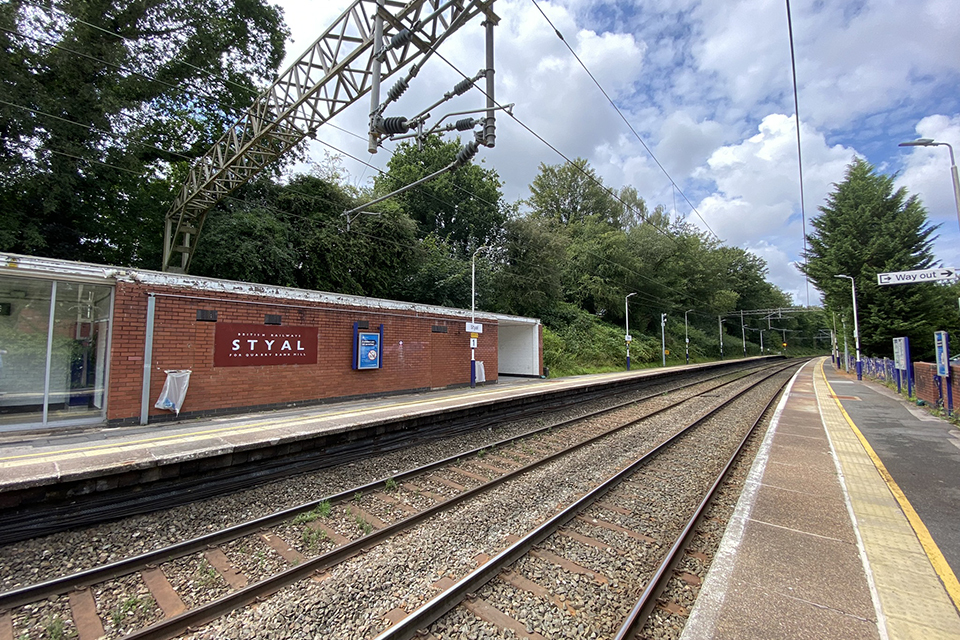
At around 15:26 hrs on Wednesday 3 May 2023, a passenger train operated by Northern Trains departed from Styal station, Cheshire, with five passenger doors open. The train travelled for approximately 10 seconds with these doors open. Once the train reached 5 km/h (3.1 mph), a safety system caused the open doors to close automatically

Link to webpage - Investigation into an unsafe movement of train at Styal station, Cheshire, 3 May 2023
 
Last edited by a moderator:
Sponsor Post - registered members do not see these adverts; click here to register, or click here to log in
R

RailUK Forums

185

On Moderation
Joined
29 Aug 2010
Messages
5,709
Whilst on paper I'm sure Northern are compliant with RSSB standards, but I do wonder if the operational basics of a guard course have been squashed into a twenty minute section, whilst the other 97% of many tocs courses being customer service, diversity, et al. TIS and EBS are major things and perhaps the move from classroom training to doing it with minders/instructors wasn't a wise one.
 

skyhigh

Established Member
Joined
14 Sep 2014
Messages
6,886
but I do wonder if the operational basics of a guard course have been squashed into a twenty minute section, whilst the other 97% of many tocs courses being customer service, diversity, et al. TIS and EBS are major things and perhaps the move from classroom training to doing it with minders/instructors wasn't a wise one.
I think that's a bit of baseless speculation there. I know a couple of the trainers pretty well (they originally started on the same course as me) and they say there's plenty of time devoted to rule book stuff. There's nothing to say the guard involved in the incident hadn't been on years - or that they were even involved anyway. They might have had nothing to do with it and it was only the driver involved. How many seconds would it take you to stop a train if you were in the saloon and none of the passcoms worked because the EBS was isolated?
 

scrapy

Established Member
Joined
15 Dec 2008
Messages
2,313
Can someone in the know explain what safety system on a class 323 would cause the doors to close automatically?

I know there are safety systems that put the brakes on (presumably TIS was isolated) but have never heard of one that shuts the doors. As far as I know if the TIS is isolated the doors can remain open.
 

ComUtoR

Established Member
Joined
13 Dec 2013
Messages
9,562
Location
UK
I think that's a bit of baseless speculation there.

Agreed.

However, just a quick professional question.

Would / Are the Guards allowed to operate a 'safety system' or is that a Driver only system ?
 

Towers

Established Member
Joined
30 Aug 2021
Messages
3,009
Location
UK
Agreed.

However, just a quick professional question.

Would / Are the Guards allowed to operate a 'safety system' or is that a Driver only system ?
TIS would be driver operated.

A crucial element here will be whether the guard ‘dispatched’ the train; i.e. gave two on the bell/buzzer, or if the driver moved the train without having received the bells for whatever reason.
 

Starmill

Veteran Member
Joined
18 May 2012
Messages
27,306
Location
Bolton
Agreed.

However, just a quick professional question.

Would / Are the Guards allowed to operate a 'safety system' or is that a Driver only system ?
I can't spot anything at the link which mentions the conductor.
 

ComUtoR

Established Member
Joined
13 Dec 2013
Messages
9,562
Location
UK
I can't spot anything at the link which mentions the conductor.

Neither did I. I also didn't see anything about TIS, EBS, taking power, gradient, rolling, speed sensor(s), reasons for isolation, platform dispatch, Driving policies, safety cases, competency management, DOTELS, incident management, fleet management, operations control experience, engineering and defect reporting procedures, and Christ knows what else the RAIB will be investigating.

However, my professional curiosity was piqued because it was relevant to the thread as Guard training was mentioned

TIS would be driver operated.

Many thanks. I assume (yes I know) EBS would be too ?

A crucial element here will be whether the guard ‘dispatched’ the train; i.e. gave two on the bell/buzzer, or if the driver moved the train without having received the bells for whatever reason.

So many questions to ask. So much more to learn. My TOC had a similar incident. The RAIB didn't get involved.
 

LowLevel

Established Member
Joined
26 Oct 2013
Messages
8,924
Agreed.

However, just a quick professional question.

Would / Are the Guards allowed to operate a 'safety system' or is that a Driver only system ?
As a safety system isolation that would be the driver following instruction from maintenance control. However, the rulebook also states that for guard operated trains that if the TIS is used, the Guard is responsible for physically checking every door is closed before giving the driver the ready to start signal to move.
 

Starmill

Veteran Member
Joined
18 May 2012
Messages
27,306
Location
Bolton
However, my professional curiosity was piqued because it was relevant to the thread as Guard training was mentioned
What I was actually getting at was that the person who mentioned that may have been drawing on their own experiences rather than anything to do with this thread.
 

ComUtoR

Established Member
Joined
13 Dec 2013
Messages
9,562
Location
UK
What I was actually getting at was that the person who mentioned that may have been drawing on their own experiences rather than anything to do with this thread.

Something I've learned by being on this forum, is that, TOC procedures are very wide ranging and the rulebook is applied in many different ways. Traction varies considerably and what I know at my TOC; isn't the same at others.

This thread; will devolve into mud slinging and pure speculation. If you have ever done an investigation, you know full well that asking questions is the path to knowledge and understanding.

I have only ever driven a train with TIC isolated; once. However, I have lost count of the numer of movement irregularities where trains have moved with doors open. It isn't hard to do and doesn't always require TIS to be isolated.

The safety system that auto closed the doors sounds awesome. I'd also love to know more about it. Should anyone know and is willing to share. I would echo @scrapy 's request.
 

jonnyfan

Member
Joined
6 Apr 2013
Messages
278
Location
Manchester
From what I understand, the train moved off with the guard on the platform.

This safety feature of the doors closing over 3.1mph makes sense now to me, I've worked 323s for years and once the train starts to move you hear and feel the cab doors lock secure (they are already closed of course). So this feature must apply to all doors on the train, something I did not realise. Clever feature really.
 

skyhigh

Established Member
Joined
14 Sep 2014
Messages
6,886
As a safety system isolation that would be the driver following instruction from maintenance control. However, the rulebook also states that for guard operated trains that if the TIS is used, the Guard is responsible for physically checking every door is closed before giving the driver the ready to start signal to move.
That's an interesting one. The rulebook actually states in TW5 section 23.3 that it's the Driver's responsibility to check all doors are securely closed on both sides of the train before operating TIS. 23.4 then goes on to say the "driver of a DO train or guard" must check all doors on both sides of the train are securely closed before any movement and then on each occasion the doors are released they must then check the doors on that side of the train.

So based on that reading, at our TOC, both the driver and guard are responsible to check all doors are securely shut when the TIS is first operated.
 

12LDA28C

Established Member
Joined
14 Oct 2022
Messages
5,058
Why was the train still in passenger service with the traction interlock isolated? Or had the train been taken out of service just prior to being moved? It's not really clear from the initial report apart from mentioning a 'passenger train'.

== Doublepost prevention - post automatically merged: ==

As a safety system isolation that would be the driver following instruction from maintenance control. However, the rulebook also states that for guard operated trains that if the TIS is used, the Guard is responsible for physically checking every door is closed before giving the driver the ready to start signal to move.

It is extremely unusual for a train to be allowed to proceed in passenger service with interlock isolated, surely? The more normal procedure would be to come out of service and proceed ECS.
 

Towers

Established Member
Joined
30 Aug 2021
Messages
3,009
Location
UK
From what I understand, the train moved off with the guard on the platform.

This safety feature of the doors closing over 3.1mph makes sense now to me, I've worked 323s for years and once the train starts to move you hear and feel the cab doors lock secure (they are already closed of course). So this feature must apply to all doors on the train, something I did not realise. Clever feature really.
But surely cleverer still to have the more common system of the interlock just not allowing the train to move in the first place?! Given that there surely can’t be any valid reasons for moving a train with open doors!
 

12LDA28C

Established Member
Joined
14 Oct 2022
Messages
5,058
But surely cleverer still to have the more common system of the interlock just not allowing the train to move in the first place?! Given that there surely can’t be any valid reasons for moving a train with open doors!

The interlock was clearly isolated prior to the train moving.
 

skyhigh

Established Member
Joined
14 Sep 2014
Messages
6,886
But surely cleverer still to have the more common system of the interlock just not allowing the train to move in the first place?! Given that there surely can’t be any valid reasons for moving a train with open doors!
There was a situation a while back where the door gear of a 150 totally collapsed and jammed meaning it was impossible to close a set of doors. Given they're not plug doors the unit wasn't foul of anything so permission was given to turf all the passengers off and proceed empty to depot to be repaired.

If there's no way of bypassing the interlock you will cause havoc when inevitably a fault means a train can't be moved and is blocking a main junction somewhere. TIS has been a thing for decades and is used relatively frequently (when you look at the number of trains that run per day in the UK). Something like this is highly unusual which is why it's being taken so seriously.

Knee jerk suggestions from people who don't really understand the systems in place doesn't help anyone. The normal procedure is operate the override to get the train where passengers can be kicked off and move the train ASAP to somewhere it's out of the way. Having a unit stuck in the middle of nowhere for hours until a fitter can attend and fix the fault isn't a good idea.
 

Mothball

Member
Joined
26 Nov 2018
Messages
179
But surely cleverer still to have the more common system of the interlock just not allowing the train to move in the first place?! Given that there surely can’t be any valid reasons for moving a train with open doors!

A damaged/faulty door that can be securely closed but not be seen by the sensors that it's closed, faulty brake loops, faulty connections between coupled units, plenty of other potential reasons.
 

ComUtoR

Established Member
Joined
13 Dec 2013
Messages
9,562
Location
UK
Why was the train still in passenger service with the traction interlock isolated?

"Evening fleet, I've tried to pull away from the station and the brakes won't release. The doors have been closed up but for some reason I can't release the brakes"
"No worries, have you tried rebooting it...." (j/k)
"Yeah, we don't know either Drive, could you trip the TIS as it's showing no interlock on the RCM"
"Will do fleet, cheers for the help"


TIS isolated, brakes release, train rolls out the station...


I understand where you are coming from but again, so much can happen during an incident and it's difficult to determine any sequence of events. If I was on a platform, I'd pull the train from service. A platform in the middle of nowhere ? I might try and get to a main station where passengers could be detrained and continue their journey.

Was the service heading to or away from the airport ?
 

LowLevel

Established Member
Joined
26 Oct 2013
Messages
8,924
Why was the train still in passenger service with the traction interlock isolated? Or had the train been taken out of service just prior to being moved? It's not really clear from the initial report apart from mentioning a 'passenger train'.

== Doublepost prevention - post automatically merged: ==


It is extremely unusual for a train to be allowed to proceed in passenger service with interlock isolated, surely? The more normal procedure would be to come out of service and proceed ECS.
Depends where the problem happened. Certainly I've worked a train with defective door interlocking to a suitable station to terminate on the basis that kicking the passengers out at the countryside halt where the problem occurred wasn't deemed appropriate. Yes, I got very fed up of running backward and forward at every station checking all the doors before we left (Control said to make booked calls on the same basis, no other alternative options for passengers).
 

Towers

Established Member
Joined
30 Aug 2021
Messages
3,009
Location
UK
A damaged/faulty door that can be securely closed but not be seen by the sensors that it's closed, faulty brake loops, faulty connections between coupled units, plenty of other potential reasons.
All of which are a reason to TIS/EBS, but not to pull away with the doors open?!

== Doublepost prevention - post automatically merged: ==

There was a situation a while back where the door gear of a 150 totally collapsed and jammed meaning it was impossible to close a set of doors. Given they're not plug doors the unit wasn't foul of anything so permission was given to turf all the passengers off and proceed empty to depot to be repaired.

If there's no way of bypassing the interlock you will cause havoc when inevitably a fault means a train can't be moved and is blocking a main junction somewhere. TIS has been a thing for decades and is used relatively frequently (when you look at the number of trains that run per day in the UK). Something like this is highly unusual which is why it's being taken so seriously.

Knee jerk suggestions from people who don't really understand the systems in place doesn't help anyone. The normal procedure is operate the override to get the train where passengers can be kicked off and move the train ASAP to somewhere it's out of the way. Having a unit stuck in the middle of nowhere for hours until a fitter can attend and fix the fault isn't a good idea.
We’re at cross purposes here. I was responding to an observation that the doors auto closing at a set speed was a clever idea, with a comment that it is surely cleverer still for the train to be unable to move in that state in the first place! My point was that an auto close feature is a somewhat obscure idea that doesn’t exist on most other stock (if indeed it exists on a 323!), and leads to wonder what other interlock system exists on those trains. Given that operating the TIS would presumably render an auto close system inoperable anyway, what is it for? Unless of course the TIS doesn’t isolate the auto close, and it exists purely for the incredibly rare occasion where someone isolates the TIS and forgets to shut the doors….!

I’m sceptical whether the feature actually exists, or whether somebody simply pressed the doors close button; but presumably we shall find out!

I fully “understand the systems in place”; I’m still drawing a blank as to when you would move a sliding plug door unit with the doors open unless as a result of a c*ckup!
 
Last edited:

pompeyfan

Established Member
Joined
24 Jan 2012
Messages
4,445
it was mentioned up thread about the guard potentially giving the ready to start to the driver. I thought if TIS was operated, the bells/buzzer wouldn’t work and you’d be relying on a green flag (straight platform or curve with the train), or cab to cab. If I was to take a guess, I’d suggest the driver operated the TIS at request of fleet control and got brake release, and that they were on a gradient. Obviously the truth will come out.
 

ainsworth74

Forum Staff
Staff Member
Global Moderator
Joined
16 Nov 2009
Messages
31,114
Location
Redcar
The RAIB have now published their report into this incident:

Summary​

At around 15:26 hrs on Wednesday 3 May 2023, a passenger train operated by Northern Trains Ltd departed from Styal station, Manchester, with five bodyside doors open.

The train involved was a three-car class 323 electric multiple unit. Immediately before the incident, the train had experienced technical difficulties which meant that the driver was unable to release the brakes and take power. As a result of this, Northern Trains Ltd control instructed the driver to isolate safety systems relating to the doors to allow the train to move. The safety isolations did not resolve the issue; however, after further checks, the train became able to move.

The train travelled for approximately 10 seconds with five doors open. Once the train reached 3.1 mph (5 km/h), a safety system caused the open doors to close automatically. No one was hurt in the incident, although people were moving towards the train and a passenger was standing in an open doorway when the train started to move.

The incident occurred because the engineering safeguards on the train to prevent the train from departing with the doors open had been bypassed to try and rectify a fault. The train departed without the driver receiving an indication that the dispatch process was complete and without confirmation that the doors were closed.

The investigation identified that the process used by Northern Trains Ltd for assessing trains before being released into service had permitted the train to be in service with an unidentified intermittent defect. Northern Trains Ltd’s processes for authorising the isolation of engineered safeguards on trains in service did not effectively control the risks created by such isolations. Also, Northern Train Ltd’s training did not provide the driver with the necessary skills for managing stressful situations.

Recommendations​

RAIB has made three recommendations addressed to Northern Trains Ltd. The first seeks to improve the management of the risk of trains being in operational service with known intermittent faults. The second recommendation considers how the operational risk of trains being in service with safety systems isolated is managed. The third recommendation looks to provide operational staff with the skills and strategies to manage out-of-course incidents and stressful situations.

RAIB has also identified a learning point to remind train operators of the importance of complying with operating rules when isolating safety systems.


Doesn't make pleasant reading for Northern I'd say! I find it particularly surprising that the process for deciding when a unit is safe to release into traffic seemed to boil down to gut instinct. There's clearly a role to play for professional judgement, things would grind to a halt otherwise, but feels as if there should be some manner of procedure in place for managing that kind of thing!

Equally not great for the driver but I can certainly see why they ended up making the mistakes that they did in the pressure of the moment. I wonder if there needs to be a bit more of a focus on human factors and the way that train crew manage incidents under that pressure? It almost feels as if the railway industry needs it's own version of the airline concept of crew resource management.

On a completely light hearted note however, is it just me or have the RAIB upped their diagram game with this report? Figure 2 (though what on earth is that livery the 323 is in :lol:) and particularly figure 5 feel like a step up from what normally see in RAIB report! Have they hired someone with an artistic bent?
 

Horizon22

Established Member
Associate Staff
Jobs & Careers
Joined
8 Sep 2019
Messages
11,010
Location
London
As per the speculation above, you have to feel sorry for the guard who was left fairly helpless in the situation.

The driver has evidently completely lost situational awareness and had a 'silo focus' on getting the train moving, foregoing the usual steps. Probably as a result of task overload and didn't take the time to double check procedure and go through the usual dispatch process. There is lots of training for train crew who will regularly end up in such situations - be safe and if takes extra time so be it. It should have definitely been detrained at Styal.

I am surprised Northern control didn't register the issue sooner, considering there was a prolonged sit-down at Alderley Edge and the fact the call to the Maintenance Controller just went completely unanswered (not even bouncing within Manchester ROC)
 

paulmch

Member
Joined
20 Dec 2018
Messages
220
That made for some seriously uncomfortable reading. It's as if RAIB have access to my bad dreams about work and wrote a report on it!
 

WAB

Established Member
Joined
27 Jun 2015
Messages
1,299
Location
Anglia
It occurs to me that we've placed a majority of the operational management of the railways into Control offices without ensuring that the necessary numbers of controllers and levels of training are in place. On the frontline, the number of staff deemed competent to deal with operations during an incident is a lot lower than fifty years ago.

Fewer shunters, train crew supervisors, ops-competent station staff, traction inspectors (as was), traffic supervisors (as was), signallers etc. This means more and more getting bounced via Control, whose establishments and competencies have not necessarily kept pace.
 

Tazi Hupefi

On Moderation
Joined
1 Apr 2018
Messages
1,931
Location
Nottinghamshire
It occurs to me that we've placed a majority of the operational management of the railways into Control offices without ensuring that the necessary numbers of controllers and levels of training are in place. On the frontline, the number of staff deemed competent to deal with operations during an incident is a lot lower than fifty years ago.

Fewer shunters, train crew supervisors, ops-competent station staff, traction inspectors (as was), traffic supervisors (as was), signallers etc. This means more and more getting bounced via Control, whose establishments and competencies have not necessarily kept pace.
The level of training in control rooms is generally extremely good and comprehensive - and there's been a push in recent years (as the report says) to integrate Non-Technical Skills into the required learning.

However, you have staff who have been around for a fair while, and went through different training schemes etc, and are more reliant on their experience than any formal training they've received.

The difficulty is that control staff quite expensive - rightly so for what they do - and in some locations they are understaffed - or covering multiple roles. When serious disruption occurs, it all falls apart, because they rightly can only prioritise operational safety issues - but that's at the expense of information and customer service (and other less urgent operational issues). When you call control, they can sound rushed/dismissive/disinterested - which I think psychologically adds to the stress of a situation like in this report and subliminally puts pressure on front line staff to resolve the matter as quickly as possible- even if they don't intend to be perceived that way.
 
Status
Not open for further replies.

Top