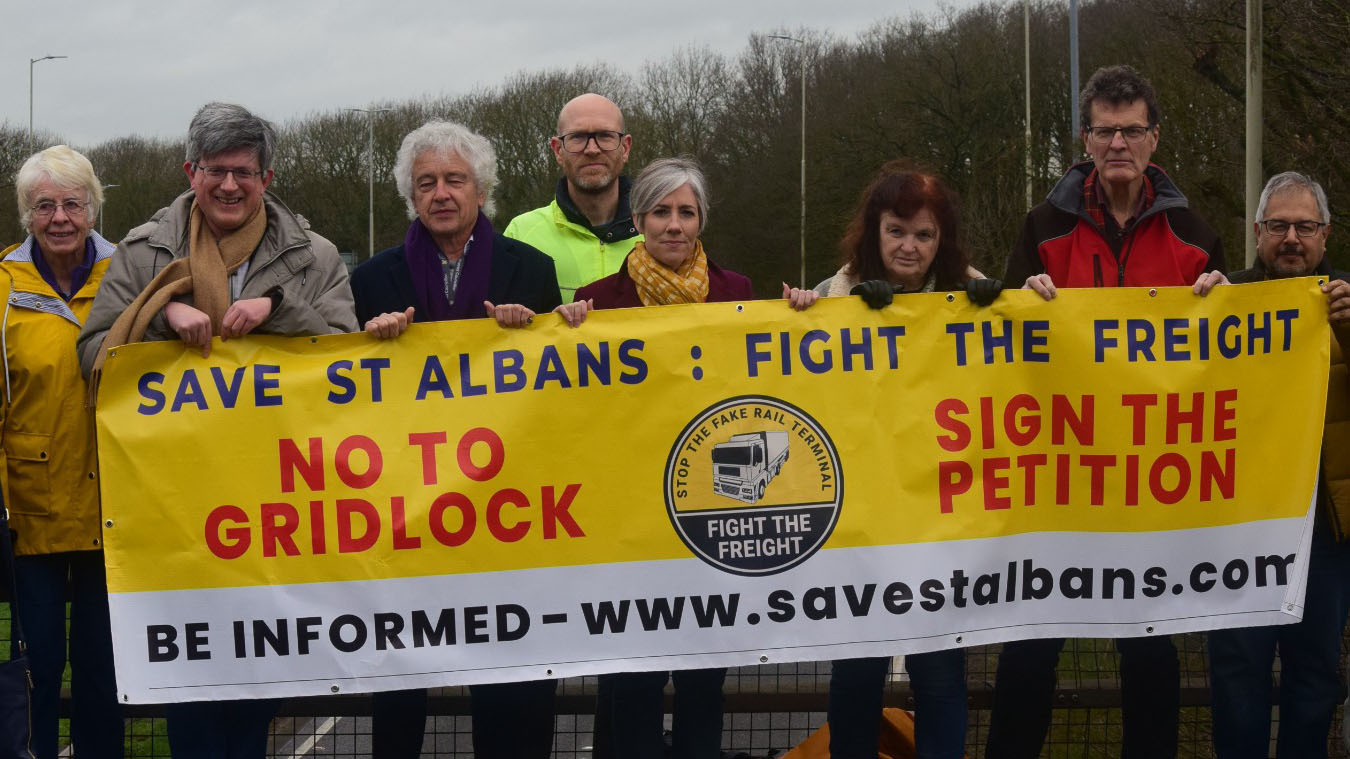
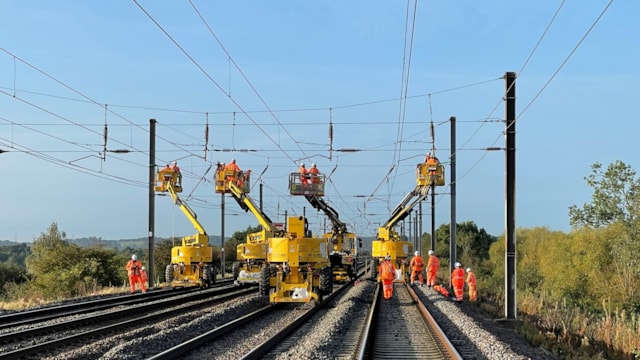
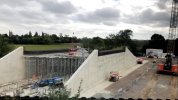
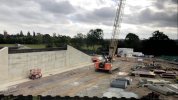
Now this appears to actually be moving forward, it reminded me of some old musing back from when it was first announced. Whilst I'm extremely sceptical of just how much rail freight this will ever actually see given how these things tend to pan out (let alone the capacity constraints on the southern MML), let's give it the benefit of the doubt for now.
Specifically, I was wondering if could it ever be worthwhile to also have a connection to the Abbey Line to provide a rail freight connection to the WCML? There once upon a time was a contractor's connection from just north of How Wood, used during the construction of the Midland's London extension from Bedford that appears to be in a perfect location. Obviously, the branch would need major upgrading, but it could act as the justification needed to finally get that done for wider benefits.

The options as I see them are either to double the branch and treat it as two separate bidi routes, which would have the advantage of keeping them operationally separate, but would force you to do expensive doubling works. An alternative is to introduce signalling with loops, the number and location of which would all depend on how many freight paths you needed (you might just need the proposed one at Bricket Wood to let a long freight pass a short passenger service, for example). Or you go the whole hog and double the whole thing and signal accordingly to get all the capacity you would need for freight and increased passenger services.
Specifically, I was wondering if could it ever be worthwhile to also have a connection to the Abbey Line to provide a rail freight connection to the WCML? There once upon a time was a contractor's connection from just north of How Wood, used during the construction of the Midland's London extension from Bedford that appears to be in a perfect location. Obviously, the branch would need major upgrading, but it could act as the justification needed to finally get that done for wider benefits.
The options as I see them are either to double the branch and treat it as two separate bidi routes, which would have the advantage of keeping them operationally separate, but would force you to do expensive doubling works. An alternative is to introduce signalling with loops, the number and location of which would all depend on how many freight paths you needed (you might just need the proposed one at Bricket Wood to let a long freight pass a short passenger service, for example). Or you go the whole hog and double the whole thing and signal accordingly to get all the capacity you would need for freight and increased passenger services.