• Our new ticketing site is now live! Using either this or the original site (both powered by TrainSplit) helps support the running of the forum with every ticket purchase! Find out more and ask any questions/give us feedback in this thread!

Quirky or quaint practices on buses in the past

Status
Not open for further replies.

Old Walter

Member
Joined
26 Aug 2025
Messages
48
Location
Ilford
I've seen pictures of estate cars as buses / post-buses in Scotland, so quite possible. A brief search on Flickr came up with a Chrysler estate or two, example (not my flickr account or photo) here but no Cortinas - although that of course doesn't prove they didn't exist.
Firstly thank you so much for answering this and providing so many sources. It’s absolutely fascinating and you may be right - what I took to be a Cortina (with a similar shape and style to a seven year old - or so I’d guess) could be one of these Chrysler estates. The memory I have is of the slipboard actually across the dash and the photo in an isolated location devoid of buildings - but - after so long what you’ve provided would fit the bill perfectly. Thank you : )

I’m very interested to see the use of these ex London taxis and the Eastern Counties photo did make me chuckle - zooming in and seeing a driver with his blazer & tie complete with a round PSV badge! Absolutely excellent stuff.

While I’m here, a quick question for those familiar with north Hampshire - I recall the 36 route from Basingstoke to Stoney Heath years ago, but having limited resources back then (OS Maps) never actually found a place with said name. It appears that (using Google Maps today) the route would have turned from Baughurst Road onto The Common in Ramsdell, then continuing onto Church Road and past St. Stephens Church (noted in timetables as Baughurst Church) before (possibly) coming back down Baughurst Road and Wolverton Townsend before turning into Stoney Heath, itself a very short lane. There is mention to Pound Green in the timetable which seems to relate to Pound Green House, indicating that the route might have continued down Baughurst Road and and terminated at the end of the Stoney Heath road instead of running the length of it.

With very limited resources to hand this does seem a grey area, and worthy of quirky routes, the description of places indicated by timetables seems obscure in the extreme!

If anyone has experience of the 36/336 this would be excellent, I only ever travelled on the peak time version of the 36 which went to Woodlands Road in Baughurst (terminus of the main services and then worked back as a service 50 - these days the 2 route) so haven’t seen the arrangement which qualified Pound Green and Stoney Heath as destinations, I think it certainly qualifies as obscure and fitting for this thread : )

== Doublepost prevention - post automatically merged: ==

Having been used to Hindhead depot (which had gone by this time) I do remember thinking it was quite a novelty for ex-Hindhead routes to interwork with north-of-Aldershot routes.

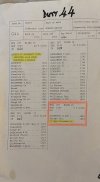
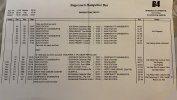
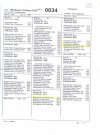
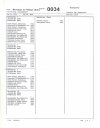
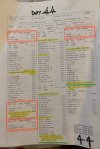
Righto…..looking in the cupboard for an East London line timetable (for another thread on here - I’ll have to look again in more depth soon) I have found a duty card from 2004 which does have a mixture of north-of-Aldershot and the former Hindhead. Attaching here, plus a late turn Basingstoke shift from 1999 which was just below it - again attaching here in case of interest….
 

Attachments
  • IMG_6143.jpeg
    IMG_6143.jpeg
    2.7 MB · Views: 62
  • IMG_6144.jpeg
    IMG_6144.jpeg
    1.6 MB · Views: 60
  • IMG_6142.jpeg
    IMG_6142.jpeg
    1.8 MB · Views: 60
Last edited:
Sponsor Post - registered members do not see these adverts; click here to register, or click here to log in
R

RailUK Forums

nw1

Established Member
Joined
9 Aug 2013
Messages
9,430
Firstly thank you so much for answering this and providing so many sources. It’s absolutely fascinating and you may be right - what I took to be a Cortina (with a similar shape and style to a seven year old - or so I’d guess) could be one of these Chrysler estates. The memory I have is of the slipboard actually across the dash and the photo in an isolated location devoid of buildings - but - after so long what you’ve provided would fit the bill perfectly. Thank you : )

I’m very interested to see the use of these ex London taxis and the Eastern Counties photo did make me chuckle - zooming in and seeing a driver with his blazer & tie complete with a round PSV badge! Absolutely excellent stuff.

While I’m here, a quick question for those familiar with north Hampshire - I recall the 36 route from Basingstoke to Stoney Heath years ago, but having limited resources back then (OS Maps) never actually found a place with said name. It appears that (using Google Maps today) the route would have turned from Baughurst Road onto The Common in Ramsdell, then continuing onto Church Road and past St. Stephens Church (noted in timetables as Baughurst Church) before (possibly) coming back down Baughurst Road and Wolverton Townsend before turning into Stoney Heath, itself a very short lane. There is mention to Pound Green in the timetable which seems to relate to Pound Green House, indicating that the route might have continued down Baughurst Road and and terminated at the end of the Stoney Heath road instead of running the length of it.

With very limited resources to hand this does seem a grey area, and worthy of quirky routes, the description of places indicated by timetables seems obscure in the extreme!

If anyone has experience of the 36/336 this would be excellent, I only ever travelled on the peak time version of the 36 which went to Woodlands Road in Baughurst (terminus of the main services and then worked back as a service 50 - these days the 2 route) so haven’t seen the arrangement which qualified Pound Green and Stoney Heath as destinations, I think it certainly qualifies as obscure and fitting for this thread : )

== Doublepost prevention - post automatically merged: ==


Righto…..looking in the cupboard for an East London line timetable (for another thread on here - I’ll have to look again in more depth soon) I have found a duty card from 2004 which does have a mixture of north-of-Aldershot and the former Hindhead. Attaching here, plus a late turn Basingstoke shift from 1999 which was just below it - again attaching here in case of interest….

Thanks for that - that Aldershot duty certainly seems very varied, but it has to be said very long, basically 12 hours with only two sub-1-hour breaks. I think I imagined driver duties to be around 8 hours with 1 hour break, as per the classic working day; I've never studied driver duties in the way I've studied vehicle duties.

You can see the classic pattern of the 70 then working a 71 at Guildford, and then a 19 from Haslemere. Interesting to also see the outbound 19 working empty from the depot - that accords with my observations during the (short) time I spent at Aldershot in summer 2000, when there was no clear interworking pattern with some journeys going to and from the depot. I do seem to remember one of the incoming 19s then forming a 49 or a 50, or possibly vice-versa - and another 19 (which I think was diagrammed for a larger single-deck than the standard Darts) then forming the 1435 out on the 18, which did school work in Bordon/Whitehill.

Back in post-deregulation Alder Valley days, the drivers used to display their duty in the front of the vehicle. I always used to sneak a look at it, as it showed the bus duty/diagram numbers too, which I often used to figure out some of the bus workings through the day. Furthermore you could figure out whether the bus was "supposed to" be single deck or double deck in cases where there was some inconsistency, as the single-deck workings were numbered from around 1-15, while the double-deck workings were around 101-110.
I seem to remember slightly annoying the driver in one case by looking at his duty for a couple of seconds! (I was only around mid-teens then, if that excuses it ;) )
 
Last edited:

pitdiver

Established Member
Joined
22 Jan 2012
Messages
1,290
Location
Warsop Vale
Many years ago when on holiday in Cyprus I went for a bus ride to Ayia Napa from Larnaca. Part of the Route went through the Sovereign Base Area at Dhekelia. Back then there were soldiers on duty at the entrances to the base. It seemed so different to catching a bus in London. I would imagine things are different these days.
 

Tester

Established Member
Joined
5 Jul 2020
Messages
1,738
Location
Watford
I seem to remember slightly annoying the driver in one case by looking at his duty for a couple of seconds! (I was only around mid-teens then, if that excuses it ;) )
I bet it was longer than a couple of seconds :D
 

Whisky Papa

Member
Joined
8 Aug 2019
Messages
744
Thanks for that - that Aldershot duty certainly seems very varied, but it has to be said very long, basically 12 hours with only two sub-1-hour breaks. I think I imagined driver duties to be around 8 hours with 1 hour break, as per the classic working day; I've never studied driver duties in the way I've studied vehicle duties.

The duty would almost be a fairly classic split turn, other than having that one trip at 1312 in the middle of the unpaid break (I say almost as a minimum 3 hour break seemed to be the rule). Roughly 8 hours work but spread over somewhere between 11 and 12 hours.

A few 'three line splits' like this were scheduled when I started with Bee Line Buzz Company in Stockport in 1987, but they soon realised how unpopular they were and got rid. Still, unlike the pre-deregulation world where a spreadover payment had been made, the breaks in splits at Bee Line were unpaid. Eventually they were 'hived off' onto volunteer rotas, who did not work earlies or late turns.
 

nw1

Established Member
Joined
9 Aug 2013
Messages
9,430
The duty would almost be a fairly classic split turn, other than having that one trip at 1312 in the middle of the unpaid break (I say almost as a minimum 3 hour break seemed to be the rule). Roughly 8 hours work but spread over somewhere between 11 and 12 hours.

A few 'three line splits' like this were scheduled when I started with Bee Line Buzz Company in Stockport in 1987, but they soon realised how unpopular they were and got rid. Still, unlike the pre-deregulation world where a spreadover payment had been made, the breaks in splits at Bee Line were unpaid. Eventually they were 'hived off' onto volunteer rotas, who did not work earlies or late turns.

I also notice the "B" and "D" prefixes to the vehicle duties.

Given the era I'd expect "D" to be "Dart", perhaps. Certainly the 46 and 70 mandate the use of single-deckers due to low bridges. Not sure about "B" but it looks like a school/college working so likely a double-decker, and then the notes suggest it goes on to do a Shottermill school working in the afternoon (the 59, presumably). Too late though for "Bristol VR".
 

Old Walter

Member
Joined
26 Aug 2025
Messages
48
Location
Ilford
I also notice the "B" and "D" prefixes to the vehicle duties.

Given the era I'd expect "D" to be "Dart", perhaps. Certainly the 46 and 70 mandate the use of single-deckers due to low bridges. Not sure about "B" but it looks like a school/college working so likely a double-decker, and then the notes suggest it goes on to do a Shottermill school working in the afternoon (the 59, presumably). Too late though for "Bristol VR".

As far as I remember there were B, D and M. My understanding was that B was ‘bus’ - so a double decker or a big single decker like a Volvo B10M (or a National). D was ‘Dart’ (like you say) and M was ‘minibus’. There were a load of Merc 709Ds at Aldershot at the time and a lot of these were deployed on Camberley and Farnborough work (along with the 4/5 which was exclusively minibus at the time).

However, I have no clue as to the prefix with the duty number (such as G44 and references to a J03 and duties beginning with an A). I can only assume this was more to aid the scheduler identifying certain duties for certain rotas (Aldershot had quite a few rotas dependant on route knowledge). I believe the 7## duties were the Haslemere shifts at this time, but when I had observed in the late 1990s Haslemere were in the 5## series.

Actually, that reminds me of another odd practice. The buses were under the ownership of Aldershot and the Aldershot controller would allocate the buses for the next days work. Most Haslemere duties that were in the Aldershot area late in the day, would go to the fuelling bay in Halimote Road to get filled up for the morning. The controller would then indicate what the vehicle would work the next day. The electric ‘Bright-Tech’ blinds had the Haslemere duty numbers as a display, so upon arrival at the outstation the driver would display the number and the morning driver would know that was their bus.

The long duty is typical of a provincial four-day week shift, they still exist. Even the five-day week of the era with ‘short’ duties weren’t very short in many cases. 9-10 hours was the norm.
 
Last edited:

nw1

Established Member
Joined
9 Aug 2013
Messages
9,430
As far as I remember there were B, D and M. My understanding was that B was ‘bus’ - so a double decker or a big single decker like a Volvo B10M (or a National). D was ‘Dart’ (like you say) and M was ‘minibus’. There were a load of Merc 709Ds at Aldershot at the time and a lot of these were deployed on Camberley and Farnborough work (along with the 4/5 which was exclusively minibus at the time).
Interesting, I did note that certain journeys tended to be B10M and others tended to be Dart at the time, which agrees with this. Presumably though there was a differentiation for double-deckers as loadings on some services might have demanded double deck?

I do remember minibuses on the Haslemere 59, I also seem to remember that one of the two 18 workings that terminated at Whitehill on a Saturday was minibus operated on the day I was in the area in summer 2000 (the other a double-decker, strangely enough!) No idea whether that was usual, though.
 

Old Walter

Member
Joined
26 Aug 2025
Messages
48
Location
Ilford
Interesting, I did note that certain journeys tended to be B10M and others tended to be Dart at the time, which agrees with this. Presumably though there was a differentiation for double-deckers as loadings on some services might have demanded double deck?

I think the same as you - it would have been advantageous for whoever was doing the allocating to have a DD working stand out against an SD. I only ever saw B, D and M but that’s not to say there weren’t other indications behind the scenes. I know the Basingstoke allocation sheet of the time had the car number, first duty, time depart and what the first trip was. There was a column for vehicle type, some were straightforward such as ‘Dart’ or ‘B10’ etc, but the Olympians specified either Leyland or Volvo and whether long or short wheelbase. Something like this probably existed in Aldershot to supplement the letter codes.

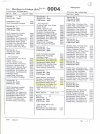
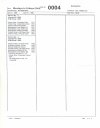
The Basingstoke late duty attached further up is an example of another (!) odd practice. From the November 1998 timetable change, the numbering of the duties in time order finished (and this remained as such for quite a few years). The morning starts were numbered as odds from the first book on, and the late shifts were in the even series counting back from the last finish. So in the example above, the last Chineham was duty 4 (duty 2 being the last Kempshott which booked off at 00:20).

However, the later even numbered shifts only went up to about duty 26. The odds from the morning went all the way up to 99 which made it look like there were a lot more duties than there were (at this stage the town rotas, country rota and Alton rota all had the same sequence - these were split up and numbered independently in due course)!

I’ve still not quite got how that was adopted but one theory was that certain schedulers would work from opposite ends of the graph with each duty to ensure coverage of the ends and to gauge easier where floating time during the day to cover breaks would go in.

Going back to the archive again, from 2011 an example of a five day rota shift and a four day - this having come up earlier. Both are pretty long for what they are.
 

Attachments

  • IMG_6154.jpeg
    IMG_6154.jpeg
    941.8 KB · Views: 55
  • IMG_6155.jpeg
    IMG_6155.jpeg
    574.9 KB · Views: 52
  • IMG_6156.jpeg
    IMG_6156.jpeg
    899 KB · Views: 42
  • IMG_6157.jpeg
    IMG_6157.jpeg
    641.2 KB · Views: 53

Bristol LHS

Member
Joined
29 Sep 2020
Messages
167
Location
Yorkshire
The rules about operating a car on a PSV Operators Licence have been a bit fuzzy (I think it depended what Traffic Commissioner's region you were in) but have been tightened up - but I think it's still legal some circumstances, but increasingly rare. There's also a concept of being able to operate a registered local bus service with a licensed taxi in some circumstances, although not sure I've encountered one.

Lincoln City Transport in the early post-deregulation era had a number of London style taxis which operated flexible bus services (I'm not sure how they were registered) as 'Limo' - photo (again not my photo or Flickr account) here. Potteries also had a couple of London style taxis under the 'Flexi' fleet name, photo (same basis) here in the pre-deregulation era.

Station Taxis in Sunderland registered a couple of taxi bus routes across the city centre in the 90s, after a row with the council over taxi access to bus lanes. I’m not certain what the commercial advantage to these was - presumably this allowed them to pick up (eg hail and ride) on bus lanes, and perhaps passengers could pay to the end of the taxi bus route and then the meter would be turned on for a longer journey? I never used one.
 

Strathclyder

Established Member
Joined
12 Jun 2013
Messages
3,840
Location
Clydebank
The posts above about taxis being used on PSV work awakened a tangental, but somewhat related memory of some being used by Stagecoach somewhere as staff transport vehicles in the mid-late 2000s. I did remember seeing pics of taxis decked out in full Stagecoach colours years ago on Flickr, so I did a quick search there and this is what I got back. Turns out it was Manchester I was thinking of, though I'd be surprised if they were alone in this practice within Stagey.


(linked photos copyright of Christopher Lowe)

A mix of FX4 Fairways and Metrocabs, numbered into the ancillary fleet on paper but not carrying full fleetnumbers, though that FX4 is carrying 01 (last two digits of 92101) on the front.

Not quirky, but certainly unique, was the Border Courier network in the Scottish Borders which ran for 28 years (1979-2007), a partnership between the bus companies, Borders Regional Council and the local health board.

It linked outlying areas and local hospitals with Peel Hospital near Galashiels, subsequently Borders General Hospital when that opened towards the end of the 1980s, and was the only bus service network in the UK which carried passengers and goods. The timetables were designed so that all the services converged on Peel, and later the BGH at around lunchtime and goods unloaded/changed over before the buses did the return journey in the afternoon. One service ran up to the Edinburgh hospitals and you could use it to travel to, but not from, Edinburgh as the departure time from there fluctuated.

Each generation of Border Courier vehicles was purpose-built with the passengers being separated from the goods by a partition. Notable were the Optare MetroRiders used on the network by First between 1997 and 2002, which were the only examples built to a passenger+goods layout.

In 2007 the Borders health board decided that it would be cheaper to run vans and dispense with the passenger element, thus bringing this unique service to an end.

Operators were:

Eastern Scottish 1979-1985
Lowland Scottish/Lowland 1985-1992
Austin of Earlston & Munro's of Jedburgh 1992-1997
First Lowland/First Edinburgh 1997-2002
Munro's of Jedburgh 2002-2007.
Have dug up a couple pics of those MetroRiders (a batch of 5, registered P538-542 YSH and numbered 1538-1542), somehow I was never aware of this service/network or the buses used. Fascinating for sure. Pity none of those MRs were saved either, though I suspect they succumbed to the usual Optare/Metrorider rot long before preservation was even a consideration.


(both images copyright of Alan Urquhart)
 

DunsBus

Established Member
Joined
12 Jan 2013
Messages
1,821
Location
Duns
The posts above about taxis being used on PSV work awakened a tangental, but somewhat related memory of some being used by Stagecoach somewhere as staff transport vehicles in the mid-late 2000s. I did remember seeing pics of taxis decked out in full Stagecoach colours years ago on Flickr, so I did a quick search there and this is what I got back. Turns out it was Manchester I was thinking of, though I'd be surprised if they were alone in this practice within Stagey.


(linked photos copyright of Christopher Lowe)

A mix of FX4 Fairways and Metrocabs, numbered into the ancillary fleet on paper but not carrying full fleetnumbers, though that FX4 is carrying 01 (last two digits of 92101) on the front.


Have dug up a couple pics of those MetroRiders (a batch of 5, registered P538-542 YSH and numbered 1538-1542), somehow I was never aware of this service/network or the buses used. Fascinating for sure. Pity none of those MRs were saved either, though I suspect they succumbed to the usual Optare/Metrorider rot long before preservation was even a consideration.


(both images copyright of Alan Urquhart)
Another thing about these MRs is that unlike on the previous generations of Courier vehicles, the partition dividing the passengers from the goods was permanent. This meant that they couldn't be rebuilt and upseated once their time on the Couriers was over.
 

Strathclyder

Established Member
Joined
12 Jun 2013
Messages
3,840
Location
Clydebank
Another thing about these MRs is that unlike on the previous generations of Courier vehicles, the partition dividing the passengers from the goods was permanent. This meant that they couldn't be rebuilt and upseated once their time on the Couriers was over.
Yep the cargo compartment looked pretty integral to the vehicle's structure. They were noticeably low-capacity once redeployed onto regular service work by First, with only 22 seats compared to the normal 31 for a regularly specced MetroRider of that length. They did last long enough to recieve national fleetnumbers (50438-442) and from what I can find, most if not all 5 later got Barbie Fadeout livery.
 

Flange Squeal

Established Member
Joined
17 Jul 2012
Messages
1,864
The posts above about taxis being used on PSV work awakened a tangental, but somewhat related memory of some being used by Stagecoach somewhere as staff transport vehicles in the mid-late 2000s. I did remember seeing pics of taxis decked out in full Stagecoach colours years ago on Flickr, so I did a quick search there and this is what I got back. Turns out it was Manchester I was thinking of, though I'd be surprised if they were alone in this practice within Stagey.


(linked photos copyright of Christopher Lowe)

A mix of FX4 Fairways and Metrocabs, numbered into the ancillary fleet on paper but not carrying full fleetnumbers, though that FX4 is carrying 01 (last two digits of 92101) on the front.
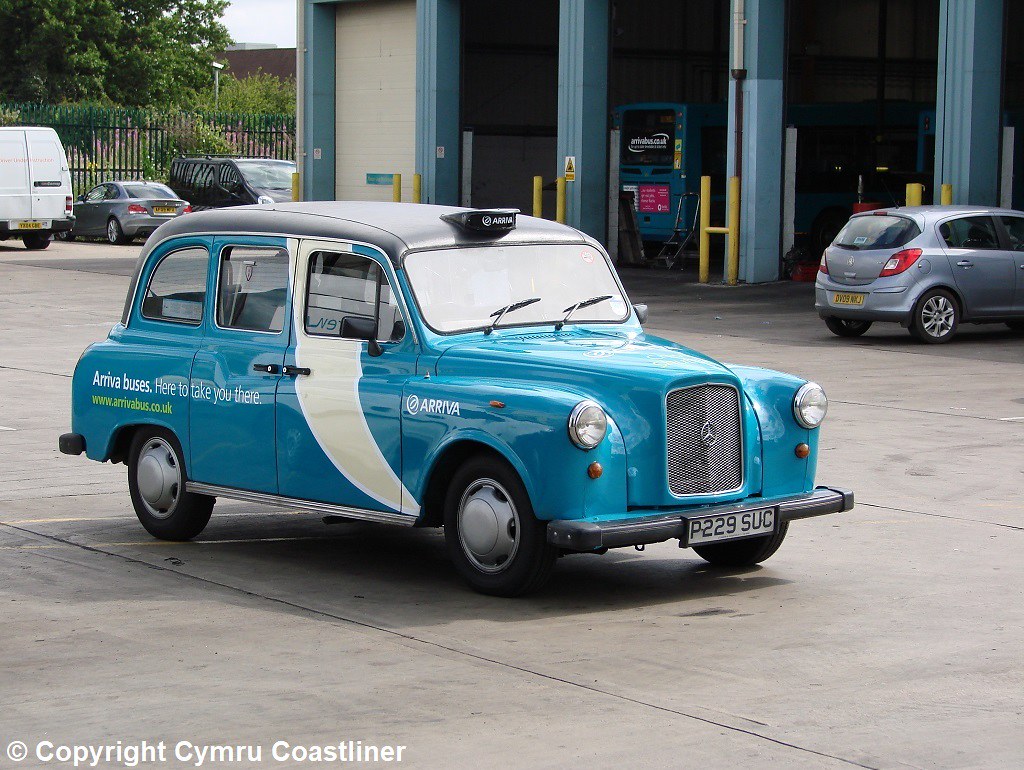
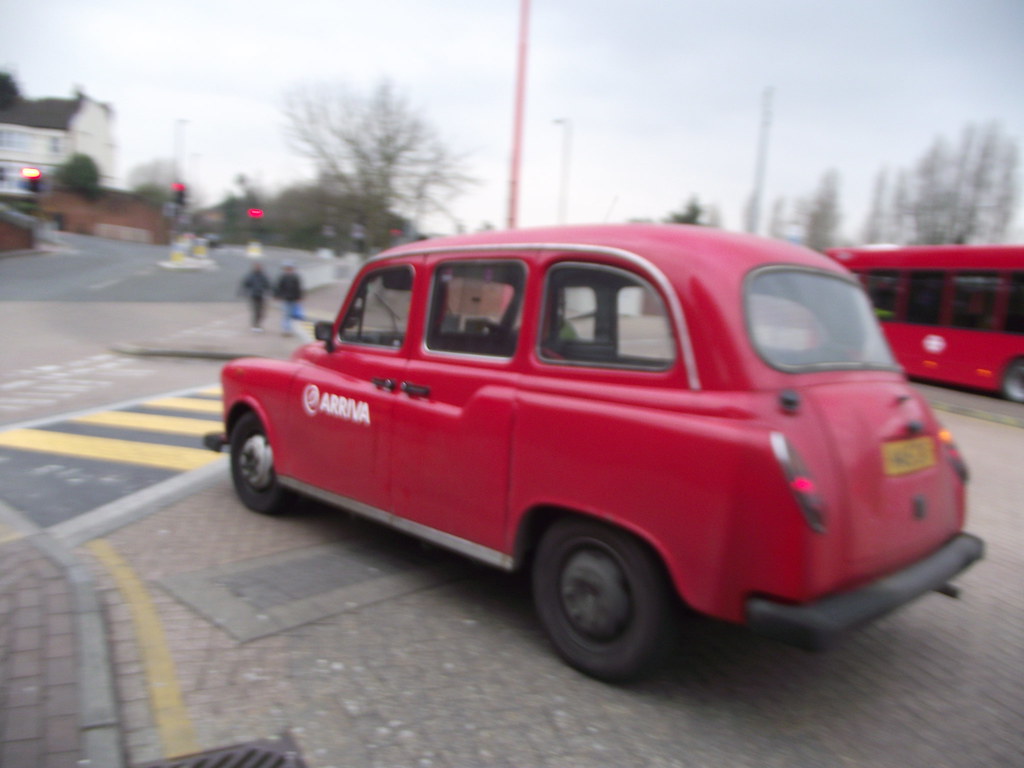
Arriva also used to use old taxis as crew ferry vehicles at some of their Shires depots including Aylesbury, Luton, Stevenage and Wycombe. Below are some links to Flickr pages showing these taxis with Arriva branding.


Mark L

Member
Joined
12 Dec 2023
Messages
324
Location
West London
Many years ago when on holiday in Cyprus I went for a bus ride to Ayia Napa from Larnaca. Part of the Route went through the Sovereign Base Area at Dhekelia. Back then there were soldiers on duty at the entrances to the base. It seemed so different to catching a bus in London. I would imagine things are different these days.
During the Second World War London Transport ran route 410 in two sections - Bromley North to Leaves Green and Biggin Hill village to Reigate. This was because buses were not permitted to run along the section of road that skirted the airfield. I suspect it was probably closed to all traffic but can’t confirm this.
 

MotCO

Established Member
Joined
25 Aug 2014
Messages
6,140
During the Second World War London Transport ran route 410 in two sections - Bromley North to Leaves Green and Biggin Hill village to Reigate. This was because buses were not permitted to run along the section of road that skirted the airfield. I suspect it was probably closed to all traffic but can’t confirm this.

Was it restricted only at night, and there was a fear that the cabin lights might show the location of the airfield?
 

TheGrandWazoo

Veteran Member
Joined
18 Feb 2013
Messages
23,023
Location
Somerset with international travel (e.g. across th
A couple of fuelling quirks from back in the day, courtesy of United Auto.

United closed Northallerton depot, instead having a yard near Northallerton station. All the buses were cycled through Darlington (the home depot), Richmond or Stokesley in the course of their normal runs, and were fuelled at those depots... except the minibus that did the town service. It needed a dedicated journey that ran at 1850 non-stop to Darlington where the driver would have a break whilst the minibus was either fuelled or swapped out for another, ready to return 50 mins later, again direct down the A167.

More odd was one of the boards at Richmond depot. The depot was located on the main road out towards Catterick. The main 27 service evidently had one board that was beyond the capability of a VR's fuel tank so the bus would divert in, get fuelled whilst passengers were on the bus, and then reverse back out into the depot yard before continuing to Darlington!
 

Mark L

Member
Joined
12 Dec 2023
Messages
324
Location
West London
Was it restricted only at night, and there was a fear that the cabin lights might show the location of the airfield?
In Volume 1 of his “Country Buses” trilogy Lawrie Akehurst notes that the road passing the airfield was closed on 26 May 1940 to allow for its expansion. Initially the northern section of the route continued to be run from Godstone garage with buses running dead via Riverhead but from 10 July responsibility for this part transferred to Dunton Green. From 23 June until 14 January 1842 the two sections were linked by route 410B which ran via the back lanes and used a Leyland Cub. Through running was reinstated on 14 January but buses carried a sentry for the section of road that had previously been out of bounds.

Akehurst notes that a similar situation arose at North Weald but that there isn’t much detail about how this affected services. I’m guessing that as the 410 served Reigate, the centre of the country bus universe it was better documented. He doesn’t, however, say when the requirement for a sentry was lifted - it may well have been “for the duration”
 

Roger1973

Member
Joined
5 Jul 2020
Messages
859
Location
Berkshire
Arriva also used to use old taxis as crew ferry vehicles at some of their Shires depots including Aylesbury, Luton, Stevenage and Wycombe. Below are some links to Flickr pages showing these taxis with Arriva branding.

Also from Dartford (which in recent years has either mainly or exclusively operated TFL services) and involves driver change-overs as far away as Eltham. Some photos (not my photos or Flickr accounts) at Eltham (here - Arriva branded) and Dartford (here - still in 'taxi black') - I think they use generic cars or MPV's now, I haven't noticed any taxis on recent visits to the patch.

An increasing number of London operators with remote garages use staff shuttle vehicles of one sort or another, in some cases they are 'self driven' by bus drivers, although this either means they have to be parked somewhere, or all drivers have to return to the garage for meal breaks. Some operators have shuttle vehicle drivers so that (bus driver) meal breaks can be taken at the change over point and the shuttle can return to garage empty (the saving in bus driver time / drivers' hours* must make this worthwhile.) Go-Ahead London tend towards 8 seater Mercedes minibuses, there's one visible on Street View at Tottenham Hale here, and one at Bromley North here.

* - I presume that driving a non PSV staff shuttle would count as 'other work' rather than (bus) 'driving time' as far as domestic drivers' hours are concerned, but not sure anyone has been challenged on this.
 

341o2

Established Member
Joined
17 Oct 2011
Messages
2,014
Hope this hasn't already been mentioned, the person who collected the fares was usually known as a conductor, but in Manchester was a guard.

In Yorkshire, at least, the booms of a trolleybus were known as ducks, and when they came off the wires, a duck hook was needed.

The St Helens trolleybus system used both hoghbridge and lowbridge trolleybuses, what if a highbridge trolleybus strayed onto a lowbridge route?
The solution was provided by R Edgley Cox, latterly of Walsall, to slew one of the wires which could be negotiated by a lowbridge trolleybus, but a highbridge trolleybus would dewire.

St Helens was also served by trolleybuses of the South Lancashire system, and from time to time it would be necessary to turn a bus where no wiring facilities existed. The solution was two pairs of poles joined by cables. They would be hooked over the wires and the trolleyheads, thus enabling the bus to turn under power.

Bournemouth's trolleybus turntable was almost unique, I have observed a conductress in high heels assisting the driver in turning the bus. I knew someone who insisted that it would be impossible to turn a bus by two people pushing.

The Isles of Scilly had Vic's Tours, operated by Vic Trenwith, a real natural comedian. One of the coaches he used had a blocked radiator core, the cooling system would pressurise and the top hose pop off.
Anticipating this, Vic would announce "Ladies and Gentlemen, this is a most unusual bus, because at any minute now, it will convert from petrol to steam"
I should add that there are only about three miles of road on the Scillies on the main island which may be used by buses, top speed around 20mph, and frequent stops would be made.
The incident is related about 14 minutes into this video of Vic Trenwith Isles of Scilly

 
Last edited:

Dwarfer1979

Member
Joined
24 Feb 2025
Messages
453
Location
Leicester
* - I presume that driving a non PSV staff shuttle would count as 'other work' rather than (bus) 'driving time' as far as domestic drivers' hours are concerned, but not sure anyone has been challenged on this.
Technically yes, though as a scheduler I tend to include it in my driving time calculation just in case they need to use a bus due to a shortage of ferry vehicles. A lot of operators use ferry cars, or mostly in our case vans, to get drivers from more remote depots to changeover points but I suspect few actually have spare ones to cover unavailability like they do for buses so when a ferry vehicle is off the road you are just scrambling around (sometimes borrowing a managers vehicle).
 

Mark L

Member
Joined
12 Dec 2023
Messages
324
Location
West London
The St Helens trolleybus system used both hoghbridge and lowbridge trolleybuses, what if a highbridge trolleybus strayed onto a lowbridge route?
Until the advent of low height (as opposed to low bridge) buses it was quite common for garages to have a mixed fleets. It was down to schedulers to ensure that the right bus was allocated to the right route with drivers acting as the back stop. Oxford always had an issue with the Botley Road bridge (now being rebuilt) - to try and mitigate the risk of a bridge strike full height double deckers have had fleet numbers in the 9XX series.
Bournemouth's trolleybus turntable was almost unique, I have observed a conductress in high heels assisting the driver in turning the bus. I knew someone who insisted that it would be impossible to turn a bus by two people pushing
There was also a trolleybus turntable on the Huddersfield system and, until fairly recently, in Solingen (which has the largest of the three trolleybus networks remaining in Germany).
 
Last edited:

341o2

Established Member
Joined
17 Oct 2011
Messages
2,014
Until the advent of low height (as opposed to low bridge) buses it was quite common for garages to have a mixed fleets. It was down to schedulers to ensure that the right bus was allocated to the right route with drivers acting as the back stop. Oxford always had an issue with the Botley Road bridge (now being rebuilt) - to try and mitigate the risk of a bridge strike full height double deckers have had fleet numbers in the 9XX series.

There was also a trolleybus turntable on the Huddersfield system and, until fairly recently, in Solingen (which has the largest of the three trolleybus networks remaining in Germany).
Also, a fourth at Guadalajara, Mexico, briefly used on two seperate occaisions during the 80's. The Huddersfield turntable was at Longwood. I note some sources incorrectly claiming that there were four trolleybus turntables in the UK. I thought the Longwood turntable became disused after a trolleybus went over the edge and fell onto the field below, rather than conductresses lacking the strength to push the bus round, and crews having problems with the blackout dsuring WW2.

This reminds me of the Nechells trolleybus route in Birmingham. It was isolated from the rest of the system, trolleybuses entering and coming out of service drew power from the tram wires, using a trailing skate on the rails to complete the circuit. Sparks from the skate contravened blackout regulations, so the trolleybuses were withdrawn, never to return.
 

geoffk

On Moderation
Joined
4 Aug 2010
Messages
3,933
Location
Exeter
In the past, there were some unusual instructions to passengers. "No spitting" signs were quite common, I think mostly in coal-mining areas (but I'm open to correction). A new one I've recently come across was on the upper deck above the front offside window of a preserved Devon General double decker - "Driver below, please do not stamp feet". I'm told by a former DG employee that it was a standard sign on all their double deckers but I've no idea if other operators had a similar one. Today, some operators prohibit food or drink being consumed on the bus - whether "drink" just means alcohol or includes tea and coffee is not clear.
 

Roger1973

Member
Joined
5 Jul 2020
Messages
859
Location
Berkshire
While I’m here, a quick question for those familiar with north Hampshire - I recall the 36 route from Basingstoke to Stoney Heath years ago

I think I have a Wilts + Dorset* timetable from the late 60s - I will try and find it and see if it sheds any light

* - for those not aware, the original Wilts + Dorset didn't have the same territory as the deregulation era company. Bournemouth / Poole (Bournemouth used to be in Hampshire until they mucked about with the counties) were in Hants + Dorset territory, Basingstoke was Wilts + Dorset territory despite being in Hampshire. I think this was a consequence of Venture (part of the Red and White group) passing in to the nationalised (mostly former Tillings group) operation, and it fitted more neatly in to W+D than any other operation, the Newbury and District operation passing in to Thames Valley's control.

Hope this hasn't already been mentioned, the person who collected the fares was usually known as a conductor, but in Manchester was a guard.

Think that may have been a north west England thing. I don't remember crew operation elsewhere in the north west, but Blackpool's conductors were often referred to as guards in the 1980s.

St Helens was also served by trolleybuses of the South Lancashire system, and from time to time it would be necessary to turn a bus where no wiring facilities existed

London trolleybuses (with a few exceptions) had traction batteries so could do some turns on battery power - these tended to be emergency short turn points rather than scheduled workings. One at 'Holly Park' (between Finchley and Golders Green) was used often enough to be photographed frequently - one on Flickr (not my account and of course not my photo) here. Some involved a longer 'round the block' turn, and I have read that in later days, when the traction batteries were not in best of condition, it was not unknown for trolleybuses to get stuck part way round.

Until the advent of low height (as opposed to low bridge) buses it was quite common for garages to have a mixed fleets. It was down to schedulers to ensure that the right bus was allocated to the right route with drivers acting as the back stop.

Some operators fitted different coloured steering wheels to try and remind drivers if they were driving a high-bridge bus (some did similar for 8 foot wide buses when they were a rarity) - photo showing highbridge Potteries bus complete with white steering wheel (SCT61 website) here.
 

Simon75

On Moderation
Joined
25 May 2016
Messages
1,531
In the early 2000s when Arriva North West, still had a garage at Crewe bus station, once the driver ssid to me (only one on thr bus) , that he had take the bus into bus wash before dropping me off !
 

izvor

Member
Joined
11 Jun 2014
Messages
596
Location
on the SER
There was also a trolleybus turntable on the Huddersfield system and, until fairly recently, in Solingen (which has the largest of the three trolleybus networks remaining in Germany).
I believe there was a bus turntable at the former Eastern station in St. Helier, Jersey.
 

Whisky Papa

Member
Joined
8 Aug 2019
Messages
744
Hope this hasn't already been mentioned, the person who collected the fares was usually known as a conductor, but in Manchester was a guard.

Since you've mentioned it, this brought back memories of many evenings of overtime 'guarding' buses in Manchester in the 1980s, having done a day in the schedules office earlier (except Saturdays, of course). As most boarding passengers reasonably expected to pay the driver, his repeated comment of 'There's a guard on' was not immediately understood by many, particularly students on the Wilmslow Road corridor.

It also highlights two other quirks of Manchester at the time. First, allowing office staff to drive and conduct buses for overtime on what were normally pay-as-you-board services. This was only permitted at some Manchester garages, and none of the surrounding districts would allow it. I don't know how common this was in the wider industry, although I was certainly asked if I was prepared to go conducting during an (obviously unsuccessful) 1980 interview for a traffic trainee post with Ribble .

Secondly, the remaining handful of conductors who had sufficient length of service not to be committed to go driving had to be found work. In addition to night services, most garages had a short daytime rota to accommodate them, even when all routes were nominally pay-as-you-board. Princess Road's four week rota was centred around working the 2300 252 to Partington, which was deemed unsafe for one-person operation. Northenden took a different approach - the handful of two-man* crews simply worked their way round the main one-person rota.

* - accurate, as Northenden had no female road staff at the time.
 
Status
Not open for further replies.

Top