Bletchleyite
Veteran Member
A thought I had yesterday evening in light of Saturday's events but also more generally.
It's well established that psychological barriers are quite effective. For instance, significant sums have been spent adding fast line barriers to local stations on the WCML despite the fact that these barriers are never actually locked (they are on some routes, but not on the WCML because trains can be diverted onto the slow lines at short notice). They do however provide a powerful psychological barrier to someone potentially in an unstable emotional state to entering the area resulting in harm to themselves and potentially others.
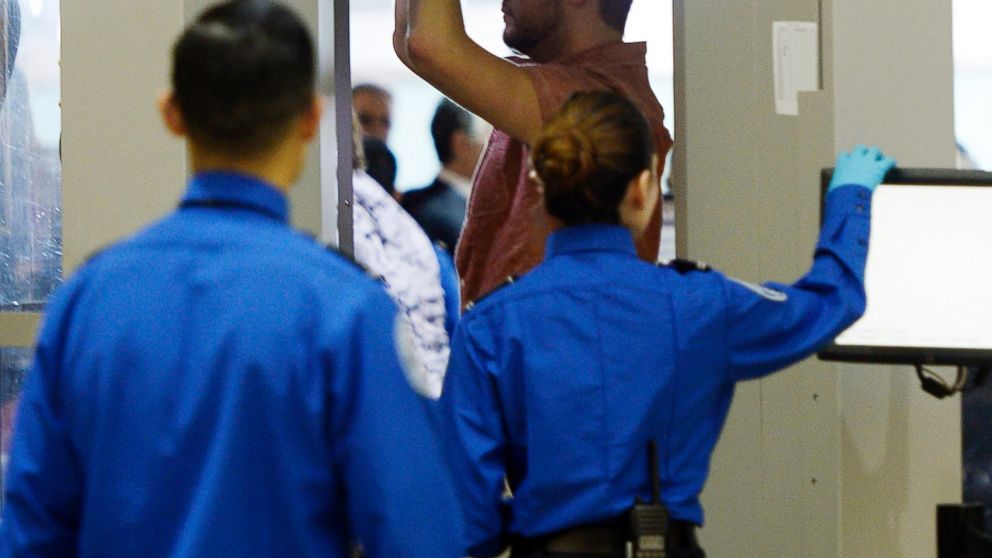
Aside from purpose built new stuff as per Spain and China (you could possibly install airport style security on the "Aston-Acton" HS2 setup if designed in from the start, for instance) most would recognise that this sort of thing is not a feasible response to things like this because of the number of stations that aren't airport style London termini (basically that's Euston, Euston and, er, Euston). The best you could do is put something on entering the station from outside, but then you'd create another vulnerability in the form of the queue itself (which is the reason for the near total ban on bags at gigs now rather than just having airport style scanners there).
But would someone up to no good stroll up to a booking office, plonk their weapon on the desk and casually buy a ticket? Clearly not. Within the London area they might tap in - unlikely, though - more likely is that they would in fact push through the gateline or stroll through an open one. It will be interesting to see which of these is the case here. But moving on from this specific instance, it's very normal for more minor antisocial behaviour like smoking/vaping, feet on seats, boisterous behaviour, playing music out loud, littering etc, plus worse but still petty crime like robberies, to be committed by people who do not hold a valid ticket, or indeed any ticket at all, not even a child single to the first stop.
So, do we need to harden gatelines? I am inclined to think we do. By that I mean we need to employ security staff whose role isn't to debate the nuances of the Routeing Guide and break of journey regulations, nor to shove bags through X ray machines (during which they're at risk of theft), but rather whose job it is to apprehend, physically if necessary, people who attempt to pass gatelines without anything even resembling a valid ticket. Do we need to employ those staff to keep gatelines closed for longer periods of the day even if they can do little more than let people through if there is a ticket validity question or let people out regardless? Do we need to harden the physical gatelines, with possibly full height barriers which can only be pushed through outwards but not inwards (and designed so if you're trapped between them the way to release is to back out and try again, not enter), potentially some kind of double gate? I am inclined to think yes.
If we don't allow petty offenders (blatent fare dodgers, not people who might be using their WMT Advance on Avanti or similar) into the system, then we will reduce antisocial behaviour and crime on the network. And security staff are quite cheap; it could well be viable to fund it by way of the reduced fare dodging and vandalism?
The LNER incident has been quite big in the news partly because intercity trains generally feel very safe. But more minor cases (e.g. muggings) do happen on the south London Southern and Southeastern services rather more often, and that is at least in part because these networks are to all intents and purposes fully open to the street, and similar issues exist in Germany where ticket barriers just aren't a thing, and it's also evident that there is far more vandalism and misuse of station toilets now it's free to use them, too. So is this a feasible improvement? I think it very much is, and at comparatively low cost, too.
It's well established that psychological barriers are quite effective. For instance, significant sums have been spent adding fast line barriers to local stations on the WCML despite the fact that these barriers are never actually locked (they are on some routes, but not on the WCML because trains can be diverted onto the slow lines at short notice). They do however provide a powerful psychological barrier to someone potentially in an unstable emotional state to entering the area resulting in harm to themselves and potentially others.
Aside from purpose built new stuff as per Spain and China (you could possibly install airport style security on the "Aston-Acton" HS2 setup if designed in from the start, for instance) most would recognise that this sort of thing is not a feasible response to things like this because of the number of stations that aren't airport style London termini (basically that's Euston, Euston and, er, Euston). The best you could do is put something on entering the station from outside, but then you'd create another vulnerability in the form of the queue itself (which is the reason for the near total ban on bags at gigs now rather than just having airport style scanners there).
But would someone up to no good stroll up to a booking office, plonk their weapon on the desk and casually buy a ticket? Clearly not. Within the London area they might tap in - unlikely, though - more likely is that they would in fact push through the gateline or stroll through an open one. It will be interesting to see which of these is the case here. But moving on from this specific instance, it's very normal for more minor antisocial behaviour like smoking/vaping, feet on seats, boisterous behaviour, playing music out loud, littering etc, plus worse but still petty crime like robberies, to be committed by people who do not hold a valid ticket, or indeed any ticket at all, not even a child single to the first stop.
So, do we need to harden gatelines? I am inclined to think we do. By that I mean we need to employ security staff whose role isn't to debate the nuances of the Routeing Guide and break of journey regulations, nor to shove bags through X ray machines (during which they're at risk of theft), but rather whose job it is to apprehend, physically if necessary, people who attempt to pass gatelines without anything even resembling a valid ticket. Do we need to employ those staff to keep gatelines closed for longer periods of the day even if they can do little more than let people through if there is a ticket validity question or let people out regardless? Do we need to harden the physical gatelines, with possibly full height barriers which can only be pushed through outwards but not inwards (and designed so if you're trapped between them the way to release is to back out and try again, not enter), potentially some kind of double gate? I am inclined to think yes.
If we don't allow petty offenders (blatent fare dodgers, not people who might be using their WMT Advance on Avanti or similar) into the system, then we will reduce antisocial behaviour and crime on the network. And security staff are quite cheap; it could well be viable to fund it by way of the reduced fare dodging and vandalism?
The LNER incident has been quite big in the news partly because intercity trains generally feel very safe. But more minor cases (e.g. muggings) do happen on the south London Southern and Southeastern services rather more often, and that is at least in part because these networks are to all intents and purposes fully open to the street, and similar issues exist in Germany where ticket barriers just aren't a thing, and it's also evident that there is far more vandalism and misuse of station toilets now it's free to use them, too. So is this a feasible improvement? I think it very much is, and at comparatively low cost, too.
Last edited: