DevonTrains
Member
I was wondering why signallers often don’t revert a signal back to danger well after a train has passed. For example, I was at Lostwithiel toad at and one signal was still at clear a good five minutes after the train had passed.

If nothing has been offered on from the previous box there’s no danger and there may well be more pressing immediate priorities. Indeed, IIRC an accident occurred at Hull in the 1920s to which one of the contributory factors was the speed at which signals were reset. Not many manually operated areas left where there’s that great a traffic density now. (The only ones I can think of where it might get close are Worcester, Shrewsbury and possibly Littlehampton and Bognor)I was wondering why signallers often don’t revert a signal back to danger well after a train has passed. For example, I was at Lostwithiel toad at and one signal was still at clear a good five minutes after the train had passed.

Beyond making a suitable entry in the Train Register Book there is no ‘paperwork’ for a signaller to fill out after causing a technical SPAR.Signallers MAY wait until there are no trains in their section before reverting them back to danger. Possibly mitigates them throwing the wrong lever back and having to fill out no end of paperwork!

Beyond making a suitable entry in the Train Register Book there is no ‘paperwork’ for a signaller to fill out after causing a technical SPAR.

At the other end of the scale, the home peg for Marchwood MoD spur, had been pulled back to danger whilst the loco here was still passing under it.I was wondering why signallers often don’t revert a signal back to danger well after a train has passed.
One should never replace the lever until the train is clear of any pointwork it protects.

I signal on a heritage railway and agree with this. The only times I set the signal back on the moment the train has passed are if I have got something else in section; this will usually be if I have got two engines to let out of the yard in the morning (Ok, so not technically a section), or if I have a light engine behind a train departing from a platform. Sequential locking doesn't help either of these two situations.I always saw it as good practice to replace a signal to Danger once the train was safely past, but not to be too hurried
One should never replace the lever until the train is clear of any pointwork it protects.
Again, agree with this, but if I have a track circuit interlock on the points I never think I am achieving very much by doing so. But yes, until a recent upgrade, one the boxes I work had no track circuits and it was a rule you had to be sure to obey. That location now has auto replacing semaphores - it's a bit freaky seeing the signal operate when I'm out of the box to exchange the token.That is the message I was taught .........
I hope you savoured the heritage atmosphere - only a couple of weeks left now, (and just two days at Truro I believe).I was wondering why signallers often don’t revert a signal back to danger well after a train has passed. For example, I was at Lostwithiel toad at and one signal was still at clear a good five minutes after the train had passed.

One should never replace the lever until the train is clear of any pointwork it protects.
Same here on the heritage railway I volunteer at.That is the message I was taught .........


Economy of movement. That's what I got taught on my first day in the box. Why get up 3 times when 1 will do.Perhaps he was waiting for Treverrin IBS to clear to save getting up twice!
Think that may have been precisely the lesson to be learned from the Hull accident I mentioned earlierThat is the message I was taught .........
Unless the marks were being takenEconomy of movement. That's what I got taught on my first day in the box.
 .
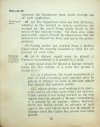
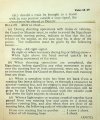
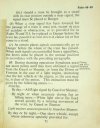
.1950 rule book rule 68
(a)'A stop signal must be placed at danger immediately the last vehicle if a train has passed it except (list of exceptions)
69(b) when a stop signal has been lowered for the passage of a train it must not ..... be placed at Danger before the train has passed it as laid down in clause (a) or has come to a stand.
I'll scan the rule and post on this thread, as what I have posted here is an edited version.
== Doublepost prevention - post automatically merged: ==
as promised...
page 071d.jpg is how it looks when you open the page. The owner has stuck a change over the top and that is image page071.jpg
But I think you have all of rule 68
Interesting example on how corrections were done in the old days. But then I remember correcting maritime stuff (charts, almanacs) in the first decade of the current century.
Similarly for me 10 years or so later. I used to think that with all those people spending time updating, it would be far cheaper overall just to re-issue the affected pages. Maybe it was so people were more likely to remember what had changed?I used to correct working documents in the late 1970's by the pasting in of inserts - a tedious job but one had to keep on top of it.

I used to correct working documents in the late 1970's by the pasting in of inserts - a tedious job but one had to keep on top of it.
Similarly for me 10 years or so later. I used to think that with all those people spending time updating, it would be far cheaper overall just to re-issue the affected pages. Maybe it was so people were more likely to remember what had changed?
I enjoy collecting the old rule books and comparing the changes pasted in. I don't work on the railways and unlikely to but just love reading the old rule books and appendices.Pasting in or hand writing amendments to the Rule Book continued until December 2013, which is surprisingly late really. I always quite enjoyed doing it.
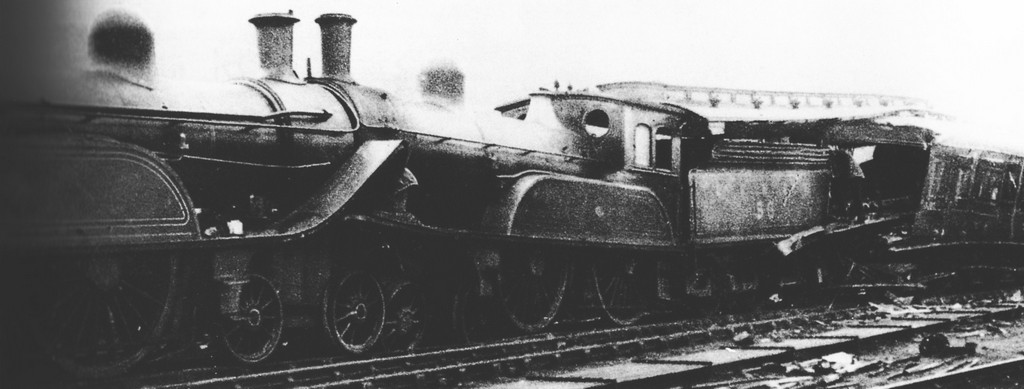
Quite so. 1927. The points were locked by the signal being at clear, or by a locking bar whciuh detected a train approaching the points. Somebody replaced the signal protecting the points, and in the 1.9 seconds it took the train to reach the locking bar, somebody else setting up a route for another train pulled the wrong lever and moved those points.Think that may have been precisely the lesson to be learned from the Hull accident I mentioned earlier
The rule book I have is proving to be a right pain to scan. Ho humMy recollection is that the replacement slips were either too wide, so had to be folded back and often ended up getting torn, or they were much longer than the original item and it was difficult not to cover over part of another one. The loose leaf was better, but still need a bit of care to avoid having odd pages in the wrong place.
I certainly did! Lostwithiel box goes next Monday! The lack of station announcements certainly helped with the atmosphereI hope you savoured the heritage atmosphere - only a couple of weeks left now, (and just two days at Truro I believe).