70014IronDuke
Established Member
- Joined
- 13 Jun 2015
- Messages
- 4,070

Summer Evening - Walk Home
The Douro as she once was - July, 1973
Canon FTb + 135mm Soligor
Copyright Iron Duke

Summer Evening - Walk Home
The Douro as she once was - July, 1973
What a wonderful shot!View attachment 199017
Summer Evening - Walk Home
The Douro as she once was - July, 1973
Canon FTb + 135mm Soligor
Copyright Iron Duke
No. It is the last train of the day to Barca D'Alva, the most easterly station on the line.A cross border service?...
Thank you kindly. For me, it kind of sums up the line. About 4 steam workings + the Bud Railcar each day, 35-38C temperatures, cheap vino in the odd village bars. Very lazy days!What a wonderful shot!
No. It is the last train of the day to Barca D'Alva, the most easterly station on the line.
It's leaving Covelinhas, which from memory is the first station east of Regua. It's about 18.15, at a guess. I think the train left Porto around 15.30.
Your question has made me think what the cross border service was like historically. All the years I knew the line - 1971-74 - there was only one cross-border train, and that was a RENFE DMU, little 2-car, I think. It connected with the Bud Railcar service from Porto (dep around 08.00, maybe) which got to the border around noon, maybe. The RENFE train arrived maybe 30 minutes later, turned around and left back for Salamanca after another wait. I think I went back into Spain this way three times.
There were never many passengers. The border region was striking in its barreness. I was only ever there in summer, but the overriding impression was of brown-yellow baked rocks for miles and miles. It felt as if it hadn't rained for a year or more. I suppose this wilderness went on for maybe 12-14 miles, then there were occasional hamlets, but nothing very serious until we joined the 'main line' from Salamanca into Portugal.
I thnk the entire line east of Regua, certainly east of Tua, would have given Richard Beeching a heart attack.
Thank you kindly. For me, it kind of sums up the line. About 4 steam workings + the Bud Railcar each day, 35-38C temperatures, cheap vino in the odd village bars. Very lazy days!
About 500 metres behind my back from where I took this pic, during that day a PW gang came by and pointed to a tree as I sat on the bank. "Figos" one cried. I looked at the tree none the wiser. So he picked this green thing and gave it to me. I didn't know what to do with it, so he picked another one and bit off the end. I'd never seen a fresh fig before! They were beautiful.
EDIT: I should add, Portugal at the time was horribly poor. They were fighting colonial wars in Mozambique and Angola, which drained an already weak economy. Of course, Porto was richer, but not rich. In the sticks, many people had very hard lives. They were sweet though. Times have changed. I never saw a tourist in the Douro Valley back then, not even another rail enthusiast.
Come to think of it, this may have been June, rather than July, not that it matters much!
Thank you for that detail. A lovely story.No. It is the last train of the day to Barca D'Alva, the most easterly station on the line.
It's leaving Covelinhas, which from memory is the first station east of Regua. It's about 18.15, at a guess. I think the train left Porto around 15.30.
Your question has made me think what the cross border service was like historically. All the years I knew the line - 1971-74 - there was only one cross-border train, and that was a RENFE DMU, little 2-car, I think. It connected with the Bud Railcar service from Porto (dep around 08.00, maybe) which got to the border around noon, maybe. The RENFE train arrived maybe 30 minutes later, turned around and left back for Salamanca after another wait. I think I went back into Spain this way three times.
There were never many passengers. The border region was striking in its barreness. I was only ever there in summer, but the overriding impression was of brown-yellow baked rocks for miles and miles. It felt as if it hadn't rained for a year or more. I suppose this wilderness went on for maybe 12-14 miles, then there were occasional hamlets, but nothing very serious until we joined the 'main line' from Salamanca into Portugal.
I thnk the entire line east of Regua, certainly east of Tua, would have given Richard Beeching a heart attack.
Thank you kindly. For me, it kind of sums up the line. About 4 steam workings + the Bud Railcar each day, 35-38C temperatures, cheap vino in the odd village bars. Very lazy days!
About 500 metres behind my back from where I took this pic, during that day a PW gang came by and pointed to a tree as I sat on the bank. "Figos" one cried. I looked at the tree none the wiser. So he picked this green thing and gave it to me. I didn't know what to do with it, so he picked another one and bit off the end. I'd never seen a fresh fig before! They were beautiful.
EDIT: I should add, Portugal at the time was horribly poor. They were fighting colonial wars in Mozambique and Angola, which drained an already weak economy. Of course, Porto was richer, but not rich. In the sticks, many people had very hard lives. They were sweet though. Times have changed. I never saw a tourist in the Douro Valley back then, not even another rail enthusiast.
Come to think of it, this may have been June, rather than July, not that it matters much!
The 'Sud Express' had a Porto portion from the '70s (not sure of the exact date) that ran via the Duoro - detached / attached at La Fuente de San Esteban. When RENFE closed their section of the line, it continued to run for a while to Porto via Pampilhosa.
Wow. Western Spain in 1968. Must have taken most of the day, that trip! Is the loco oil-fired, or still coal?I first visited the Douro line in 1968 and travelled from Barca d'Alva to Fuente de San Esteban on the once a day cross border train.
There were no through carriages from Porto conveyed and the only other passenger train on the line did not cross the border.
I was there during the last week of steam on the line and my photo shows 030-2568 at the Spanish border town of La Fregenada. There was plenty of time to take the photo while they sorted the passports out!
It was coal fired .Interesting. If it ran when I was visiting, then I must have forgotten about it. The main train I caught across Spain and into Portugal from Salamanca split somewhere near the coast, with a portion to Lisbon and another north to Porto. Sorry, it was probably about 06.00 in the morning, can't remember the names of the stations!
If I have forgotten, it's a bit strange, because on my first trip I didn't really want to go to Porto. That is to say, getting to the Douro directly would have appealed to me, I'd have thought. IT is true though that I was with some other guys who were 'normals' and only came with me for the adventure. Maybe we went via Porto for their sakes. As I remember, we arrived in Porto and split -they to do 'normal' holidays for 2-3 days, and me to be abnormal around Regua and Tua.
It must have been an awfully slow trip from La Fuente - and I doubt there would have been more than one or two passengers for the intermediate stations on the Douro Valley at best. Maybe close to Porto itself, I suppose, it's possible. Guest workers in Paris, perhaps. Did this Sud express start in Paris?
Wow. Western Spain in 1968. Must have taken most of the day, that trip! Is the loco oil-fired, or still coal?
According to a Wikipedia author, the Porto portion was introduced in 1974 - and through variable gauge couchettes had been introduced the previous year Paris - Lisbon. Sleeping car and seated passengers still had to change at Hendaye / Irun. I don't have access to my 'Cook's' at the mo - I'll report back to confirm with timings!Interesting. If it ran when I was visiting, then I must have forgotten about it. The main train I caught across Spain and into Portugal from Salamanca split somewhere near the coast, with a portion to Lisbon and another north to Porto. Sorry, it was probably about 06.00 in the morning, can't remember the names of the stations!
If I have forgotten, it's a bit strange, because on my first trip I didn't really want to go to Porto. That is to say, getting to the Douro directly would have appealed to me, I'd have thought. IT is true though that I was with some other guys who were 'normals' and only came with me for the adventure. Maybe we went via Porto for their sakes. As I remember, we arrived in Porto and split -they to do 'normal' holidays for 2-3 days, and me to be abnormal around Regua and Tua.
It must have been an awfully slow trip from La Fuente - and I doubt there would have been more than one or two passengers for the intermediate stations on the Douro Valley at best. Maybe close to Porto itself, I suppose, it's possible. Guest workers in Paris, perhaps. Did this Sud express start in Paris?
Wow. Western Spain in 1968. Must have taken most of the day, that trip! Is the loco oil-fired, or still coal?
It sometimes felt like the Wild West without the guns. At one station, I think it was Tua, there was a kind of 19th century supermarket. It was in some kind of barn type building where goods were piled up and you could buy everything from plastic buckets and soap powder to dried fish hanging from lines. (I think they got me sick that night, with dreadful results.)Thank you for that detail. A lovely story.
Yes, I have travelled to Portugal many times, and can remember how much poorer it was even 20 years ago. I can imagine it was a different world.


Ah, that's probably why I can't remember it. I did go to Porto in 1974, but focused on the Porto narrow gauge lines in the city suburbs, and missed the Douro that year. Maybe some of the workings had already gone diesel, which was a disincentive.According to Wiki the Porto portion was introduced in 1974 - and through variable gauge couchettes had been introduced the previous year Paris - Lisbon. Sleeping car and seated passengers still had to change at Hendaye / Irun. I don't have access to my 'Cook's' at the mo - I'll report back to confirm with timings!
Oh yes, probably hundreds of thousands! I used to get an SNCF train from Austerlitz at about 13.25 I think it was to Spain. (Was that the Sud Express you mention?) The routine was to find a window seat at an empty compartment, and 15 minutes before departure an entire family of Portuguese or Spanish worker would pile in. Immediately on departure, they would start eating and swilling down wine (and alway hospitably offering me some of their fare as we swished through the suburbs of southern Paris)!There were lot of Portuguese (and Spanish) workers in France during that era seeking better opportunities.
Must have been fun for the fireman - shovelling in the summer heat across the pass and then the plane towards Salamanca at 38CIt was coal fired .
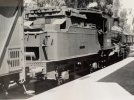
Here's another pic of the line, albeit rather bland - the kind of shot you could get any day. But you can't get it now!
Although the loco was coal-fired it wasn't coal as we new it. It was more like what we used to call "brickettes" ,I think.Must have been fun for the fireman - shovelling in the summer heat across the pass and then the plane towards Salamanca at 38C
The train from Barca d'Alba to Salamanca had come from Porto. This international train was the only one west of Barca d'Alba, there weren't any local ones on this section. Very wild country.Going back to the cross border trains at Barca d'Alba, I was there in July 1971, and having worked our way up from Porto visiting all the narrow gauge lines, we boarded a railcar which I recall ran only three days a week and we had to pay a supplement for our journey to Salamanca although it was the only service on this line!
I bought both CP and RENFE timetables, and kept them as a souvenir - will dig them out and see whether there were any intermediate stations between Barca d'Alba and Fuentes de San Esteban. I seem to recall one at Lumbrales.
Yes, a very poor country, but nice people.
Well said, I thoroughly agree - amazing photos, despite my being a confirmed diesel boy!This is all absolutely fascinating thank you all for sharing.
A reminder that it's worth taking pictures of the boring everyday stuff as well as things which are interesting. Someday what's normal now will have passed into history and pictures is all we'll have!
Henschel 2010. Loco 282 was still rotting in a scrap line a decade ago.It sometimes felt like the Wild West without the guns. At one station, I think it was Tua, there was a kind of 19th century supermarket. It was in some kind of barn type building where goods were piled up and you could buy everything from plastic buckets and soap powder to dried fish hanging from lines. (I think they got me sick that night, with dreadful results.)
By the way, looking at that photo again, it looks like the train being passed in the loop is a pw train with workers in an open wagon - probably the pw gang that had introduced me to 'figos'.
Here's another pic of the line, albeit rather bland - the kind of shot you could get any day. But you can't get it now!
View attachment 199246
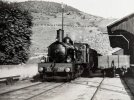
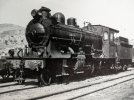
Two of CP's beautiful 'B12' 4-6-0s built by Henschel (or Borsig, I forget) which worked most trains east of Regua at the time. Here seen passing at Tua. I can't remember which year this was, but probably June 1973 as the pics looks sharp, so probably with the Canon FTb. Being the terminus of a metre-gauge branch line heading north, Tua was a little bit more busy for the photographer than random station stops, though nothing like as busy as Regua, of course. Copywrite IronDuke
Ah, that's probably why I can't remember it. I did go to Porto in 1974, but focused on the Porto narrow gauge lines in the city suburbs, and missed the Douro that year. Maybe some of the workings had already gone diesel, which was a disincentive.
Oh yes, probably hundreds of thousands! I used to get an SNCF train from Austerlitz at about 13.25 I think it was to Spain. (Was that the Sud Express you mention?) The routine was to find a window seat at an empty compartment, and 15 minutes before departure an entire family of Portuguese or Spanish worker would pile in. Immediately on departure, they would start eating and swilling down wine (and alway hospitably offering me some of their fare as we swished through the suburbs of southern Paris)!
However, I never really noticed anyone looking like guest workers going back to France using the RENFE DMU at Barca D'Alva. I suppose there might have been some at different times, or maybe I've just forgotten.
Happy Days!
Must have been fun for the fireman - shovelling in the summer heat across the pass and then the plane towards Salamanca at 38C
After the introduction of the through Budd railcar to to Salamanca the Douro line became more steamier. The other two railcar workings to Barca d'Alva reverted to being loco hauled and the then new EE diesels disappeared from the Douro line.To the enthusiasts delight the last member of a class of twelve 4-6-0's, no.268, built in 1903 by Fives-Lille, was brought up to Regua from the South and often worked the early morning mixed train to Pocinho. I also photographed this Henschel 4-6-0 no.211, which was brought up to Pocinho, but I never saw it working and doubt whether it ever did.Well said, I thoroughly agree - amazing photos, despite my being a confirmed diesel boy!
You had to pay a supplement for the CP Bud railcar, but surely not the RENFE unit that crossed the border surely? (I had free BR international tickets, and I can't remember having to pay anything extra, unlike, say the German 'D' expresses.Going back to the cross border trains at Barca d'Alba, I was there in July 1971, and having worked our way up from Porto visiting all the narrow gauge lines, we boarded a railcar which I recall ran only three days a week and we had to pay a supplement for our journey to Salamanca although it was the only service on this line!
I think there were one or perhaps two. Don Quixote stops. But on the plain, nothing for miles after you left Barca d'Alva in the mountains.I bought both CP and RENFE timetables, and kept them as a souvenir - will dig them out and see whether there were any intermediate stations between Barca d'Alba and Fuentes de San Esteban. I seem to recall one at Lumbrales.
Agreed, both Portugal and Spain. I remember in the back streets of Miranda d'Ebro a tiny glass of wine was Peseta 1. I think at the time it was something like £1 = Pts 150Yes, a very poor country, but nice people.
== Doublepost prevention - post automatically merged: ==
I don't think it had. As I wrote earlier, the Bud railcar terminated at Barca d'Alva from Porto. A bit later the RENFE DMU - also silver colour as I remember - arrived from Salamanca. After the respective crowds had alighted and boarded (I am joking, there were maybe half a dozen or so people on each train), I think the RENFE left first for Salamanca, and maybe 30 mins later the Bud for Porto.The train from Barca d'Alba to Salamanca had come from Porto. This international train was the only one west of Barca d'Alba, there weren't any local ones on this section. Very wild country.
Ah, very sad. Barrycao.Henschel 2010. Loco 282 was still rotting in a scrap line a decade ago.
The EE diesels still worked some Porto - Regua trains in '71, as I remember. I think with 2-6-4Ts and 2-8-4Ts in the peak? Or did they terminate before Regua?After the introduction of the through Budd railcar to to Salamanca the Douro line became more steamier. The other two railcar workings to Barca d'Alva reverted to being loco hauled and the then new EE diesels disappeared from the Douro line.
There was also 501 - a pacific - which was returned to traffic in 70 or '71. I saw it at Regua shed in summer 71. But it had a crash a bit later and was withdrawn, as I remember. No piccies, sorry.To the enthusiasts delight the last member of a class of twelve 4-6-0's, no.268, built in 1903 by Fives-Lille, was brought up to Regua from the South and often worked the early morning mixed train to Pocinho. I also photographed this Henschel 4-6-0 no.211, which was brought up to Pocinho, but I never saw it working and doubt whether it ever did.
Well said, I thoroughly agree - amazing photos, despite my being a confirmed diesel boy!

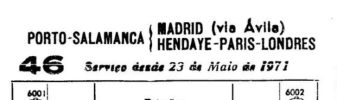
I've found the CP timetable from July 1971, and looked up table 25 'Linha do Douro'. It shows a train at 07.50 from Porto Sao Bento as a railcar arriving at Barca d'Alva at 12.20 and a note saying this train continued to Salamanca, so seems to have been a through train. This is confirmed in table 46 in the international part of the timetable, which also shows it as only running on Tuesdays and Saturdays.
The 'Sud Express' had a Porto portion from the '70s (not sure of the exact date) that ran via the Duoro - detached / attached at La Fuente de San Esteban. When RENFE closed their section of the line, it continued to run for a while to Porto via Pampilhosa.
It's not too nerdy at all, not at least for high quality nerdsI've found the CP timetable from July 1971, and looked up table 25 'Linha do Douro'. It shows a train at 07.50 from Porto Sao Bento as a railcar arriving at Barca d'Alva at 12.20 and a note saying this train continued to Salamanca, so seems to have been a through train. This is confirmed in table 46 in the international part of the timetable, which also shows it as only running on Tuesdays and Saturdays.
I also found my written notes of the trip; on 23rd July 1971 I rode this from Barca d'Alva to Salamanca - "13.10 (from Porto) Barca d'Alva to Salamanca". It was recorded as a 2 car dmu, but I did not make any note as to what sort of dmu. I didn't take any photos of it as steam was the purpose of the trip!
My notes record a customs and passport check at Fregeneda.
Hoping this isn't too nerdy!
Table 46 in the CP timetable shows the eastbound train arriving at Barca d'Alva at 13.20, leaving at 13.00 and arriving at Salamanca at 16.30 (presumably Spanish time) on Tuesdays and Saturdays. The westbound train is shown as leaving Salamanca at 13.55 and arriving at Barca d"Alba at 17.16, leaving for Porto at 17.35 on Wednesdays and Fridays. The trains are shown as railcars/dmus with first and second class accommodation.
Interestingly, table 46 also shows daily railcar/dmu trains between Fuente de San Esteban and Barca d'Alva, not running onto or from Porto. Leaving F de SA at 10.10 and arriving at Barca d'Alva at 12.30, returning at 15.15 to reach F de SA at 17.45. 'Classe unico', presumably a RENFE railcar/dmu.
The plot thickens!
I meant 12.20, not 13.20, as the arrival of the through train at Barca d'Alva.Table 46 in the CP timetable shows the eastbound train arriving at Barca d'Alva at 13.20, leaving at 13.00 and arriving at Salamanca at 16.30 (presumably Spanish time) on Tuesdays and Saturdays. The westbound train is shown as leaving Salamanca at 13.55 and arriving at Barca d"Alba at 17.16, leaving for Porto at 17.35 on Wednesdays and Fridays. The trains are shown as railcars/dmus with first and second class accommodation.
Interestingly, table 46 also shows daily railcar/dmu trains between Fuente de San Esteban and Barca d'Alva, not running onto or from Porto. Leaving F de SA at 10.10 and arriving at Barca d'Alva at 12.30, returning at 15.15 to reach F de SA at 17.45. 'Classe unico', presumably a RENFE railcar/dmu.
The plot thickens!
== Doublepost prevention - post automatically merged: ==
The Sud Express certainly did have coaches running across the break of gauge - in the form of Paris-Lisbon and Paris-Porto couchettes.I don't think it's possible to conclude if a service is s through train or not in Thomas Cooks at that time unless specifically indicated with a footnote showing through coaches.
For example the Sud Express is shown as if it's a through train but the footnote shows no through coaches running across the break of gauge (not too surprising).
The plot certainly does thicken. Well, I wrote to an old friend and asked him (in a neutral question) how he remembered the route - and he agreed with me. The connection was made with a RENFE DMU on the Spanish section. But I don't know when he 'did' the line. I have a suspicion that I (unusually) beat him to it and he did it in 1972.Table 46 in the CP timetable shows the eastbound train arriving at Barca d'Alva at 13.20, leaving at 13.00 and arriving at Salamanca at 16.30 (presumably Spanish time) on Tuesdays and Saturdays. The westbound train is shown as leaving Salamanca at 13.55 and arriving at Barca d"Alba at 17.16, leaving for Porto at 17.35 on Wednesdays and Fridays. The trains are shown as railcars/dmus with first and second class accommodation.
The plot may have thickened more than the number of passengers on that daily working! I suspect that by 1972, to cut costs, they decided to use the RENFE railcar to save the use of the CP Bud unit and send it back to Porto tout'dsuite.Interestingly, table 46 also shows daily railcar/dmu trains between Fuente de San Esteban and Barca d'Alva, not running onto or from Porto. Leaving F de SA at 10.10 and arriving at Barca d'Alva at 12.30, returning at 15.15 to reach F de SA at 17.45. 'Classe unico', presumably a RENFE railcar/dmu.
The plot thickens!
When trains don't run daily, and days of operation are shown by numbets in a circle, does (1) mean Sunday or Monday?
It does, despite Sunday being the first day of the week in Christian scripture and tradition.I'm sure I did know, but I can't remember now. Isn't there a guide at the front of the TT? I have a sneaking suspicion that in Catholic countries, the 1 (in a circle) refers to Monday, but I wouldn't bet on that.
General Franco did consider invading Portugal on several occasions - he even wrote a paper 'How to Invade Portugal in 72hrs' before he became 'El Caudillo'.The plot certainly does thicken. Well, I wrote to an old friend and asked him (in a neutral question) how he remembered the route - and he agreed with me. The connection was made with a RENFE DMU on the Spanish section. But I don't know when he 'did' the line. I have a suspicion that I (unusually) beat him to it and he did it in 1972.
So, if you say this is the timetable print out, I'm going to have to side with you. I can only guess that in July 1971 we went through to Salamanca with the Bud railcar, but in 72 and 73 it had changed to doing the CP bit only, and I'd forgotten the first trip. Thank you for clarifying this!
The plot may have thickened more than the number of passengers on that daily working! I suspect that by 1972, to cut costs, they decided to use the RENFE railcar to save the use of the CP Bud unit and send it back to Porto tout'dsuite.
As an aside, I had a friend who was - is - a go-go Spanish diplomat (Deputy head of Mission level, possibly ambo by now). He told me a decade back that apparently, pre-1974 revolution, the Portuguese government was obsessed with the idea that Spain wanted to invade and take over the country. Of course, having very limited knowledge of current affairs at the time - and it was hardly a subject the Times or Guardian of the day would cover, even less the tabloids - so I don't know how true this is even to this day, but my friend was no idle story teller. Not his nature. He thought the whole idea bizarre.
But it would imply - not that I think that any sane Spanish military planner would organise a major invasion over those barren mountains into Barca D'Alva, indeed, not even a raiding party - why CP of Portugal would not seek to enhance the frontier link with trains carrying mostly air over that awfully difficult terrain. And what for? Even the Port wine vineyards were some way off Barca!
I'm sure I did know, but I can't remember now. Isn't there a guide at the front of the TT? I have a sneaking suspicion that in Catholic countries, the 1 (in a circle) refers to Monday, but I wouldn't bet on that.


Thanks for this. I did wonder if anyone in here had any historical knowledge on the matter. I assume this is genuine, and not any allied propaganda of the time? Interesting that the Axis, ie primarily Germany, I suppose, denied any help. This is possibly one reason why he refused to let Hitler take Gibraltar - I mean to get his own back.General Franco did consider invading Portugal on several occasions - he even wrote a paper 'How to Invade Portugal in 72hrs' before he became 'El Caudillo'.
In 1940 he planned an invasion to take advantage of Britain's danger - but was denied Axis help. In 1974 after the "Carnation Revolutuon' in Portugal, he wanted to invade to 'restore order' but his grip was fading and he died the following year.
It is said that no broad-gauge lines closed during his tenure - he took the old view that they were strategic military assets to move troops around in the event of 'trouble'. It was not until 1985, 10yrs after his death, that there was a very significant closure programme.
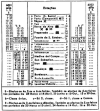
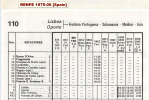
Thanks for these. Just reading some of the station names brings back floods of memories. Quite few stations in fact between Barca D'Alva and Fuentes on the Spanish side, all 'served' by one or two trains per day!September 1971 Portugal timetable.
Copied from timetableworld.com
== Doublepost prevention - post automatically merged: ==
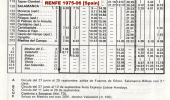
June 1975 RENFE timetable
Copied from timetableworld.com
Franco met Hitler at Hendaye in France in 1940 - there is rather chilling newsreel footage (can't link as on mobile) for the station has hardly changed since. Franco overplayed his hand with his 'demands' - Hitler famously said he would rather have teeth extracted than meet him again. Franco's train was interesting - hauled by a Norte 'crocodile' electric loco. On leaving the coaches snatched causing him to nearly fall over which gave Charlie Chaplin inspiration for the scene in the 'Great Dictator'!Thanks for this. I did wonder if anyone in here had any historical knowledge on the matter. I assume this is genuine, and not any allied propaganda of the time? Interesting that the Axis, ie primarily Germany, I suppose, denied any help. This is possibly one reason why he refused to let Hitler take Gibraltar - I mean to get his own back.
Presumably, in 1974, he saw the Portuguese revolution as a Marxist takeover and a crumbling of the old order - which, of course, in the latter bit, it was.
One wonders, why would Franco even think it was necessary or worthwhile trying to occupy Portugal. It was no threat to Spain, and in 1940 Spain must have still been in deep economic trouble. The last thing it needed was another war so soon after the disastrous (from an economic and human pov) Civil War.
However, it does beg the question why my friend the Spanish diplo didn't know about these various plans by Franco. He was/is, of course, very bright, and since he obviously had an interest, I'd have thought he'd have come across it somehow in his 35-odd years. If I get a chance, I'll ask him.
Thanks for these. Just reading some of the station names brings back floods of memories. Quite few stations in fact between Barca D'Alva and Fuentes on the Spanish side, all 'served' by one or two trains per day!