Clarence Yard
Established Member
- Joined
- 18 Dec 2014
- Messages
- 3,278
A 48DS weighs only about 7.5 tons. The larger and more numerous 88DS weighed between 17 and 20 tons.

48DSs are distinctly cute!A 48DS weighs only about 7.5 tons. The larger and more numerous 88DS weighed between 17 and 20 tons.
Thanks for the detail, and by the way those great photos. Yes I can see how you could miss that loco quite easily.Just as an example of the OH loco's used at some places, albeit not Clitheroe, but in this case Avenue Coking Plant at Chesterfield in 1989 and one of the pics I took of one of their OH line operated coke oven locos.
I could certainly imagine many of them being forgotten and even buried.Some locos survived in scrapyards for decades! (The Bug on the Romney Hythe & Dymchurch, for example, spent 22 years in a scrapyard before being rescued and restored.)
Sometimes because they were buried under scrap or because there was always something easier to hand to break up (which was pretty much what happened at Barry).
Thanks every one for the weights of these engines, they are certainly on the lighter side.A 48DS weighs only about 7.5 tons. The larger and more numerous 88DS weighed between 17 and 20 tons.


Baker and Civil were seriously good researchers and authors, particularly on matters relating to Bagnalls.Huncoat originally had two WB (William Bagnall) 0-4-0F engines, both arriving there new. They were WB 2989/51 and WB 3022/53 and neither now survive. In 12/58 Huncoat acquired HL 3746/29, a larger 0-6-0F from Slacks Valley electricity works and that is now preserved at Tanfield, arriving there in 11/82. Huncoat did acquire a diesel in later years of operation, a Fowler 0-4-0DM - JF 421011/47, arriving from Stuart Street Power Station in 11/72 and that was eventually scrapped too.
The main producer of fireless locos in this country was Andrew Barclay with WB and HL/RSH also contributing a few. Both Sentinel and Peckett had a go at entering the market in the 1950’s but were not successful, although the sole Peckett, P2155/55, survives today.
One of my former guvnors on BR, Allan Baker, wrote a very good book on fireless locos with his friend Allen Civil - Oakwood Press 97, published in 1976. In it, they explain the principals and go into the calculations to see if a loco needed one or two charges a day, depending on usage.
So the issue of range anxiety, so concerning to today's electric car drivers, is nothing new! I bet those caught in queues for chargers at motorway services wish they could manage, like their fireless forebears, on just one or two charges per day!One of my former guvnors on BR, Allan Baker, wrote a very good book on fireless locos with his friend Allen Civil - Oakwood Press 97, published in 1976. In it, they explain the principals and go into the calculations to see if a loco needed one or two charges a day, depending on usage.
Presumably the gas was contained and not floating around the place?I was just wondering about fire risk, that is, its been mentioned that Clitheroe gas works had an electric shunter for some time. What were the chances of sparks from its use at a gas works?
I remember once seeing in the Staffordshire countryside (at night) a high speed inter city train go past, you could clearly see the blue sparks as it went by, or is it at low speeds you don't get them? or am I on the wrong track (no pun intended!).
Fire risk virtually zero - any gas escaping into open air would go straight up. I would expect there to be some sparking - the overhead line would probably suffer the effects of local air contamination, and tram-type systems are noted for sparking. I can just remember the last trams running in London, plus more recent visits to the National Tramways Museum at Crich.I was just wondering about fire risk, that is, its been mentioned that Clitheroe gas works had an electric shunter for some time. What were the chances of sparks from its use at a gas works?
I remember once seeing in the Staffordshire countryside (at night) a high speed inter city train go past, you could clearly see the blue sparks as it went by, or is it at low speeds you don't get them? or am I on the wrong track (no pun intended!).
Given the amount of coal being burnt in such places I doubt a few sparks would have been an issue.
Thanks, it was rather a stupid question on my part - sorry folks!Fire risk virtually zero
There are no stupid questions if genuinely asked.Thanks, it was rather a stupid question on my part - sorry folks!
Thanks, Andy.
 ), but that is based purely on what is in front of me - the map. Not saying there wasn't a narrow gauge system as well, and the kink I would take for just the way the points are laid (or a glitch in the mapping at the time?).
I've found a note in the National Archives suggesting that around 1927 the Great Harwood gasworks was expanded and that it was Accrington that became merely a storage point.Now I don't know what time period my friend is telling me about (must ask him) but these details are all that he knows about the gas work's engine. What I can tell you is that records show that by the mid 1930's Great Harwood gas works wasn't making town gas anymore, it was being used as a gas storage point, the gas from which came from Accrington.
Given the above facts, do you think this engine, "The Bug" was from the 1920's / '30s? or would you place it earlier or later?
He says it's battery powered, does that give us a clue / date as to when it might have been there?
Maybe the battery reference is a clue to how the over head engine at Clitheroe was powered?
On the above OS map, just inside the gas works yard there is a kind of 'kink' in the track. Do you think this is where the standard gauge stops and the narrow gauge starts? There doesn't seem to be much length of standard gauge inside the gas works yard - enough for a couple of mineral wagons?
What do you think?
Thanks, Andy.
A further note. Some press coverage suggests that the rebuild at Great Harwood (and closure of Accrington) was first suggested in 1919, work was approved in 1920 and was completed by 1923.I've found a note in the National Archives suggesting that around 1927 the Great Harwood gasworks was expanded and that it was Accrington that became merely a storage point.
Yes, you can't tell if there were two gauges along side each other inside the gas works from that OS map. I'm not aware of any books covering the gas works there which is a great pity. P.S. Don't worry about the spelling, if anyone can get that wrong it's me!If two gauges were involved, there would be a point where both ran parallel to each other (I would have thought?) for easy interchange of wagon loads.
Are there any books, you know the one's, "xxxx (town) in old photographs" knocking about, that just might have the odd photo of the works? Just a thought.
Bold: spelling error corrected. Sorry folks..
Not for the first time it seems I've got the facts the wrong way around.I've found a note in the National Archives suggesting that around 1927 the Great Harwood gasworks was expanded and that it was Accrington that became merely a storage point.
Thanks so much, that's great detective work, thanks for the time and effort finding out these details, looks like circa 1923 for the gas works engine. This ties in with my L&Y society book regarding the branch line who suggested 1922 / 24, which makes 1923 bang on.A further note. Some press coverage suggests that the rebuild at Great Harwood (and closure of Accrington) was first suggested in 1919, work was approved in 1920 and was completed by 1923.
The project was priced up at £137k and included work to "complete railway connections" and purchase of an "electric storage battery locomotive", the latter costed at £2,500.
So, it would appear, the battery loco dated from c.1923
Re motive power, just a guess, but steam seems the most likely choice in 1904. Nice little tank engine? It seems improbable that there would have been much enthusiasm for cable haulage across a thoroughfare.Yes, you can't tell if there were two gauges along side each other inside the gas works from that OS map. I'm not aware of any books covering the gas works there which is a great pity. P.S. Don't worry about the spelling, if anyone can get that wrong it's me!
Not for the first time it seems I've got the facts the wrong way around.
Thanks so much, that's great detective work, thanks for the time and effort finding out these details, looks like circa 1923 for the gas works engine. This ties in with my L&Y society book regarding the branch line who suggested 1922 / 24, which makes 1923 bang on.
It looks like then that Great Harwood (GH) gas works were at the centre of the Accrington gas & water board's gas supply to the area. And it makes sense when you look at a general map of the area, GH is roughly a couple of miles (or so) from Accrington in the South, Whalley to its North, and Billington to its West which places GH roughly at the centre for the gas supply.
Back to sidings:
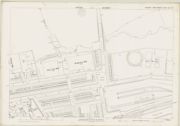
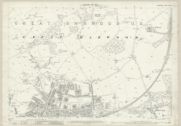
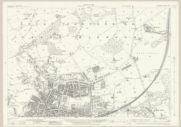
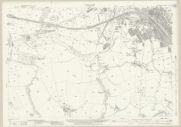
The 1890 OS map shows the gas works, only opened four years before. You can see there is only one gasometer (which by the way could hold 500,000 cubic feet of gas). Note there are (at this point) no internal sidings. The one siding on its own (bottom right of the map) was the only one at that time for the gas works.
Next, the 1909 map. Here you can see the gas works now has two gasometers and its basic internal track together with the line across Heys Lane connecting to GH goods yard.
And then the 1931 map, you can see the new internal track layout. Apparently the engine has its own shed but I can't see where it is on this map.
Motive power:
In 1904 the gas works at GH applied to Parliament to use mechanical power for the use of moving carriages and wagons across Heys Lane...
Questions:
As this is 1904 (passed 1905) it can't by the 1923 engine "The bug", so what kind of mechanical power would the gas works be thinking of? a steam loco? some sort of system with cables?
Before this date, I'm presuming they used horses to move the wagons across the lane?
A different question - The year this branch line opened fully (1877) the Accrington gas and water co purchased land right next to the railway goods yard so they could build the new gas works (completed 1884). Now once I came across the earlier OS maps (before 1909) I thought it very strange that the L&Y would purchase so much land for their goods yard when clearly they had more than enough space for their own needs... With that in mind, it looks like the gas company and the L&Y must have been planning to expand the goods yard for gas works use?
Sounds the most likely to me too.Re motive power, just a guess, but steam seems the most likely choice in 1904. Nice little tank engine?
Thanks so much for ploughing through those editions. must have taken a fair while, appreciated!Looking through the old IRS newsletters, the battery loco (no maker or build date stated) was reported as scrapped c/1953. The IRS don’t list a predecessor.
More than likely before any motive power was used it would surely have been done by horse power from the gas works side.The pre 1923 layout doesn’t look that extensive - it could well have been shunted by an L&Y engine with maybe a horse doing any internal moves.
I would have thought mixed gauge track to enable haulage of standard gauge wagons by a narrow gauge loco is unlikely. Before H&S was a thing, there were all sort of reasonably hair-raising practices to move wagons like fly shunting, connecting a loco to wagons on adjacent track with ropes or chains etc. Its just possible that the method of operating here was similarly creative.Sounds the most likely to me too.
Thanks so much for ploughing through those editions. must have taken a fair while, appreciated!
More than likely before any motive power was used it would surely have been done by horse power from the gas works side.
What I can say is that in 1947 the gas works had zero coal deliveries, but 3,000 tons of coke, they had to buy it in by then as no coal processed meant to coke as a by-product.
Also, in 1896 the L&Y and the gas works entered into an agreement for the L&Y to provide private sidings. Now I think that statement means the gas sidings in the railway goods yard which connected to a new head shunt. The L&Y simply called these "The gas sidings" - question - would these gas sidings in the railway yard be fenced off from the rest of the railway sidings?
Is it possible that for a short length inside the gas yard, the standard gauge track also had a third rail for the narrow gauge engine? that way the engine could move close to the gas yard rail entrance gate and pull the standard gauge mineral wagons in? and also push them back across Heys Lane? what do you think?
By the way, I remember those rails going across Heys Lane in the 1970's. My grandfather told me about the level crossing gates that used to be there to stop the traffic but were long gone by then.
Have we ever established that there was any narrow gauge track on the site?Sounds the most likely to me too.
Thanks so much for ploughing through those editions. must have taken a fair while, appreciated!
More than likely before any motive power was used it would surely have been done by horse power from the gas works side.
What I can say is that in 1947 the gas works had zero coal deliveries, but 3,000 tons of coke, they had to buy it in by then as no coal processed meant to coke as a by-product.
Also, in 1896 the L&Y and the gas works entered into an agreement for the L&Y to provide private sidings. Now I think that statement means the gas sidings in the railway goods yard which connected to a new head shunt. The L&Y simply called these "The gas sidings" - question - would these gas sidings in the railway yard be fenced off from the rest of the railway sidings?
Is it possible that for a short length inside the gas yard, the standard gauge track also had a third rail for the narrow gauge engine? that way the engine could move close to the gas yard rail entrance gate and pull the standard gauge mineral wagons in? and also push them back across Heys Lane? what do you think?
By the way, I remember those rails going across Heys Lane in the 1970's. My grandfather told me about the level crossing gates that used to be there to stop the traffic but were long gone by then.
No, not at all. MY L&Y society book about the line (1993) does not mention it as narrow gauge at all.Have we ever established that there was any narrow gauge track on the site?
That's the other point, most of the maps from that time period show a lot of specific detail and I can't see another track anywhere.The maps don't suggest any
Very possible indeed, something that an OS map might not bother with.Could it be that the narrow gauge rails were either in one of the buildings or entirely within an area marked on the map as a structure of some sort?
Me too, it was just a thought that popped up.I would have thought mixed gauge track to enable haulage of standard gauge wagons by a narrow gauge loco is unlikely.
Looking at the maps that would be my guess too (next to the weigh machine). Stuart Taylor says you could see the small engine shed next to Heys Lane as you approached the railway station by train.I don’t know if anyone has mentioned it, but could the building at the end of the siding alongside Heys Lane be a loco shed?
Vey possibly, this is the reason why I check and double check what I read from all sources.and could it be that your source was misremembering a small (standard gauge) loco and thinking it was narrow gauge?
I can well believe it, the best (most logical) one here would be a small steam loco for shunting and before that, horses. I know at Martholme colliery a horse was used to move empty mineral wagons from the line's sidings to the pit, and pull loaded ones back there, and this was in the 1920's.there were all sort of reasonably hair-raising practices to move wagons like fly shunting, connecting a loco to wagons on adjacent track with ropes or chains etc. Its just possible that the method of operating here was similarly creative.

I suspect that in 1967 your grandfather would have said railway station rather than "train station" which is something I never heard until about 20 years ago.No, not at all. MY L&Y society book about the line (1993) does not mention it as narrow gauge at all.
That's the other point, most of the maps from that time period show a lot of specific detail and I can't see another track anywhere.
Very possible indeed, something that an OS map might not bother with.
Me too, it was just a thought that popped up.
Looking at the maps that would be my guess too (next to the weigh machine). Stuart Taylor says you could see the small engine shed next to Heys Lane as you approached the railway station by train.
Vey possibly, this is the reason why I check and double check what I read from all sources.
Here is one example of where my source and I disagree (and please bare with me on this!)...
"Happy Christmas"
One afternoon at my grandparents house my grandfather said "lets go and see the train station". This made me very excited (at almost 18 months old). Off we went, as we walked down Railway View I noticed that all the houses we on my left with nothing on the other side but a stone wall.
As we walked, I could see small trees in the front windows, some had lights shining.
"Grandad, why are there trees in the windows?"
"It's Christmas"
After looking confused at him, he added
"It's when Father Christmas brings presents to little children"
This made me more excited and I wondered if this "Mr Christmas" might bring me one.
After seeing where the station once was we entered the goods yard, it was a bumpy ride as the push chair moved over the setts of the yard floor. We stopped at the western end of the goods shed. I could see right inside.
"Trains used to stop there" I was told. I couldn't see any only two men inside standing on the internal platform, one has a blow torch and was cutting something up.
We stayed watching for a few minutes until I was told it's time to go and "it's going dark now".
The point of me telling you all this is that my source says the goods shed was demolished by 1966 - what we saw was December 1967! The second point is that my grandfather was quite knowledgeable about the branch line. The third point is what I saw inside the shed is exactly how it's described and shown on the maps.
There are also other things we disagree on.
I can well believe it, the best (most logical) one here would be a small steam loco for shunting and before that, horses. I know at Martholme colliery a horse was used to move empty mineral wagons from the line's sidings to the pit, and pull loaded ones back there, and this was in the 1920's.
Either way, we can see the same pattern, that is railway company locos simply not being allowed to enter the private sidings without some sort of prior agreement.
It's a pity the IRS newsletters don't tell us the maker's name of this gas works loco and whether it was standard gauge or not.
With regards to this engine being scrapped circa 1953, by that date some restructuring was clearly going on. All the gas works around the country had been incorporated into one of the regional gas boards, this one into the North Western Gas Board.
Do you think 3,000 tons of coke delivered in 1947 would still have come in by rail?
and what was the common capacity of a mineral wagon around that time? 10. 12. 16 tons? I'm not too clued up on wagons at all.
I understand what you're saying, he said it in a way a very young child would have understood it, the word "train" to a little boy pricked my ears up much more than the word "railway" would have done but thanks for that.I suspect that in 1967 your grandfather would have said railway station rather than "train station" which is something I never heard until about 20 years ago.
I like the way you're thinking here but the answer is no, it didn't extend to the gas works there.We've previously seen there was a narrow gauge system linking some of the pits with the canal pier. Did that extend to the gas works?
The Padiham layout is a very simple tramway which I suspect was probably horse- (or even hand-) worked.That said, Padiham gas works did have a narrow gauge track running from the works there right into the railway goods yard. It was removed in 1956 I think when the that gas works stopped production of gas.
This narrow gauge track was extant at Padiham in 1931, but I have no details what so ever of what gauge it was or what engine was used? any one have any ideas?
Two observations though:
If you look at the map of Padiham circa 1931 you will see
1. The narrow gauge track from the gas works isn't (space wise) drawn any differently to the standard gauge tracks in the railway goods yard (or perhaps only a small difference?).
2. This narrow gauge track is actually marked as a tramway - something that the private sidings at Great Harwood gas works aren't?
Here is the map (look at the top right of the map).
Thanks very much for taking the time, effort and trouble to contact the society. Pity they don't have any details on this one.I've been in touch with the Industrial Railway Society and they have no record of a loco or locos at Great Harwood Gas Works so if it's passed them by it'll be very challenging for the rest of us!
They have said they will continue to search.
Funny you should say that, my contact / friend emailed me late yesterday after I asked a few more questions regarding the loco at Great Harwood gas works.And I still don't think any of the Great Harwood layout was narrow gauge.
There's a lot to go at there, so perhaps best I break it down!Thanks very much for taking the time, effort and trouble to contact the society. Pity they don't have any details on this one.
Funny you should say that, my contact / friend emailed me late yesterday after I asked a few more questions regarding the loco at Great Harwood gas works.
Bare in mind this was an email not a person to person conversation:
He tells me,
1. He has a drawing of the gas works.
2. The loco 0-4-0 is drawn in black (no year stated).
3. The above loco was No. 258 (perhaps a build number)?
4. A similar "Bug" shunter is in the Industrial and Science Museum, Manchester,
Now the confusing points!!
5. The Battery powered having central cab doors to either side, with gritted bodywork shaping down words to the buffer stops. The Great Harwood Bug was in Black. Built by: The English Electric Co. Ltd, London. Double number plate fixed on it, being 1378, built in 1944. Manufactured by Dick Kerr. The works being at Preston and it registered no. 258, date 1945 Great Western Railway. Co.
6. The gas works production area was to narrow between the all the building’s. This made it to narrow for standard gauge and it’s corner’s for a B.R. steam loco to be used as with a track to come from the good’s yard.
7. With the smaller gauge loco having it’s open wagon’s loaded to move about the Gas Work’s area then return to the Goods Yard.
8. And in the previous email - At the very beginning A standard track with loco’s did steam into the Gas Work side but then it created mega traffic problems , for traffic, buses coming into Great Harwood and also traffic come out i.e. Due to the size of the rail traffic. The answer was to change the track size plus using a “ Bug “ and open rail wagons. This being empties and loaded going into the gas work side
Questions:
Why would changing the internal gas works track gauge to narrow solve the traffic problems on Heys lane? or does he mean the connection across the lane was also altered to narrow?
Point 5 gives several details - is he talking about the same works loco or several over the years?
He doesn't tell me his source of information but perhaps the IR society might be interested in the details?
Can anyone tell me in plain English what he's telling me please!
A footnote - he tells me that in 1915 the gas works had 41,000 tons on coal delivered that year.
Help anyone!
Like you I don't understand how switching to n.g. would ease problems on Heys Lane. Indeed a narrower gauge with smaller wagons would surely make things worse!8. And in the previous email - At the very beginning A standard track with loco’s did steam into the Gas Work side but then it created mega traffic problems , for traffic, buses coming into Great Harwood and also traffic come out i.e. Due to the size of the rail traffic. The answer was to change the track size plus using a “ Bug “ and open rail wagons. This being empties and loaded going into the gas work side
Questions:
Why would changing the internal gas works track gauge to narrow solve the traffic problems on Heys lane? or does he mean the connection across the lane was also altered to narrow?
It seems odd that the Great Harwood loco was "258" which is also one of the numbers carried by the loco at Manchester ...Bare in mind this was an email not a person to person conversation:
He tells me,
1. He has a drawing of the gas works.
2. The loco 0-4-0 is drawn in black (no year stated).
3. The above loco was No. 258 (perhaps a build number)?
4. A similar "Bug" shunter is in the Industrial and Science Museum, Manchester,
Now the confusing points!!
5. The Battery powered having central cab doors to either side, with gritted bodywork shaping down words to the buffer stops. The Great Harwood Bug was in Black. Built by: The English Electric Co. Ltd, London. Double number plate fixed on it, being 1378, built in 1944. Manufactured by Dick Kerr. The works being at Preston and it registered no. 258, date 1945 Great Western Railway. Co.