Our new ticketing site is now live! Using either this or the original site (both powered by TrainSplit) helps support the running of the forum with every ticket purchase! Find out more and ask any questions/give us feedback in this thread!
Thanks - another great find @weepingwillowb Ever since @WesternLancer posted an "Anonymous", very early in this thread, I've searched for one here deep south. I have yet to find one!
Thanks - another great find @weepingwillowb Ever since @WesternLancer posted an "Anonymous", very early in this thread, I've searched for one here deep south. I have yet to find one!
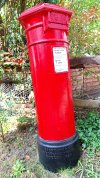
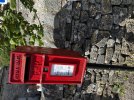
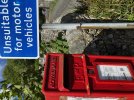
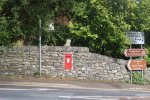
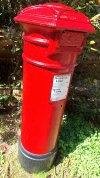
I'm lucky enough to live close to this lovely postbox which is in World's End, near Hambldon, Hampshire. I believe it's a First National Standard box from 1859.
Victorian rarities...
Yesterday's excellent insight from @weepingwillowb (thank you!) means two more styles ticked off my "within one hour drive" scope.
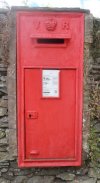
A hexagonal-capped First National Standard pillar box (dated 1859). This example is the Type B, of a thinner diameter than Brighton's octagonal-capped Type A upthread (link):
Similarly, there are post boxes to be found in Malta that still have a British monarch's details. On the boxes in Republic Street in Valletta they've been chiseled off, but in several other places no-one has been bothered about that and they remain as they were before the country became...
www.railforums.co.uk
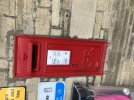
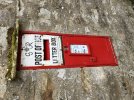
A Victoria-era Type B "Anonymous" pillar box (1879 to 1887), inadvertently lacking the royal cypher and the POST OFFICE legend. Its backstory is upthread (link)
A non-railway topic - but with a trait that resonates with railway lovers: "Gotta get them all" e.g. numbers, track routes, haulage. I've set myself a whimsical task, to find as many variations of free-standing (pillar) and wall post boxes within a radius "one hour's drive from home". A wall...
It's now just a couple of dozen houses, set back from a rural straight road.
The F.N.S. 1859-dated post box now stands, incongruously, at one house's driveway entrance!
Worlds End, these days, is only a mile or so from a very new housing development. The land around it, farmland, is sadly shrinking: yet more gets consumed for the residential sprawl.
Worlds End's name (as with similar named settlements) may originate from a dwelling or land-plot at the extreme edge of a parish; the "end of the world" for administrative purposes.
Another possible origin: their local industry was traditionally woodworking, so "World's End" perhaps designated the edge of this rural community, before the transition into the denser woodlands of the Forest of Bere.
It's now just a couple of dozen houses, set back from a rural straight road.
The F.N.S. 1859-dated post box now stands, incongruously, at one house's driveway entrance!
Worlds End, these days, is only a mile or so from a very new housing development. The land around it, farmland, is sadly shrinking: yet more gets consumed for the residential sprawl.
Worlds End's name (as with similar named settlements) may originate from a dwelling or land-plot at the extreme edge of a parish; the "end of the world" for administrative purposes.
Another possible origin: their local industry was traditionally woodworking, so "World's End" perhaps designated the edge of this rural community, before the transition into the denser woodlands of the Forest of Bere.
Fun fact...
The Victoria-era "Anonymous" pillar box (1879 to 1887) was cast inadvertently lacking VR royal cypher and POST OFFICE legend. Those boxes were also cast with posting aperture at two different heights.
- Early boxes had the aperture at a higher position - examples are shown on post 12 and post 275. Some of the public had difficulties using that height of aperture - and, being directly under pillar box's cap, it could impede hand / wrist access.
- Founder Handyside thus lowered their posting aperture on their casting - example is shown on post 269. This was the height used on other pillar boxes. Can you find both Anonymous styles?
The only postbox on the island of North Ronaldsay, Orkney. Sent myself a postcard on Sunday first class which I’m still waiting for, we will see when it arrives!
Edit: arrived this morning (8/5), so four working days since posting.
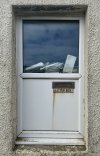
The island's only postbox is set into a window of [[4706045]]. It is a nice, and increasingly rare, example of what is known as a 'carpenter's box' - one that was locally made to suit, and clearly not a regular design. The window is also embellished with a whalebone.
www.geograph.org.uk
The whole island is rather old fashioned, it’s a wonderful place and already planning a return!
Here's one in Chichester's gloom today. Its solar panel cap is fitted the opposite way round to the example in post 101. I'll try the one in Emsworth on a better day. Thanks. That’s interesting to see. Mind you I hope the Victorian era ones near me don’t get that treatment.
www.railforums.co.uk
It's the official font on Skipton's box. G does look cast slightly higher than R, though, as you say.
Casting-moulds inevitably wore through use and things like door hinge-mounts seem to have been most suspectible to "go" first. In the case of cast cyphers - where new monarch's cypher might be "set" in an existing door mould - I wonder if the variation was due, simply, to who was doing it that day.
The George V wall box at Hinton Ampner, on post 261, is of narrower design to other W.T. Allen-cast GV wall boxes; and my gut tells me the crude G R mould was done by someone less-skilled, or lacking the cypher to refeence when cutting the mould for that size door.
Oooh - Ludlow wood-carcass wall box - they are my personal favourite style! Although Ludlows were introduced at the very end of Victoria's reign (post 44), they continued to be made through until Elizabeth II's reign (post 56).
That GVI enamel plate is the original. The George VI Ludlow boxes are, I understand, the second most rare after Edward VIII Ludlow boxes (the Victoria era Ludlow / Cole is an outlier in that context).
Casting-moulds inevitably wore through use and thinga like door hinge-mounts seem to have been most auspectible to "go" first. In the case of cast cyphers - where new monarch's cypher might be "set" in an existing door mould - I wonder if the variations were due, simply, to who was doing it that particular day.
The George V wall box at Hinton Ampner, on post 261, is of narrower design to other W.T. Allen-cast GV wall boxes; and my gut tells me the crude G R mould was done by someone less-skilled, or lacking the cypher to refeence when cutting the mould for that size door.
Oooh - Ludlow wood-carcass wall box - they are my personal favourite style! Although Ludlows were introduced at the very end of Victoria's reign (post 44), they continued to be made through until Elizabeth II's reign (post 56).
That GVI enamel plate is the original. The George VI Ludlow boxes are, I understand, the second most rare after Edward VIII Ludlow boxes.
Thanks. I bet that’s it. Just different craftsmen cutting the casting shape.
I’ll take closer look at the Ludlow box as I’m in the area. I took the pictures as I passed it in a hurry.
Could the small panel attached low down just be a repair, or some other purpose?
Almost certainly a repair. The doors on Ludlow boxes were (and likely still are) made of seasoned wood, so more risk of impact-damage. So that plate most likely protects and holds a wood-split / gouge.
Almost certainly a repair. The doors on Ludlow boxes were (and likely still are) made of seasoned wood, so more risk of impact-damage. So that plate most likely protects and holds a wood-split / gouge.
== Doublepost prevention - post automatically merged: ==
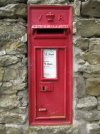
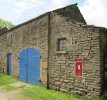
By pub at Kilnsey. Yorks Dales.
Pretty standard type of box. But cast front makes them seem significantly more robust than the modern equivalent recently introduced imho.
Great stuff, @WesternLancer - - that Elizabeth II lamp box dates post-1994, when the legend POST OFFICE (as per post 1's example) was changed to ROYAL MAIL.
Founder Machan (see linked post) is one I haven't seen on a lamp box yet. The ones I photographed for this thread, were cast by Carrondale or Carron.
Similarly, there are post boxes to be found in Malta that still have a British monarch's details. On the boxes in Republic Street in Valletta they've been chiseled off, but in several other places no-one has been bothered about that and they remain as they were before the country became...
Crafted from robust cast aluminium, and finished in an Irish green finish with gold detail for the text, as well as the harp motif. This slim line post box comes complete with a lockable front door to keep your post secure, and two sets of keys.Featuring a hooded aperture to ensure your post...
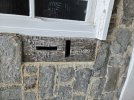
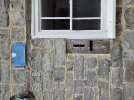
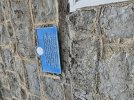
I was in Lyme Regis at the weekend where I spotted a very rough wooden box in a wall. The blue plaque above indicates it's in the old post office and is one of the oldest in the country - although not in use as such today. Lyme Regis was a Post Town by 1701 so the town would have been well acquainted with the workings of the Royal Mail
I was in Lyme Regis at the weekend where I spotted a very rough wooden box in a wall. The blue plaque above indicates it's in the old post office and is one of the oldest in the country - although not in use as such today. Lyme Regis was a Post Town by 1701 so the town would have been well acquainted with the workings of the Royal Mail
Amazing. I'd never heard of this before, thanks so much for sharing the photos.
== Doublepost prevention - post automatically merged: ==
In Northiam, Sussex.
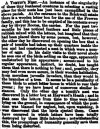
....A TOMTIT'S NEST.—An instance of the singularity of these tiny feathered creatures in selecting a resting place for their nests has just been exemplified in the above parish. At the entrance to the Brickwall estate there is a wooden letter box for the use of the Frewen family, and this has to be emptied of its contents every day by Sivyer Rootes, the carrier. For the past two months he has noticed feathers and little pieces of rubbish mixed with the letters, but imagined that they had been placed there by some person, but, however, the other day he discovered on opening the box that a pair of tomtits had taken up their quarters inside the box and had constructed a nest in which were a number of eggs. In his daily visits to their novel abode he sees one of the birds sitting on the eggs, apparently undisturbed by his appearance; accustomed to his regular appearance, instinct, no doubt, has taught them that there is nothing to fear; and, possibly, they may feel even more secure, in their wooden habitation from merciless juvenile invaders, than they would in the branches of a tree. It seems to be a peculiarity of these birds to select letter boxes in which to rear their young; for we have heard of numerous similar instances. Only the other day a tomtit's nest was discovered in a letter box at Hayward's Heath; and in that case the letters from time to time were found lying on the ground, in consequence of which the postman was blamed for neglect, but, upon watching, it was discovered that the birds ejected them. Cases have occurred in which letters have been totally destroyed by these little intruders; notwithstanding this, the promptings of humanity generally save them from being disturbed. [The Hastings and St. Leonards Observer, 11th May 1872]
Superb find @mailbyrail - I have found a little about its social history (the underlined bit)
Prior to the Postal Reform 1840 a recipient paid postage on received correspondence; the sender typically did not pay.
1600s
The postal system was still in its relative infancy.
To send a letter, you went to a Receiving House (was typically a local inn, or designated shop) and handed correspondence to the postmaster / clerk.
1700s
Sgnificant increase in correspondence and the requirements upon a postal service. Some busy Post Offices and coaching inns cut slits into their wooden door, or wall mounted wooden box. Deposited letters fell through the slit, into a secure box or chest inside.
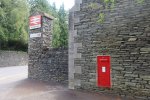
1) At the junction of Rayrigg Road (A592) and Ambleside Road (A591).
2) At the junction of Elleray Road and Church Street (A591)
3) On the north-west wall of Booths supermarket, on the site of the train shed.
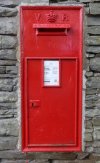
The large-capacity Victoria-monogrammed wall boxes are in great condition; and are a very similar design to the Edward VII wall box shown on post 1.
The George V wall box was cast by W.T Allen (London), it's the same narrow design as Hinton Ampner's (post 261) and has the same "not official" style of cypher - so that seems to support the hypothesis that @WesternLancer and I posed upthread.
1) At the junction of Rayrigg Road (A592) and Ambleside Road (A591).
2) At the junction of Elleray Road and Church Street (A591)
3) On the north-west wall of Booths supermarket, on the site of the train shed.
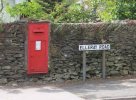
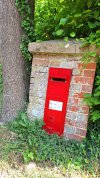
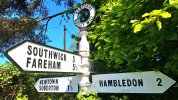
A delightfully dilapidated brick post for this Victoria era wall box, a variant seen in at least two other posts upthread. This rural spot, Rudley Mill, sports a four-way directional signpost; its style quite common across the South Downs areas within Hampshire and West Sussex.
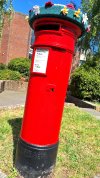
Another view of the First National Standard Type B pillar box (1859) at Worlds End. The image here, shows its cast pattern on its hexagonal-cap.
A delightfully dilapidated brick post for this Victoria era wall box, a vairant seen in at least two other posts upthread. This rural spot, Rudley Mill, sports a four-way directional signpost; its style quite common across the South Downs areas within Hampshire and West Sussex.
Another view of the First National Standard Type B pillar box (1859) at Worlds End. The image here, shows its cast pattern on its hexagonal-cap.
We are aware of an issue with emails from the Forum to Microsoft-based email accounts (hotmail/outlook/live.com email addresses). This is being looked into currently, thanks for your patience meanwhile.


Ever since @WesternLancer posted an "Anonymous", very early in this thread, I've searched for one here deep south. I have yet to find one!