
-
Our new ticketing site is now live! Using either this or the original site (both powered by TrainSplit) helps support the running of the forum with every ticket purchase! Find out more and ask any questions/give us feedback in this thread!
You are using an out of date browser. It may not display this or other websites correctly.
You should upgrade or use an alternative browser.
You should upgrade or use an alternative browser.
Poor Design Examples....
- Thread starter BecontreeD
- Start date
- Status
- Not open for further replies.

Sponsor Post - registered members do not see these adverts; click here to register, or click here to log in
R
RailUK Forums
In my experience those "World" type dryers blew cold air approximately 75% of the time. The Dysons were much better.Original Airblades are terrible. You have to put your hands in a slot full of accumulated grime and hold them very steady else you touch it and negate the point of having washed them to start with. The only good dryers were the old heated "World" type ones with the big button you were meant to hit with your elbow.
== Doublepost prevention - post automatically merged: ==
Having the door close sound at all doors is doubtless much less complicated in software and also possibly hardware terms. It is also potentially a useful safety feature.I tend to find the passenger DOOR OPEN and DOOR CLOSE buttons are sometimes a bit confusing. I find they're usually stacked vertically but sometimes the OPEN is at the top and other times the CLOSE is at the top.
I also don't like it when the doors are released by the train crew and then both buttons light up. To me that's the system suggesting pressing the CLOSE button to close a door that's already closed? Similarly when you open the door but the OPEN button remains illuminated.
While I'm on the subject I don't like it when the door close alarm sounds on a door which is already closed. I think the 170s do it correctly, which is if the door is open then it goes through the whole shebang, if the door is already closed (wasn't used at that station or was closed manually by a passenger) then the door interior light turns off and the door locks immediately, without the alarm etc process.
I can't see any use as a safety feature. Quite the opposite in fact - it replaces a specific door beeping about something that it's about to do with an obscure train-wide alarm which could mean anything.Having the door close sound at all doors is doubtless much less complicated in software and also possibly hardware terms. It is also potentially a useful safety feature.
Software and hardware shouldn't be s massive issue at all - the sensors and logic are already there, and it's easy enough to test, so you're basically taking about half a dozen lines of code

CaptainHaddock
Established Member
- Joined
- 10 Feb 2011
- Messages
- 2,730
I've mentioned it many a time in here but the worst design fault for me must be cycle spaces with pull down seats on trains such as 185s and 195s. This creates unnecessary conflict between passengers when you board with your bike and you find some prat has chosen to sit in the cycle space, even when there are other free seats available throughout the train.
fwsmVor
On Moderation
Specifically it replaces "this door is about to shut, so don't try to get on or off" with "THE TRAIN IS ABOUT TO LEAVE YOU BEHIND, RUUUN!".I can't see any use as a safety feature. Quite the opposite in fact - it replaces a specific door beeping about something that it's about to do with an obscure train-wide alarm which could mean anything.
Software and hardware shouldn't be s massive issue at all - the sensors and logic are already there, and it's easy enough to test, so you're basically taking about half a dozen lines of code
At least, that's how people treat it on 165/166s.

bramling
Veteran Member
Does anyone have any examples of poor design on train control panels etc or other railway infrastructure? I'll start with the DLR B92 stock, the AUX OFF button (basically Train OFF), is directly above the HEAT ON button, separated by 5mm!
Here's one that would appear to fit the bill. LU's 96 and 95 stocks have high speed circuit breakers protecting all the 630 volt equipment. The snag is that these circuit breakers are air operated, and the compressors are one of the pieces of equipment protected.
So essentially if the train is off current, once the air in the reservoir is used up, the circuit breakers can't be closed. What they did to work around this was provide a small secure reservoir of air, enough to get the breakers to close, which has to be manually operated by the driver when the train is off current for any length of time. This works to a point, providing (1) the driver remembers to do it before all the air is used up, (2) the driver can get to it as the cock is under seats, (3) the driver operates the right cock, and (4) there are no leaks in the system. If all else fails, car examiners have a foot pump which can be connected to a port to get the breakers to close that way.
To be fair the 96 and especially 95 stocks are a superb train otherwise, but this is a slight flaw, though everyone who needs to know *should* know and avoid being caught out, but it does still happen from time to time that someone has to be sent out with the pump.
CaptainHaddock
Established Member
- Joined
- 10 Feb 2011
- Messages
- 2,730
Has anyone mentioned the door controls on class 195s that light up red and read 'out of use' just before they turn green, meaning that passengers think the door isn't working so move down the train to the next exit?

Have to disagree on this one, purely because the system on the Turbo's is frankly utter rubbish. There's the buttons to open the internal doors, but most of the time the sensors, doors and switches will just do their own thing - It's not uncommon to see the slightly amusing frightened door where it goes so close to closing, before opening itself again.Interior doors that need a touch or push button to open.
158/159 internal doors are also rather slow to open and close.
I agree, the doors on 222 Meridians often used to have issues with the floor switches, and they would just constantly, repeatedly open and close. Very annoying on a long journey.Have to disagree on this one, purely because the system on the Turbo's is frankly utter rubbish. There's the buttons to open the internal doors, but most of the time the sensors, doors and switches will just do their own thing - It's not uncommon to see the slightly amusing frightened door where it goes so close to closing, before opening itself again.
158/159 internal doors are also rather slow to open and close.
Bletchleyite
Veteran Member
Buttons are better than them banging back and forth when standees are there, as per Mk2s and Mk3s.

It's one of those can't-cover-everything situations - I love the pressure-switch mats when I'm moving through the train with my hands full, but dislike them quite a bit when, as you say, they're constantly being activated by standees in the vestibule.Buttons are better than them banging back and forth when standees are there, as per Mk2s and Mk3s.
py_megapixel
Established Member
The ones on the IETs seem to be quite good. I think they use infrared sensors like automatic doors in buildings do, but they seem to be angled well enough not to trigger constantly.It's one of those can't-cover-everything situations - I love the pressure-switch mats when I'm moving through the train with my hands full, but dislike them quite a bit when, as you say, they're constantly being activated by standees in the vestibule.

CC 72100
Established Member
- Joined
- 23 Jan 2012
- Messages
- 3,852
Class 80x UAT sinks, where the sticker/labelling for the water isn't where the sensor is.
The sensor is actually a little way to the left and if you put your hand under the water label, you'll come to the conclusion that it's out of water.
Considering how much travelling I do on them, it took me a surprisingly long time to work that out.
The small toilets don't have that issue and the sensor is underneath the label.
The sensor is actually a little way to the left and if you put your hand under the water label, you'll come to the conclusion that it's out of water.
Considering how much travelling I do on them, it took me a surprisingly long time to work that out.
The small toilets don't have that issue and the sensor is underneath the label.

penguin8967
Member
The problem with them is having to get incredibly close to them before the sensor triggers as it's positioned very close to the door on the ceiling.The ones on the IETs seem to be quite good. I think they use infrared sensors like automatic doors in buildings do, but they seem to be angled well enough not to trigger constantly.

61653 HTAFC
Veteran Member
Interior doors that need a touch or push button to open.
Vestibule doors that are on a timer and close regardless of whether someone is in the doorway or not.
As a few have said, this is an awkward one. Whichever method is chosen it'll throw up issues at times. Some HST trailers had little toggle switches in the vestibules to lock the doors in the 'open' position, but there were probably rules preventing staff from using those when trains were full and standing. I did once hear of a group of anti-social passengers being shut into a carriage using those switches on a late-night St Pancras to Leeds service, but that could be apocryphal.Buttons are better than them banging back and forth when standees are there, as per Mk2s and Mk3s.

LOL The Irony
Established Member
The overhead luggage rack space on 185s underneath the HVAC unit is too small for a backpack, never mind a rucksack or carry on.
The lack of luggage racks on Northern's Civitys means luggage is left in inappropriate locations.
Every single Mk3 based rolling stock, especially the EMUs.
The entrances to the main concourse toilets at Manchester Piccadilly are a severe choke point, not helped by the location of the hand driers.
The lack of luggage racks on Northern's Civitys means luggage is left in inappropriate locations.
Every single Mk3 based rolling stock, especially the EMUs.
The entrances to the main concourse toilets at Manchester Piccadilly are a severe choke point, not helped by the location of the hand driers.
The class 315s manage it. Hardly cutting edge modern technology! I don't understand the safety concern. As soon as the driver or guard presses the door close button in the cab, all passenger door buttons are deactivated and the doors will not open. The Networkers as built, and probably all BREL units too, were more risky as pushing the open button during the hustle alarm sequence resulted in the doors opening part way before sliding shut again.Having the door close sound at all doors is doubtless much less complicated in software and also possibly hardware terms. It is also potentially a useful safety feature.
On a general note, it's amazing how peaceful the 315s are at Liverpool Street compared with the 345s. The latter have door open/close sounds going off constantly. No sooner does a set of doors close than a passenger pushes the button to reopen them.
== Doublepost prevention - post automatically merged: ==
At London termini the auto closing doors often counter productive. They cause people to panic if they arrive three or four minutes before departure because they think the train is about to depart without them.Specifically it replaces "this door is about to shut, so don't try to get on or off" with "THE TRAIN IS ABOUT TO LEAVE YOU BEHIND, RUUUN!".
At least, that's how people treat it on 165/166s.
As often used to happen on the 156s when they were new in the late 1980s. They had a passcom located beneath the WC bowl in what was thought to be an ideal location for disabled people but it was often mistaken for the flush so passengers would pull it and the train would come shuddering to a halt.No it’s not!
If the ‘user’ doesn’t put the seat down quite often they assume the passcomm all call for aid button is the flush!
uglymonkey
Member
- Joined
- 10 Aug 2018
- Messages
- 709
Not enough luggage space on the 800's , so that space at the end of the aisle gets cases in the aisle, the bike rake gets full of luggage and most important it means the tea trolley can't get past !
Purple Train
Established Member
It's great fun trying to reopen them before they squash the poor person in the doorway thoughVestibule doors that are on a timer and close regardless of whether someone is in the doorway or not.

Returning to topic, I would like to nominate practically everything about the Voyager, particularly window alignment/table issues, and the non-standard door alarms. They may be smooth-riding, comfortable 125mph units, but the seating layout is atrocious and the lack of carriages even more so - thank goodness XC have taken to letting them hunt in pairs.
Though I'm far too young to have experienced them, the original door handles on class 313 units (as-built until 1977 according to Wikipedia) were apparently liable to being operated even when the doors were locked - can anyone confirm this?
Bletchleyite
Veteran Member
Though I'm far too young to have experienced them, the original door handles on class 313 units (as-built until 1977 according to Wikipedia) were apparently liable to being operated even when the doors were locked - can anyone confirm this?
On all PEPs you can easily pull the doors open by about 6" or so, handles or no. I think people were doing this and damaging the mechanism.
davetheguard
Established Member
- Joined
- 10 Apr 2013
- Messages
- 1,939
Though I'm far too young to have experienced them, the original door handles on class 313 units (as-built until 1977 according to Wikipedia) were apparently liable to being operated even when the doors were locked - can anyone confirm this?
Yes, I experienced it at Moorgate on my first trip on the then-new units. I applied pressure on the handle as we ran in to the platform and to my amazement the doors opened slightly.
It was a bit like some of those older trains on the Paris Metro; although on those you can completely open the door before the train has stopped!
The same can be said about the entrances to the main concourse toilets at some other stations such as Sheffield.The entrances to the main concourse toilets at Manchester Piccadilly are a severe choke point, not helped by the location of the hand driers.
You’ve just been spoilt for the last couple of years with those StadlersBoth toilets on 158s seem so outdated now.


dk1
Veteran Member
You’ve just been spoilt for the last couple of years with those Stadlers
We certainly have mate. Most other UK trains are such a come down these days in comparison.

QueensCurve
Established Member
- Joined
- 22 Dec 2014
- Messages
- 2,203
The Voyagers and Pendolini have the door open and close buttons reversed.
Bletchleyite
Veteran Member
The Voyagers and Pendolini have the door open and close buttons reversed.
This is due to the BR convention, UK RVAR (Rail Vehicle Accessibility Regulations) and PRM-TSI being the opposite ways round (open at top, open at bottom then back to open at top).

Mikey C
Established Member
- Joined
- 11 Feb 2013
- Messages
- 8,281
If we're moaning about station toilets, the ones at London Bridge are awful for a no expense spared, completely rebuilt station.The same can be said about the entrances to the main concourse toilets at some other stations such as Sheffield.
Far too small and congested, with the urinals down one end, the sinks down the other (by the WCs) and the hand dryers located near the entrance.
Bletchleyite
Veteran Member
If we're moaning about station toilets, the ones at London Bridge are awful for a no expense spared, completely rebuilt station.
Far too small and congested, with the urinals down one end, the sinks down the other (by the WCs) and the hand dryers located near the entrance.
St Pancras are similar.
And at Euston...the design of the ventilation is hopelessly inadequate. I don't get why that is difficult to solve - the gents at least has an outside wall - drill a big hole and put a massive high speed extractor fan in! That's like half a day's job if that.

Rick1984
Member
- Joined
- 23 Aug 2012
- Messages
- 1,150
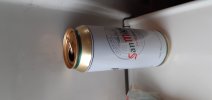
When you put a can on divet on Pendolino tray table it hits seat back and dissent sit properly.
On the plus side the a proper powerful ha d dryer. Talking Dyson strength nearly
Experienced the external door buttons beside internal door on a class 397 . Made worse by the fact button for internal door hidden away.
Edit
My bad the table just dropped a tad when I had weight on it and my beer is now sitting comfortably
On the plus side the a proper powerful ha d dryer. Talking Dyson strength nearly
Experienced the external door buttons beside internal door on a class 397 . Made worse by the fact button for internal door hidden away.
Edit
My bad the table just dropped a tad when I had weight on it and my beer is now sitting comfortably
Attachments
Last edited:
- Status
- Not open for further replies.