• Our new ticketing site is now live! Using either this or the original site (both powered by TrainSplit) helps support the running of the forum with every ticket purchase! Find out more and ask any questions/give us feedback in this thread!

Please help withthis jigsaw

Status
Not open for further replies.

pieguyrob

Member
Joined
27 Oct 2018
Messages
573
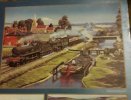
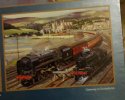
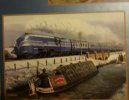
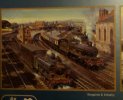
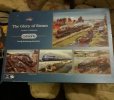
My dad has just received this jugsaw of our next door neighbour, I was wondering if you could help name the locations? Please?

== Doublepost prevention - post automatically merged: ==

I know one of the pictures is alongside the Kennet and Avon cannal. The coronation scot is alongside the grand union canal somewhere between London village and Birmingham town. Its where the br standard is and the double headed great western locos are I'm not to sure of. Any help please?
 

Attachments
  • 20221028_054306.jpg
    20221028_054306.jpg
    4.3 MB · Views: 214
  • 20221028_054332.jpg
    20221028_054332.jpg
    3.8 MB · Views: 207
  • 20221028_054355.jpg
    20221028_054355.jpg
    3.6 MB · Views: 194
  • 20221028_054418.jpg
    20221028_054418.jpg
    3.2 MB · Views: 198
  • 20221028_054444.jpg
    20221028_054444.jpg
    3.5 MB · Views: 213
Last edited:
Sponsor Post - registered members do not see these adverts; click here to register, or click here to log in
R

RailUK Forums

Harvester

Established Member
Joined
9 Nov 2020
Messages
1,741
Location
Notts
My dad has just received this jugsaw of our next door neighbour, I was wondering if you could help name the locations? Please?

== Doublepost prevention - post automatically merged: ==

I know one of the pictures is alongside the Kennet and Avon cannal. The coronation scot is alongside the grand union canal somewhere between London village and Birmingham town. Its where the br standard is and the double headed great western locos are I'm not to sure of. Any help please?
The last one showing the 4-6-0 (a Star?) passing the Pannier, is at Newton Abbot.
 

alistairlees

Established Member
Joined
29 Dec 2016
Messages
4,379
Here’s the blurb from Amazon which answers most of your question.

This Barry Freeman collection is perfect for any steam train enthusiastic! Each 500 piece puzzle depicts a different steam train scene for you to complete. In 'Sharing the Moment', a Plymouth Express races past the horse drawn barge, Unity, on her way to Hungerford. In 'Gateway to Snowdonia' the 'Britannia' class 4-6-2 No. 70045, soon to be named 'Lord Rowallan' coasts into Llandudno Junction station. 'Elegance & Industry' features a GWR 'Star' class 4-6-0 No. 4010 'Western Star' leaving for Paignton and Kingswear. And finally 'Winter Wayfarers' shows the 'Coronation Scot', hauled by Stanier "Pacific" No. 6221.Each of these scene have been painting by Barry Freeman, the established steam train artist. Following ten years in the Royal Navy and several years in the electronics and aviation industry, he took up teaching, drawing and painting before early retirement gave him the opportunity to become a professional artist. An avid railway enthusiast since childhood, his combined love of art and railways is reflected in the detailed paintings in which he now specialises. In 1995, Barry was elected a fellow of the Royal Society of Arts and is a former deputy president of the Guild of Railway Artists.
 

DelW

Established Member
Joined
15 Jan 2015
Messages
5,937
The GWR locos alongside the Kennet and Avon canal will be heading west around Bedwyn, west of Newbury.

The Coronation Scot is most likely alongside the Oxford Canal near Brinklow, east of Coventry. That would means it's on the Trent Valley line, not the line to Birmingham.

The Snowdonia view shows Conwy castle and bridge, viewed from Llandudno Junction. That's a few miles south of Llandudno itself, which is reached via the line going off to the right.
 

John Webb

Established Member
Joined
5 Jun 2010
Messages
3,746
Location
St Albans

Wychwood93

Member
Joined
25 Jan 2018
Messages
693
Location
Burton. Dorset.
The GWR locos alongside the Kennet and Avon canal will be heading west around Bedwyn, west of Newbury.

The Coronation Scot is most likely alongside the Oxford Canal near Brinklow, east of Coventry. That would means it's on the Trent Valley line, not the line to Birmingham.

The Snowdonia view shows Conwy castle and bridge, viewed from Llandudno Junction. That's a few miles south of Llandudno itself, which is reached via the line going off to the right.
GWR - I would say Little Bedwyn, with its church and footbridge.
 

pdeaves

Established Member
Joined
14 Sep 2014
Messages
5,932
Location
Gateway to the South West
Most pictures have been identified. I would add that, in the general case, 'nice picture' is the main thing and it may not be an accurate depiction of any one single place (taking elements of many places, or even no real place).
 

Taunton

Veteran Member
Joined
1 Aug 2013
Messages
12,220
The last one showing the 4-6-0 (a Star?) passing the Pannier, is at Newton Abbot.
Yes, it is a Star, by the shape of the cylinders etc. Pre-1948 as the locos don't have the BR numberplate on the smokebox. Train is signalled out of the Down main platform onto the Torbay line. The first coach is a GWR "concertina", with each of the compartment doors recessed, built in Churchward's era pre-WW1, they lasted to the early 1950s.

My guess by this sort of detail is the artist was working from a photograph taken from the Torquay Road footbridge. Here's the scene today:


30907

Veteran Member
Joined
30 Sep 2012
Messages
21,922
Location
Airedale
Most pictures have been identified. I would add that, in the general case, 'nice picture' is the main thing and it may not be an accurate depiction of any one single place (taking elements of many places, or even no real place).
In these cases, though, the locations are identifiable and correctly depicted and the locos and stock are at least plausible.
I wasn't sure about a double-header on the Berks and Hants, but David Heys has a couple of examples which are probably of balancing workings:
https://davidheyscollection.myshopb...m-diesel-photo-collection-97-great-way-west-2
 

Taunton

Veteran Member
Joined
1 Aug 2013
Messages
12,220
In these cases, though, the locations are identifiable and correctly depicted and the locos and stock are at least plausible.
I wasn't sure about a double-header on the Berks and Hants, but David Heys has a couple of examples which are probably of balancing workings:
https://davidheyscollection.myshopb...m-diesel-photo-collection-97-great-way-west-2
The GWR/WR were against double headers more than most others (notably the Midland, whose traditions also continued into BR days). On the Western it was an operating principle that an assisting engine be put INSIDE the train loco, which remained on the front and its Driver handled the train brake, as opposed to some likely Passed Fireman with little high speed driving experience handling the pilot. This of course meant extra shunting to get it in and out. More commonly, for an overweight train, if you had two engines and two loco crews, you ran a relief. Yes, there are various photos around of double headers, but I imagine it's over-represented in the photo files, from when photos were expensive and taken sparingly, as something of an unusual occurrence at the time. Yes, there were some places where a pilot on the front was standard, such as between Newton Abbot and Plymouth, but there the pilot crews did this every day (I believe around 1960 a D63xx in front of a King on the downhill charge through the Totnes dip was a real hoot!!).

Now having said that, the jigsaw picture shows a Saint in front of a Castle, so pilot in front, and I imagine the artist took this from reality rather than making it up. It is quite a long drag up from Newbury to the summit at Pewsey (the locks on the adjacent canal, also in the picture, are a bit of a giveaway for this), and so not unknown to have assistance, which had to come on at Reading. Likewise in the opposite direction Taunton occasionally supplied a pilot which was needed on the climb over the edge of the Mendips from Castle Cary to Westbury.
 
Last edited:

geoffk

On Moderation
Joined
4 Aug 2010
Messages
3,922
Location
Exeter
The GWR/WR were against double headers more than most others (notably the Midland, whose traditions also continued into BR days). On the Western it was an operating principle that an assisting engine be put INSIDE the train loco, which remained on the front and its Driver handled the train brake, as opposed to some likely Passed Fireman with little high speed driving experience handling the pilot. This of course meant extra shunting to get it in and out. More commonly, for an overweight train, if you had two engines and two loco crews, you ran a relief. Yes, there are various photos around of double headers, but I imagine it's over-represented in the photo files, from when photos were expensive and taken sparingly, as something of an unusual occurrence at the time. Yes, there were some places where a pilot on the front was standard, such as between Newton Abbot and Plymouth, but there the pilot crews did this every day (I believe around 1960 a D63xx in front of a King on the downhill charge through the Totnes dip was a real hoot!!).

Now having said that, the jigsaw picture shows a Saint in front of a Castle, so pilot in front, and I imagine the artist took this from reality rather than making it up. It is quite a long drag up from Newbury to the summit at Pewsey (the locks on the adjacent canal are a bit of a giveaway for this), and so not unknown to have assistance, which had to come on at Reading. Likewise in the opposite direction Taunton occasionally supplied a pilot which was needed on the climb over the edge of the Mendips from Castle Cary to Westbury.
I've read elsewhere that the GWR/WR required the pilot loco to go "inside" the train engine if it had no leading bogie or truck, otherwise it could go on the front. So, on the Cambrian line, a Collett 0-6-0 had to go behind the train engine but a Dukedog went in front. Taunton's explanation looks to be the more likely. On the South Devon banks and through the Severn Tunnel the pilot (usually a 2-6-2 tank) went on the front as the crews did this work regularly.
 

DerekC

Established Member
Joined
26 Oct 2015
Messages
2,432
Location
Hampshire (nearly a Hog)
I hope the OP won't mind me muscling in on his thread - but I wondered about this one. I found it in a tin in my parents' loft when clearing their house. Obviously a Duchess picking up water in early BR days (were any Duchesses ever BR blue?) but where? The track appears to be curved, but that would make water troughs very difficult, I would have thought!

IMG_5644.jpg
 

Gloster

Veteran Member
Joined
4 Sep 2020
Messages
12,940
Location
Up the creek
Googling bushey water troughs and choosing Images produces a lot of photos, the first of which is very similar except that the loco is an LNWR design 4-6-0.

Quite a few seem to have carried blue, although I can’t work out which features the one on the jigsaw has in order to limit the number of possibilities.
 

furnessvale

Established Member
Joined
14 Jul 2015
Messages
4,897
The Coronation Scot alongside part of the northern section of the Oxford Canal is just north of Brinklow.
This is a relatively recent view of the same stretch of canal:
Oxford Canal approaching Stretton Stop in Warwickshire

© Copyright Roger Kidd and licensed for reuse under this Creative Commons Licence.
Note the considerable increase in greenery! (Click on photo to go to the larger original on the Geograph website.)
At the risk of being pedantic, and also being wrong, I feel the location is a bit further north, just south of Shilton where the canal rejoins the railway for another mile or so. I think the 3 arch bridge over the river ties it down.

A favourite spot for me and my canal boat over the years.
 

Attachments

  • SANY0039.JPG
    SANY0039.JPG
    3.7 MB · Views: 18

John Webb

Established Member
Joined
5 Jun 2010
Messages
3,746
Location
St Albans
At the risk of being pedantic, and also being wrong, I feel the location is a bit further north, just south of Shilton where the canal rejoins the railway for another mile or so. I think the 3 arch bridge over the river ties it down.

A favourite spot for me and my canal boat over the years.
I think you are correct - I assumed the bridge was lost in the greenery! View here from 2015:
Oxford Canal at Hopsford Aqueduct

© Copyright David Martin and licensed for reuse under this Creative Commons Licence.
 

Ianigsy

Established Member
Joined
12 May 2015
Messages
1,345
Googling bushey water troughs and choosing Images produces a lot of photos, the first of which is very similar except that the loco is an LNWR design 4-6-0.

Quite a few seem to have carried blue, although I can’t work out which features the one on the jigsaw has in order to limit the number of possibilities.
It’s got the semi-streamlined smokebox and the nameplate looks like a Duchess of…. rather than a City of…. to me!

On the subject of pilot locos, I’m fairly sure that I’ve read of the North British doing this as well. I struggled to understand it for a while, until I realised that as Taunton says, the driver of the train engine remained in overall charge. I would imagine that in steam days in particular, it was a case of the time taken to add the additional loco being less than would be lost by allowing the train engine to go it alone.
 
Last edited:

52290

Member
Joined
23 Oct 2015
Messages
726
Googling bushey water troughs and choosing Images produces a lot of photos, the first of which is very similar except that the loco is an LNWR design 4-6-0.

Quite a few seem to have carried blue, although I can’t work out which features the one on the jigsaw has in order to limit the number of possibilities.
In my very early days as a Spotter, 1953/4, I remember seeing Duchesses in blue.
 

AndrewE

Established Member
Joined
9 Nov 2015
Messages
7,302
In my very early days as a Spotter, 1953/4, I remember seeing Duchesses in blue.
Apparently it ws an early BR experimental livery. We have a childrens picture book somewhere with a similar train going over the Forth Bridge. It always looked very odd to me, never having seen a steam loco in that livery.
 

Taunton

Veteran Member
Joined
1 Aug 2013
Messages
12,220
In my very early days as a Spotter, 1953/4, I remember seeing Duchesses in blue.
That was a different blue livery, the LMS streamlined locos had all had the casing removed by then, and been repainted in standard livery, but there was a further attempt in the very early BR days to have the largest express locos blue, passenger locos green. and all the rest black. Not many were painted in the blue before it was given up, and green used for those as well, but others like Western Region Kings had some done in blue. It lasted until their next repaint, which would take it into your timeline.

There was then a separate dispensation given for the Duchesses to now be red. I wonder if there was a time in the 1950s when all three colours were in use, and even more so whether anybody managed to get a, then rare, colour photo of the three together. About 15 years later the WR managed to have roughly equal numbers of red, blue and green Warships due to two changes of policy, and there are just a few colour photos of the three lined up.
 

52290

Member
Joined
23 Oct 2015
Messages
726
I think the last blue Duchess I saw was about 1955. The red livery was originally introduced for locos dedicated to the new Caledonian service between Euston and Glasgow in 1957or was it 1958?
 

Bevan Price

Established Member
Joined
22 Apr 2010
Messages
8,318
I think the last blue Duchess I saw was about 1955. The red livery was originally introduced for locos dedicated to the new Caledonian service between Euston and Glasgow in 1957or was it 1958?
Looking at the RCTS History of Stanier Pacifics, 5 Duchesses were painted in an experimental Dark Blue livery in May/June 1948
(46224/27/30/31/32/41) The last one in that livery (46230) was repainted in February 1952.

A lighter blue (described in the book as BR Blue livery) was applied to 25 Duchesses starting in June 1949 until June 1951; most were repainted green in 1952 to 1954, the last loco repainted green was 46254 in October 1955.

16 Duchesses were painted "Crimson Lake" (red) between December 1957 and November 1960.
 

Peter Mugridge

Veteran Member
Joined
8 Apr 2010
Messages
17,795
Location
Epsom
Enlarging it, it's 46246, City of Manchester.

Did that one receive blue livery, and was it a "semi"?

1669242517865.png
 

Bevan Price

Established Member
Joined
22 Apr 2010
Messages
8,318
Enlarging it, it's 46246, City of Manchester.

Did that one receive blue livery, and was it a "semi"?

View attachment 124214
46246 never received blue livery. It went from lined black (Nov. 1948 - June 1953) to BR Green, and then to Crimson Lake in June 1957.
Of course, "artistic licence" might have been used in the original painting - and the last word on the nameplate looks too short to have been Manchester.

Locos reported not to have received BR Standard Blue livery were 46230/32/34/36/38/45-48/51-53/57.

As an aside, many Duchesses retained their LMSR liveries for much of WW2, with a sudden burst of painting into plain black between December 1943 to December 1944; a few even escaped "plain black" and were painted in "lined black" between 1946 and May 1948.
 

Peter Mugridge

Veteran Member
Joined
8 Apr 2010
Messages
17,795
Location
Epsom
It's a pity the last digit is cut through by the piece join!

I wonder about 46240 City of Coventry? That was definitely a blue semi. If artistic licence is coming in to play, we probably can't really rely on the nameplate appearance either?
 

Bevan Price

Established Member
Joined
22 Apr 2010
Messages
8,318
It's a pity the last digit is cut through by the piece join!

I wonder about 46240 City of Coventry? That was definitely a blue semi. If artistic licence is coming in to play, we probably can't really rely on the nameplate appearance either?
The coaches definitely have "artistic licence". Vaguely LMSR Stanier coaches but with what look more like GWR-style roofboards.

As another aside, locos originally streamlined were (4)6220-29/35-49. When de-streamlined, they had distinctive front bolier casings, but those were often swapped after works visits, so it is impossible just to view photos and say that a loco had once been streamlined.
 
Status
Not open for further replies.

Top