• Our new ticketing site is now live! Using either this or the original site (both powered by TrainSplit) helps support the running of the forum with every ticket purchase! Find out more and ask any questions/give us feedback in this thread!

Pacers have a future.

Status
Not open for further replies.

Haydn1971

Established Member
Joined
11 Dec 2012
Messages
2,101
Location
Sheffield
Are you seriousley suggesting that we should put up with stock shortages, fewer seats and toiletless trains just so a minority don't have to ask the guard for assistance ? If you are, I would suggest you have your priorities wrong.

No, I'm afraid you have - equality means equal and independent access, making up excuses about stock shortages, fewer seats and toiletless trains is just a white wash over the needs of people who need equality in travel. Converting existing stock is a non starter, lessons from trams and overseas stock demonstrate that level access is possible with the appropriate rolling stock and platform alignment. It's not just wheelchair users, ever tried getting a child's buggy on or off a train ? It's easier on commuter style stock than express trains, but the difference in platform to train floor makes it difficult regardless.

Time for a rethink of how we use trains and time to get a large order in place before some bright spark takes this issue to the court of human rights.
--- old post above --- --- new post below ---
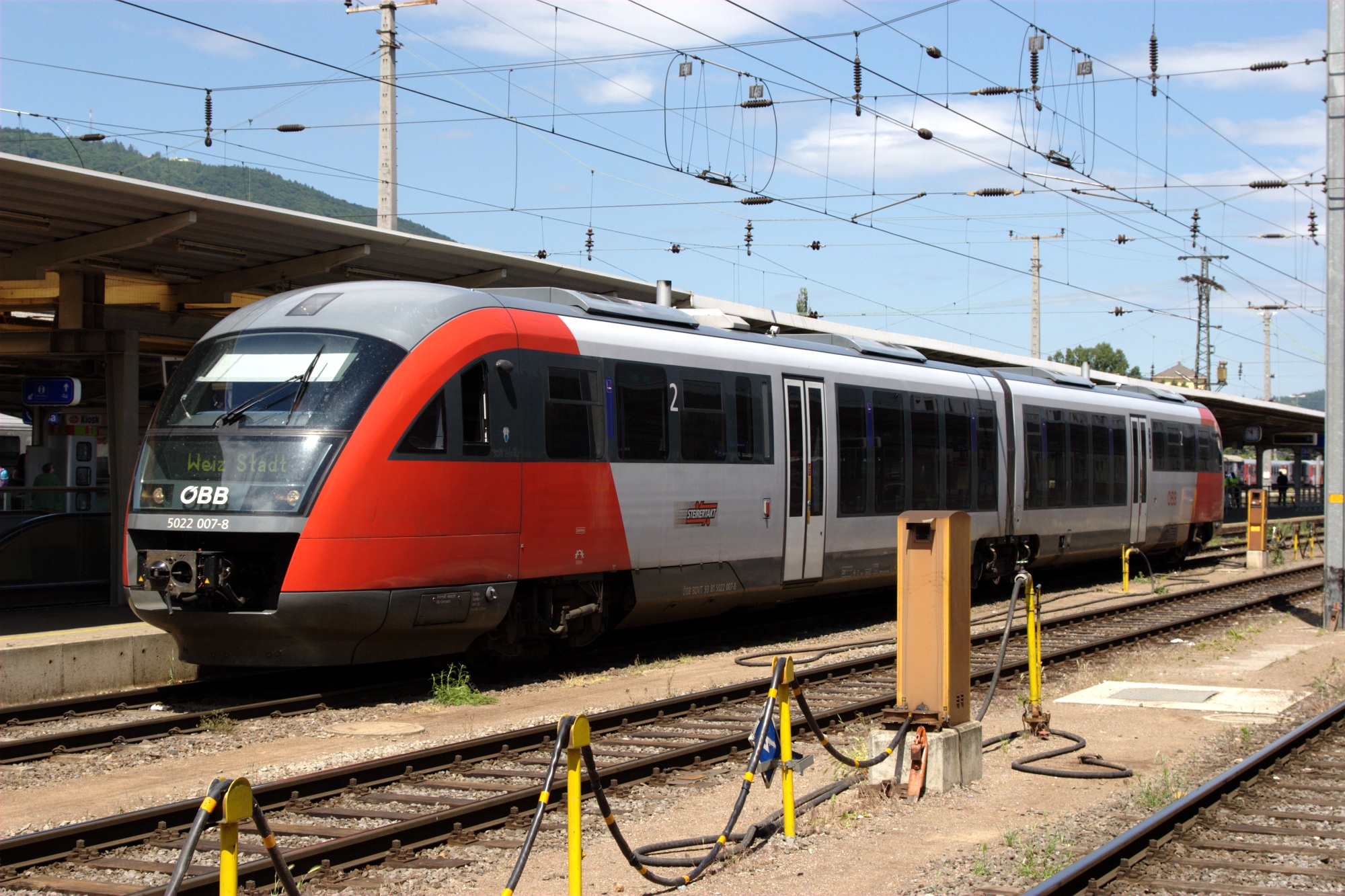
We don't even have to design something from first principles - Siemens already have a product ready to roll

5022007_graz.jpg
 
Sponsor Post - registered members do not see these adverts; click here to register, or click here to log in
R

RailUK Forums

Greybeard33

Established Member
Joined
18 Feb 2012
Messages
4,335
Location
Greater Manchester
That's great for mobility independence isn't it :-/

My idea of a vehicle that offers mobility equity to users is a vehicle that can get a mobility impaired passenger from the platform into the train without having to rely on someone else. At the moment, I can only think of one rail based vehicle that offers that capability, my local tramway in Sheffield. I'm sure there are some other trams, but I can't think of any trains that either have level access or a chair lift between levels that a passenger can use independently.

No, I'm afraid you have - equality means equal and independent access, making up excuses about stock shortages, fewer seats and toiletless trains is just a white wash over the needs of people who need equality in travel. Converting existing stock is a non starter, lessons from trams and overseas stock demonstrate that level access is possible with the appropriate rolling stock and platform alignment. It's not just wheelchair users, ever tried getting a child's buggy on or off a train ? It's easier on commuter style stock than express trains, but the difference in platform to train floor makes it difficult regardless.

Time for a rethink of how we use trains and time to get a large order in place before some bright spark takes this issue to the court of human rights.
--- old post above --- --- new post below ---
We don't even have to design something from first principles - Siemens already have a product ready to roll
UK platforms vary in height, and different classes of rolling stock (not just Pacers) have different floor heights. The infrastructure changes and rolling stock replacement programme required to provide level access at every station would be completely unaffordable - most of the network would have to close to passenger traffic. That is why the PRM-TSI requirements for level access only apply to new systems such as Sheffield Supertram, not to the legacy Victorian railway - the legislators tempered principles with practicality. Sometimes half a loaf is better than none.
 

Surreyman

Member
Joined
29 Jan 2012
Messages
1,020
Going slightly off topic here, what will be interesting is when the first cases of Train operators being taken to court post 2020 for being in breach of DDA laws.
(Applies to bus operators in 2015/2016/2017 as well).
I wonder what will happen when a wheelchair user is refused access to a train (lets assume they have booked and notified TOC in advance) because: -
Ramp is broken//unavailable?
Accessible toilet is 'out of order' etc.
Door controls are faulty.
Destination/Station stopping info defective.
Doubtless the TOCs will have trained/briefed all their staff.
Are their provisions in the legislation for mechanical/electrical breakdown?
Some interesting test cases in early 2020.
 

Haydn1971

Established Member
Joined
11 Dec 2012
Messages
2,101
Location
Sheffield
UK platforms vary in height, and different classes of rolling stock (not just Pacers) have different floor heights.

High time we ditched the Victorian shackles - it's a very defeatist attitude to say we can't do something because its too expensive - trains have a usable life of about 35-40 years, major stations get refurbished every 20-40 years, making excuses is why legislation has had to be made to ensure that all passengers are ultimately equal - the "too expensive" excuse doesn't wash anymore I'm afraid, lets set a platform standard that suits the majority of stations and work towards that ideal standard over the next 40-60 years - simple really
 

yorksrob

Veteran Member
Joined
6 Aug 2009
Messages
44,312
Location
Yorks
High time we ditched the Victorian shackles - it's a very defeatist attitude to say we can't do something because its too expensive - trains have a usable life of about 35-40 years, major stations get refurbished every 20-40 years, making excuses is why legislation has had to be made to ensure that all passengers are ultimately equal - the "too expensive" excuse doesn't wash anymore I'm afraid, lets set a platform standard that suits the majority of stations and work towards that ideal standard over the next 40-60 years - simple really

Indeed, but no ones suggesting that such things shouldn't be included in new built rolling stock. It's the particular issue of the Pacer fleet which is likely to still be around but not long enough to justify major expenditure. Dress it up anyway you like, but it's ultimately futile if we end up getting bitten in the backside by this legislation and everyone suffers because we have to remove seats, decommission toilets or even withdraw units when we don't have replacements ready.
 

HSTEd

Veteran Member
Joined
14 Jul 2011
Messages
20,284
High time we ditched the Victorian shackles - it's a very defeatist attitude to say we can't do something because its too expensive - trains have a usable life of about 35-40 years, major stations get refurbished every 20-40 years, making excuses is why legislation has had to be made to ensure that all passengers are ultimately equal - the "too expensive" excuse doesn't wash anymore I'm afraid, lets set a platform standard that suits the majority of stations and work towards that ideal standard over the next 40-60 years - simple really

What do you think we have been doing since nationalisation?
Every possible attempt to bring us closer to standard has been taken, but we could be at it for another century and still not reach this proposed goal.

And refurbishments don't tend to include complete demolition and reconstruction of platforms and all the supporting infrastructure, which is really what is required to achieve this goal.
 
Joined
6 Sep 2011
Messages
989
Location
Blackpool south Shore
High time we ditched the Victorian shackles - it's a very defeatist attitude to say we can't do something because its too expensive - trains have a usable life of about 35-40 years, major stations get refurbished every 20-40 years, making excuses is why legislation has had to be made to ensure that all passengers are ultimately equal - the "too expensive" excuse doesn't wash anymore I'm afraid, lets set a platform standard that suits the majority of stations and work towards that ideal standard over the next 40-60 years - simple really

Life of rolling stock is more like 50 - 60 years on Britain's railways!
Mk 1 built 1951–1963 still in use - steam specials etc.
Mk 2 built 1964.
Mk 3 from 1975 - 88, HST 1975
142 Pacer 1985 - 87
The majority of stations have had very little money spent on them, other than the removal of buildings, a bus type shelter replacement, general maintenance, and new signs.
If the only accessable toilet is out of order, should the Guard lock all the other toilets to ensure equality?
I expect there are more people with bladder problems, including expectant mums, than use wheelchairs!

The train in the photo - if you walk through the train you go up and down steps to cross the bogies. The wheelchair is parked next to the toilet.
 

Haydn1971

Established Member
Joined
11 Dec 2012
Messages
2,101
Location
Sheffield
Mk 1 built 1951–1963 still in use - steam specials etc.

Hardly what you could called a timetabled service and very limited numbers are actually running daily - I'd call this splitting hairs

Mk 2 built 1964.

Again, just how many of these are running on a daily basis ? Tens at most ?

Mk 3 from 1975 - 88, HST 1975

This was my baseline for age of services, currently the Mk3 carriage is anything from 38-25 years old - IEP will replace much of this rolling stock.

142 Pacer 1985 - 87

Not the oldest regular timetabled units, but notoriously the worst

The majority of stations have had very little money spent on them, other than the removal of buildings, a bus type shelter replacement, general maintenance, and new signs.

All stations have money spent on them as part of routine maintenance. You may not realise how much because most work is done when the statioms ard closed at night. I currently pay about £60 sq.m to place new footway over existing hard carriageway / footways on highways contracts - all stations will at some point require a renewed platform surface, many are currently uncomplient with standards anyways due to a lack of tactile edgings - it's not costly to sort and something that over a 20 year period could be integrated into the routine maintenance schedules for a large part of the network with priority to the least complient and most busy stations.

If the only accessable toilet is out of order, should the Guard lock all the other toilets to ensure equality?

Now your being silly and unrealistic - it's not unreasonable to expect to be disrupted by a faulty facility, it is unreasonable to have a daily blockage to leading a life on an equal basis.

I expect there are more people with bladder problems, including expectant mums, than use wheelchairs!

See above, regard the reasonable nature of getting around a faulty toilet vs a daily blockage of a discrimination against mobility impaired travellers - this is why many trains have more than one toilet

The train in the photo - if you walk through the train you go up and down steps to cross the bogies. The wheelchair is parked next to the toilet.

Access to a toilet is less of an issue on a short distance service - never the less, having a toilet in the lower floor area isn't beyond the wit of man, nor is actually having the station platforms at a level to accomodate direct access into current rolling stock - there is no excuse for the step except a shaking head of "it's always been like that, why change" - the rail industry needs to wake up before they get pulled over the coals for being discriminatory.

 

tbtc

Veteran Member
Joined
16 Dec 2008
Messages
18,052
Location
Reston City Centre
High time we ditched the Victorian shackles - it's a very defeatist attitude to say we can't do something because its too expensive - trains have a usable life of about 35-40 years, major stations get refurbished every 20-40 years, making excuses is why legislation has had to be made to ensure that all passengers are ultimately equal - the "too expensive" excuse doesn't wash anymore I'm afraid, lets set a platform standard that suits the majority of stations and work towards that ideal standard over the next 40-60 years - simple really

Now your being silly and unrealistic

Do you not see a slight contradiction between your first post and the second one?
 

Haydn1971

Established Member
Joined
11 Dec 2012
Messages
2,101
Location
Sheffield
Dress it up anyway you like, but it's ultimately futile if we end up getting bitten in the backside by this legislation and everyone suffers because we have to remove seats, decommission toilets or even withdraw units when we don't have replacements ready.

Unlike others on here, I'm not seeing any reason to block replacement of the Pacers and other end of life stock - the cash is there in the DfT, I've just been pulling together bids for a £130m fund to deal with pinch points on highways, I'm involved in transport fund bids in West & South Yorkshire worth £100m's, the Highways Agency are throwing £100m's at a few flashing lights to deal with a traffic growth problem, I'm working on a proposed tramway worth £300m, guys in my office are also busy on the Manchester routes at the moment, plus billions of £'s in numerous smaller schemes - to say we are broke isn't quite the picture I'm seeing through my work in transportation and traffic engineering. Time for an easy spend, £100m on a few new DMU's to start replacing the aging fleet.
--- old post above --- --- new post below ---
Do you not see a slight contradiction between your first post and the second one?

No, not in the slightest - we live in a modern world and need to move forward from ideas that should have been cast aside decades ago.

...And what I said was

Now your being silly and unrealistic - it's not unreasonable to expect to be disrupted by a faulty facility, it is unreasonable to have a daily blockage to leading a life on an equal basis.

It's a disgrace that in this modern world that discrimation against someone with a mobility impairment is so acceptable to people.
 
Last edited:

tbtc

Veteran Member
Joined
16 Dec 2008
Messages
18,052
Location
Reston City Centre
No, not in the slightest - we live in a modern world and need to move forward from ideas that should have been cast aside decades ago

You are calling £100m of DMUs (which may have a limited life span) "an easy spend" whilst deriding other people for being "unrealistic"?
 

yorksrob

Veteran Member
Joined
6 Aug 2009
Messages
44,312
Location
Yorks
Unlike others on here, I'm not seeing any reason to block replacement of the Pacers and other end of life stock - the cash is there in the DfT, I've just been pulling together bids for a £130m fund to deal with pinch points on highways, I'm involved in transport fund bids in West & South Yorkshire worth £100m's, the Highways Agency are throwing £100m's at a few flashing lights to deal with a traffic growth problem, I'm working on a proposed tramway worth £300m, guys in my office are also busy on the Manchester routes at the moment, plus billions of £'s in numerous smaller schemes - to say we are broke isn't quite the picture I'm seeing through my work in transportation and traffic engineering. Time for an easy spend, £100m on a few new DMU's to start replacing the aging fleet.

I'd certainly like to see it. Alas I won't be holding my breath !
 
Joined
6 Sep 2011
Messages
989
Location
Blackpool south Shore
I'm working on a proposed tramway worth £300m

It's sadly never ideal.
Nantes has the same LRV's (trams) as Blackpool. Suggest you visit it!!
I did not see 1 wheel chair on their LRV's
Platforms were packed, and the LRV tram was packed like sardines (Sandwich in French!!) Not ideal for wheelchairs etc!

New rolling stock? Get it ordered DfT!
 

tom1649

Member
Joined
5 Jul 2010
Messages
989
It's a disgrace that in this modern world that discrimation against someone with a mobility impairment is so acceptable to people.

To be honest it was always a disgrace not just in this modern world. Yes the industry has had ages to get things ready in time, but decisions are never made quickly when it comes to planning on the railway. Just look how long successive governments have dithered over electrification. Now they're going to have to botch it (in my view considerations to modify the Pacers should never have become necessary) and make the best of a bad job.
 

Greybeard33

Established Member
Joined
18 Feb 2012
Messages
4,335
Location
Greater Manchester
High time we ditched the Victorian shackles - it's a very defeatist attitude to say we can't do something because its too expensive - trains have a usable life of about 35-40 years, major stations get refurbished every 20-40 years, making excuses is why legislation has had to be made to ensure that all passengers are ultimately equal - the "too expensive" excuse doesn't wash anymore I'm afraid, lets set a platform standard that suits the majority of stations and work towards that ideal standard over the next 40-60 years - simple really
It sounds simple in principle, but the devil is in the detail - how to get from here to there. All current UK passenger stock for the "classic" network, including orders yet to be delivered like IEP, has the floor higher than the standard platform height of 915mm, with a step up from platform to train. This enables the carriage floor to overhang the platform edge slightly, reducing the H&S hazard of slipping down the gap between platform and train (particularly on curved platforms) while maintaining dynamic clearances for running past a platform at high speed.

Future level access carriages would have to have the floor lowered to platform height, with an extending door sill to bridge the gap. The carriage body would have to be significantly narrower to maintain platform clearances, reducing passenger capacity and making the interior even more claustrophobic than on Voyagers and Pendolinos.

The ideal solution would be to move the platform edges further back from the track so that level access carriages could be the same width as today's, but this would prevent "old" stock using modified platforms and make the level access stock captive to modified lines.
 

Haydn1971

Established Member
Joined
11 Dec 2012
Messages
2,101
Location
Sheffield
You are calling £100m of DMUs (which may have a limited life span) "an easy spend" whilst deriding other people for being "unrealistic"?

Why will they have a limited lifespan ? New stock in, you get rid of the oldest stock first. We won't have a 100% electric network in 40 years time, there will always be a need for stock that runs without wires or a third rail - that could be DMU's, it could some form of hydrogen fuel cell in 40 years time, could be batteries - each needs a void under the carriage for a power source.

Of course it's an easy spend - specifications are already in place for recent DMU's, BS/EN standards need to be brought up to date, which given the age of the last order could mean about 20% needs a good look at. Bring a team in from the big manufactures and you could have a working spec in 3-6 months, tender prep another 3-6 months, OJEU is 3 months, you could be welding body parts in 12-18 months from now. Simple, oh, forgot, we have the DfT involved. :-/
--- old post above --- --- new post below ---
It sounds simple in principle, but the devil is in the detail - how to get from here to there.

A logistical challenge for sure, but not insurmountable with a whole route approach changing over to the level platforms in a single hit over a weekend, then making permenent solutions over subsequent months. Worth it in the long run, but limited by the head shaking Victorians ;)
 

HSTEd

Veteran Member
Joined
14 Jul 2011
Messages
20,284
Why will they have a limited lifespan ? New stock in, you get rid of the oldest stock first. We won't have a 100% electric network in 40 years time, there will always be a need for stock that runs without wires or a third rail - that could be DMU's, it could some form of hydrogen fuel cell in 40 years time, could be batteries - each needs a void under the carriage for a power source.

Why not?
40 years is a long time, it would take a sum equal to a tenth of the current rail industry annual subsidy to ensure that the entire network is electrified within that time frame.

Even using the current lacklustre pace (to avoid having to assemble additional OLE teams and train more engineers) we could be potentially done by 2035.


And how do you plan to completely reconstruct an entire line's platforms over a single weekend?
It would probably be cheaper and less disruptive to build Shinkansen along all rail corridors and then close the existing lines when they are ready.
 

Haydn1971

Established Member
Joined
11 Dec 2012
Messages
2,101
Location
Sheffield
Why not?
40 years is a long time, it would take a sum equal to a tenth of the current rail industry annual subsidy to ensure that the entire network is electrified within that time frame.

We don't know either way for sure, until we know for sure that the whole network will be electrified, there remains a need for DMU's

Even using the current lacklustre pace (to avoid having to assemble additional OLE teams and train more engineers) we could be potentially done by 2035.

Just because we can, doesn't guarantee that we will - overhead lines cannot physically fit at many locations - tunnels and urban areas with numerous structures over spring to mind - any idea of how many bridges will need replacement to make room for OHLE ?

And how do you plan to completely reconstruct an entire line's platforms over a single weekend?

You don't - temporary decks could be fitted in over a weekend at multiple locations along a route with new rolling stock - it's not unusual to roll out a single stock type on a particular route - the main task of changing platform levels is done over the following months. It's not a simple task, especially at larger stations and especially at stations where different stock will continue to be used, but logistically, many sites could be made to work, but the end result is a level accessible rail system.

It would probably be cheaper and less disruptive to build Shinkansen along all rail corridors and then close the existing lines when they are ready.

That's a silly statement and you know it !
 

Xenophon PCDGS

Veteran Member
Joined
17 Apr 2011
Messages
35,400
Location
A typical commuter-belt part of north-west England
You don't - temporary decks could be fitted in over a weekend at multiple locations along a route with new rolling stock - it's not unusual to roll out a single stock type on a particular route - the main task of changing platform levels is done over the following months. It's not a simple task, especially at larger stations and especially at stations where different stock will continue to be used, but logistically, many sites could be made to work, but the end result is a level accessible rail system.

The Midland Metro has a system scheduled closure to ensure that the platform areas are sizably amended to meet the new trams that will be coming to this system. I think that there is a thread about this on the "Other Transport" forum.
 

Haydn1971

Established Member
Joined
11 Dec 2012
Messages
2,101
Location
Sheffield
The tram-trains will be accomodated at Rotherham Station by extending the platforms south at a lower level - not an ideal solution but demonstrates what is possible at some locations.
 

The Ham

Veteran Member
Joined
6 Jul 2012
Messages
12,036
We don't know either way for sure, until we know for sure that the whole network will be electrified, there remains a need for DMU's

Although in theory there can always be a need for DMU's as some lines would never be worth electrifying. In reality once the number of route miles falls below a certain amount it results in very small fleets of DMU's which are then expensive to buy and maintain. Which means that it then can become cheaper to spend a lot of money on those last few lines to electrify them.

Just because we can, doesn't guarantee that we will - overhead lines cannot physically fit at many locations - tunnels and urban areas with numerous structures over spring to mind - any idea of how many bridges will need replacement to make room for OHLE ?

Given that there is a lot of new duel voltage stock at the moment/in the near future this could be used on lines where there are such restrictions for a few years after the total electrification of the network. Although it will mean retaining 3rd rail for longer it would reduce costs as the bridges can then be replaced over a longer time.
 

Greybeard33

Established Member
Joined
18 Feb 2012
Messages
4,335
Location
Greater Manchester
A logistical challenge for sure, but not insurmountable with a whole route approach changing over to the level platforms in a single hit over a weekend, then making permenent solutions over subsequent months. Worth it in the long run, but limited by the head shaking Victorians ;)
Sheer fantasy! For example, take Stockport station. The two Down platforms receive trains from Cleethorpes, Norwich, Buxton, London via Stoke, London via Crewe, Bournemouth, Penzance, Milford Haven and Chester, plus local services. It would take years of disruption to alter all the hundreds of platforms and replace all the rolling stock on all these routes. Meanwhile wheelchair users would be particularly hard hit by the additional changes and replacement buses.
 
Last edited:

Xenophon PCDGS

Veteran Member
Joined
17 Apr 2011
Messages
35,400
Location
A typical commuter-belt part of north-west England
Although in theory there can always be a need for DMU's as some lines would never be worth electrifying. In reality once the number of route miles falls below a certain amount it results in very small fleets of DMU's which are then expensive to buy and maintain. Which means that it then can become cheaper to spend a lot of money on those last few lines to electrify them.

One could think back to the decision to eradicate steam haulage traction by 1968 and to fully change over to diesel or electric traction. No small branch lines were left with some retained steam locomotives to run their services to save on the costs of increased fleet purchases.
 

rebmcr

Established Member
Joined
15 Nov 2011
Messages
4,005
Location
St Neots
Given that there is a lot of new dual voltage stock at the moment/in the near future this could be used on lines where there are such restrictions for a few years after the total electrification of the network. Although it will mean retaining 3rd rail for longer it would reduce costs as the bridges can then be replaced over a longer time.

Somewhat related, and probably one for the structural engineers: to fit new OHLE in, is it cheaper (ignoring extreme corner cases) to raise/replace a bridge, or to lower the track level?
 

Haydn1971

Established Member
Joined
11 Dec 2012
Messages
2,101
Location
Sheffield
Somewhat related, and probably one for the structural engineers: to fit new OHLE in, is it cheaper (ignoring extreme corner cases) to raise/replace a bridge, or to lower the track level?

Given the time and associated cost of track possession required for dropping a trackbed over say 200-300m, I'll stick my finger in the air and say it would be generally cheaper to remove and replace a bridge. Cost for removal of a bridge is about £1k per sq.m, £3k to put back something new. Someone else may well have a better idea of possession costs, but it generally runs into £100k's per day
--- old post above --- --- new post below ---
Sheer fantasy!

Not at all - throw enough resource at an engineering problem and fixed. Thank goodness we didn't think like this before the Normandy landings !

What's the alternative ? Do nothing and leave people to suffer ? Adapt a single carriage with some form of chair lift ? The problem isn't going to go away, manual lifting regulations prevent employees from lifting heavy weights, it won't be long until pushing heavy weights is included in those regulations - regulations that are designed to reduce the number of people debilitated due to a head in the sand attitude to employee health and wellbeing.
--- old post above --- --- new post below ---
Given that there is a lot of new duel voltage stock at the moment/in the near future this could be used on lines where there are such restrictions for a few years after the total electrification of the network. Although it will mean retaining 3rd rail for longer it would reduce costs as the bridges can then be replaced over a longer time.

That's a fair comment over dual use - is the change between done without driver intervention ? And how does this work for frequent but isolated obstructions - say for example a route into an urban area with bridges overhead, where room for bracing guys at the ends of OHLE cable runs ? Would the different systems just be installed large logical blocks. ?
 

tbtc

Veteran Member
Joined
16 Dec 2008
Messages
18,052
Location
Reston City Centre
throw enough resource at an engineering problem and fixed

I'm guessing that you are an engineer (and not someone responsible for budgets)?

:lol:

Why will they have a limited lifespan ? New stock in, you get rid of the oldest stock first

As I've previously explained, the post-privatisation DMUs will last until at least HS2 is running (early 2030s), probably beyond.

If CP6 sees logical follow-ons from CP5 electrification (e.g. once the TPE line through Huddersfield is wired, the Calder Valley comes into consideration) then the number of DMUs required will start to fall considerably.

If Pacers can't be refurbished to meet requirements after 2019 then we'd need new stock. However if this can be done at a reasonable price then we'll have a five year window in the early 2020s when the additional DMU resource will be required.

After secondary routes are electrified in CP6 our DMU demands will reduce. Since we'll have enough DMUs after around 2025 we'll be able to withdraw Pacers around this date. So, your idea of building lots of DMUs to replace Pacers would only be needed for maybe five years (assuming that Pacers can't be upgraded). Can you see anyone justifying such a build (at a couple of million pounds per carriage) when we'll not need the extra DMU numbers after 2025?

Easy to say "scrap everything and build hundreds of new trains", but hard to actually justify.
 

YorkshireBear

Established Member
Joined
23 Jul 2010
Messages
9,664
This is my list of lines needed to rid of pacers. (this presumes the obvious extensions come in CP6 such as Sheffield Donny and Hull TPE)

- Leeds-Sheffield/Huddersfield via Kirkgate
-Edinburgh/Glasgow to Aberdeen&Inverness (and the route between the two )
- Calder Valley(inc route through burnley and to Scarbrough)
- Harrogate Loop (rumours seem to suggest this may follow very quickly after TPE in CP6)
-Snow Hill Lines
-Newcastle Carlisle
-Cleethorpes (inc Barton on Humber for operational reasons)
-Manchester commuter network inc to Blackpool South, Wigan, Marple and New mills. (Unsure about Colne and Clitheroe)
-To Plymouth and Paington/Exmouth (i'm still 50-50 on this one)
-Remainder of Diesel Islands below the Thames (is it Uckfield?)

I believe the remainder of the routes can remain operate by diesels. Units left in service would be. 156s, 158s, 16X, 17X, 18X, 22X. 150s may be required to operate commuter services in some rural areas where commuter rail is re-introduced. But NOT to be used on long distance services.

I think 2030 will be optimistic for this to happen, very optimistic. So pacers may need to last 10 years. If the pacers can be converted cheap enough then let them last 10 years to allow the rest of the DMU fleet to have full life extension refurbishment.

*note this is all back of the hand calcs and allows for a signifcant growth in service frequencies and lengths.
 

tbtc

Veteran Member
Joined
16 Dec 2008
Messages
18,052
Location
Reston City Centre
I'd take a similar approach to YorkshireBear.

As well as filling in the Cross Country gaps (Erewash, Birmingham to Derby, Sheffield to Doncaster/Moorthorpe) and other obvious InterCity fill-ins (Selby - Hull, Wolverhampton - Shrewsbury) I'd focus on routes with frequent DMU services - off the top of my head:

Calder Valley
Snow Hill lines
Warrington Central line
Salford/Bolton - Wigan/ Southport
Fife Circle
Sheffield - Barnsley - Leeds
Hope Valley (inc New Mills/ Marple)

All of a sudden it's 2024 and you've saved the need for a hundred DMUs and justified the short-term upgrading of Pacers needed to last that extra five years.
 

northwichcat

Veteran Member
Joined
23 Jan 2009
Messages
32,692
Location
Northwich
All of a sudden it's 2024 and you've saved the need for a hundred DMUs and justified the short-term upgrading of Pacers needed to last that extra five years.

But will the 150s still be good to carry on for another few years after 2024 (around their 40th birthday) or will they need replacing then anyway? If it's the latter then you could just replace the Pacers with 172s or equivalent whenever and use the additional electrification as a way of replacing 150s by 2024.
 

Greybeard33

Established Member
Joined
18 Feb 2012
Messages
4,335
Location
Greater Manchester
The tram-trains will be accomodated at Rotherham Station by extending the platforms south at a lower level - not an ideal solution but demonstrates what is possible at some locations.
...but not at many others. And this work at Rotherham is taking a couple of years not one weekend!
Not at all - throw enough resource at an engineering problem and fixed. Thank goodness we didn't think like this before the Normandy landings !
But resource priorities are controlled by politicians and "politics is the art of the possible". I do not believe that the majority of the electorate considers the need for level access to trains as high a priority as the need to defeat Nazi Germany in 1944. Suppose we had waited for level access landing craft!:)
 
Status
Not open for further replies.

Top