• Our new ticketing site is now live! Using either this or the original site (both powered by TrainSplit) helps support the running of the forum with every ticket purchase! Find out more and ask any questions/give us feedback in this thread!

Operation Snap

Status
Not open for further replies.

125Spotter

Member
Joined
7 Aug 2022
Messages
113
Location
South West
Some (many?) police forces in the UK now run a variant of "Operation Snap" to encourage the public to submit dashcam and other footage of poor driving, to allow the police to follow up.

I'm interested to understand, if acceptable to ask here, whether forum members have experience submitting to this scheme, particularly if you've had outcomes of more interest than "received" or "no further action"? I don't expect to hear back on the intricacies of the police investigation following a submission, but interested if anyone has examples where they did?

I've submitted clips to it a few times. I try to be circumspect and not go around reporting every minor driving infraction (I'd be submitting all the time if so!). But where something was egregiously bad or seemed to be a deliberately poor act, or – in different circumstances – someone could feasibly have been hurt, I have submitted the footage, which hopefully does a small amount of good if follow-up is made.
 
Last edited:
Sponsor Post - registered members do not see these adverts; click here to register, or click here to log in
R

RailUK Forums

4COR

Member
Joined
30 Jan 2019
Messages
875
Location
W Oxon (UWL exile)
I have submitted many from a helmet cam which I wore when cycling over the years (to Thames Valley). Examples vary in outcome, but I've noted that the responses have become far more useful over time - originally "a letter of advice" was often written, but I think they have clocked on that this does nothing, and hitting the driver in the wallet is the only way. A driver improvement course is paid for by the driver.

Similarly to yourself, I don't report minor stuff - almost being hit (when on a bike, 2 tonnes of metal tends to almost always win...), or being close passed when I can pretty much reach and touch the car side as it passes me (!).

Some examples:

Close/unsafe/punishment passes (I had about three in a month while cycling my son to primary school): each one of the last 6 or so have resulted in a driver improvement course.

Got almost taken out by a car on a roundabout not giving way to me while I was crossing it - another driver course.

One close pass in Oxford where the driver was offered a course. They failed to attend so were taken to court for driving without due care. Didn't attend court hearing, and was eventually banned for 6 months through totting up as they already had 9 points (what an idiot!)
 

Bikeman78

Established Member
Joined
26 Apr 2018
Messages
6,172
It's gone the other way in south Wales. Going back two years, a fairly detailed response was given. More recently, the update simply said positive action taken. The last two had the message below. For context, one of them involved a minibus passing about a foot away from me on a near deserted road, despite there being two other lanes to choose from. It appears that South Wales Police are overwhelmed, and offences against cyclists are low down the priority list.

Thank you for taking the time to submit your footage that we have reviewed carefully. Unfortunately, on this occasion, we are unable to take any further action. Operation SNAP has become so successful that the team is no longer able to manage the demand submitted by the public. We are in the process of reviewing the operation to ensure that it remains efficient and effective. Therefore, until further notice, we will not be able to take any further action in cases that would previously have been dealt with by an advisory notice (warning letter), such as this case. This means the operation can continue, and that the teams can deal with the most serious cases submitted. Regrettably, we’re unable to discuss this outcome further. We thank you for your patience and understanding during this time.
 

Tazi Hupefi

On Moderation
Joined
1 Apr 2018
Messages
1,838
Location
Nottinghamshire
A lot of people who submit videos to police also don't appreciate that there is quite a high likelihood of being asked to attend court as a witness, and the issues getting time off and travelling to a magistrates court sometimes a considerable distance away.

The police refuse (generally) to share the video or statement with the alleged offender unless and until they elect for a court hearing, and a significant number of them prefer to take their chances, that the witness won't actually bother to turn up and the case collapses. All the driver is told is an allegation of careless/inconsiderate dangerous driving at (location) on (date) and (time) and to provide the name of the driver, and then to either admit guilt and select from a course or points or dispute and go to court. There's no "show me the evidence" and then I'll decide option.

The other issue is because they don't recall being spotted by the police or a camera van etc, the driver is unlikely to attribute their behaviour to a particularly memorable event, meaning they're more likely to genuinely believe that they have done nothing wrong and therefore defend the matter, in the absence of the police providing any evidence.
 

Bikeman78

Established Member
Joined
26 Apr 2018
Messages
6,172
A lot of people who submit videos to police also don't appreciate that there is quite a high likelihood of being asked to attend court as a witness, and the issues getting time off and travelling to a magistrates court sometimes a considerable distance away.

The police refuse (generally) to share the video or statement with the alleged offender unless and until they elect for a court hearing, and a significant number of them prefer to take their chances, that the witness won't actually bother to turn up and the case collapses. All the driver is told is an allegation of careless/inconsiderate dangerous driving at (location) on (date) and (time) and to provide the name of the driver, and then to either admit guilt and select from a course or points or dispute and go to court. There's no "show me the evidence" and then I'll decide option.

The other issue is because they don't recall being spotted by the police or a camera van etc, the driver is unlikely to attribute their behaviour to a particularly memorable event, meaning they're more likely to genuinely believe that they have done nothing wrong and therefore defend the matter, in the absence of the police providing any evidence.
I have only had to attend court once in five years. I didn't get past the waiting area (where I had to wait for about an hour) because the driver was shown the footage and immediately admitted his guilt. Prior to that, he had only seen still images. It seemed to me that a lot of time and effort had been wasted. Had the driver been shown the footage in the first place, then presumably it would never have got to court. It's no wonder the system is getting overwhelmed.
 
Last edited:

Trackman

Established Member
Joined
28 Feb 2013
Messages
4,252
Location
Lewisham
Cyclingmikey on tube is worth a watch. He's been doing it for years in London, in Hyde Park mainly and the junction at the end as some drivers disregard for the rules at that junction.
He's caught a couple of celebs too, Guy Ritchie and Chris Eubank - that were prosecuted.
He lets you know the outcome at the end of the video, usually. Seems to be respected by the Police.
 

Cloud Strife

Established Member
Joined
25 Feb 2014
Messages
2,962
A lot of people who submit videos to police also don't appreciate that there is quite a high likelihood of being asked to attend court as a witness, and the issues getting time off and travelling to a magistrates court sometimes a considerable distance away.

This is where the law should have been reformed. There's no reason why someone can't give video evidence remotely at the level of the magistrates court (or the equivalents elsewhere in the UK). We already have secure systems used for video calling in prisons, so we can easily use the same for court appearances. If there's sufficient doubt to warrant it, it shouldn't be rocket science to get someone to give their evidence in front of a local magistrate, transmitted via video link.
 

Egg Centric

Established Member
Joined
6 Oct 2018
Messages
2,836
Location
Land of the Prince Bishops
Cyclingmikey on tube is worth a watch. He's been doing it for years in London, in Hyde Park mainly and the junction at the end as some drivers disregard for the rules at that junction.
He's caught a couple of celebs too, Guy Ritchie and Chris Eubank - that were prosecuted.
He lets you know the outcome at the end of the video, usually. Seems to be respected by the Police.

He *was* worth a watch and his original videos still are, but I have to disagree now - so much of it is completely routine drivers sitting in stationary traffic fiddling with a phone, which while an offence and a theoretical problem (what if they need to react to emergency services?) is orders of magnitude difference safety wise. He's diluted a genuine road safety message of egregious offences with stuff that's pretty meh and imo counter productive as you're never going to get normals on side highlighting that stuff.

Incidentally some completely unrelated videos of him are good too - I can't immediately find it but there's one of him with one of his patients with the kings guard and how compassionately they were treated.
 

341o2

Established Member
Joined
17 Oct 2011
Messages
2,012
The Police request that if you submit evidence to Operation Snap, it should not be posted on social media while the incident is being investigated, and if a NIP has been issued, not until the courts have issued a verdict.
 

styles

Established Member
Joined
7 Dec 2014
Messages
4,682
Location
Gwynedd
He *was* worth a watch and his original videos still are, but I have to disagree now - so much of it is completely routine drivers sitting in stationary traffic fiddling with a phone, which while an offence and a theoretical problem (what if they need to react to emergency services?) is orders of magnitude difference safety wise. He's diluted a genuine road safety message of egregious offences with stuff that's pretty meh and imo counter productive as you're never going to get normals on side highlighting that stuff.

Incidentally some completely unrelated videos of him are good too - I can't immediately find it but there's one of him with one of his patients with the kings guard and how compassionately they were treated.
Have to remember really that Mikey's dad was killed by a drunk driver. I believe he's as much, if not more, motivated by this injustice than the social media clout; and I do genuinely believe him when he says he simply wants to get the message out to people that there are cyclists and drivers with headcams/dashcams and if you break the law while driving, there's a good chance you'll get caught. After all, chance of getting caught is shown to be a greater factor than potential sentence in offending rates. Too many phone-holding drivers simply think they won't get caught. Hopefully these new 'AI' cameras which can detect phone use will change this.

I personally can't imagine spending my free time standing at Gandalf's Corner waiting for people to disobey a keep left sign, but I also don't really mind Mikey doing it.

The videos are mostly boring. Was funny seeing Chris Eubank use a phone while driving, without a seatbelt, pretend to be a police officer, then run a red light while distracted on the phone though.
 

Bikeman78

Established Member
Joined
26 Apr 2018
Messages
6,172
Three months later and South Wales has a new excuse. Good to have their lack of interest formally written down. The standard of driving is already often poor. Once this becomes common knowledge, it's only going to get worse. I find it bizarre that the government has so little interest in this but doubles down on other low risk things, see the SSS thread.

A decision has been made to temporarily suspend taking action on evidence submitted to Operation Snap whereby pedal cyclists, horse riders and pedestrians feel that the subject vehicle has passed them too closely. This decision has been made following national guidance from the Forensic Science Regulator. Operation Snap remains in service for witnesses of driving offences and will evaluate each incident on a case-by-case basis taking into consideration aggravating factors present. Regrettably, we’re unable to discuss this outcome further, we thank you for your patience and understanding during this time. We will communicate any updates as appropriate via official GoSafe and/or police channels.
 

styles

Established Member
Joined
7 Dec 2014
Messages
4,682
Location
Gwynedd
Three months later and South Wales has a new excuse. Good to have their lack of interest formally written down. The standard of driving is already often poor. Once this becomes common knowledge, it's only going to get worse. I find it bizarre that the government has so little interest in this but doubles down on other low risk things, see the SSS thread.
Seems all the more frustrating when the Highway Code has recently (ish) been refreshed to make explicit the expected distances for passing vulnerable road users when overtaking.

A lot of these changes mean barely anything if they're not enforced.
 

AlterEgo

Verified Rep - Wingin' It! Paul Lucas
Joined
30 Dec 2008
Messages
29,225
Location
LBK
Three months later and South Wales has a new excuse. Good to have their lack of interest formally written down. The standard of driving is already often poor. Once this becomes common knowledge, it's only going to get worse. I find it bizarre that the government has so little interest in this but doubles down on other low risk things, see the SSS thread.
Clearly there's been a challenge about the forensics of (often fisheye) cameras and their measurement of distance.
 

styles

Established Member
Joined
7 Dec 2014
Messages
4,682
Location
Gwynedd
Clearly there's been a challenge about the forensics of (often fisheye) cameras and their measurement of distance.
Well, sort of.

It appears they may be referring to guidance on estimating speed from dashcam footage. That's clearly different to measuring distance though.

(And for what it's worth, the police have never been able to prosecute or FPN speeding offences from dashcam footage because the evidential requirements mandate a Home Office approved speed measurement device, which a dashcam is not. If speed is clearly excessive then careless or dangerous driving can be charged, and remains unaffected by the FSR reiterating the point that speeding offences cannot be prosecuted from dashcam footage alone).

Also curiously, the same police force, prior to using the FSR excuse, were using the 'too many submissions' excuse.

Seems a bit convenient that they've found a scapegoat in the form of the FSR issuing guidance on measuring speed, when by their own admission they'd stopped processing such submissions due to the number of submissions being received.

A more detailed write-up: https://road.cc/content/news/police-stop-taking-action-cyclists-close-pass-videos-314741

According to South Wales Police, Operation SNAP, which is used across the UK, enabling members of the public to submit video and photographic evidence of driving offences to the police, is currently under review because, they said, it has “become so successful that the team is no longer able to manage the demand”.

> Police say drivers who close pass cyclists will avoid punishment… because there are too many of them for cops to cope

When approached by road.cc, GoSafe Wales – the Welsh road safety partnership which manages the Operation SNAP portal on behalf of the police – later confirmed that the third-party reporting initiative will not result in warning letters being issued for the foreseeable future “due to the unprecedented increase in submissions”.

“Since its inception in 2017 Operation SNAP has proved a valuable tool for road safety in Wales,” a spokesperson for GoSafe told road.cc.


“It allows member of the public to submit footage of potential road traffic offences, directly to the police, via an internet portal, and where appropriate suitable action can be taken against offenders, as part of the overall Welsh road safety effort.

“However, the scheme has become so successful that the team is no longer able to manage the demand submitted by the public. We are in the process of reviewing the operation, in order to ensure that it remains efficient and effective.

“Therefore, until further notice, we will not be able to take any further action in cases which would previously be dealt with by warning letter. This change will mean that the operation can continue, and that the teams will be able to deal with the most serious cases submitted.”


Cyclists submit record number of close pass videos, as road safety charities warn over half of drivers still don’t know the Highway Code’s minimum passing distance

GoSafe did, however, noted that “positive action” can still be taken in some cases and may include a conditional offer of a diversionary course, a conditional offer of a fixed penalty, or, in the most serious instances, a date in court.

Shortly after we first contacted GoSafe about their change in policy when it comes to Operation SNAP, another road.cc reader, Ian, told us that he had experienced a dangerous close pass while cycling earlier this month, before submitting the footage “as usual” to the reporting portal.


However, this time, Ian was told that no action will be taken due to “new guidance stating we are not to deal with incidents involving distances”.

When asked about this, GoSafe confirmed that they will no longer take action against motorists who commit close passes following, the spokesperson said, “national guidance from the Forensic Science Regulator”.

“A decision has been made to temporarily suspend taking action on evidence submitted to Operation Snap whereby pedal cyclists, horse riders, and pedestrians feel that the subject vehicle has passed them too closely,” the spokesperson told road.cc.

“This decision has been made following national guidance from the Forensic Science Regulator. Operation SNAP remains in service for witnesses of driving offences and will evaluate each incident on a case-by-case basis taking into consideration aggravating factors present.”

What is the Forensic Science Regulator’s guidance and how does it affect close pass submissions? So, what exactly is this guidance from the Forensic Science Regulator, which effectively means close passing drivers can’t currently be punished in Wales?

Based on the guidance issued by the FSR over the past 18 months, which covers everything from drug driving to suspected data manipulation at Randox, it appears GoSafe were referring to a notification, published in August 2024(link is external), relating to the estimation of speed from video footage in the criminal justice system.

According to the FSR, a post appointed by the Home Secretary and currently held by former Met Police forensic science director Gary Pugh, the estimation of vehicle speed from video footage – like the clips submitted by camera cyclists and dash cam-using drivers – is a forensic science activity subject to the regulator’s statutory Code of Practice, which came into force in 2023.

Last year, the FSR notified police forces undertaking speed estimation from dash cam or bike camera videos that they must comply to the Code of Practice and ensure effective training, methods, checks are in place when examining third-party footage.

This guidance has led some forces to pause their speed estimation policies, though others have continued to examine speed from third-party footage while supplying evidence of their compliance to the Criminal Justice System, with the FSR noting that it is working closely with forces to ensure they “understand the risks that inaccurate or unreliable speed estimation” will be reported.


However, this speed-related guidance does not, as GoSafe suggested, refer to the police’s assessment of the distance between a vulnerable road user and an overtaking motorist.

And, when approached by road.cc, the FSR confirmed that they have not issued national guidance on close passes or “non-analytical” assessments of dangerous or careless driving.


“The Forensic Science Regulator requires forensic units estimating speed or distance from video footage to comply with the Code of Practice, and for forensic units to declare compliance or non-compliance in any reports made,” a spokesperson for the FSR told road.cc.

“This does not preclude the use of the evidence at all, and the declaration would only be required if an analytical test such as speed estimation was performed. The requirements do not cover non-analytical viewing to assess a road users’ actions or the consequence of their actions.

“The Forensic Science Regulator has not issued any national guidance on the topic, and certainly nothing that would suggest forces suspend taking action on evidence submitted to Operation Snap for the purposes you outline.”

As clear as mud?

road.cc then asked GoSafe to clarify why, in that case, action on close pass submissions had been suspended, despite the FSR failing to reference distance in its guidance, leaving the door open for the road safety partnership itself to determine whether a motorist’s overtake can be deemed careless or dangerous.

The organisation then pointed us to the recent Roads Policing Strategy issued by the National Police Chiefs’ Council(link is external), which, unlike the FSR’s guidelines, references both speed analysis and distance measurement.

According to GoSafe’s team, the NPCC’s “framework for video-based evidence” details the requirements and level of training required for assessing third-party videos.

“This gives errant drivers carte blanche to do what they like”: Police tell camera cyclists they are “unable to deal” with motorists driving in bike lanes or the wrong way down one-way streets, while warning cyclists to “not confront” dangerous drivers

When it comes to “investigative viewing”, the guidance states that for “journeycam practitioners”, footage can be viewed without any forensic analysis by level one trained personnel, “in order to consider the question of prosecution”.

However, to confuse matters even further, the NPCC – referencing the FSR’s guidance – notes that the forensic analysis of this footage, known as “image analysis”, must be carried out by level three trained forensic specialists, who must be “specifically competent in the Forensic Science Activities (FSAs) being undertaken”.

It is this forensic science-based guidance, then, that appears to have triggered GoSafe’s decision to suspend taking action on close passes after all, despite distance measurement not being included in the FSR guidance referenced by the National Police Chiefs’ Council.

And, in any case, does the level of careless or dangerous driving typically displayed in the close passes we’ve witnessed on hundreds of occasions over the years on road.cc really require a highly trained forensic specialist?

We contacted the National Police Chiefs’ Council with these questions, but are yet to receive a response.
 

Egg Centric

Established Member
Joined
6 Oct 2018
Messages
2,836
Location
Land of the Prince Bishops
Well, sort of.

It appears they may be referring to guidance on estimating speed from dashcam footage. That's clearly different to measuring distance though.

I don't think that's right, because they're talking about distance from bikes so why would the exact speed matter all that much? It's being too close that's the problem (and presumably grossly quick/close would be obvious and still prosecutable)
(And for what it's worth, the police have never been able to prosecute or FPN speeding offences from dashcam footage because the evidential requirements mandate a Home Office approved speed measurement device, which a dashcam is not. If speed is clearly excessive then careless or dangerous driving can be charged, and remains unaffected by the FSR reiterating the point that speeding offences cannot be prosecuted from dashcam footage alone).

My understanding of the position is this - a speed can be obviously excessive of the speed limit (120 in a 60 kind of thing) and not be careless/dangerous driving, and secondly said obviously excessive speed *could* be prosecuted as straightforward speeding on dashcam evidence alone. The point about calibration / type approval is that it's evidence in court of the precise speed (and so can be taken to prosecute in theory any speed outside of tolerance) whereas dashcam footage would need to be admitted in the same way as any cctv type evidence and so you've no chance of realistically proving say 70 in a 60 beyond reasonable doubt without completely unreasonably disproportionate effort.

It might be slightly different up where you are cause of the need for corroboration, as the law about type approval also specifically means it is sufficient to establish speed. But I don't think there's any such need in the rest of the UK.
 

styles

Established Member
Joined
7 Dec 2014
Messages
4,682
Location
Gwynedd
I don't think that's right, because they're talking about distance from bikes so why would the exact speed matter all that much? It's being too close that's the problem (and presumably grossly quick/close would be obvious and still prosecutable)
Well, that's my (and road.cc's) point. It appears they're referring to this guidance, but said guidance doesn't mention distance so they're potentially just using it as an excuse, given their previous responses said they couldn't cope with demand.
My understanding of the position is this - a speed can be obviously excessive of the speed limit (120 in a 60 kind of thing) and not be careless/dangerous driving, and secondly said obviously excessive speed *could* be prosecuted as straightforward speeding on dashcam evidence alone. The point about calibration / type approval is that it's evidence in court of the precise speed (and so can be taken to prosecute in theory any speed outside of tolerance) whereas dashcam footage would need to be admitted in the same way as any cctv type evidence and so you've no chance of realistically proving say 70 in a 60 beyond reasonable doubt without completely unreasonably disproportionate effort.
In England and Wales, the CPS will not prosecute a speeding offence by dashcam footage alone. That's actually in part why FSR drafted the guidance.

If the speeding is minor, then it will be argued that it's not a prescribed device with evidence of calibration and therefore unreliable. That's why the CPS don't.

If the speeding is blatant, then the argument of exact speed is mostly irrelevant as it will be charged as careless or dangerous driving.

It might be slightly different up where you are cause of the need for corroboration, as the law about type approval also specifically means it is sufficient to establish speed. But I don't think there's any such need in the rest of the UK.
It would be the same up here as down south. The only real difference for speeding is in the discretion for alternatives to prosecution - Police Scotland don't publicly state they follow the 10%+2mph NPCC guideline enforcement threshold (and I have known family members be done for the 76-78 range so that seems to track!), and we don't offer speed awareness courses (we were going to, then Police Scotland said they couldn't afford the £500k capital cost, so it was abandoned). For a short while longer you may also get away with a 'not proven' verdict if the dashcam isn't seen to be reliable but the sheriff doesn't believe the threshold is met for a not guilty verdict!

From Dorset police:

Why can't I send you a speeding offence captured on my device?

Speed may only be proved by single technical means in this country by devices that are both Home Office Type Approved (HOTA) and calibrated. Smart phone Apps and SATNAV programmes do not fall in to this category. Such (HOTA) devices must also be operated by suitably trained and authorised personnel.

 
Last edited:

signed

Established Member
Joined
13 May 2024
Messages
2,372
Location
ROI
Does that means that dashcams are allowed and legal in the UK, which doesn't seem to be the EU consensus based on GDPR. Quite a few countries DPAs have ruled outlawing their uses.
 

styles

Established Member
Joined
7 Dec 2014
Messages
4,682
Location
Gwynedd
Does that means that dashcams are allowed and legal in the UK, which doesn't seem to be the EU consensus based on GDPR
Dashcams are perfectly lawful to use in the UK.

There is no reasonable expectation of privacy in a public place. If someone is driving on a public road, they're fair game for recording. The dashcam recording can be used in criminal cases, as well as in civil courts and by insurance companies to settle liability disputes.

For the sake of a couple of hundred quid for front and rear cameras, I think they're well worth the investment.

Some EU countries have restrictions on e.g. publishing the footage without consent of the people in the video. I believe most EU countries allow them in some form though.
 

signed

Established Member
Joined
13 May 2024
Messages
2,372
Location
ROI
I believe most EU countries allow them in some form though.
Most EU countries it's grey

In France, it's grey, you can buy them and install them.

However recent rulings from the DPA indicated that they are considered to legally be CCTV when in public, which has its ton of issues.
A judge could decide to allow the footage, which is technically illegally (according to some opinions), but either way you could be sued by anyone visible on the footage.

In Luxembourg, Austria and Portugal they are fully banned, and Swiss privacy laws basically make them illegal
 

styles

Established Member
Joined
7 Dec 2014
Messages
4,682
Location
Gwynedd
Most EU countries it's grey

In France, it's grey, and you can buy them and install them. Recent rulings from the DPA indicated that they are considered to legally be CCTV when in public, which has its ton of issues. A judge could decide to allow the footage, but either way you could be sued by anyone visible on the footage.

In Luxembourg, Austria and Portugal they are fully banned, and Swiss privacy laws basically make them illegal
This website appears to summarise things, though I haven't gone searching for primary sources for every country!


Also https://nextbase.co.uk/hub/european-dash-cam-legality-2022-/ albeit from 2022

It appears that Austria allows them but not for continuous recording. Luxembourg banned. Portugal grey area, generally illegal but wilfully ignored by law enforcement.

Ireland strictly speaking treats them as CCTV, meaning you must display a notice to the public that they're being recorded, responding to subject access requests, etc.

Thankfully the UK and most EU countries more sane. They may just require blurring faces or not uploading to social media etc.
 

Bikeman78

Established Member
Joined
26 Apr 2018
Messages
6,172
Clearly there's been a challenge about the forensics of (often fisheye) cameras and their measurement of distance.
There has clearly been a change in policy. I rarely report anyone. I usually can't be bothered. Until about six months ago, 100% of the reports I did submit came back with "positive action taken." Now it's gone 100% the other way. The most recent reported incident involved a van trying to overtake uphill between two oncoming cars that were seven seconds apart. The driver completely bungled it and forced both me and the oncoming vehicle to slow down.

This evening a delightful driver cut me up whilst overtaking and started driving along a bus lane to jump a queue. It was only when he realised that he was entering a bus lane that he moved hastily back into lane two and slammed on his brakes. So the driver was more worried about a bus lane fine than colliding with another person. Says it all really. He can't possibly not have seen me because he was stopped behind me at a red light 10 seconds earlier. I won't be wasting my time submitting any footage.

== Doublepost prevention - post automatically merged: ==

Some still images from my camera. Here we can clearly see the start of the bus lane, and the queue waiting for the lights.
image1.jpg

This is shortly after the culprit appears, already rather close and changing lanes without signalling.
image2.jpg

This is the point at which he slammed on the brakes. I nearly took his mirror off! Sadly this level of stupidity is a frequent occurrence. Not sure what needs to be measured here. It's clearly poor driving.
image3.jpg
 
Last edited:

Egg Centric

Established Member
Joined
6 Oct 2018
Messages
2,836
Location
Land of the Prince Bishops
There has clearly been a change in policy. I rarely report anyone. I usually can't be bothered. Until about six months ago, 100% of the reports I did submit came back with "positive action taken." Now it's gone 100% the other way. The most recent reported incident involved a van trying to overtake uphill between two oncoming cars that were seven seconds apart. The driver completely bungled it and forced both me and the oncoming vehicle to slow down.

This evening a delightful driver cut me up whilst overtaking and started driving along a bus lane to jump a queue. It was only when he realised that he was entering a bus lane that he moved hastily back into lane two and slammed on his brakes. So the driver was more worried about a bus lane fine than colliding with another person. Says it all really. He can't possibly not have seen me because he was stopped behind me at a red light 10 seconds earlier. I won't be wasting my time submitting any footage.

== Doublepost prevention - post automatically merged: ==

Some still images from my camera. Here we can clearly see the start of the bus lane, and the queue waiting for the lights.
View attachment 188756

This is shortly after the culprit appears, already rather close and changing lanes without signalling.
View attachment 188757

This is the point at which he slammed on the brakes. I nearly took his mirror off! Sadly this level of stupidity is a frequent occurrence. Not sure what needs to be measured here. It's clearly poor driving.
View attachment 188758

While I personally am having greater and greater misgivings about how normalising sending clips in may be something we very much vegret when the more extreme governments that are likely in the future come in, if you're still comortable with the principle (and it sounds like you are) then looking at that clip dispassionately I don't see what you have to lose by submitting it? It's egregiously bad driving, there are no camera distortions that could make that acceptable (and it's more than a close pass too).

If that's a bus lane camera on the streetlamp you could also ask the council to look at it around the time the car entered it; they were committing an offence even being that much in....
 

Towers

Established Member
Joined
30 Aug 2021
Messages
2,969
Location
UK
The forensic evidence thing is interesting; I wonder if perhaps a particularly clued up (or wealthy!) subject of police attention opted to defend themselves on that basis and the police found their evidence coming under heavy scrutiny for the first time?

The general standard of driving in the UK is overwhelmingly poor, and with close to zero qualified police presence on the roads to curtail the decline, it is perhaps rather inevitable that asking the general public to send in their footage of what is essentially just ‘normal’ driving in many places will result in the police becoming overwhelmed with the amount of footage they receive. Snap was a reasonable concept, but perhaps it has simply been a victim of its own success?

We appear to be living in an increasingly selfish, stressed and aggressive society, so it’s not at all surprising that attitudes towards driving reflect this, sadly. I feel for the cyclists who make up a fair percentage of those sending in footage, I certainly wouldn’t enjoy feeling exposed and desperately unsafe day in, day out riding on our road network.
 
Last edited:

styles

Established Member
Joined
7 Dec 2014
Messages
4,682
Location
Gwynedd
The forensic evidence thing is interesting; I wonder if perhaps a particularly clued up (or wealthy!) subject of police attention opted to defend themselves on that basis and the police found their evidence coming under heavy scrutiny for the first time?
It seems to me like the police force in question are just using it as a thinly veiled excuse to not spend time handling the submissions, which, by their own admissions, are/were very high in number and they were unable to cope. The FSR themselves say they haven't issued any such advice about distances or evidence of close-passing.
The general standard of driving in the UK is overwhelmingly poor
I don't agree about this. The UK is ranked in the top 10 globally for road safety. We're beaten by the likes of Denmark, Finland, and Monaco.

Compared to most of the world, our roads are practically paradise. In absolute terms we do still have ~5 motor vehicle related deaths per day so it's not all roses and there's certainly room for improvement, but I'd take ours over US, Canada, Australia, or the mayhem of Indian roads.

Most drives I go on I find the vast majority of drivers are fine. There's always the middle lane hoggers and whatever, but that's more frustrating than it is directly unsafe (it's indirectly unsafe due to the frustration!)
and with close to zero qualified police presence on the roads to curtail the decline, it is perhaps rather inevitable that asking the general public to send in their footage of what is essentially just ‘normal’ driving in many places will result in the police becoming overwhelmed with the amount of footage they receive. Snap was a reasonable concept, but perhaps it has simply been a victim of its own success?
Well it certainly seems some Welsh police forces have stopped submissions of certain driving rules infringements because they didn't have the capacity to deal with them, so I'd agree with that. Our police forces are well under-resourced in almost every area.

We also do very little to get ahead of road traffic offences before they occur. The rules changed the other year to explicitly clarify the distance to give cyclists when passing, but we didn't even send a copy of the new rules to licensed drivers, let alone verify that they'd read and understood them. Mandatory theory re-testing would be straightforward to implement and would, like existing theory and practical tests do, cover their own costs. The actual cost to a full licence holder would be 10p/month, which is nothing when considering the cost of owning, maintaining, and driving a motor vehicle.
We appear to be living in an increasingly selfish, stressed and aggressive society, so it’s not at all surprising that attitudes towards driving reflect this, sadly. I feel for the cyclists who make up a fair percentage of those sending in footage, I certainly wouldn’t enjoy feeling exposed and desperately unsafe day in, day out riding on our road network.
Indeed, I do think people on the roads are in too much not a rush. I did most of my driving lessons in London, where I cycled to work daily, and thanks to the Royal Borough of Kensington and Chelsea objecting to every single segregated cycle lane proposal in their borough, this meant cycling on the roads in parts. The mentality is bizarre from some drivers, who will close pass you about 100 metres from a red light which has an advance stop cycling for cyclists, meaning you went right back in front of them. They gain nothing but will do it anyway. Cabbies on Oxford St were some of the worst for it. There's fault from some cyclists also, not even stopping to check before running some red lights, though obviously the likely damage from a pedal cyclist doing 14mph is far less than from a 1.5T car doing 25mph or more.

I've never really understood it. I don't engage in road rage, and used to just enjoy people watching or following the clouds while sat a red light. Leave extra time for journeys and life is a lot more relaxing.
 

ainsworth74

Forum Staff
Staff Member
Global Moderator
Joined
16 Nov 2009
Messages
31,069
Location
Redcar
A lot of these changes mean barely anything if they're not enforced.
I mean before we get to enforcement I'd suggest we need to get better at communicating changes when they happen! Sure drivers are supposed to keep themselves up to date with changes proactively (and I wouldn't suggest changing that requirement!) but we all know that that doesn't really happen. It's perfectly possible that someone passed their test in say the 1980s and hasn't even glanced at anything to do with the Highway Code since!

The recent change to priority at junctions meaning that pedestrians have priority crossing a side street and drivers should give way is a classic example. Technically speaking if I want to cross a side street then traffic wanting to turn off the main road onto the side street should give way. Would we like to guess how many times I'd have been run over now if I'd actually followed that change to the Highway Code? Sure it's a should not a MUST in the Highway Code but still, very very few drivers seem to be aware of it at all.

I believe there was some communication of the changes and some media at the time but really our attempt to communicate changes to drivers seems to be poor and entirely reliant on drivers taking ownership of their own education. Which, speaking as a driver, I know we're pretty ruddy terrible at (though I do try my best)!

Then, as you say, there's enforcement which has dropped of a cliff since the austerity cuts of the 2010s.
The general standard of driving in the UK is overwhelmingly poor
You need to spend more time on foreign roads :lol:

There's room for improvement to be sure but if you think the standard of driving here is overwhelmingly poor then I have no idea what you'd make of many of our European friends let alone places like the United States or India!
 

SteveP29

Member
Joined
23 Apr 2011
Messages
1,181
Location
Edinburgh/ Chester le Street
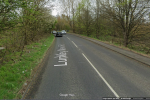
My father was caught just around the bend up ahead here on the attached screenshot from Google Maps.
He approached the corner at around 30mph

The corner is tighter than it looks on the picture, as he rounded the corner, there was a cyclist in a low down recumbent type cycle.
Performing an emergency stop or slowing down enough would have caused the car behind to hit him as it was too close, there were cars coming the other way.

He took what he thought was the safest course of action and that was to accelerate and pass the cycle before the traffic coming the other way got close enough.
The cyclist was recording his journey and submitted the video to the police.
My dad was adjudged to have passed too closely to the cycle, 3 points and a speed/ driver awareness course (with fine too I believe)

Unfortunately, his dash cam didn't record the incident, for some reason it records him leaving the street at home about 10 minutes earlier and again about 10 minutes afterwards.

It seems the magistrate that viewed the case thought it was quite simply an open and shut case of passing too closely going up a hill.
No mitigation was considered that he had just rounded a tight bend with tall tress and bushes obscuring sight lines around it and he took sensible evasive action.
With dash cam evidence, a different outcome may have been reached, but taking one side over the other without considering mitigating circumstances does seem quite unfair
 

Attachments

  • Lumley Road.png
    Lumley Road.png
    1.8 MB · Views: 17

Egg Centric

Established Member
Joined
6 Oct 2018
Messages
2,836
Location
Land of the Prince Bishops
My father was caught just around the bend up ahead here on the attached screenshot from Google Maps.
He approached the corner at around 30mph

The corner is tighter than it looks on the picture, as he rounded the corner, there was a cyclist in a low down recumbent type cycle.
Performing an emergency stop or slowing down enough would have caused the car behind to hit him as it was too close, there were cars coming the other way.

He took what he thought was the safest course of action and that was to accelerate and pass the cycle before the traffic coming the other way got close enough.
The cyclist was recording his journey and submitted the video to the police.
My dad was adjudged to have passed too closely to the cycle, 3 points and a speed/ driver awareness course (with fine too I believe)

Unfortunately, his dash cam didn't record the incident, for some reason it records him leaving the street at home about 10 minutes earlier and again about 10 minutes afterwards.

It seems the magistrate that viewed the case thought it was quite simply an open and shut case of passing too closely going up a hill.
No mitigation was considered that he had just rounded a tight bend with tall tress and bushes obscuring sight lines around it and he took sensible evasive action.
With dash cam evidence, a different outcome may have been reached, but taking one side over the other without considering mitigating circumstances does seem quite unfair

Those are not mitigating circumstances. If your father was unable to safely stop - even if this was due to tailgaters (sounds highly unlikely to me but whatever) then he was going too quickly. What if the cyclist had been in the middle of the road?
 

AlterEgo

Verified Rep - Wingin' It! Paul Lucas
Joined
30 Dec 2008
Messages
29,225
Location
LBK
Those are not mitigating circumstances. If your father was unable to safely stop - even if this was due to tailgaters (sounds highly unlikely to me but whatever) then he was going too quickly. What if the cyclist had been in the middle of the road?
Indeed. One has to drive on line of sight and be prepared to stop as if there is a stationary obstruction just out of sight.
 

styles

Established Member
Joined
7 Dec 2014
Messages
4,682
Location
Gwynedd
My father was caught just around the bend up ahead here on the attached screenshot from Google Maps.
He approached the corner at around 30mph

The corner is tighter than it looks on the picture, as he rounded the corner, there was a cyclist in a low down recumbent type cycle.
Performing an emergency stop or slowing down enough would have caused the car behind to hit him as it was too close, there were cars coming the other way.

He took what he thought was the safest course of action and that was to accelerate and pass the cycle before the traffic coming the other way got close enough.
The cyclist was recording his journey and submitted the video to the police.
My dad was adjudged to have passed too closely to the cycle, 3 points and a speed/ driver awareness course (with fine too I believe)

Unfortunately, his dash cam didn't record the incident, for some reason it records him leaving the street at home about 10 minutes earlier and again about 10 minutes afterwards.

It seems the magistrate that viewed the case thought it was quite simply an open and shut case of passing too closely going up a hill.
No mitigation was considered that he had just rounded a tight bend with tall tress and bushes obscuring sight lines around it and he took sensible evasive action.
With dash cam evidence, a different outcome may have been reached, but taking one side over the other without considering mitigating circumstances does seem quite unfair
It may not be what you want to hear, but that was probably the right decision by the police, CPS, and magistrate.

There's a couple of things here though.

The first is something which is only taught on 'advanced' driving/riding courses these days - driving to 'limit points'. That is to say, you should drive such that you can safely stop in the distance of road you can see to be clear ahead of you. The best way of picturing this is - imagine there is a skip parked on the road after every corner and every brow of a hill. As drivers, we need to drive such that, if that were the case, we could safely stop for it. It's quite easy to practice this skill on country roads. One of my favourite driving instructors, Reg Local, has a good video on it:
. Advanced driving courses are more self-preservation for motorcycle riders, but a lot of car drivers ought to consider them too, even if they don't take the test.

The second is about the pass, 'before the traffic coming the other way got close enough'. It may just be the wording, but this sounds a bit sketchy to me. To safely make an overtake, you need to be confident that you can safely make the three stages of the pass (catch, match, dispatch - catch up to the vehicle in freont, match the speed, then dispatch to overtake them without unnecessary delay). Another Reg Local video:
. If any of the stages aren't secure, don't make the overtake - hang back, and look for another opportunity.

The third and last is about the overtaking distance. Regardless of points one and two above, if a driver leaves the sufficient passing distance, they're not going to get a careless driving charge purely for the overtake. So even if everything else is messed up, the least the driver can do is move fully over to leave space for the cyclist in case they swerve, slip, or reposition. Given the photo of the road provided, if the driver has moved out to pass the cyclist, they're going to be blocking the opposing lane regardless, so there's no reason at all not to move fully over; it'll make no difference to traffic coming the other way, but it'll make a big difference to the cyclist being overtaken.

That was a bit of a long-winded answer, but in parts:

My father was caught just around the bend up ahead here on the attached screenshot from Google Maps.
He approached the corner at around 30mph

The corner is tighter than it looks on the picture, as he rounded the corner, there was a cyclist in a low down recumbent type cycle.
This is why he should've driven to limit points. If he had, he wouldn't find himself forced into an overtake.

Performing an emergency stop or slowing down enough would have caused the car behind to hit him as it was too close, there were cars coming the other way.
Only if the car behind wasn't driving to limit points. In the event the car behind was tailgating and hit the car in front, they'd rightly be found liable and potentially given the careless driving charge instead. If the car behind was genuinely tailgating leading up to this, it probably would've been safest to be the 'bigger person', pull over and let them by. Don't know about you, but I'd rather not have a dangerous driver behind me!

He took what he thought was the safest course of action and that was to accelerate and pass the cycle before the traffic coming the other way got close enough.
The cyclist was recording his journey and submitted the video to the police.
My dad was adjudged to have passed too closely to the cycle
Yes, so he should've left a greater gap when overtaking. Pretty straightforward.

3 points and a speed/ driver awareness course (with fine too I believe)
So for careless driving you either get 3 points and a £100 fine, or you pay ~£100 for a driver retraining course (the exact cost varies by provider, which in turn is decided by the locale). If he did a driving retraining course, he won't have been fined, but he will have had to have paid for the course. Same as speed awareness courses really.

It seems the magistrate that viewed the case thought it was quite simply an open and shut case of passing too closely going up a hill.
No mitigation was considered that he had just rounded a tight bend with tall tress and bushes obscuring sight lines around it and he took sensible evasive action.
Well, yes, that's the correct decision. It isn't a mitigation that he was going around a tight corner. If you're going around a tight corner you need to slow down, such that you can stop in the distance of road you can see to be clear before you. If bushes and trees obstruct this line of sight, it just means the distance seen to be clear in front of you is less, and you need to drive slower. He only had to take evasive action in the first place because he wasn't driving to the road conditions.

With dash cam evidence, a different outcome may have been reached, but taking one side over the other without considering mitigating circumstances does seem quite unfair
But there was dashcam evidence, from the cyclist. That's what secured the prosecution! If the driver had dashcam footage leading up to the incident, all it would show is that they were careless in their driving leading into the corner by not allowing a safe stopping distance for any potential hazards, like a recumbent cyclist.

Your old man was rightly prosecuted for careless driving.

Unfortunately, his dash cam didn't record the incident, for some reason it records him leaving the street at home about 10 minutes earlier and again about 10 minutes afterwards.
Yes, this is very convenient :D

For what it's worth, this is a major factor in why fitting a dashcam doesn't significantly reduce insurance premiums - insurers found that in many cases, their insured driver just happened to have not switched the camera on, or had left the SD card out, or whatever.

I would add a bit of a harsh but salient point here - take what other drivers say with a bucket of salt. Many people who fail their driving test will say something like, "I was given a major for doing 22mph in a 20mph for 2 seconds when I turned into a residential street.", people who do speed awareness courses will often say they were clocked doing 31mph in a 30mph zone, etc. Your dad might be spinning the tale that he had no other option but to close pass this cyclist, but it's self-evidently not the case because it meant he went into the corner too fast and unable to stop for hazards, and when he did decide to overtake, even though he would have to block the entire opposite lane given the screenshot, he didn't use the full width of the lane and instead passed the cyclist too close, which was caught on camera. Purely coincidentally, his dashcam was working for his journey except for this very moment he was supposedly forced into this maneuver. I'm not saying he's a bad guy or anything, but his careless driving charge is entirely reasonable based on what you've said, and I'm honestly suspicious about his lack of dashcam footage of this very moment.

 

Peter Mugridge

Veteran Member
Joined
8 Apr 2010
Messages
17,800
Location
Epsom
The first is something which is only taught on 'advanced' driving/riding courses these days - driving to 'limit points'. That is to say, you should drive such that you can safely stop in the distance of road you can see to be clear ahead of you.
One factor here that some people might need pointing out to them - if it's a single lane country road, the limit point should instead be half the distance you can see to be clear.

If two drivers are heading in opposite directions on such a road and both are at a speed that they can stop in the full distance they can see to be clear, they will collide head on at the half point.
 
Status
Not open for further replies.

Top