I started at my toc in 2021 and we didn't get one then or in 2022 or 2023 , so pretty accurate.The government have moved on pay rises for many public sector workers (teachers, junior doctors, police/prison workers, dentists, armed forces, civil servants) of between 5% and 7%, from variously April or September this year.
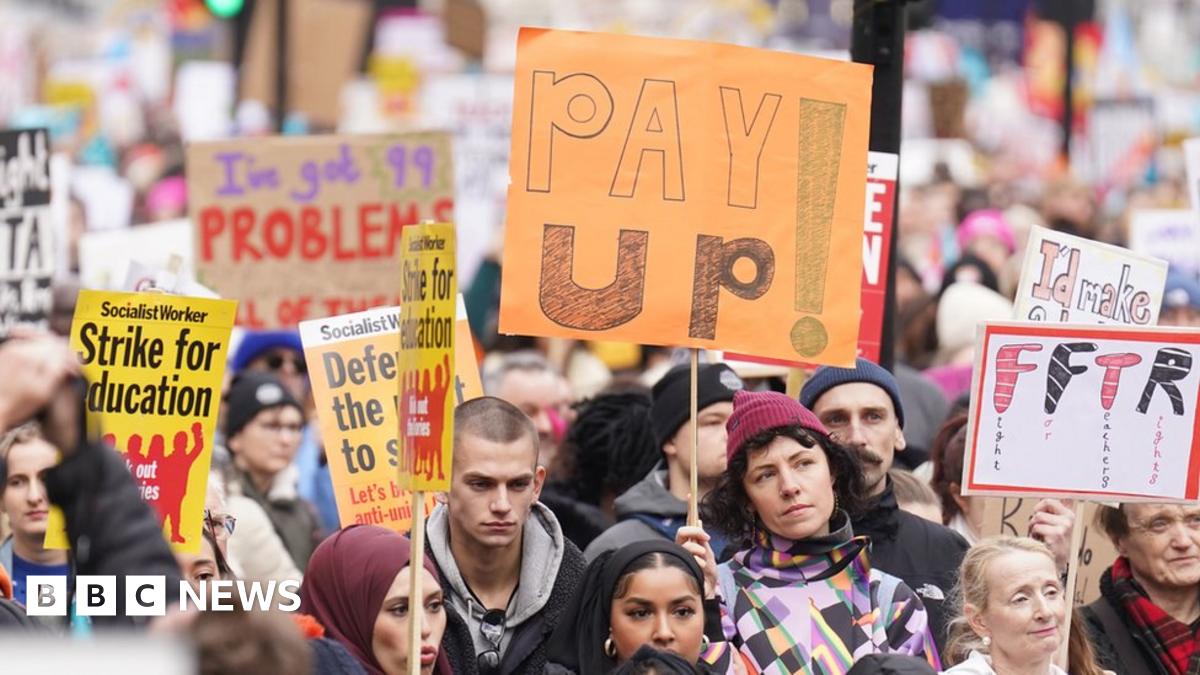
Public sector pay: Workers offered pay rises of around 6%
PM Rishi Sunak said the offer to workers was final and there would be "no more talks on pay".www.bbc.co.uk
Looks like this will end the disputes in those sectors, except for the junior doctors with their nonsense 35% claim.
The government is saying there will be no more negotiations on pay this year in these sectors.
But there were pay review bodies for those sectors, unlike in rail, which made reasoned arguments for increases.
It's also not clear how the pay rises will be funded, with some coming from departmental budgets (ie cutting spend or headcount elsewhere).
The deal will probably include all the staff working on rail in the DfT/ORR, and would probably apply to GBR if it existed.
So if the rail unions were planning joint action on the government on a general "we're all worth it" basis, it's not going to happen.
It seems a complete stalemate on negotiations.
Kier Starmer is also not making any encouraging noises about wider public sector funding from a future Labour government, tying it to increased productivity.
Also, what's the truth in the ASLEF "no pay rise for 4 years" mantra?
Is that zero increase for any drivers in that time, or the end of a 4-year agreement for agreed rises during that period?
And does it vary from TOC to TOC?

-
Our new ticketing site is now live! Using either this or the original site (both powered by TrainSplit) helps support the running of the forum with every ticket purchase! Find out more and ask any questions/give us feedback in this thread!
You are using an out of date browser. It may not display this or other websites correctly.
You should upgrade or use an alternative browser.
You should upgrade or use an alternative browser.
Ongoing ASLEF overtime bans
- Thread starter BPN2022
- Start date
- Status
- Not open for further replies.
Sponsor Post - registered members do not see these adverts; click here to register, or click here to log in
R
RailUK Forums
It seems a complete stalemate on negotiations.
I don't think there are any negotiations as the government appear to be refusing to play ball and just trotting out the "unions should put the offer to their members" mantra. Meanwhile this week parliament will go into recess, they will all go on holiday and leave the railway to rot away.

It isn't just about pay in the rail disputes. Also, what is happening about the 2023 increase, not just the 2022 increase?The government have moved on pay rises for many public sector workers (teachers, junior doctors, police/prison workers, dentists, armed forces, civil servants) of between 5% and 7%, from variously April or September this year.
The way of funding increases on the railway is making the terms and conditions changes that the staff are striking about.It's also not clear how the pay rises will be funded, with some coming from departmental budgets (ie cutting spend or headcount elsewhere).
Robertj21a
On Moderation
- Joined
- 22 Sep 2013
- Messages
- 7,691
Quite, the passengers really just want a reliable, consistent, service. If that needs some regular cuts to certain services then so what ?. As long as services are run at stated times (to avoid any overtime) I'm sure that most passengers will be happy.In that case, from a passenger perspective, bring it on!
No need for the railways to *rely* on overtime, just make the necessary cuts.
But are railway staff in the public sector or the private sector?The government have moved on pay rises for many public sector workers (teachers, junior doctors, police/prison workers, dentists, armed forces, civil servants) of between 5% and 7%, from variously April or September this year.
Public sector pay: Workers offered pay rises of around 6%
PM Rishi Sunak said the offer to workers was final and there would be "no more talks on pay".
Looks like this will end the disputes in those sectors, except for the junior doctors with their nonsense 35% claim.
The government is saying there will be no more negotiations on pay this year in these sectors.
But there were pay review bodies for those sectors, unlike in rail, which made reasoned arguments for increases.
It's also not clear how the pay rises will be funded, with some coming from departmental budgets (ie cutting spend or headcount elsewhere).
The deal will probably include all the staff working on rail in the DfT/ORR, and would probably apply to GBR if it existed.
So if the rail unions were planning joint action on the government on a general "we're all worth it" basis, it's not going to happen.
It seems a complete stalemate on negotiations.
Kier Starmer is also not making any encouraging noises about wider public sector funding from a future Labour government, tying it to increased productivity.
Also, what's the truth in the ASLEF "no pay rise for 4 years" mantra?
Is that zero increase for any drivers in that time, or the end of a 4-year agreement for agreed rises during that period?
And does it vary from TOC to TOC?

whoosh
Established Member
- Joined
- 3 Sep 2008
- Messages
- 1,908
Also, what's the truth in the ASLEF "no pay rise for 4 years" mantra?
Is that zero increase for any drivers in that time, or the end of a 4-year agreement for agreed rises during that period?
And does it vary from TOC to TOC?
Plenty of truth, but yes it does vary from TOC to TOC.
South Western Railway had a four year deal, 2019, 2020, 2021, 2022. This was running late and agreed just as Covid started. Their pay anniversary is April 2023.
C2C also had a multi-year deal including 2022, and have reached their 2023 pay anniversary as well. I'm not sure what month it is off the top of my head, but could be January, April or May.
Southern reached year five of their 5 year deal in October 2020 (2.5% or August RPI whichever was greater). They got 0% in October 2021.
Everyone else, I believe, had 0% in 2020 and 0% in 2021. Then as each pay anniversary came around in 2022 - ALL the TOC's said, "We can't talk to you about pay until the DfT gives us permission."
This stonewalling continued for the entirety of 2022. In December 2022, Rail Delivery Group (on behalf of the TOC's) made an offer to the RMT.
They then waited a month, until after the ASLEF strike in January 2023, and then made ASLEF a similar offer, despite still not having any negotiations with them.
Talks then took place, looked promising, but then a worse offer was made.
XIX7007177
Member
- Joined
- 6 Jun 2018
- Messages
- 85
Who from Dft authorised management at GTR to get a pay rise?
Train_manager
Member
- Joined
- 5 Jun 2023
- Messages
- 191
Private sector.But are railway staff in the public sector or the private sector?
Why? Does employees refusing to work overtime make the news.
Its a none issue and wouldn't be reported if it was another industry.

LNW-GW Joint
Veteran Member
It's a hybrid.But are railway staff in the public sector or the private sector?
Arguably all the TOCs are in the private sector even if their ultimate owner is HMG, and may be refranchised out if DfT so decides.
But I would say NR and the OLR TOCs are now firmly in the public sector; most other TOCs remain private but with firm government control of their costs.
The TfW, Scotrail, Caledonian Sleeper, Merseyrail and TfL-controlled TOCs are in the public sector.
Freight and open access are definitely private sector, as are Roscos and manufacturers who employ railway staff.
Unlike central and local government staff, NHS, teachers, police etc, the railway is funded by a mix of customers (passenger and freight) and the taxpayer.
irish_rail
On Moderation
I'd be interested if , say , the army are having to make significant productivity savings in order to receive their 5 percent award. Yet for four years in a row rail workers get nothing unless we give in to victorian working demands. Ironically , all of those recommended a payrise are industries that do not generate money for the economy, unlike the railways which are crucial in generating GDP.The government have moved on pay rises for many public sector workers (teachers, junior doctors, police/prison workers, dentists, armed forces, civil servants) of between 5% and 7%, from variously April or September this year.
Public sector pay: Workers offered pay rises of around 6%
PM Rishi Sunak said the offer to workers was final and there would be "no more talks on pay".
Looks like this will end the disputes in those sectors, except for the junior doctors with their nonsense 35% claim.
The government is saying there will be no more negotiations on pay this year in these sectors.
But there were pay review bodies for those sectors, unlike in rail, which made reasoned arguments for increases.
It's also not clear how the pay rises will be funded, with some coming from departmental budgets (ie cutting spend or headcount elsewhere).
The deal will probably include all the staff working on rail in the DfT/ORR, and would probably apply to GBR if it existed.
So if the rail unions were planning joint action on the government on a general "we're all worth it" basis, it's not going to happen.
It seems a complete stalemate on negotiations.
Kier Starmer is also not making any encouraging noises about wider public sector funding from a future Labour government, tying it to increased productivity.
Also, what's the truth in the ASLEF "no pay rise for 4 years" mantra?
Is that zero increase for any drivers in that time, or the end of a 4-year agreement for agreed rises during that period?
And does it vary from TOC to TOC?
whoosh sums in up 100% in terms of pay offers and numbers, it was one of the reasons why SWR have only just joined the industrial action.
I do get the impression the govt were more than happy to put through a pay freeze during the 2 covid years as there is an impression that drivers / rail workers pay has got out of control. Don’t expect any RPI+ X pay deals at DFT controlled TOCS for the foreseeable, if at all…
I do get the impression the govt were more than happy to put through a pay freeze during the 2 covid years as there is an impression that drivers / rail workers pay has got out of control. Don’t expect any RPI+ X pay deals at DFT controlled TOCS for the foreseeable, if at all…
Sly Old Fox
Member
Why would the government settle now? They save more money in wages than they lose in revenue every strike day. They’ll be delighted that the unions are still doing the same thing a year on.
== Doublepost prevention - post automatically merged: ==
We can’t be too far away from ASLEF calling a week long strike. This will have the effect of costing their member’s a weeks wages each, and achieve absolutely nothing at all. Nothing that has happened over the last 12 months makes me think that any other outcome is a possibility. If the RDG/DfT had any interest in settling they would’ve tried to do it by now.
== Doublepost prevention - post automatically merged: ==
We can’t be too far away from ASLEF calling a week long strike. This will have the effect of costing their member’s a weeks wages each, and achieve absolutely nothing at all. Nothing that has happened over the last 12 months makes me think that any other outcome is a possibility. If the RDG/DfT had any interest in settling they would’ve tried to do it by now.
Last edited:
You do realise this strike costs the government or indirectly you more to keep going than settling it, had they done so months ago tens of millions could've been saved, but no they elected to keep it going rather than doing what's best for the country. Sad reflection of what they've become really.Why would the government settle now? They save more money in wages than they lose in revenue every strike day. They’ll be delighted that the unions are still doing the same thing a year on.
Train_manager
Member
- Joined
- 5 Jun 2023
- Messages
- 191
100% agree.You do realise this strike costs the government or indirectly you more to keep going than settling it, had they done so months ago tens of millions could've been saved, but no they elected to keep it going rather than doing what's best for the country. Sad reflection of what they've become really.
The only thing I would add is that's it's billions not millions.

Who from Dft authorised management at GTR to get a pay rise?
Eh?

Silverlinky
Member
- Joined
- 3 Feb 2012
- Messages
- 876
Management piggybacked the accepted TSSA deal, which itself piggybacked the TSSA NR pay settlement. Not just management though as station grades, on board, revenue protection, fleet and engineering amongst others all got the same.
No compulsory redundancies until 2024 was the main selling point.

 www.tssa.org.uk
No compulsory redundancies until 2024 was the main selling point.
Members accept offers to end national rail dispute | TSSA
TSSA members have voted to accept offers made by train companies in the long-running national rail dispute over pay, job security and conditions. Find out more.
www.tssa.org.uk
thedbdiboy
Established Member
- Joined
- 10 Sep 2011
- Messages
- 1,215
The elephant in the room of course is that in professions such as the health service and teaching, recruitment has been struggle, not least because the qualifications and training for these jobs are not matched by the salaries on offer; whereas there is no shortage of willing recruits to become drivers. I understand the skill, aptitude and training required to be a driver and that the current terms and conditions have been negotiated over many years by the unions; however at Government level they are very much of the view that rail income is still over £3bn below pre-Covid, and that they are not willing to inflate that bill further. That means the dreaded 'productivity improvement' is the only way forward they will countenance to any settlement. And all the time unions congratulate themselves on reducing income through industrial action they are just hardening the government's position. All very depressing.The government have moved on pay rises for many public sector workers (teachers, junior doctors, police/prison workers, dentists, armed forces, civil servants) of between 5% and 7%, from variously April or September this year.
Public sector pay: Workers offered pay rises of around 6%
PM Rishi Sunak said the offer to workers was final and there would be "no more talks on pay".
Looks like this will end the disputes in those sectors, except for the junior doctors with their nonsense 35% claim.
The government is saying there will be no more negotiations on pay this year in these sectors.
But there were pay review bodies for those sectors, unlike in rail, which made reasoned arguments for increases.
It's also not clear how the pay rises will be funded, with some coming from departmental budgets (ie cutting spend or headcount elsewhere).
The deal will probably include all the staff working on rail in the DfT/ORR, and would probably apply to GBR if it existed.
So if the rail unions were planning joint action on the government on a general "we're all worth it" basis, it's not going to happen.
It seems a complete stalemate on negotiations.
Kier Starmer is also not making any encouraging noises about wider public sector funding from a future Labour government, tying it to increased productivity.
Also, what's the truth in the ASLEF "no pay rise for 4 years" mantra?
Is that zero increase for any drivers in that time, or the end of a 4-year agreement for agreed rises during that period?
And does it vary from TOC to TOC?

Bevan Price
Established Member
- Joined
- 22 Apr 2010
- Messages
- 8,360
I think you mean "Lose, Lose".Time for an indefinite overtime ban. Less burden on the members and significant disruption. Win-win.
The Unions. The passengers. Everybody.
As I have said before, The Unions need to accept reality. There will be NO MORE MONEY whilst we have this government - no matter how long they extend the dispute. .
It's not really lose lose for us . It's a rest day ban and not a strike. Just means we aren't going in on our days off.I think you mean "Lose, Lose".
The Unions. The passengers. Everybody.
As I have said before, The Unions need to accept reality. There will be NO MORE MONEY whilst we have this government - no matter how long they extend the dispute. .
irish_rail
On Moderation
Quite. This RD ban is great, I'm not losing any money but the service is disrupted with cancellations daily, therefore hitting the government.It's not really lose lose for us . It's a rest day ban and not a strike. Just means we aren't going in on our days off.
This articulates my view much better than I previously have. The government, especially a Conservative one isn't going to look for further increased costs where it perceives there are growing costs / losses without something that offers them a route to cutting them going forward. The rights and wrongs of this have been debated to death, but this is why this government is digging in.The elephant in the room of course is that in professions such as the health service and teaching, recruitment has been struggle, not least because the qualifications and training for these jobs are not matched by the salaries on offer; whereas there is no shortage of willing recruits to become drivers. I understand the skill, aptitude and training required to be a driver and that the current terms and conditions have been negotiated over many years by the unions; however at Government level they are very much of the view that rail income is still over £3bn below pre-Covid, and that they are not willing to inflate that bill further. That means the dreaded 'productivity improvement' is the only way forward they will countenance to any settlement. And all the time unions congratulate themselves on reducing income through industrial action they are just hardening the government's position. All very depressing.
Last edited:
irish_rail
On Moderation
But there will be a new governemnt next year, one that will likely offer a reasonable sum with no strings attached, say 4 or 5 percent. One that is not so ideologically embedded in victorian times and practices. If we can find the money for the Army, prison officers etc , then we can find it for rail staff who by then will be 5 years without so much as any rise whatsoever in that period.I think you mean "Lose, Lose".
The Unions. The passengers. Everybody.
As I have said before, The Unions need to accept reality. There will be NO MORE MONEY whilst we have this government - no matter how long they extend the dispute. .
Snow1964
Veteran Member
I'm not sure it hits the Government, they don't seem to mind things not functioning properly, instead hits innocent people.Quite. This RD ban is great, I'm not losing any money but the service is disrupted with cancellations daily, therefore hitting the government.
And as others have said, what's the point of action when Government will be in recess, which they start Friday. They won't be there to notice.
The Army is to see a reduction of 3000 troops, down to 73,000, and there is to be a freeze on recruitment of MoD civil servants.I'd be interested if , say , the army are having to make significant productivity savings in order to receive their 5 percent award. Yet for four years in a row rail workers get nothing unless we give in to victorian working demands. Ironically , all of those recommended a payrise are industries that do not generate money for the economy, unlike the railways which are crucial in generating GDP.
irish_rail
On Moderation
The fact passengers are affected is of course unfortunate. Generally when you explain to people quite what the governemnt are trying to impose on us , and for what money , they tend to be a little more sympathetic.I'm not sure it hits the Government, they don't seem to mind things not functioning properly, instead hits innocent people.
And as others have said, what's the point of action when Government will be in recess, which they start Friday. They won't be there to notice.
I would argue it will affect the governemnt though, at the ballot box. There unbelievable inability to handle industrial relations across pretty much all sectors hasn't gone unnoticed by the voters.
== Doublepost prevention - post automatically merged: ==
A fraction i expect of how many station staff positions that will be lost next year. At Plymouth for example I've heard the figure of a reduction from 41 to 26 (total station staff including dispatchers etc etc). Roll that nationwide and that will be a lot of roles gone. All in the name of improving the customer experience.The Army is to see a reduction of 3000 troops, down to 73,000, and there is to be a freeze on recruitment of MoD civil servants.
Sly Old Fox
Member
Quite. This RD ban is great, I'm not losing any money but the service is disrupted with cancellations daily, therefore hitting the government.
As of 08.15 this morning, three trains are showing as cancelled on your company’s Journeycheck for the whole day. That’s probably fewer than a normal day!
Clarence Yard
Established Member
- Joined
- 18 Dec 2014
- Messages
- 3,279
The action is designed to hit the DfT’s rail budget. As closing lines is a political no-no in the run up to a General Election, it puts pressure on the civil servants who are really running the railway.
If the Government followed the same path with rail, as with the other disputes, they would have found the money by doing something like cutting NR’s renewal budget. They can bypass the ORR settlement if they really wanted to.
If the Government followed the same path with rail, as with the other disputes, they would have found the money by doing something like cutting NR’s renewal budget. They can bypass the ORR settlement if they really wanted to.
irish_rail
On Moderation
Three more than normal (it's four by the way, and all in the south west so will have an impact). And another week of NO route learning or training. The knock on effects will soon be felt!As of 08.15 this morning, three trains are showing as cancelled on your company’s Journeycheck for the whole day. That’s probably fewer than a normal day!
Last edited:
Does this affect route learning or training for trainee drivers, or just for trained drivers?Three more than normal (it's four by the way, and all in the south west so will have an impact). And another week of NO route learning or training. The knock on effects will soon be felt!
- Status
- Not open for further replies.