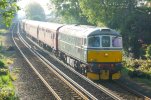
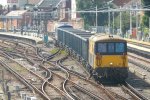
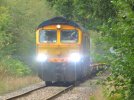
I am talking about the LACK of headlight power creating a potential danger for people other than drivers.
The USA has the correct attitude to headlight power.
If you could point me towards any data set, anywhere, that highlights this problem, I'd be very interested to read it.
To the best of my professional knowledge, there isn't an issue with people being struck by trains, where this could have been prevented by brighter headlights. Indeed, in one of the most recent, tragic examples of track workers being fatally struck by a train, the train in question was one of the 80x fleet with particularly bright headlights.
The US has plenty of examples of people being struck by trains, especially on level crossings, where bright headlights do nothing to prevent this.
Essentially, whichever way you want to cut this, there is neither an issue with drivers being excessively dazzled by approaching headlights, or members of the public/track workers being put in harms way by lack of sufficiently bright headlights - to the best of my knowledge. If I'm wrong, by all means present the data as it would be an interesting conversation.
Polarising windscreens and lights almost certainly would not be acceptable to the regulator as there are simply too many variables that the technology would need to be tested against, from other light sources to glasses that may be available to the public. Given the cost of such an investigation into the technology there needs to be a sufficiently significant issue to justify it. It's that issue that I'm struggling to find here.