Why must everything be about "profit" with some?
Because some of us have thought more deeply about the implications of
not generating a profit than is apparent from this remark?
For normal businesses a profit is necessary in order for the business to keep going. If it makes a loss it will be dismembered and the remaining profitable parts (if any) sold and the proceeds used to pay the creditors. In any case jobs will be lost. The State then loses the taxes that the previously employed paid - and not only that they are likely to be financially supported by the State - in other words by taxes from other sources - until they find another employment.
Profit is vital in the world of normal business - from the largest to my window cleaner. The State takes its money by skimming off a percentage of the money-go-round, i.e., by taxing individuals in employment, the self-employed and business entities.
No profit - no tax. It's that simple.
The State has decided that, for a variety of reasons, it is prepared to 'publicly fund'/'subsidise'/'cover the losses'/<insert own choice of phrase> the railways. In view of the myriad of calls for 'the Government must do something' from many pressure groups the amount of money available for any particular interest group is limited as a government's ability to increase taxation levels is limited. (For the avoidance of doubt 'tax' in this context refers to
all forms of tax, not just income tax).
Across the OECD (Organisation for Economic Cooperation and Development) countries the tax-to-GDP ratio ranged from 17.9% in Mexico to 46.5% in Denmark. The bulk of the countries lie in the 30% to 40% range; the OECD average is 33.53% (in 2020) with the UK at 32.77% so the UK government's tax take is in line with other countries.
This tax take ratio is critical - if it is too high for some types of business then the business either downsizes, closes or moves to a lower tax country. There are a range of pressures which limit a government's freedom of action.
This means that 'the railways' have to be seen to be careful in their use of the money supplied by the State. Which means that the expenditure has to be justifiable, both immediately and in the long term. With no transparency how does anyone know whether the Okehampton re-opening gives a better return than if the capital was spent on, say, re-opening the fourth platform at Westbury? It may even be that the fourth platform at Westbury is also environmentally sound in promoting the use of rail.
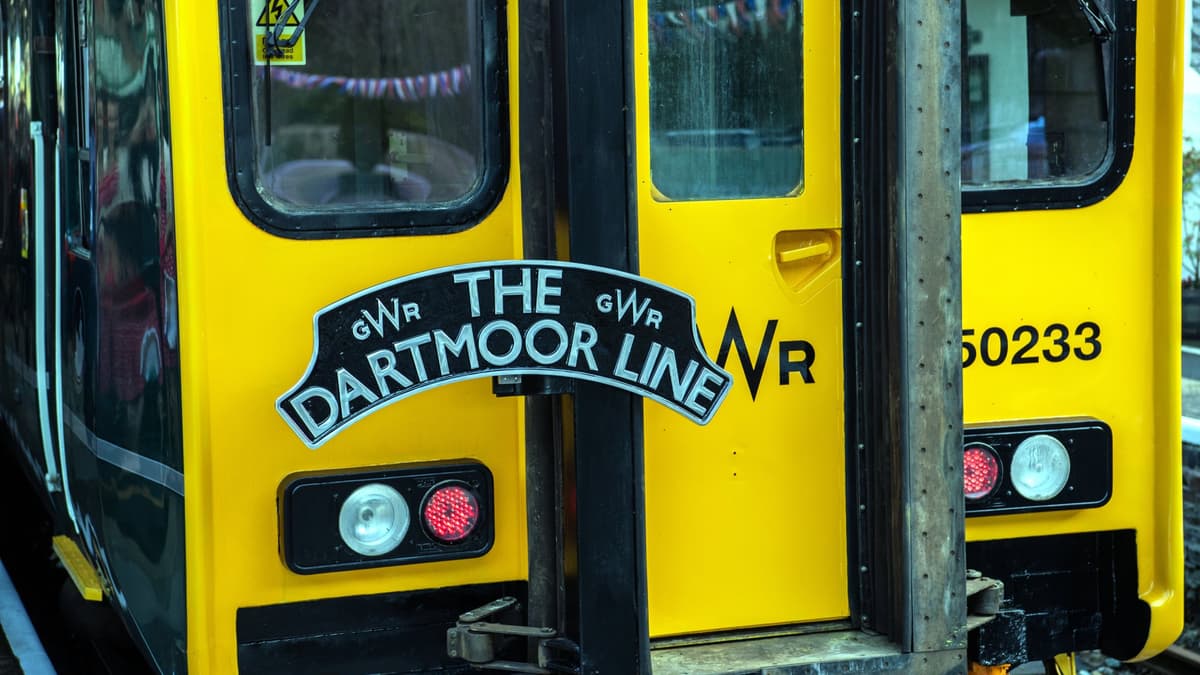
So, what is the subsidy paid by the tax payer for each passenger-km on the Okehampton line? Is it more or less than that paid for a passenger to, say, Torquay? And how much is it in absolute terms?
'Sustainable' is not just a word connected with environmental protection, it also refers to the long term willingness and ability of Government to fund the activity in question.



 . What I will say is that you don't really know how a line is performing until 5 years or so in. 1 year on people it's still shiny and new, the service is still fresh in people's minds, etc. The long-term (20+ year) view only becomes apparent as the gloss fades.