• Our new ticketing site is now live! Using either this or the original site (both powered by TrainSplit) helps support the running of the forum with every ticket purchase! Find out more and ask any questions/give us feedback in this thread!

Norwood Junction dispatching incident: level boarding implications

saltywalrus

Member
Joined
21 May 2022
Messages
29
Location
Lancaster
Moderator note: Split from:

One thing that has annoyed me;
31 Norwood Junction station has been in operation since 1859 and has six platforms
(figure 9). The accident occurred on platform 1, which is the only platform
accessible without the need to use stairs. The design of platform 1 does not allow
for level boarding with a class 378 unit and a portable access ramp is used to
allow passengers with reduced mobility to board and alight from trains, where
they would otherwise be unable to do so. At Norwood Junction station, portable
access ramps are used on a limited number of occasions per day and there is no
pattern to how often a driver will experience ramps being used on trains at that
station.
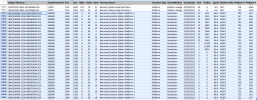
The design of the platform 1 is fine; it complies with the GB standard for level boarding of 730mm x 915mm (see attached).

The high-floor train is the problem; if we actually procured trains that fit the platforms then this poor passenger wouldn't have been nearly killed and traumatised against using trains again.
 

Attachments
  • 1782123691866.png
    1782123691866.png
    199.5 KB · Views: 22
Last edited by a moderator:
Sponsor Post - registered members do not see these adverts; click here to register, or click here to log in
R

RailUK Forums

bluenoxid

Established Member
Joined
9 Feb 2008
Messages
2,659
I don’t travel on class 378’s but I would guess that any concerns about level boarding would be linked to the class 378 floor height, which I guess is a little higher than the level boarding specification that has been shared.
 

yorkie

Forum Staff
Staff Member
Administrator
Joined
6 Jun 2005
Messages
78,238
Location
Yorkshire
.... if we actually procured trains that fit the platforms then this poor passenger wouldn't have been nearly killed and traumatised against using trains again.
My understanding is that this isn't simple.

There have been some threads on the subject; @mr_moo is extremely knowledgeable on this topic.

For example:


Last edited:

D365

Veteran Member
Joined
29 Jun 2012
Messages
13,161
Most, if not all of the upcoming rolling stock tenders (e.g. Northern, Southeastern, ScotRail) have a requirement for at least partial level boarding.
 

Bletchleyite

Veteran Member
Joined
20 Oct 2014
Messages
113,091
Location
"Marston Vale mafia"
Most, if not all of the upcoming rolling stock tenders (e.g. Northern, Southeastern, ScotRail) have a requirement for at least partial level boarding.

Partial is probably the only solution for the Elizabeth Line given the issue of the core area platforms - you could have doors at both heights with a ramp between them as per the Swiss "Giruno" units and the wheelchair spaces and accessible toilet in that same area. Should also be physically possible to do this for HS2 by way of a between-bogies dip.
 

SargeNpton

Established Member
Joined
19 Nov 2018
Messages
1,717
The attached picture shows the step up to the train at Pembroke Dock as it was in 2014 (no idea whether it has changed since then). The difference in height between platform and train gets worse the further you walk down to the country end of the platform.

Other stations on the branch had a similar step up - though most of them had portable steps to alleviate it (I guess the one at Pembroke Dock had been stolen by the local yobs as it was an open platform).

As it's the platforms that are too low, I'm not sure how you would acquire level boarding stock for the branch as it would then be out for the stations on the main lines.
 

Attachments

  • DSC_0011.JPG
    DSC_0011.JPG
    3 MB · Views: 39

frankmoh

On Moderation
Joined
7 May 2025
Messages
820
Location
London
And some lines will never have level boarding simply because of heights that can't be changed. Watford DC springs to mind.
 

Bletchleyite

Veteran Member
Joined
20 Oct 2014
Messages
113,091
Location
"Marston Vale mafia"
As it's the platforms that are too low, I'm not sure how you would acquire level boarding stock for the branch as it would then be out for the stations on the main lines.

The approach to this in places like the Conwy Valley is to order stock to standard platform height (915mm, which to give room for moving steps etc gives a floor height of 960mm) and install a "Harrington hump" (so called because of where it was first done) to raise part of the platform to that level.

The 197s of course are not level boarding, but this work has been done nonetheless.
 

zwk500

Veteran Member
Joined
20 Jan 2020
Messages
18,458
Location
Northampton
As it's the platforms that are too low, I'm not sure how you would acquire level boarding stock for the branch as it would then be out for the stations on the main lines.
The "proper" answer to this is that level boarding will require some platforms to be rebuilt. You order stock to a required height to narrow the gap t0 a 915mm platform and then rebuild platforms that are beyond a certain tolerance.

However the chances of getting funding to rebuild platforms at remote ends of the network are fairly low.
 

saltywalrus

Member
Joined
21 May 2022
Messages
29
Location
Lancaster
The attached picture shows the step up to the train at Pembroke Dock as it was in 2014 (no idea whether it has changed since then). The difference in height between platform and train gets worse the further you walk down to the country end of the platform.

Other stations on the branch had a similar step up - though most of them had portable steps to alleviate it (I guess the one at Pembroke Dock had been stolen by the local yobs as it was an open platform).

As it's the platforms that are too low, I'm not sure how you would acquire level boarding stock for the branch as it would then be out for the stations on the main lines.
No, the platforms are at the correct height as defined by the relevant standard (GI/RT7016).

GI/RT7016 (pp8)
"3.1.1 For new platforms and alterations (as defined) to existing platforms, the height at the edge of the platform shall be 915mm"
"3.2.1 For new platforms and alterations (as defined) to existing platforms, the platform edge shall be the minimum distance for the adjacent track [...] For most rolling stock, this requirement is met on curves with a radii greater than or equal to 360m by a platform offset of 730mm"

It's not possible to increase the height of the platform without moving the platform edge back to accommodate loading gauges for freight trains - Gareth Dennis does a good job explaining this in one of his videos (I know it's very long, but the relevant part I've linked to is only ~5 mins).

#RailNatter | Episode 31: Is level boarding on trains really that hard to achieve?
This week's #RailNatter aims to get to the root of an issue incredibly close to my heart, and something we as an industry do a very bad job of: actually letting everyone get on our trains.

In Episode 31, we'll be looking at the issue of level boarding: what do I mean by this, why is it an issue, and is it as hard to achieve as lots of people say it is? I'll also look at why an industry in the 2020s still thinks it is okay to exclude huge numbers of people from using trains like everyone else.

Join us LIVE to ask all of your level boarding questions... This won't be the last episode on this subject, either.

== Doublepost prevention - post automatically merged: ==

I should also mention that I've noticed some parallels between this report and the one into the level crossing accident at Leominster recently - both have been primarily caused by staff distraction / inattention, and the RAIB has done a good job at identifying those and other major causes. But they also completely fail to address why the processes in question are done the way they are;
  • Why is there a need to attach a large metal object to the outside of trains to let some passengers board?
  • Why does the signaller responsible for a level crossing need to call up another signaller to instate a line blockage when they already have the equipment to do so themselves?

Obviously the primary cause of both accidents are staff distraction when carrying out safety-critical tasks - that's the most important thing that needs to be addressed. However, it feels like a missed opportunity to not also examine why certain procedures are carried out the way they are, and if there is a more fundamental change that can be made that removes the possibility for human error altogether.
 
Last edited:

Top