
• Our new ticketing site is now live! Using either this or the original site (both powered by TrainSplit) helps support the running of the forum with every ticket purchase! Find out more and ask any questions/give us feedback in this thread!

New trains vs further developing existing designs

davart

Member
Joined
14 Jul 2018
Messages
119
I was thinking how, in aviation for example, designs such as the Boeing 737 are developed and improved over time, whereas rolling stock is mostly redesigned when new trains are ordered.

Would it result in a better product if existing rolling stock were further refined to improve shortfalls in performance or flaws in design?

I appreciate that there is a period of time, often decades and manufacturers/tooling may no longer be in business/be available.

What's wrong with, say, reusing the MK3 body shell and suspension of the Class 150, with a modern engine, better soundproofing and improved layout. Would this be a 'better' design than the CAF 195s?
 
Sponsor Post - registered members do not see these adverts; click here to register, or click here to log in
R

RailUK Forums

Sun Chariot

Established Member
Joined
16 Mar 2009
Messages
6,550
Location
2 miles and 50 years away from the Longmoor Milita
My two immediate thoughts:

Over time, the scope and demand-criteria for trains (i.e. their emissions and efficiency, accessibility, safety) has changed more than it has for aircraft in same time-frame. Changes upon the railway industry, also influences a pace of change to the railway vehicles.

Both modes of transport do have multiple vendors, each with distinct design ethos / style. Arguably a train's design can be more varied than an aircraft's can, practically.
 

martin butler

Member
Joined
9 Oct 2018
Messages
853
I would imagine that its easier and more cost efficient to build new, after all, look at what happened when the old Wessex units were to be fitted with new motors, it meant so much work, a full rewire, that it became not viable

Manufacturers will build batches of what is the same unit, but to suit what the end user has requested, this might mean different wiring, different systems, that mean whilst from the outside units look identical, internally they are not, even something like a minor control modification, means two units, might not be compatible, even though they came off the same production line.
 

Silent

Member
Joined
31 Mar 2016
Messages
737
Location
London
I was thinking how, in aviation for example, designs such as the Boeing 737 are developed and improved over time, whereas rolling stock is mostly redesigned when new trains are ordered.

Would it result in a better product if existing rolling stock were further refined to improve shortfalls in performance or flaws in design?

I appreciate that there is a period of time, often decades and manufacturers/tooling may no longer be in business/be available.

What's wrong with, say, reusing the MK3 body shell and suspension of the Class 150, with a modern engine, better soundproofing and improved layout. Would this be a 'better' design than the CAF 195s?


I think I prefer new designs. America seems to use old designs for trains and they aren’t really better. Also material science and engineering techniques have improved or advanced making the old designs obsolete.
 

BlythPower

Member
Joined
15 Jan 2009
Messages
864
Location
Kenilworth
A passenger vehicle which combined the best design points of Mk III coaches (ride quality, seat comfort, etc) updated with modern crash worthiness standards, etc. would be a wonderful idea. Especially if all the known pitfalls with IETs, Aventras, Mk Vs and Civities were thoroughly designed out. Just make sure Hitachi aren't allowed anywhere near it.
 

LNW-GW Joint

Veteran Member
Joined
22 Feb 2011
Messages
21,902
Location
Mold, Clwyd
The manufacturers are responding to global demand, with the UK requirement being limited and rather specialised (smaller gauge, different standards etc).
The rolling stock market moves on whatever the UK thinks is desirable.
With the development of (eg) battery technology and high speed (over 200 km/h), most manufacturer's platforms have moved on past the upgrade stage.

Then there's what Roger Ford called "Stanier-Gresley Syndrome" where each TOC wants a unique specification tailored to its particular requirements, in generally low volume, preventing standardisation and interoperability across the network.
 

D365

Veteran Member
Joined
29 Jun 2012
Messages
13,161
What's wrong with, say, reusing the MK3 body shell and suspension of the Class 150, with a modern engine, better soundproofing and improved layout. Would this be a 'better' design than the CAF 195s?
Just to clarify, are you suggesting that existing Class 150 vehicles should be gutted and rebuilt / repowered? E.g. in a similar vein to the Vivarail Class 230/484.
 

Invincible

Member
Joined
23 Apr 2022
Messages
852
Location
Surrey
Seems for new UK tenders:
CAF will propose new battery Civitys built in Newport
Siemens are proposing new battery Desiro Verves built in Goole, but "Drivers’ cabs are based on those used on the Mireo fleets, adapted for the UK loading gauge, with extensive commonality between the two designs".

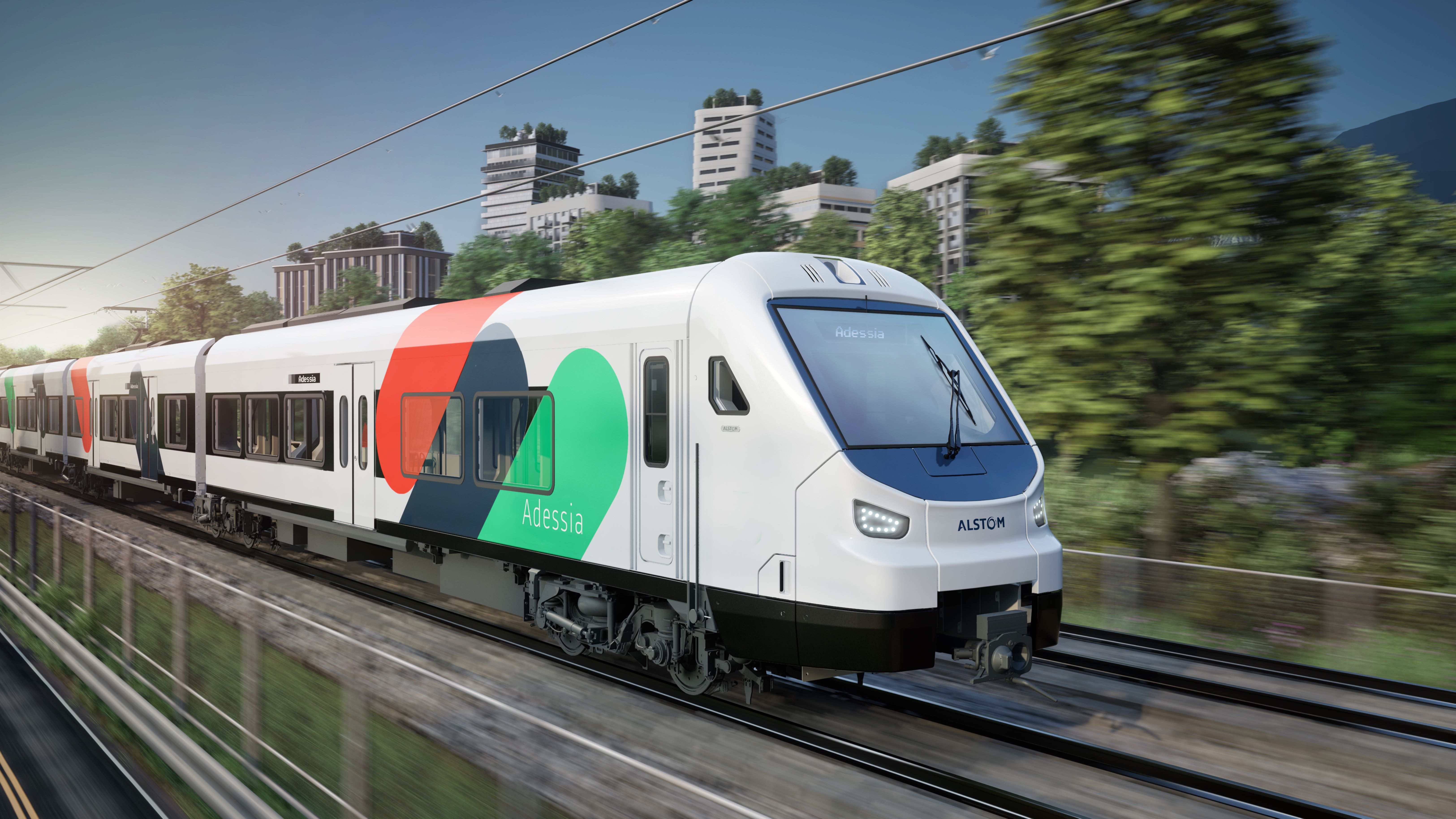
Alstrom are proposing new battery Adessias built in Derby, based on X'Trapolis designs.
 
Last edited:

The exile

Established Member
Joined
31 Mar 2010
Messages
9,333
Location
Somerset
Just to clarify, are you suggesting that existing Class 150 vehicles should be gutted and rebuilt / repowered? E.g. in a similar vein to the Vivarail Class 230/484.
I had understood the question to be more about continuing to build “new” to existing specs /designs but with minor upgrades, in the way that DB were still building the ET420 in the early to mid 90s though it was launched for the Munich Olympics in 1972. Would presumably solve some of the delays associated with getting new stock / tech into traffic - at the cost of perpetuating older designs.
 

Western Lord

Member
Joined
17 Mar 2014
Messages
1,058
If Airbus and Boeing had to design a new aircraft for every customer they (and probably the customer) would soon go bust. Both the 737 and the A320 are old designs which have been refined and re-powered to make them more efficient. A new design would be better but is probably unaffordable in the cut-throat aviation market. A train is a metal box on wheels and it is a lot cheaper to design a new metal box than a new aircraft. The problem with new trains seems to be the computerised systems built into them rather than the metal box, so the same problems would presumably occur if you built the new systems into an old metal box design.
 

stevieinselby

Established Member
Joined
6 Jan 2013
Messages
1,668
Location
Selby
It's kind of what happens already, in a lot of cases. For example, the Aventra is mechanically only a small update on the Electrostar but put into a new bodyshell so that it looks like a new train. Siemens have been iterating the Desiro platform for over 20 years. Manufacturers would much prefer to build on an existing platform than design a new one from scratch, as it's a lot cheaper for them, but at the same time they want to keep their products at the cutting edge and so there comes a point where it becomes too much of a challenge to update the old platform to accommodate all the new requirements and it becomes better to start afresh.

There's also a difference of scale in the marketplace. There are a lot more train manufacturers than plane manufacturers, and each of them will be building a lot more units per year. For example, in the last 30 years Scotrail has had new trains from Adtranz (170), Alstom (334), Siemens (380) and Hitachi (385) ... it doesn't matter how long a manufacturer keeps iterating its designs for if the buyer goes elsewhere! And while there is an advantage to having a more homogenous fleet, there is a bigger advantage in getting the best vehicle available at any one time, which often means a newer design rather than an old one that has been tweaked a few times.

The question is ... what problem are we trying to solve here? You might prefer the design of the class 150, but for a start it wouldn't meet current crashworthiness standards, and secondly it would become increasingly difficult to retrofit the design to meet other modern requirements around emissions, accessibility, passenger facilities etc, even if we're talking about new builds rather than actually retrofitting existing units.
 

The exile

Established Member
Joined
31 Mar 2010
Messages
9,333
Location
Somerset
The question is ... what problem are we trying to solve here? You might prefer the design of the class 150, but for a start it wouldn't meet current crashworthiness standards, and secondly it would become increasingly difficult to retrofit the design to meet other modern requirements around emissions, accessibility, passenger facilities etc, even if we're talking about new builds rather than actually retrofitting existing units.
The main problem I’d like to see solved is that of compatibility. At the very least a standard needs to be set such that everything is capable of being moved by everything else (preferably without having to detrain passengers)in an emergency. Probably needs a line drawn in the sand and stipulating “everything ordered from 01/01/2027” so it would take time but be worth it.
 

Snow1964

Established Member
Joined
7 Oct 2019
Messages
11,051
Location
West Wiltshire
Just to clarify, are you suggesting that existing Class 150 vehicles should be gutted and rebuilt / repowered? E.g. in a similar vein to the Vivarail Class 230/484.
Let's be real, no one is going to gut and renovate a 40 year old train.

However there is strong case for taking something off the shelf in Europe (or even Asia etc), and fitting it with tried and tested standard parts used in multiple countries. With only difference being a UK size body shell.

Need to get away from idea that each batch of vehicles has to unique. It needs to be standard, can couple to anything introduced after certain date (say January 2027), with just paint colour and internal fittings different.

The BR mk1 coach had variations, but they still built over 13,000 of them as hauled coaches (and over 3000 similar vehicles in EMUs). Ultimately they were one basic design, not lots of unique incompatible, restricted area, change it for sake of it, trains
 

Magdalia

Established Member
Joined
1 Jan 2022
Messages
7,345
Location
The Fens
I was thinking how, in aviation for example, designs such as the Boeing 737 are developed and improved over time, whereas rolling stock is mostly redesigned when new trains are ordered.
I disagree with the premise here. Trains were developed over time, even in BR days. Look at how the MarkI and MarkII coach designs evolved. Look at the various different versions of what evolved out of the PEP project.

Post privatisation the electrostar is a classic example of a train that developed over time, though it would probably be contentious to say that all the developments were improvements.

But there are bound to be discontinuities to take advantage of technological changes and to adapt to regulatory changes.
 

Zomboid

Established Member
Joined
2 Apr 2025
Messages
2,243
Location
Oxford
I don't know much about aviation, but I suspect if you compared an original 737 to a current one, you wouldn't find much in common beyond the name. Kind of like a comparison between a 1980 VW golf and a 2025 golf.
 

Mikey C

Established Member
Joined
11 Feb 2013
Messages
8,238
The sheer number of suppliers is what's making things messy, and creating lots of small sub types, all with their own unique aspects.

Even with Alstom, their post privatisation "legacy" products in the UK come from 3 different companies, Alstom (ex Metro Cammell and GEC, e.g. the Junipers and Pendolinos), Bombardier "proper" (the Voyagers and derivatives) and BREL/ABB/Adtranz Bombardier Derby (Turbostars and Electrostars). And the Pendolinos have FIAT tilting technology, so that's a 4th company.

Add Siemens, Hitachi, CAF and Stadler, that's a massive amount of variation.
 

The Pelican

Member
Joined
3 Oct 2025
Messages
396
Location
London
There were some steam classes built over a suprisingly long time, and lasting in service even longer- the NER P3 /LNER J27 started being built in 1906, based on the P1 class from 1898, construction of new locos in the class finished in 1923, and were withdrawn in 1959-1967- so 17 years of building. A modern comparison to this might be the diesel networker/turbostar family, built from 1990 to 2013. If they last as long as the first generation dmus, some will still be operating in the 2060s!
 

bahnause

Member
Joined
30 Dec 2016
Messages
1,010
Location
bülach (switzerland)
Much of what is marketed as a platform today is, in reality, far from being a modular system. For example, a Desiro HC and a Desiro Doubledeck have nothing in common apart from their name. Even if they are the same vehicle, the same components are not always used throughout the production run. The Flirt 1 was produced for SBB over a period of 12 years. Each batch differed from its predecessor to a greater or lesser extent, as the manufacturer had to renegotiate with suppliers for additional orders. In many cases, the same components simply weren't available anymore. Consider, for instance, the passenger information system on SBB’s Flirt trains. All are now equipped with the new TIMS system. At first glance, they appear uniform. Behind the scenes, however, there are five different architectures: Legacy, New, Railvox, Info and TSI.

Added to this are rapidly evolving standards. Even trains called upon as an option under an existing contract for approved trains must comply with current standards and cannot be replicated without changes.
 

Technologist

Member
Joined
29 May 2018
Messages
467
The most basic point around aircraft is that to fly effectively they need to be highly optimised. The 737 had a far greater amount of money invested in its design and development than any individual train design. This design was done by Boeing who had just come out of building all of the USAFs strategic bombers before putting that tech in the EC135 tanker and the 707 from which the 737 borrows heavily. The original 737 thus represents a product much closer the ultimate state of the art than any train from 1969 having come out of the combined efforts of 25 years of the US military industrial complex spending.

Thus there are relatively small benefits from designing a totally new fuselage using modern materials, particularly in plane in such widespread service and which flies relatively short distances. However in its 50+ years of service they have completely changed the engines 3 times, the wing has been changed totally once and been extensively modified twice, the analogue systems have been replaced by digital ones as well. But the basic fuselage and configuration remains because it is actually pretty good. There is also some survivorship bias, we aren't looking at re-engining 707's, the 727 died decades ago as did the 757, the 747 was extensively overhauled twice and the second time was not a success.

There was still steam trains on the UK's railways when the 737 was initially in testing, the APT still had to have a mount for an oil lamp on it's nose. You still need to fit in with existing infrastructure, this limits the ability for a design to leap ahead and then conquer and entire global market. If you designed a high speed train with the best available 1969 technology it would look pretty similar to todays high speed trains and perform pretty similarly they would likely get replaced by something with pretty similar configuration but improved technology. You can actually see this happening in Japan where 700 series Shinkansen are now being retired and replaced by N700S.
 

Peter Wilde

Member
Joined
14 Oct 2019
Messages
146
Location
Surrey
Yes the above messages show the mess we are in with too many suppliers each trying to do their own thing. Would be great if the advent of GBR could introduce some standardisation and order. Especially over 1. coupling systems and 2. driving controls. How about GBR telling putative suppliers that they must provide the same “UK standard” cab layouts and controls for all types of train serving a similar purpose, i.e all commuter /metro type stock must be capable of being driven by any driver who’d already been trained on that type cab? Yes, this might slow down performance “improvements” but with such a known kind of tech, surely the gains in system efficiency (e.g. cascades and transfers of stock) would outweigh that? Simple, boring, reliable and predictable is what that market most needs, after all. There might be some short term pain (maybe, for example, adjusting signal sightings and platform clearances?) but those things also need standardisation, anyway.

I understand of course that in the current economic climate this is all theoretical. Maybe even pie-in-the-sky, if politicians decide there should be no more investment in GBR as trains are about to be replaced by autonomous taxis, door-to-door passenger drones, etc, etc. With this and everything else going on in UK politics and in the world, we may be approaching a dangerous moment.
 

davart

Member
Joined
14 Jul 2018
Messages
119
Just to clarify, are you suggesting that existing Class 150 vehicles should be gutted and rebuilt / repowered? E.g. in a similar vein to the Vivarail Class 230/484.
I meant using the existing design as a starting point for further development, utilising the good points and upgrading where necessary.

E.g. Keep the Mk 3 based shell and it's dimensions.
Keep the driver cab if possible to retain familiarity.
Quieter, more efficient engines.
Better soundproofing.
Improve the seating layout.
and so on...

Thanks to all that have contributed. Some excellent points have been made.
 

BogiePicker

Member
Joined
29 Dec 2020
Messages
88
Location
Leeds
I was thinking how, in aviation for example, designs such as the Boeing 737 are developed and improved over time, whereas rolling stock is mostly redesigned when new trains are ordered....

What's wrong with, say, reusing the MK3 body shell and suspension of the Class 150, with a modern engine, better soundproofing and improved layout. Would this be a 'better' design than the CAF 195s?
The thing is that in the actually existing here and now, CAF made the apparently best possible offer.

The key difference is the use of inboard bearing bogies, this is a 'step change' compared to more evolutionary improvements as per aviation These bogies being so much lighter are what help the CAFs be the fastest diesels in the network, helpful for timetabling, and probably keep capital and operational expenses lower too (and CAF being CAF was likely cheaper than competitors anyway).

As far as I am aware, they are actually a British innovation and have been used in Bombardier stock (Voyager), now adopted and refined all over the world...

It's kind of what happens already, in a lot of cases. For example, the Aventra is mechanically only a small update on the Electrostar but put into a new bodyshell so that it looks like a new train. Siemens have been iterating the Desiro platform for over 20 years. Manufacturers would much prefer to build on an existing platform than design a new one from scratch, as it's a lot cheaper for them, but at the same time they want to keep their products at the cutting edge and so there comes a point where it becomes too much of a challenge to update the old platform to accommodate all the new requirements and it becomes better to start afresh.
.

The question is ... what problem are we trying to solve here? You might prefer the design of the class 150, but for a start it wouldn't meet current crashworthiness standards, and secondly it would become increasingly difficult to retrofit the design to meet other modern requirements around emissions, accessibility, passenger facilities etc, even if we're talking about new builds rather than actually retrofitting existing units.
...including with the Aventras above which do feel sprightly off their feet compared to the Electrostars.

It should also be noted that if you are talking about bodyshells, with respect to which the only things I can imagine really matter are the volumetric dimensions, the Aventra 720 is strictly better than the Mk3, being both slightly wider and substantially longer, and indeed so is the 80X (the ride characteristics of a 25m vehicle with 17m bogie centre being left undiscussed).

So what is the answer? What is actually possible is what is actually possible - i.e. the not just economic and industrial conditions but also political ones which are the context out of which rolling sock is, one way or the other, delivered...
 

vuzzeho

Member
Joined
11 Apr 2022
Messages
665
Location
London
I meant using the existing design as a starting point for further development, utilising the good points and upgrading where necessary.

E.g. Keep the Mk 3 based shell and it's dimensions.
Keep the driver cab if possible to retain familiarity.
Quieter, more efficient engines.
Better soundproofing.
Improve the seating layout.
and so on...

Thanks to all that have contributed. Some excellent points have been made.
If we're to take that, though, there's very little we'd keep. Assuming we are actually keeping the bodyshell (which I imagine we wouldn't in an ideal world, so we can have more aerodynamic or newer materials/features, but let's allow it), we'd have to completely redesign the space under the body for modern equipment. We'd also need a brand new cab and to redesign the ends of carriages (so, the bodyshell) for modern crumple zone regulations, so familiarity would be lost (also because of different onboard equipment). Modern features like Wi-Fi and at-seat power would require work and completely new wiring, and better soundproofing would require new upholstery and changes to structural parts of the Mk3.

With all that change, you've essentially designed a brand new train, trying to constrain it to the bodyshell of a Mk3. And the big question there is - what's so great about the Mk3 shell/dimensions that it should be kept/built on?
 

Zomboid

Established Member
Joined
2 Apr 2025
Messages
2,243
Location
Oxford
The MK3 was reputed to ride well. Though I would suspect that a lot of that was down to the suspension and bogie designs more than the metal tube that they were attached to. Though you couldn't just use those since the weight of distributed traction completely changes that equation.
 

JonathanH

Veteran Member
Joined
29 May 2011
Messages
23,278
How about GBR telling putative suppliers that they must provide the same “UK standard” cab layouts and controls for all types of train serving a similar purpose, i.e all commuter /metro type stock must be capable of being driven by any driver who’d already been trained on that type cab?
Have we reached the pinnacle of development of the "UK standard" cab then? Should a class 701 have had the same cab layout as a class 455 to reduce training needs?
 

mike57

Established Member
Joined
13 Mar 2015
Messages
2,372
Location
East coast of Yorkshire
Have we reached the pinnacle of development of the "UK standard" cab then? Should a class 701 have had the same cab layout as a class 455 to reduce training needs?
How about GBR telling putative suppliers that they must provide the same “UK standard”
Maybe a common sense approach, A standard layout and operator interface which is only changed if technological advances require a change. Changes are then incremental, rather that each layout and design being the whim of a supplier. It would also cover things like navigating HMI screens, use of colour etc.
 

vuzzeho

Member
Joined
11 Apr 2022
Messages
665
Location
London
Maybe a common sense approach, A standard layout and operator interface which is only changed if technological advances require a change. Changes are then incremental, rather that each layout and design being the whim of a supplier. It would also cover things like navigating HMI screens, use of colour etc.
I think this makes sense but more as a set of standards. Drivers would still need full training on each type (driver training isn't just about the cab layout, of course), but this would make things a bit easier. Of course, it's not perfect - different trains have differently sized cabs, so space constraints on one type might mean it would be nonstandard, due to having to move things around. That applies to a greater degree to gangwayed stock. On top of that, there would be a need for different trains to have different features in the cab - even between a 390 and a 80x, the Pendolino has TASS and Boost Mode. Maybe more consistency can be implemented, but a standard layout isn't happening. A more realistic move for consistency is to create an open standard for coupling between units.
 

Invincible

Member
Joined
23 Apr 2022
Messages
852
Location
Surrey
. A more realistic move for consistency is to create an open standard for coupling between units.
There are only about 5 train manufacturers left in Europe, so possible.
But as in other areas China is starting to sell more products, CRRC, China Railway Rolling Stock Corporation is now a major company, and made a play for a Lisbon bid (but was blocked by the EA), might try again with less Chinese subsidy, and go with their own standards, but can see one of the European manufacturers doing a joint venture as the Chinese have an advantage with battery power.
 
Last edited:

Top