
-
Our new ticketing site is now live! Using either this or the original site (both powered by TrainSplit) helps support the running of the forum with every ticket purchase! Find out more and ask any questions/give us feedback in this thread!
You are using an out of date browser. It may not display this or other websites correctly.
You should upgrade or use an alternative browser.
You should upgrade or use an alternative browser.
New Overground line names progress?
- Thread starter renegademaster
- Start date
- Status
- Not open for further replies.
Sponsor Post - registered members do not see these adverts; click here to register, or click here to log in
R
RailUK Forums

Mikey C
Established Member
- Joined
- 11 Feb 2013
- Messages
- 8,237
But not especially relevant for the Goblin line though. Indeed the line going to Epsom Downs station would be a more fitting Suffragette Line...Their cause was just though.

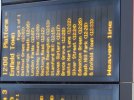
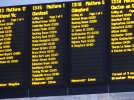
Some pics I took at Liverpool Street on Friday:
1) Enfield Town train on the big destination board - listed as "Weaver Line"
2) Chingford and Cheshunt trains on the big destination board - both listed as "Weaver Line"
1) Enfield Town train on the big destination board - listed as "Weaver Line"
2) Chingford and Cheshunt trains on the big destination board - both listed as "Weaver Line"
Attachments
Last edited:
Still don't understand the logic of that being one line rather than two.Liverpool Street on Friday:
norbitonflyer
Established Member
Like trams or buses, overlapping routes may work better as numbers.Depends where they're travelling – most of the Mildmay line is 8tph, and the core section of the Windrush line is 16tph – which is as good as many Underground lines.
Somehow I don't see Khan as an ardent royalist!
And the DLR is a lot harder to divvy up into "lines", when you've got so many overlapping service patterns.
Apart from the Stratford via Bow Church branch, and the stub to Tower Gateway, all sections of the network are served by two (or more) service patterns, so it doesn't make a lot of sense to try to separate them out.
- Beckton to Stratford International
- Beckton to Tower Gateway
- Woolwich Arsenal to Stratford International
- Woolwich Arsenal to Bank
- Lewisham to Stratford via Bow Church
- Lewisham to Bank
A logical set would be
1. Stratford to Lewisham
2. Bank to Lewisham
3. Stratford Int to Beckton
4. Tower gatreway to Beckton
5. Stratford Int to Woolwich
6. Bank to Woolwich
Odd numbers to Stratford, Even numbers to Bank/Tower
Consective pairs to Lewisham (1,2), Beckton (3,4), Woolwich (5,6)
Liverpool Street on Friday:
Should be labelled as
Overground: Weaver line
Overground: Other name line
What’s the purpose of different line names if you’re going to call two lines the same name in the main place they would be useful to differentiate them?

Isn't it like a Northern line thing where they really should be 2 lines but they're classed as one?Should be labelled as
Overground: Weaver line
Overground: Other name line
What’s the purpose of different line names if you’re going to call two lines the same name in the main place they would be useful to differentiate them?
Mildmay line to Richmond and Clapham Junction?Should be labelled as
Overground: Weaver line
Overground: Other name line
What’s the purpose of different line names if you’re going to call two lines the same name in the main place they would be useful to differentiate them?
Bletchleyite
Veteran Member
Isn't it like a Northern line thing where they really should be 2 lines but they're classed as one?
It is similar to some Tube lines which have multiple branches, yes. There's no ambiguity at Liverpool St because the destination is there in big letters at the top of the display, it's only a simple Y shape.
Not quite comparable, the Mildmay has a lot of shared stations between Stratford and Willesden before the branches split. Whereas the Weaver line only shares three stations.Mildmay line to Richmond and Clapham Junction?
Mikey C
Established Member
- Joined
- 11 Feb 2013
- Messages
- 8,237
The Weaver Line is just a bog standard commuter railway anyway. And a not an especially frequent one either.

miklcct
Established Member
But some trains skip some intermediate stations on the Weaver line, and the skipping pattern may be different during peak hours.It is similar to some Tube lines which have multiple branches, yes. There's no ambiguity at Liverpool St because the destination is there in big letters at the top of the display, it's only a simple Y shape.
Just got a message from someone near the Enfield branch:
At Enfield Town and Bush Hill Park they are not getting new enamel line maps, and have instead been given large stickers with Weaver Line colouring to stick over the entire old enamel Overground line maps. At Bush Hill Park this has been applied poorly and has large air bubbles under it, which looks terrible. You can see bits of orange poking out from under the corners, so the whole thing looks very ramshackle.

bluegoblin7
Established Member
Hardly breaking news. Quite a few places have received vinyls over the old diagrams; they'll be resolved in due course.
Indeed, hence why TfL ultimately hope to separate the Northern line. But the post I was quoting wasn't talking about the Northern line, it was talking about the Mildmay line, which has 17 shared stations, so isn't comparable to the Weaver or Northern lines which only share three stations and therefore arguably should be split into two lines.A Northern line train from Battersea to East Finchley shares only three stations with a Northern line train from Morden to Edgware:
Kennington
Euston
Camden Town
Sydenham and Forest Hill have been fully converted. Incidentally it also updates where the southbound Southern services go to now on the diagrams which is to either Victoria all day or Sutton in the evening peaks from next week. The diagram showing services to East Croydon and Caterham have vanished since they were removed a couple of years back.
Announcements also say Windrush line rather than London Overground from Atos Anne.
Announcements also say Windrush line rather than London Overground from Atos Anne.
I don't know if its just me but I'm finding the the tfl status page confusing now that the Ovegrounf has been split into six line. I agree that the Overground is complicated and needed splitting into lines. The names aren't immediately intuitive for those who are not regular users, although thinking about it only four undeground lines are at least partly intuitive - Bakerloo (Baker St & Waterloo), Hammersmith & City, Circle (not that it is) and Waterloo & City. The others aren't immediately obvious. I think that the problem is hoisting six new names on us at once rather than the names per se.
I think that the problem is the TfL has run out of colours. Right now the Windrush line is showing 'Part Closure' & the Central Line 'Good Service' but I was a bit concerned to see a red line showing Part Closed. The Mildmay & Victoria Lines and Weaver & Metropolitan lines also have similar colours. Two thoughts:
Could you change the colour of Overground lines say adding Overground Yellow in the centre to give a 'toothpaste' or 'rasberry ripple' effect?
Could you have a separate tab for the Overground?
I prefer National Rail who still refer, for example, to delays between Gospel oak & Barking.
I guess that I will get used to it over time.
I think that the problem is the TfL has run out of colours. Right now the Windrush line is showing 'Part Closure' & the Central Line 'Good Service' but I was a bit concerned to see a red line showing Part Closed. The Mildmay & Victoria Lines and Weaver & Metropolitan lines also have similar colours. Two thoughts:
Could you change the colour of Overground lines say adding Overground Yellow in the centre to give a 'toothpaste' or 'rasberry ripple' effect?
Could you have a separate tab for the Overground?
I prefer National Rail who still refer, for example, to delays between Gospel oak & Barking.
I guess that I will get used to it over time.
Confusingly, even TfL's own display boards seem to differ. At Warren Street, the overground lines have the white strip making it clear they are Overground lines, but at Limehouse DLR the line status board still showed Overground without any of the line names or colours.I agree. The distinction with the Overground lines should be that the colour is in two lines separated by a white strip, but that site seemingly doesn't have it. Which makes it more confusing.
norbitonflyer
Established Member
A journey from Gunnersbury to Harlesden and then to Clapham Junction showed signage updated at all those stations and trains, but not on the Bakerloo train I used on the Willesden/Harlesden leg. I think Harlesden station had Underground rather than Overground roundels. One train still had the spaghetti explosion network map but new individual line maps.

Skimpot flyer
Established Member
- Joined
- 16 Nov 2012
- Messages
- 1,934
Last Saturday, a couple of older ladies boarded the train at West Brompton, studied the multiple line diagrams inside the Class 378, and looked bemused.
‘We were supposed to be getting the Overground’ one said to the other ‘I think this is a tube train!’
A quick question from me ‘where are you trying to get to, ladies?’ established that they were trying to get to Kensington Olympia, and were on the correct Overground service.
‘We were supposed to be getting the Overground’ one said to the other ‘I think this is a tube train!’
A quick question from me ‘where are you trying to get to, ladies?’ established that they were trying to get to Kensington Olympia, and were on the correct Overground service.
Goldfish62
Veteran Member
- Joined
- 14 Feb 2010
- Messages
- 13,139
Well, the 378s do resemble "tube" trains internally, so if they weren't aware what the Overground was I can see that they'd be confused.Last Saturday, a couple of older ladies boarded the train at West Brompton, studied the multiple line diagrams inside the Class 378, and looked bemused.
‘We were supposed to be getting the Overground’ one said to the other ‘I think this is a tube train!’
A quick question from me ‘where are you trying to get to, ladies?’ established that they were trying to get to Kensington Olympia, and were on the correct Overground service.
Well, the 378s do resemble "tube" trains internally, so if they weren't aware what the Overground was I can see that they'd be confused.
As does the Elizabeth line. I can see how many people might get confused, but some people are going to get confused no matter what. I certainly can feel a little bit like a fish out of water when in south west London on both the tube and national rail network as there are so many different routes - and without a good geographical knowledge of the area, I can't easily work things out as I can in most other parts.
Goldfish62
Veteran Member
- Joined
- 14 Feb 2010
- Messages
- 13,139
Yes, I don't think the line names have anything to do with it.As does the Elizabeth line. I can see how many people might get confused, but some people are going to get confused no matter what.
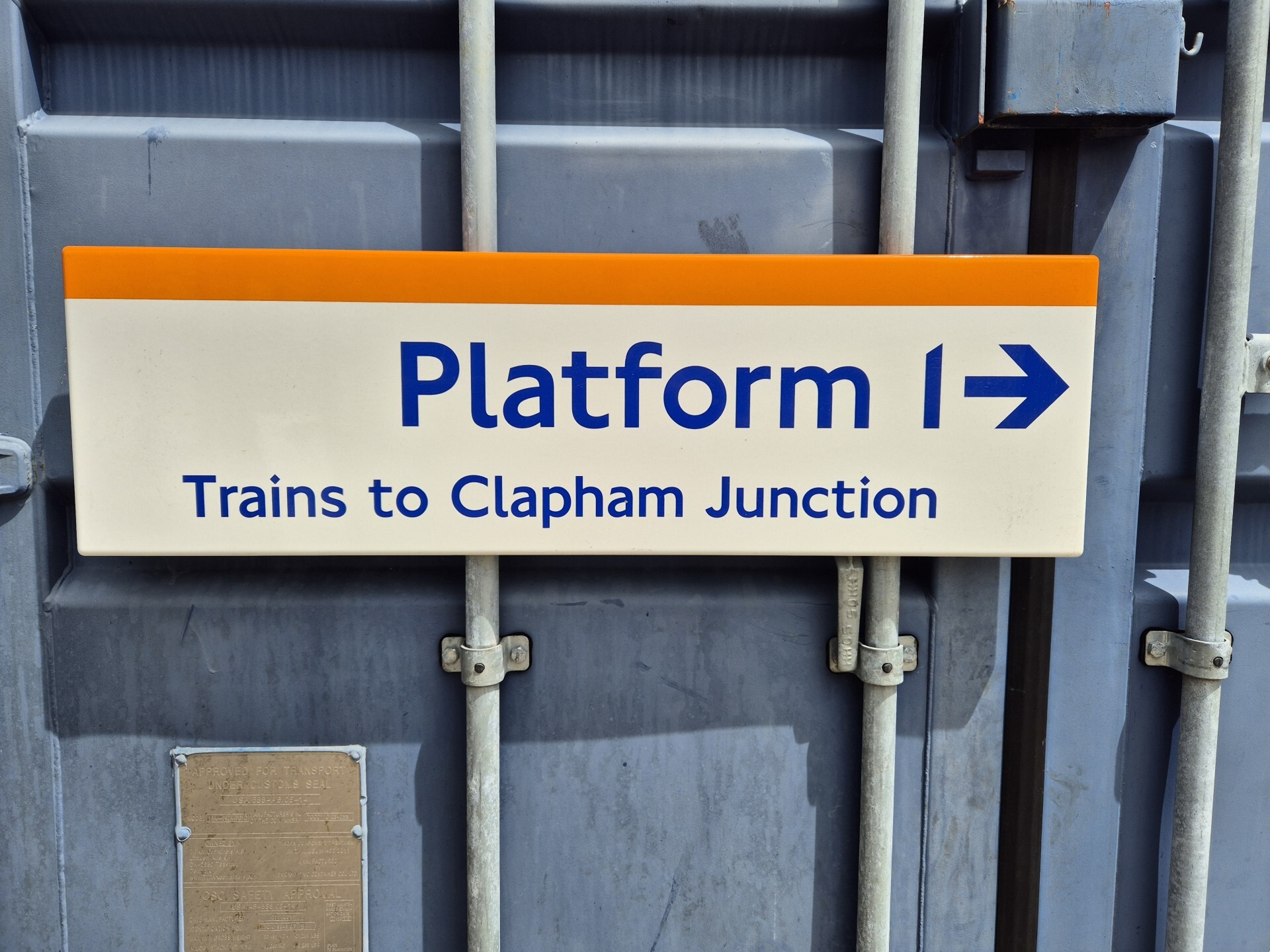
Might be of interest to some, interested in collecting railway heritage etc, on here:
 www.timeout.com
London’s Overground lines, if you didn’t already know, have just been rebranded. What was once a confusing sprawl of orange is now six new lines, hopefully making the Overground more user-friendly for out of towners and the less transport-savvy among us.
Well, the London Transport Museum (LTM) has the answer. The LTM will be selling the outdated signs on its website, meaning you – yes, you! – could own a piece of London transport heritage.
You can buy old Overground signs from the London Transport Museum
Got £900 to spare?
Changing signage, car line diagrams and announcements on other TfL modes isn't being funded as part of the project.A journey from Gunnersbury to Harlesden and then to Clapham Junction showed signage updated at all those stations and trains, but not on the Bakerloo train I used on the Willesden/Harlesden leg. I think Harlesden station had Underground rather than Overground roundels. One train still had the spaghetti explosion network map but new individual line maps.
The stations between Queens Park and Harrow & Wealdstone (inclusive) are managed by London Underground. Willesden Junction is the sole exception and is managed by London Overground. As such, I'd only expect to see fully updated signage at Willesden Junction and stations beyond Harrow & Wealdstone.
Sounds like political decision to reduce the headline cost…..Changing signage, car line diagrams and announcements on other TfL modes isn't being funded as part of the project.

pokemonsuper9
Established Member
The small ones look to be flying off the shelves (nothing under £550 not purchased).Might be of interest to some, interested in collecting railway heritage etc, on here:
You can buy old Overground signs from the London Transport Museum
Got £900 to spare?

Goldfish62
Veteran Member
- Joined
- 14 Feb 2010
- Messages
- 13,139
Great video from Jago Hazard in which he very deftly and amusingly puts down the various common moans about the names:
- Status
- Not open for further replies.