• Our new ticketing site is now live! Using either this or the original site (both powered by TrainSplit) helps support the running of the forum with every ticket purchase! Find out more and ask any questions/give us feedback in this thread!

Need help with points heaters

Status
Not open for further replies.

fatcontroller9

New Member
Joined
4 Jan 2017
Messages
2
Hi,
I am currently a student at the newcastle college rail academy and part of my p-way assignment is describe points heaters. after extensive google searches coming up empty handed, i have decided to try my luck here.
so basically i need to know what they do and how they do it. i would like to go into good detail about them too.
the examples i need are:
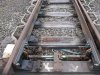
switch and stock rail heaters (strip heaters)
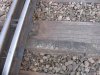
clamp lock bodies (cartridge heaters)
and rail chair/baseplate heaters.

So please if anyone can give me some good info on them or can point me in the direction of info it would be greatly appreciated.

thank you
 
Sponsor Post - registered members do not see these adverts; click here to register, or click here to log in
R

RailUK Forums

Steve Harris

Member
Joined
11 Dec 2016
Messages
1,193
Location
ECML
I can't really help other than stating the obvious.
That the heater keeps the moving parts of the points warm enough to stop them freezing up in cold weather. I believe most of them are electric, although when I used to frequent the platforms of stations more than I do now, they might of been gas or some kind of warm air!?. (As I used to hear a lot of hissing), But somehow I think I'm very wide of the mark, as now being a mechanical engineer I find it hard to believe. I can remember that snow used to always melt around the rails and point blades.

Hopefully someone else will post to enlighten further as my experience is just observations from about 30 years ago!
 

fatcontroller9

New Member
Joined
4 Jan 2017
Messages
2
Thanks for the reply, yeh all I've found so far is the rail heaters which are an electric element clipped to the rail web which heats the rail up to melt the ice. Baseplate heat pads are used to melt ice on the sliding baseplates for the switch rails to slide freely. The third one I can't find anything for. Unfortunately I can't seem to find anything that goes into great detail with schematics or wiring diagrams etc.
 

MarkyT

Established Member
Joined
20 May 2012
Messages
7,565
Location
Torbay
I believe points heating is all or largely electrically powered today. Other alternative types of point actuator machine also have small internal electric heaters like clamp locks. These are always on and are powered by the signalling supply, while rail strip heaters, a much larger load, have an independent supply infrastructure and are usually controlled by thermostats. That's about the limit of my knowledge on the subject I'm afraid!
 

AndrewE

Established Member
Joined
9 Nov 2015
Messages
7,329
You might be looking for more detail than you need... otherwise try asking the manufacturers direct (or finding out where the p-way men drink and asking them there!)
Have you found this? http://www.unipartrail.com/assets/points-heating-handbook.pdf gives details of components but there are pictures and you can read between the lines to build a wider picture.

The principle is to keep any moving parts free of ice, or from sticking together. There is also a need for extra heat to melt the ice that forms from snow being squashed in the gap between moving point blades

Besides old-fashioned gas heaters there were (are?) electrical heating tapes that are self-regulating, in that they shrink and pass more current as they cool but expand and cut their output as they warm up.

For specifics it's really down to the instructions for the ones in the area where you might be working. You can't be expected to discuss the detailed arrangements of all the makes, but I would have thought that comments on different heat sources, control mechanisms and limitations on output (and associated labour requirements) are the sorts of things an academy should be looking for...
 
Last edited:

hwl

Established Member
Joined
5 Feb 2012
Messages
8,252
You might be looking for more detail than you need... otherwise try asking the manufacturers direct (or finding out where the p-way men drink and asking them there!)
Have you found this? http://www.unipartrail.com/assets/points-heating-handbook.pdf gives details of components but there are pictures and you can read between the lines to build a wider picture.

The principle is to keep any moving parts free of ice, or from sticking together. There is also a need for extra heat to melt the ice that forms from snow being squashed in the gap between moving point blades

Besides old-fashioned gas heaters there were (are?) electrical heating tapes that are self-regulating, in that they shrink and pass more current as they cool but expand and cut their output as they warm up.

For specifics it's really down to the instructions for the ones in the area where you might be working. You can't be expected to discuss the detailed arrangements of all the makes, but I would have thought that comments on different heat sources, control mechanisms and limitations on output (and associated labour requirements) are the sorts of things an academy should be looking for...

Heating tapes (for the last 45 years) tend to be the self regulating semiconducting plastic type where the resistance falls with increasing temperature (a typical semiconductor property) to provide the self regulation (nothing to do with expansion or contraction directly)
 

AndrewE

Established Member
Joined
9 Nov 2015
Messages
7,329
Heating tapes (for the last 45 years) tend to be the self regulating semiconducting plastic type where the resistance falls with increasing temperature (a typical semiconductor property) to provide the self regulation (nothing to do with expansion or contraction directly)

Wikipedia seems to support that, but I thought it was much cruder, just the structure of the plastic: it shrinks in the cold, so carbon granules get closer together and pass more current. I thought "Real" semiconductors just had on/off gates depending on an applied voltage, or whatever.

If the resistance fell as the temp increased then surely you would get bigger currents flowing for no heat generated as the temperature rose?
 
Last edited:

Joseph_Locke

Established Member
Joined
14 Apr 2012
Messages
1,878
Location
Within earshot of trains passing the one and half
Thanks for the reply, yeh all I've found so far is the rail heaters which are an electric element clipped to the rail web which heats the rail up to melt the ice. Baseplate heat pads are used to melt ice on the sliding baseplates for the switch rails to slide freely. The third one I can't find anything for. Unfortunately I can't seem to find anything that goes into great detail with schematics or wiring diagrams etc.

Since they've just sent me a new calendar for 2017, try calling Graybar Ltd. on 01933 676700 - they specialise in railway LV systems, including constant wattage strip heaters.

Cartridge heaters for clamplock are just that, a small heating cartridge fixed to the pump/valve block to keep it from freezing.

Chair heaters came in two forms, now both obsolescent (but possibly still in use) - cartridge, which involved drilling holes in castings and were pretty rubbish, and pad heaters which were just a flat heating element placed between the bearer and the chair. These latter were still common in the 90's but they didn't really heat the rail very well.

Clipping a heater strip to the rail foot at least heats the rail directly, but also does away with the cats cradle of wiring that cartridges and pads needed. This is the current NR standard.

These systems all replaced the Planlite gas heaters, which ran off either the town gas supply or bottled propane (in remote areas). They typically had a pilot light and can be recognised with the metal duct and hoods clamped to the stock rail. The potential modes of failure of these things were manifold, including the pilot light blowing out, leading to cold propane leaking into the ballast, ready to toast the innocent PWay bod sent to relight them ....
 
Last edited:

Trog

Established Member
Joined
30 Oct 2009
Messages
1,546
Location
In Retirement.
Some junctions also had a large single tank to supply gas to the burners, instead of separate cages of propane cylinders for each set of point ends. I think from admittedly old memories that the one at Hanslope held something like 30 tons of liquid gas. There were also ducts marked as carrying acetylene, so I assume the installation changed gas types from acetylene to propane at some time. It was also alleged to have worked for years without a flashback arrestor.
 

QueensCurve

Established Member
Joined
22 Dec 2014
Messages
2,196
It may be outsider the scope of your enquiry, but nowadays there also seem to be electric fires overlooking major junctions (junction lights?).
 

rebmcr

Established Member
Joined
15 Nov 2011
Messages
4,005
Location
St Neots
Am I correct in recalling that lengths of burning rope were once used for this purpose?
 

civ-eng-jim

Member
Joined
16 Jul 2011
Messages
405
Location
UK
An example of the old gas heated switch heater at Beckingham.

Presumably the "burner" was on the lineside and the warm air was ducted in.
 

Attachments

  • IMG_5513.jpg
    IMG_5513.jpg
    235.6 KB · Views: 125

civ-eng-jim

Member
Joined
16 Jul 2011
Messages
405
Location
UK
There were also ducts marked as carrying acetylene, so I assume the installation changed gas types from acetylene to propane at some time. It was also alleged to have worked for years without a flashback arrestor.

Like so.
 

Attachments

  • IMG_5368.jpg
    IMG_5368.jpg
    233.8 KB · Views: 112

mbreckers

Member
Joined
20 Jan 2015
Messages
365
Not relevant, but reminds me of this photo which ive always liked

1474446444_Rail%20track%20heaters.JPG


(http://www.railpictures.net/photo/468663/)
 
Last edited:

broadgage

Member
Joined
11 Aug 2012
Messages
1,094
Location
Somerset
Am I correct in recalling that lengths of burning rope were once used for this purpose?

Not routinely AFAIK in the UK, but rope soaked in paraffin or diesel fuel could presumably be used in an emergency.

In the USA, oil soaked rope was and probably still is used to facilitate cold weather repairs to track.
In cold conditions the rails are under tension, and a broken rail will contract and leave a significant gap. To heat the rail and thereby expand it to the proper length, a long length of fuel soaked rope was placed touching the rail.
The ends could then be bolted or welded together.

To return to point heaters, they are all or almost all electrically heated these days. The propane bottles formerly used were not only a bit of a hazard but were frequently stolen.
Large point heating installations used mains gas, I can remember the strong smell of gas just outside London Waterloo station in years gone by. Sometimes the escaping gas ignited, but I recall no serious accidents, presumably because the escaping gas dispersed rapidly out in the open.
 

Marklund

Member
Joined
18 Nov 2010
Messages
827
You need to ask the E&P, they own the electric points heating assets.
As for gas, doesn't Plymouth still have some, or is my mind playing tricks on me?
 

gazzak

Member
Joined
14 Nov 2012
Messages
103
When I worked on the London Underground the vast majority of points were heated by hot oil passing through pipes and into the baseplate part of the track. I believe the oil was heated electrically in a small unit by the side of the track. It was back in the early 80's though so perhaps has been completely updated?
 

ge-gn

Member
Joined
5 Dec 2014
Messages
281
You need to ask the E&P, they own the electric points heating assets.
As for gas, doesn't Plymouth still have some, or is my mind playing tricks on me?

Think there might be some propane ones on the Wherry Lines also?
 

superkev

Established Member
Joined
1 Mar 2015
Messages
2,856
Location
west yorkshire
With the low cost of portal framed buildings and lack of huge gangs of ow staff these days Ive often wondered about remote junctions being covered over with such a structure having ir heaters pointing down.
No more snow clearing and no heater electrics on the track.
K
 

broadgage

Member
Joined
11 Aug 2012
Messages
1,094
Location
Somerset
With the low cost of portal framed buildings and lack of huge gangs of ow staff these days Ive often wondered about remote junctions being covered over with such a structure having ir heaters pointing down.
No more snow clearing and no heater electrics on the track.
K

It sounds attractive and might be worth it in a handful of special cases, but I see a number of pitfalls preventing general use.

Firstly, very large buildings would be needed, long enough to keep out wind blown snow, and wide enough to give safe refuge for track workers.
Secondly, in exposed locations consider the risk of structural failure in high winds and the costs of specially reinforced construction to withstand freak winds.
Thirdly, signal sighting might be impaired, and even an apparently minor relocation of a signal is a hugely expensive job.
Also I suspect that vagrants, hikers, the homeless and illegal immigrants will soon colonise these nice heated shelters.
And finally, in bad weather I suspect that wild animals and livestock would shelter in these structures and be struck by trains.

Worth considering in special cases, such as points just outside a station when extension of the station building to cover the points might be worth while.
 

Elecman

Established Member
Joined
31 Dec 2013
Messages
3,571
Location
Lancashire
I well remember fitting pads under the switches at Ribblehead and Blea Moor before the onset of a winter about 30 years and being sent back again a few weeks later to fit strips as well as the pads just couldn't cope by themselves. We ended up running the supply to the Blea Moor end via 650 volt step up transformers to reduce the volt drop over the viaduct from Ribblehead station.
 

pdeaves

Established Member
Joined
14 Sep 2014
Messages
5,932
Location
Gateway to the South West
I hope you forgive me for restarting an old thread!

Does anyone know when the last gas points heating system was installed in Britain, please? Even better, when was Didcot installed?

I happened to see some concrete troughing at Didcot recently. It now carries electric cables but the lids were moulded with the word 'gas' and I wondered how old the troughs are now.

Thanks!
 

Trackman19

New Member
Joined
5 Aug 2019
Messages
1
I am studying for a NVQ Level 3 Diploma in Engineering and Technology(Rail Pathway)in Middlesbrough through a training company called Learning Curve Group and I am currently working on unit 91 assessment 7.0 S+C layouts and I am wanting more info on points operating mechanisms and points heating systems
 
Status
Not open for further replies.

Top