
• Our new ticketing site is now live! Using either this or the original site (both powered by TrainSplit) helps support the running of the forum with every ticket purchase! Find out more and ask any questions/give us feedback in this thread!

Mystery Key

Status
Not open for further replies.

High Dyke

Established Member
Joined
1 Jan 2013
Messages
5,003
Location
Yellabelly Country
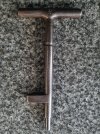
I was asked about the mystery key (as shown in the photos). It is marked Highdyke Box, on.one side, and the number 3 on the other.

Discussing with railway colleagues, both retired and present has not yielded any answers as to what it was used for. It isn't a door key. I post this to a wider audience.
20240417_154709.jpg 20240417_154659.jpg
 
Sponsor Post - registered members do not see these adverts; click here to register, or click here to log in
R

RailUK Forums

Mcr Warrior

Veteran Member
Joined
8 Jan 2009
Messages
17,194
A key to access manually operated points (normally covered) so allowing a train into (or out from) sidings?
 

WesternLancer

Veteran Member
Joined
12 Apr 2019
Messages
15,048
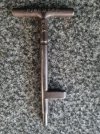
I was asked about the mystery key (as shown in the photos). It is marked Highdyke Box, on.one side, and the number 3 on the other.

Discussing with railway colleagues, both retired and present has not yielded any answers as to what it was used for. It isn't a door key. I post this to a wider audience.
View attachment 156598 View attachment 156599
What sort of size is it? How long for example.
 

John Webb

Established Member
Joined
5 Jun 2010
Messages
3,756
Location
St Albans
Where was Highdyke Box? There seem to be a number of places with a similar name scattered around the country.
Does the Number 3 refer to a lever, perhaps? And was it a way of locking the lever at danger while work was being carried out on the track the signal referred to?
 

High Dyke

Established Member
Joined
1 Jan 2013
Messages
5,003
Location
Yellabelly Country
Where was Highdyke Box? There seem to be a number of places with a similar name scattered around the country.
Does the Number 3 refer to a lever, perhaps? And was it a way of locking the lever at danger while work was being carried out on the track the signal referred to?
The assumption from the Tracks Through Grantham team is Highdyke, South of Grantham. This may / may not be correct.
A key to access manually operated points (normally covered) so allowing a train into (or out from) sidings?
A retired signaller friend has confirmed that, if it is Highdyke nr Grantham, then all the points were worked from the frame.
 

Rescars

Established Member
Joined
25 May 2021
Messages
2,531
Location
Surrey
The assumption from the Tracks Through Grantham team is Highdyke, South of Grantham. This may / may not be correct.

A retired signaller friend has confirmed that, if it is Highdyke nr Grantham, then all the points were worked from the frame.

Just a thought, but it appears that Highdyke box was rebuilt in 1916, when a 12 lever frame was replaced by a 40 lever frame to control a new branch to Closterworth as well as extensive sidings. Could the key belong to the old 12 lever frame installation perhaps?
 

High Dyke

Established Member
Joined
1 Jan 2013
Messages
5,003
Location
Yellabelly Country
Just a thought, but it appears that Highdyke box was rebuilt in 1916, when a 12 lever frame was replaced by a 40 lever frame to control a new branch to Closterworth as well as extensive sidings. Could the key belong to the old 12 lever frame installation perhaps?
Maybe.
 

John Webb

Established Member
Joined
5 Jun 2010
Messages
3,756
Location
St Albans
The assumption from the Tracks Through Grantham team is Highdyke, South of Grantham. This may / may not be correct....
In that case Highdyke Box was a short distance away from the North end of Stoke Tunnel. Could this have been a key for locking a south-bound (Up) signal at danger to prevent trains entering the tunnel while work was being undertaken in the tunnel? (The key would reside in a lock on the lever and could only be removed when the lever was 'normal' and the signal at danger.) A signal diagram for the box might confirm or refute this theory.
 

zwk500

Veteran Member
Joined
20 Jan 2020
Messages
18,481
Location
Northampton
There's a signal diagram from 1974 on Flikr here: https://www.flickr.com/photos/32297024@N08/6973402327

It shows signal 3 as being the signal controlling the exit from the Up Goods to the Up Main, mounted on a gantry. I'm not sure what the symbols below the Stop signals controlling the exit from the Up Goods mean. Of course the '3' may refer to something else completely.
 

John Webb

Established Member
Joined
5 Jun 2010
Messages
3,756
Location
St Albans
There's a signal diagram from 1974 on Flikr here: https://www.flickr.com/photos/32297024@N08/6973402327

It shows signal 3 as being the signal controlling the exit from the Up Goods to the Up Main, mounted on a gantry. I'm not sure what the symbols below the Stop signals controlling the exit from the Up Goods mean. Of course the '3' may refer to something else completely.
Signal 3 allows trains from the Goods loop onto the main line, signal 7 appears to allow trains to cross over into the Down Sidings, and signal 8 allows trains onto the line to Stainby. The 'D' sign below each signal indicates either a plunger or a telephone to contact the signal box is available; this allows the train crew to remind the box that they are there in the absence of track circuits. (This removes the need for one of the crew to go the 262 yards to the box to comply with the old Rule 55.)

That Signal 3 allows trains to approach Stoke tunnel (signal 13 near the tunnel mouth is obviously a later addition) reinforces my view that the key probably locked signal 3 at 'Danger' when work was being undertaken in the tunnel. I would expect there to have been a similar key for signal 12.
 

Railsigns

Established Member
Joined
15 Feb 2010
Messages
2,754
I'm not sure what the symbols below the Stop signals controlling the exit from the Up Goods mean.
Those are "D" signs, which (in LNER practice) denote that a telephone is provided.
 

1whitemoor

New Member
Joined
28 Oct 2016
Messages
1
Single line keys from the Highdyke branch do turn up fairly regularly. However, this is altogether more interesting.

I believe this key is a basic Annetts key for locking the large lever frame in the box. Likely that several were issued, hence the numbering.

If it ever needs a new home please let me know, I collect items from Highdyke and this is probably a unique survivor...

== Doublepost prevention - post automatically merged: ==

To add to further comments above, I cannot see that lever no.3 would have special treatment versus any of the others and photographs of the lever frame substantiate this.


Even in light of the aborted preservation attempted of the Highdyke branch and ironstone lines through to Buckminster and Market Overton, BR were insistent on closing the junction. Given the path consists would have taken from the Up Goods right across the ECML to the branch, it is not difficult to see why!
 
Last edited:

John Webb

Established Member
Joined
5 Jun 2010
Messages
3,756
Location
St Albans
Single line keys from the Highdyke branch do turn up fairly regularly. However, this is altogether more interesting.

I believe this key is a basic Annetts key for locking the large lever frame in the box. Likely that several were issued, hence the numbering.

If it ever needs a new home please let me know, I collect items from Highdyke and this is probably a unique survivor...

== Doublepost prevention - post automatically merged: ==

To add to further comments above, I cannot see that lever no.3 would have special treatment versus any of the others and photographs of the lever frame substantiate this.


Even in light of the aborted preservation attempted of the Highdyke branch and ironstone lines through to Buckminster and Market Overton, BR were insistent on closing the junction. Given the path consists would have taken from the Up Goods right across the ECML to the branch, it is not difficult to see why!
Very nice photo you've linked to, but clearly by then lever 3 was out of use as it's painted white. So if there were any special locks on it they would no longer be there to be seen?? So still a bit inconclusive as to the function of this key. (Somehow locking the whole frame seems unlikely - the photo does not appear to show a switch which would allow the box to be 'switched out' although again changes might have occurred following closure of the branch.)
 
Status
Not open for further replies.

Top