• Our new ticketing site is now live! Using either this or the original site (both powered by TrainSplit) helps support the running of the forum with every ticket purchase! Find out more and ask any questions/give us feedback in this thread!

My Irish Adventure, July 2011

Status
Not open for further replies.

MidnightFlyer

Veteran Member
Joined
16 May 2010
Messages
12,856
Some of you may know that I went on holiday to Northern Ireland last week, and whilst I was there went on the Irish rail network for the first time ever. Here's what happened (Tuesday-Thursday to come later):

Monday 4 July
My unbelievably epic Irish adventure started off with being dropped off at Portrush station in good time for the 1133 Coleraine service. The booking office is only open through the summer (July / August only IIRC), and is a stone box with a bloke behind part of it. I bought my ticket to Coleraine (Adult Day Return [off-peak]), and was surprised when I was given a bus ticket. Mind you, I suppose it does save on the cost of printing etc, and to be fair they are easier to read. Anyhow, a 450 pulled in, and good numbers got off, as well as boarded, though it remained quiet enough for me to be the only one in the front carriage. We left dead on time, and passed through Dhu Varren and University (serving the University of Ulster) before arriving at Coleraine. I left the train to have a look around the station, and was told by the ticket gate attendant upon returning to the train that it ‘was the next one this side’. I took his word, and promptly ended up in Castlerock on the Londonderry line... I thought the train was a bit too busy. Apparently, the Belfast-Londonderry workings and Coleraine-Portrush workings have been changed for the high summer; with it now bring Portrush-Londonderry and Belfast-Portrush. The next train back was for well over 100 minutes, so I did what any person would and called my Mum to take me back into Coleraine pronto. I arrived back at Coleraine in good time for the 1315 back to Portrush. From what I can gather, this had worked through from Great Victoria Street, and was formed of a single C3K set. They are very nice trains (except they can’t align tables to windows!!!), and I had an enjoyable journey back up to the North Coast. I note that University station is called ‘Coleraine University’ on board; I’m not really sure where you could get it confused with though? We arrived into Portrush on time, and I got a few shots around the station and of the C3K. I was later informed that that day was supposed to see the last ever workings of a 450 on the branch, but 2 C3Ks failing in Belfast that morning had ensured that that didn’t happen.
 
Sponsor Post - registered members do not see these adverts; click here to register, or click here to log in
R

RailUK Forums

Xenophon PCDGS

Veteran Member
Joined
17 Apr 2011
Messages
35,424
Location
A typical commuter-belt part of north-west England
Portrush booking office sounds straight from A Hammer Horror film...a stone box with a bloke behind part of it. It was good to see that "Mum's" do still have their uses in an emergency. If you had not had changed at Castlerock, it would have been a very long run to Londonderry, with only the station at Bellarena as the only other stop.:oops:

Looking forward to your next installment.
 
Last edited:

4SRKT

Established Member
Joined
9 Jan 2009
Messages
4,409
Lots of public buildings in Northern Ireland are utilitarian in the extreme, which I guess dates from the time when getting blown up was a real possibility. The worst station ever was York Road station in Belfast (happily closed in 1992 and mourned by nobody), but many others are also terrible (although most have been tarted up in recent years). I have seen pictures of York Road before it was blown up in the early '70s and it looked a splendid place.
 

MidnightFlyer

Veteran Member
Joined
16 May 2010
Messages
12,856
Tuesday 5 July
Today was when the real exploring started. To be more precise, it began with the 0915 from Portadown towards Belfast GVS. It is obvious that many buildings over there are designed to withstand terrorist attacks (or bombs at least). It was rather boxy, but the retailing was better (open air service, basically a guy stood behind a table with a coffee machine on it), and seats were aplenty (how many British stations can you say that of?). I queued up at the booking office (two members of staff on: once more, how many British stations can say that?), and bought my iLink ticket for £16.50 (one day’s zone three fare plus a £1.50 start-up fee). I then waited in the booking hall to be called forward – even a station of Portadown’s size there are no announcements via speakers or electronic departure boards. Instead, the ticket gate attendants call out, for example ‘People for Lurgan, Moira, Belfast and Bangor!’ when the platform is cleared. The main advantage to this is that you don’t get ‘In the interest of safety and security...’ every five minutes! I boarded the C3K in the Dublin platform, and waited to set off. All trains on the Portadown-Belfast-Bangor axis are booked C3K, as are Belfast-Londonderry runs. Only Belfast-Larne and Coleraine-Portrush are still in the hands, for the time being, of the 450s, and, just about hanging on, 80s, though these only work peak trains on the back of 450s out to Larne. The train was fairly quiet leaving Portadown, but was about 60% full after Lurgan, Moira and Lisburn. We were on time into Great Victoria Street, and I took time to explore the station and adjoining bus station. It is quite impressive, certainly better than any interchange in England. There was a similar system at GVS, where the next train due out was announced by the gateline staff. Mine was the 1028 for Coleraine (it would be Londonderry but for the diversions I mentioned yesterday). From what I can remember it was a heavily-loaded single C3K set, and we passed City Hospital and Botanic as normal, but then it was announced that this train would be terminating at Central, and any people for Yorkgate, Antrim and te North would need to change onto the train further up the platform. This turned out to be 2 x C3Ks: from this I assume that the reason our set was terminated was that it would have been impossible to run a 9-car set up to Coleraine and Portrush, though what two sets were already doing there escaped me. The back set looked almost fully loaded, though, luckily, as so many times happens over here, no-one had bothered to use the front set, and I was only one of about ten in the front coach. The line between Central and Yorkgate takes you over the River Lagan, and is probably the only thing of remote interest between Portadown and Yorkgate!

Yorkgate, AFAIK, marked the end of the complex task of combining Belfast’s three railways – from Portadown and later Antrim and Coleraine via Crumlin to Great Victoria Street, Central (I cannot remember its previous name) to Holywood and Bangor, and York Road (the depot of the same name remains, next to the most recent depot at Fortwilliam) for Larne (and previously Antrim and Coleraine). After nationalisation, work started to combine these three to what we have today. Whitefield Curve was built to connect GVS to Central, and new avoiding lines took the Enterprise into Central instead of its traditional home at Great Victoria St. York Road was a terminal station, but was in a bad way in its final years, and was closed and demolished in the 1990s, with Yorkgate (a through station) opening next door, at the end of the new viaduct over the River Lagan, which completed the job – Central and the lines to Larne and Antrim were now connected. The route to Coleraine via Belfast was brought back into regular use, with a new station as Mossley West (one for Templepatrick never materialised), meaning that the route previously taken, via Lisburn and Crumlin became disused. All three stations on the route closed, as well as Knockmore on the Portadown line, though the line is still maintained in case it is ever needed – Network Rail take note! Although they only closed in 2003, there are serious chances of the line reopening for passengers, and a new Belfast-Lisburn-Antrim-Belfast service being started, as well as reopening Knockmore on the mainline as ‘Lisburn West’.

Anyway, back to what I did. After Yorkgate we carried onto Mossley west and Antrim, then up through the county of the same name to Ballymena, Cullybackey and Ballymoney, before reaching the junction at Coleraine. My journey remained relatively quiet and on time throughout, and I changed for my Class 450 to Londonderry. We headed west almost immediately out of Coleraine (having travelled and arrived from Belfast south-north), before reaching the coastal village of Castlerock, my home for half an hour the day before. The single car set was between half and three quarters full after departure from Coleriane, and this didn’t really change at Castlerock, or indeed at Bellarena, the next station on the route. We arrived into Londonderry dead on time, and I took the 25 minute break I had looking around the fairly compact station. For such a large city, I am surprised that it’s rail services are as poor as they are: the line between Coleraine and Londonderry is the only one not to have been fully relayed since nationalisation, and, as a result of it being single track all the way to Castlerock, a good 35-40 miles, it only has 1tp2h to Belfast, and that’s it. Maybe if IE look into extending their network up to the relatively nearby County Donegal, things may improve, but it is bad at the minute – I think this was reflected on my return train: about 25 were waiting for it at Londonderry, and, as per usual, I was the only one in the front carriage (minus one member of staff who disappeared somewhere on route). The line between Coleraine and Londonderry is quite simply breathtaking – as far as I am concerned, it is better than the Cumbrian / Cambrian Coasts, the S&C, Lancaster-Carlisle on the WCML, and Newcastle-Edinburgh: it only narrowly falls short of Dingwall-Kyle and Dumbarton-Mallaig. You are literally a stone’s throw from away from the south bank of Lough Foyle (which forms the river on which Londonderry is built), and there are some stunning views out across the water to the north bank (in the Republic; County Donegal to be precise) all the way from Londonderry-Bellarena. Between the two, about eight miles west of Bellarena, you come across a unique features to any line in Britain or Ireland – you cross a runway on the now-disused Ballykelly Airfield! From Bellarena, you cut inland through tranquil County Londonderry countryside until just west of Castlerock, where you rejoin the coast, and head through some tunnels to Castlerock station – it is almost a carbon copy of the Dawlish Sea Wall. For the short run to Coleraine, you stick to the southern banks of the River Bann, crossing it just before the station at Coleraine. If that isn’t enough, the south side of the line features some of the finest rural/mountainous scenery from any line I have ever been on, and the City of ‘Derry Airport just after leaving Londonderry – take your pick! I changed once again at Coleraine for a two-set C3K train (presumably from Portrush) back down to Belfast. I saw told by platform staff at Coleraine ‘Front set only’, so I obliged, and did my favourite thing of being the only person in the front carriage – I’ll have to remember to do that more over here! We left a couple of minutes late (we had been a couple late into Coleraine from the Londonderry train), and we pulled into our first station at Ballymoney. Here, the Guard went through into the front cab, came back out, and asked everyone where they were going, and said ‘We’re having a bit of engine trouble, we will be late into Belfast.’ We [passengers] never learnt what the problem was, but we left 20 late. This messed up my plan for changing at Yorkgate and getting eight minutes there to get onto the 80 / 450 Larne Harbour train, so I stayed with it through to Belfast Central. There were good numbers waiting at all stations except Cullybackey and Mossley West, luckily none strayed into the front coach! I had a look around the station: it is quite a long walk from the platforms to the booking hall, but at least you can look down on the platforms for part of it. The first part of the booking hall contains just the gates, cafes and waiting area. As with Portadown, seats were plentiful: Belfast Central concourse probably had more seats than London Euston does, not bad when you consider that Central is about 1/15th the size! I am aware that with a normal train ticket to Belfast, you can get on any Metro bus into the city centre for free. I wasn’t clear about the rules for doing this on an iLink ticket, and I fancied the walk anyway, so I set off towards the city. Never has the term ‘Central’ been more misleading. It was quite a walk to even the edge of the centre. Even then, it was quite complex to find the absolute centre of the city, so I just went for a walkabout. When I ended up at some kind of ring road, I realised that I was well off the beaten track of the central city. Belfast, as with most large cities, is poorly signposted, so I just walked down the next busy road back to the city I saw, and hoped that I ended up at a station, or a map. I must have walked quite a way down a road which I still don’t know where it was, and had to take a photo on full zoom of a signpost across the wide road, which told me to carry on walking the way I was heading for Great Victoria St / the Europa Buscentre. About 55 minutes after I had first left Central station, I arrived at the Europa Buscentre from the small, run-down shopping centre in front of it, just to the left of the infamous Europa Hotel, and, having explored it that morning, rushed left and around the corner to the railway station. I had lost all track of time during my exploration of Belfast, so just ran for the first Portadown train that was advertised – and made it by about 20 seconds! Soon after leaving Great Victoria St I realised that I had left Belfast way earlier than I needed to in order to be back for the time I said I would after I realised that I wouldn’t get Larne / Bangor done. The train I was on (a jam-packed C3K) was one of the first proper evening peak trains, and as such was first stop Lisburn, where I detrained in order to kill time before heading back to Portadown for the tine I said that I would be in for. Lisburn is a fine station, very clean, presentable and organised. The walk from the station to the city is slightly long, but I did have 50 minutes to kill. The city was as fine as the station, many recognised shops, and all fairly compact. The 50 minutes was easily passed, and I headed back up to the station for the 1712 back to Portadown. AFAIK this train is another non-stop from GVS, and it was as busy as the first one I got, though massive numbers got off at Moira and Lurgan, leaving about half for Portadown. We got into Portadown on time, and, yet again, my iLink ticket failed at the reader, just as it had done that morning (and at GVS twice!).
 

Xenophon PCDGS

Veteran Member
Joined
17 Apr 2011
Messages
35,424
Location
A typical commuter-belt part of north-west England
Matt, you have excelled yourself with this second part of the holiday. I am glad that this time, your journey through Castlerock was the intended one (not like what could have happened on day one). When you go through the two short tunnels, the line strikes across country to reach Bellarena, then from there to Londonderry, you have a really good coastal run with Lough Foyle on your right. Did you notice how wide it is, with County Donegal across the water in Eire. Looking forward to Day Three.
 

MidnightFlyer

Veteran Member
Joined
16 May 2010
Messages
12,856
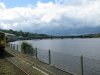
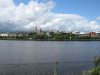
Sorry Paul, I never took any photos as I went to Londonderry (on the RHS). I took plenty from the window on the way back, but they were looking inland.

From what I can remember, and using Google Maps, after you cut cross-country, you join it about 5 miles wide, that rises to about 9, then it narrows quickly to form the river just north of Londonderry.
 

MidnightFlyer

Veteran Member
Joined
16 May 2010
Messages
12,856
To give you some sort of idea as to its size in Londonderry, see these photos (note the fence to the side in the first and in the foreground on the second).

-----------------------------------------------------------------------------

If anyone wants any photos from this I will happily upload them. I took photos of everything that I have described and will not hesitate to share them. :smile:

I also have lots of timetables and leaflets from both railways. Want any? PM me. I have tonnes to give away. :smile:
 

Attachments

  • IMG_7658.jpg
    IMG_7658.jpg
    169 KB · Views: 29
  • IMG_7660.jpg
    IMG_7660.jpg
    166.7 KB · Views: 19

4SRKT

Established Member
Joined
9 Jan 2009
Messages
4,409
A nicely written piece, well done!

To clarify the chronology of Belfast's Railway developments, NIR inherited from the UTA three completely separate railways into the City. The old NCC main line and Larne branch came into York Road, the Belfast and County Down Railway into Queens Quay roughly where Bridge End is now, and the Great Northern main line from Dublin into Great Victoria Street (originally closer to the road of the same name where the Europa Hotel stands now). The disused line between Lisburn and Antrim was retained for stock movements, but the Bangor line was physically completely isolated after the UTA had closed the former Belfast Central Railway (a freight only link).

In 1976 NIR reopened the Belfast Central Railway between Central Junction (between Adelaide and GVS), and Ballymacarett Junction (between Queens Quay and Sydenham). Queens Quay and GVS were both closed at this time, with a new depot being built on the site of Queens Quay. Trains ran cross city from Bangor to Lisburn (half hourly) and Portadown (hourly). The new and misleadingly named 'Central' was opened on the site of Maysfield cattle depot on the Belfast Central Railway, and a new station at Botanic was also opened. With the closure of GVS, Botanic was the closest station to the centre, which had contracted and shifted south due to the Ring of Steel introduced following all the violence in the early 1970s. This shifting of the CBD southwards left York Road isolated in an area dominated by menacing motorways and dual carriageways, industrial dereliction and sectarian violence, so in 1978 the Derry line services were diverted to Central via Lisburn and Botanic, adding an extra 10 or so miles to an already indirect journey, and leaving Larne line passengers stuck with the squalid York Road and wretched 'Rail Link Bus' to the city centre and Central. The Bleach Green > Antrim section was retained for stock movements. In 1986 the City Hospital station on Donegall Road was opened.

This was the state of affairs when I lived in NI, but work began in 1991 on the Cross-Harbour Link between York Road and Central. Opened in 1993, this allowed Larne passengers through access to Central and Botanic and beyond (there was an hourly Larne > Portadown service then). Central Service Depot on the site of Queens Quay disappeared under a motorway and was replaced by an expanded facility at York Road covering the site of the platforms. This was quickly followed by the reinstatement of GVS, with the original line being relayed to a new, slightly further out, station, and a completely new, very sharp curve directly linking GVS and City Hospital. After this the direct Adelaide > City Hospital route over the BCR was only used by a handful of local trains as well as all Dublins.

Finally the section between Bleach Green and Antrim was brought back into use, but as single track unfortunately. The Antrim > Lisburn section was reduced to three trains a day before being abandoned and mothballed. Translink nourish a fantasy about using it as a link to the Airport, but it'll never happen IMHO.
 

Techniquest

Veteran Member
Joined
19 Jun 2005
Messages
21,832
Location
Nowhere Heath
Sounds like it was an excellent trip! Although I'll have to mention that my eyes were struggling with the extremely long paragraph back there!

Glad to see you enjoyed it and that the long journey from Coleraine to Londonderry is worth doing. I considered it on my epic Irish bash in January, but that was soon dismissed on account of the long journey to Londonderry, the long wait to come back, not knowing if it was worth it and primarily, this was a bash for Thumpers not CAFs! Same reason why I never bothered with Bangor (although I considered doing it after it got dark in the late evening, but decided it better to keep going with the Thumper mileage. I stand by that decision and Bangor as well as Londonderry will wait until another time), although I do wonder what would have happened if 8458 had indeed gone to Bangor that morning...
 

W-on-Sea

Established Member
Joined
18 Dec 2009
Messages
1,447
Gotta agree with you about how stunning the scenery (especially along the coastal stretch) between Coleraine and Londonderry is - definitely one of the most beautiful lines in the UK.

AS for why so few people use Londonderry station: not just just the relatively low frequency of service, but the station's location is a bit odd, not that close to the city centre, and really, on the wrong side of the river, too; and the route to Belfast is so winding that it's almost always much faster to get between NI's 1st and 2nd cities by coach. Not sure that any of those things can be sorted out without major investment, unfortunately...
 

4SRKT

Established Member
Joined
9 Jan 2009
Messages
4,409
Politics, as with everything else in Derry's history, is the reason its railway service is the way it is. The GNR ran into a station at Foyle Road on the city side of the river, but its route to Great Victoria Street crossed the border twice between Derry and Strabane. Despite being a slightly shorter route than the NCC line, and serving the large-ish towns of Strabane, Omagh and Dungannon en route, and providing good connections to Dublin at Portadown, it was closed by the UTA. The NCC route was retained, and TBF does provide a good route to the towns of Antrim, Ballymena, Ballymoney and Coleraine. There has been not inconsiderable speculation over the years that predominantly Catholic NI west of the Bann was denuded of its railways while the predominantly protestant east kept most of its trunk routes at least. Whether there is any truth in this I couldn't say, but it is now politically impossible to close the NCC line into Waterside station in Derry, the [predominantly catholic] second city's last railway link with the rest of NI.

Had the GNR Derry Road been kept (as it really should have been: balls to the UTA!), the border issue could have been overcome by closing any intermediate stations in County Donegal and running 'sealed' trains between Strabane and Derry. The GNR operated the 'Bundoran Express' from Dublin sealed between Clones and Pettigo, running non-stop through Enniskillen, so there was a precedent for doing this. The GNR line would have remained the main line, and the NCC route could have then run primarily to Coleraine/Portrush, with Coleraine > Derry operated as a politically retained branch line to provide a link between the county town of Co Londonderry and its second biggest town (Coleraine).

For nearly 25 years from 1978 Derry trains over the NCC ran via an even more circuitous route via Crumlin into Central, to avoid the loathsome York Road terminus in north Belfast. This didn't help an already rubbish service and further traffic melted away.
 

The 39 Steps

Member
Joined
19 Jun 2011
Messages
56
I enjoyed reading about your travels on the 4th and 5th July. Hope you will fulfil your promise of updating your subsequent travels on that holiday.
 

MidnightFlyer

Veteran Member
Joined
16 May 2010
Messages
12,856
At long last! :D Sorry for the delay.

Wednesday 6 July
Today I planned to explore the Republic’s railways for the first time ever. Obviously to do this from the North I needed to get on an Enterprise train, which I did: the 0831 from Portadown to Dublin. As I had been told to expect, it was very busy. I didn’t do my usual of wandering up and down the train until I found something, or going to the door where no-one was trying to board, and as such just settled for an airline style seat on the left. We got going through the East Armagh countryside, with the stations at Scarva and Poyntzpass, served by only a couple of stopping trains a day between Belfast and Newry, the only highlights. After the latter, the line cuts ever-so-briefly into neighbouring County Down, for what must be little more than half a mile. Yet more rural emptiness followed as we kept close to County Armagh’s eastern border, before stopping at the dull station at Newry, a new city rocked by the Troubles, though the station is quite a way from the place. From what I can gather it has been resited and rebuilt ever so slightly in recent years, though I can find much more information than that!

The train by this point was almost at full seating capacity, maybe proof that improved times and services along this line would be keenly-welcomed. We got talking to a man near us, who recalled the tales his father had told him about the railways many years ago, as well as a general chat about modern railways, and our destination city. We soon crossed over the border into the Republic, and the line headed South West to the first town (and stop) in the country – Dundalk (or Dundalk Clarke to hard-core Nationalists). Quite a large and impressive building sits in the middle of the station’s island platform, which is served by the majority of Enterprises, as well as some slower services into Dublin and beyond. I wish I could tell you how many boarded / alighted here, but I didn't take note. We carried on through County Louth, which as far as I know is the smallest county in the island of Ireland, as we passed the disused halt at Dunleer, and a while later over the River Boyne (scene of certain 1690 events that I’m sure many historians and Irishmen / Ulstermen know well) and through the station at Drogheda MacBride (pronounced Dro-da). This is one of only two trains a day not to call at the station - the other being the Enterprise I returned on in the evening. I didn’t get a chance to observe the area south-west of the station, the site of the old line into Navan and the rest of mid-County Meath, but the tracks and platforms survive, although the latter are disused. The lines survives for freight beyond Navan, but it does look likely to reopen in future for passenger use. We left County Louth and hit the very eastern edge of County Meath, following the quite beautiful coastline down Laytown, and into County Dublin. We cut inland here, and passed through many intermediate halts, as well as the slightly larger station at Howth Jn (where the Howth line joins strangely enough), before rolling through Dublin’s north suburbs, and over Ireland’s railway spaghetti junction, where lines from all four compass points meet, into the station at Connolly. Here we, and obviously everyone else, detrained.

As I’m writing this in mid-late December and all this happened at the start of July, I have forgotten some detail, such as whether I had my ticket checked on the train or indeed leaving Connolly. I do however seem to think that I had it checked before getting onto the platform at Portadown. Anyway, we had arrived. My first impression of Connolly was that it was quite small, and for the second-busiest station in Ireland it was: the bay platforms (and accompanying trainshed) backed onto a glass and steel building, which housed the concourse, a few shops and a booking office, and not much more. I was then left by the two people I was on holiday with, who went to do all the usual boring tourist stuff – look at the Jail, the city centre, and the other exceptionally dull things normal people do. I was given twenty Euros to see me through the day, of which a few were spent on first ticket – a Day Return to Dun Laoghaire. I haven’t ever bothered to compare it distance-price for a similar journey over here, but to be honest I would have paid anything to get out and about down there. I bought it from one of a couple of TVMs next to the booking office, and it came like I assume all standard tickets over there are – slightly smaller than ours, and yellow. Armed with my brand new ticket, I set off for the suburban platforms on the west side of the bays, accessed by walking down the westernmost bay (platform 4) and through a quite sizeable gap in the trainshed wall, where I think you then passed through a gateline (though I showed mine to the staff staffing it), the n either took the subway for platforms 6 and 7 (generally northbound only), or walked a short distance to platform 5 (generally southbound trains). I looked for my train – the 1025 to Greystones – and headed for platform 5, which it was advertised from, before I was informed by announcements and the electronic screens that it had been rerouted to platform 7. I stood for a few minutes on platform 7 before it pulled in, already a few minutes late, boarded a relatively quiet leading vehicle of a Class 81xx / 83xx setup, and waited for us to set off, which we eventually did, a good few minutes down. The viaduct over the Liffey followed, as did Tara St, Pearse and Lansdowne Rd stations, to name but a few. It remained relatively quiet and peaceful until Dun Laoghaire, with few using the intermediate stations out of the city. The journey, following the east coast just as the line north of the Capital did, was slightly ruined by a fly, who did what every fly does – making themselves as annoying as is humanly possible to imagine, hence he ended up being splattered with a copy of a car magazine I found lying about after ten minutes of sheer annoyance.

Anyway, I had arrived in Dun Laoghaire – better known as Kingstown before 1923. The station there, as with many larger ones in the republic, carries a suffix – in this case Mallin, and is enclosed by two walls, over which the station building is situated. I showed my ticket to the gateline crew, who let me keep it, and had a look around the building, which took about 20 seconds: it was bare to say the least, a booking office and a bench being the only notable features. At the window of the booking office an American male, who I think the station staff knew quite well, was arguing with the clerk about the cost of a ticket, before paying up, chatting to the gateline crew and walking down to the northbound platform shouting out a list of states that constitutes the New England area of the USA. I fed my return portion of my ticket into the gate, which returned it yet kept quite a firm hold of it, so much so it smudged the ink on it. Not bothered by this relatively minor issue, I followed the American down the stairs, and waited quite a distance away from him, for the next train to Dublin. Trains run every 15 minutes or so in each direction, and I had a 12 minute wait for a Class 86xx / 85xx set to take me back to Dublin. I alighted at Pearse, a very impressive station, and the busiest in Ireland, with a beautiful overall roof and fine buildings to each side. It was undergoing refurbishment when I was there, so most of the booking office and subway was covered in scaffolding and posters advertising the improvements, which were nothing too different from the standard refurbishment on this side of the Irish Sea: better lighting, repainting, deep clean, all the usual stuff. I went back to the platform and waited for the next train north to Tara St. This is a much smaller, yet still busy station just south of the Liffey, and is one of those city centre stations that are very busy but with few passenger facilities, maybe a bit like Deansgate in Manchester. I arrived on an xx86 / xx85 set and left on the next train (just as I had done at Pearse), which was an 81xx / 83 xx set up, like I had used on my southbound journey.

I arrived back into Connolly and didn’t really know where to go – should I stay on the DART network (like I had done for the past hour plus), and head to Howth, or should I go across central Dublin to see the city’s other main station, Hesuton? In the end I decided on the latter, and used the LUAS tram system to take me there. Connolly LUAS station lies at the front of the IE station, but significantly below it – I believe they had to remove the old station front / approach road to build it. I bought my ticket to Hueston – a City Centre Zone Single (which was quite lucky as both stations are the border of it), and jumped on the tram. It was busy, but everyone had a seat – mine was, in true trackbasher style, right-hand facing, furthest forwards in this case. We set off down through the city centre, calling at Abbey Street and Smithfield LUAS stations, amongst others, all of which were quite well-used I should add, before crossing the Liffey (again!), and stopping directly in front of Heuston station. I walked into the front entrance, and noted the many shops situated on the concourse, a version of Boots I think, as well as a fast-food restaurant whose names escapes me. Anyway, I wondered around the concourse for a while, collected what felt like several tonnes of timetables and leaflets from the information desk, took in the live departures, checked what ticket prices were like from the TVMs, and, most importantly, had lunch. The fast-food restaurant turned out to be like a nice blend of McDonalds and Burger King, and wasn’t too expensive for a place to eat in a capital city. After finishing, my attention turned to what I could do next, and it was quite lucky that a local stopper to Kildare, which would have been my only journey opportunity, was the next train departing, leaving from platform 1 in approximately 20 minutes. I worked out that I could get out to the first station only (Cherry West & Park Orchard), so I bought my ticket from the TVM, before taking more of a wander around this truly excellent station. I discovered the booking office and eastern entrance – it is one of the finest rooms I have ever set foot in on a railway station. I walked around it a bit, admiring the frankly stunning internal architecture, before taking a couple of photos. That was when a member of station staff came up behind me and I think asked me not to take photos inside the station buildings, though to this day I don’t have a clue what he actually said in his thick and quick-speaking Irish accent. Once again not bothered by this minor problem, I took a few more photos of the platforms (quite subtly), and boarded the Class 22xxx sat in the platform, enjoyed the quietness (there were three other people in my coach – the leading one, right-hand facing naturally), took in the constant barrage of Irish Gaelic automatic announcements, which were then instantly repeated in English, and eventually we set off. The line between Heuston and somewhere quiet west of Dublin near Kildare whose names escapes me is four-track, improved from the two-track layout present just a few years ago, though I have to admit I don’t know why – it sees roughly 3-4tp2h in each direction, generally one all stations to Kildare, one non-stop (to Limerick), and 1-2 calling at Kildare at the most. Anyway, I enjoyed my 7 minute journey, and alighted at Park West, along with a couple of others. The station, as with many others out to Kildare, has been totally rebuilt with the Kildare Line Improvements Programme, which includes the four-tracking and more local trains. The four platforms were silent, except for those from my train, and looked like they had never been touched by humans, despite being open for a couple of years now. The station building was massive, and empty too. The gateline think was open, or gave me my ticket back, but I suspect the latter as I think someone told the booking clerk that the gates were jamming. I had only a few minutes before my train back, so never really got a good chance to look around, but from what I saw the improvements have been rather extravagant and slightly over-the-top. I got down to the platform just seconds before my train rolled in: I was the only one that boarded (I don’t think anyone alighted), and once more was one of only three in my coach. We rolled into Heuston a few minutes later, and, after giving myself one last look around this beautiful station, almost a cross-between of Connolly and Pearse, I headed back to the LUAS station.

I reached the (nearer) northbound platform, for trams back up to Connolly and the Docklands, just as a service had left, and witnessed two members of the security services talking to a woman swearing and shouting in what sounded like Spanish / Portuguese. I think she had been caught for fare evasion and wasn’t paying up, so tried to board the next tram (heading for Connolly, I wanted a The Point tram), but was dragged off by the men. She then went on to have a massive hissy fit at the two men, swore at everyone around her, threw her shoe at one of the guards and went off in a huff. After that slightly unusual event, my tram pulled in, and I boarded, got a seat and enjoyed the ride through the city. LUAS trams, as far as I can tell, get no priority over traffic, so wait at traffic lights like everyone else, resulting in a slow journey in the centre. If you are a driver on them, I assume it must send you crazy after a while. Anyway, I got off at Spencer Dock, advertised as being for the relatively new Docklands IE station, and set about trying to find it. I got a bit lost down the roads leading to the station, and ended up having to come back to the LUAS station and try again, this time walking back towards the river, then down to the station. The station was silent – not a soul was about: the booking office was shut, the gateline open, no-one was on the platform, and no-one was in the station building. Using this time to take some photos, it made me wonder whether IE and the Irish Government have been too ambitious with the recent trend of rail improvements, we have seen that Western Corridor numbers a way lower than expected, and I was stood for ten minutes on a new city centre terminus in the middle of the day without seeing a single living being. I never bothered to check if the train in the platform had people onboard, but if it was empty it wouldn’t have surprised me. I walked back along the river up to the main road (and tram route), and walked back along towards Connolly station, meeting up with the two people I had come down with, who had experienced the joys of the Prison, Zoo and tourist buses. We had out tickets checked, and were told to wait in the waiting room for Enterprise trains, where you are kept until the arriving train has been emptied of passengers and cleaned etc. Being relatively close to the front of the queue we managed to get a table to ourselves on the way back (right-hand facing of course!), but the train filled up well. Many got off at Dundalk (we were non-stop at Drogheda), as they did at Newry, and numbers thinned out further judging by how many alighted along with ourselves at Portadown, at the end of what was an absolutely spectacular day.

I will add just a couple of brief notes to this:
  • We bought our tickets for the Enterprise in advance over the Internet, obtaining what I think are the cheapest tickets possible – £17.50 return each. Although you are attached to a service you get not seat reservation, maybe we could try adopting that over here, it worked quite nicely over there!
  • The line between Newry and Dundalk is stunning, beautiful hills to the west, rolling hills and some coast to the east. If you ever find yourself out that way, try and get it done, it is a little gem!
  • Several key stations had their suffixes added / changed in 1966 to celebrate the 50th anniversary of the Easter Rising. Surnames of key figures involved were used in lieu of traditional names, hence today we have Bray Daly, Waterford Plunklett and Cork Kent, to name but a few.

 
Last edited:

Techniquest

Veteran Member
Joined
19 Jun 2005
Messages
21,832
Location
Nowhere Heath
An excellent read. I must say I'm surprised that those stations were so quiet, indeed Docklands being so empty shocks me. Without having gone over for myself to travel on IE trains in quite some time, I've not seen these improvements yet but I'm surprised they seem pointless.

It's no wonder they want to shut so much of it!
 

Xenophon PCDGS

Veteran Member
Joined
17 Apr 2011
Messages
35,424
Location
A typical commuter-belt part of north-west England
Matt. I am pleased that you have eventually found the time to complete the final part of your rail travels "over the water".

I have read it through from start to finish to get the feeling of the whole travelogue and found it very well written indeed and quite informative to anyone who has not made these journeys, who now be tempted to retrace your footsteps. Well done!!
 

GM078

Member
Joined
17 Sep 2010
Messages
432
Location
Leinster
Nice account, as an Irish native it's interesting to read a visitor's account of the system.

Just to clarify, Dunleer is no longer open to passenger traffic of any kind, excursion or otherwise. I believe the last location to be open to excursion traffic only would have been the Curragh (between Newbridge and Kildare), to serve the nearby racecourse.

I suspect you indeed had your tickets checked at Portadown, generally they don't let people on the platform until shortly before the train arrives there.

Interesting point on the Dundalk station name, although a good few locations received names during the Easter Rising 50th celebrations they don't seem to have entered vernacular usage outside the Dublin termini, where I suppose they're needed to distinguish the three. The only other location you really hear informally referred to by its official name is Kent Station Cork. It's a nice touch all the same.
 

MidnightFlyer

Veteran Member
Joined
16 May 2010
Messages
12,856
Indeed, I meant too put that as a note at the end. Don't forget Drogheda MacBride, Galway Ceannt, Tralee Casement and Limerick Cobolt!

EDIT - Thanks for reading BTW!
 

GM078

Member
Joined
17 Sep 2010
Messages
432
Location
Leinster
An excellent read. I must say I'm surprised that those stations were so quiet, indeed Docklands being so empty shocks me. Without having gone over for myself to travel on IE trains in quite some time, I've not seen these improvements yet but I'm surprised they seem pointless.

Docklands doesn't see much use, indeed under the recent timetable change IÉ diverted the off-peak M3 Parkway services to Pearse. Docklands isn't a particularly handy location for people travelling to the city center, necessitating a long walk, bus or Luas trip back into town. It's mainly there to solve capacity problems at Connolly, which would have difficulty accommodating M3 Parkway services in the morning and evening weekday peaks. M3P services run to Pearse all day weekends as the capacity is there then. There's no feasible way of adding extra platforms at Connolly without removing part of the yard and/or carpark, neither of which would be desirable for obvious reasons.

It's no wonder they want to shut so much of it!

In fairness the only lines really under threat are the lightly used ones, Limerick Junction-Waterford and the Limerick-Nenagh-Ballybrophy branch(although IÉ could make more of an effort with the timetable/speed restrictions here). The now closed Rosslare-Waterford route really only served a few villages and would closed decades ago had it not been for the Sugar Beet traffic.

The rest of the system is fairly safe from closure really.


Indeed, I meant too put that as a note at the end. Don't forget Drogheda MacBride, Galway Ceannt, Tralee Casement and Limerick Cobolt!

EDIT - Thanks for reading BTW!

There's also Wexford (O'Hanrahan), Bray (Daly), Dún Laoghaire (Malin), Waterford (Plunkett), Kilkenny (Mac Donagh) - hence the "MacDonagh Junction" shopping complex built on the former goods yard - and Sligo (Mac Diarmada). Strangely the County Mayo termini got left out of the process for some reason.

There was actually a campaign to have Docklands named after the late Boyzone singer Stephen Gately (who was from the area) but IÉ turned it down on the basis it was no longer company policy to name stations.

In addition Dublin's main provincial bus station, Busáras, is technically called Áras Mhic Dhiarmada, but I've never actually seen or heard it referred to as such.
 
Last edited:

Xenophon PCDGS

Veteran Member
Joined
17 Apr 2011
Messages
35,424
Location
A typical commuter-belt part of north-west England
Thanks, there's one more instalment though ;)

Sorry, I thought that you had completed both the Wednesday and Thursday parts, but had decided only to publish the Wednesday section first, to give forum members chance to give their opinions on that particular leg.

I await your final "Thursday" posting with interest. Don't leave it as long to publish it, please.
 

Blindtraveler

Established Member
Joined
28 Feb 2011
Messages
10,544
mat, great writeup. Particularly like the idea of cheep APs but without seat reservations. Think it should be tried here
 

4SRKT

Established Member
Joined
9 Jan 2009
Messages
4,409
mat, great writeup. Particularly like the idea of cheep APs but without seat reservations. Think it should be tried here


ATW do it. You have to travel on a specific train, but there's no reserved seat. Great on the WAG-Ex!
 

Techniquest

Veteran Member
Joined
19 Jun 2005
Messages
21,832
Location
Nowhere Heath
ATW do it. You have to travel on a specific train, but there's no reserved seat. Great on the WAG-Ex!

Well, it's good in a way but dreadfully annoying in another as you should try finding a decent seat on trains out of Manchester. Granted, last time I did that the 1730 off Manc had been cancelled so the two-car 175 an hour later was naturally going to be very busy. Even so, I would still have to had to fight my way to a table seat no doubt.
 
Status
Not open for further replies.

Top