I've always been of the opinion it's better to own than to rent, rent is dead money somebody else will benefit and you keep paying until there is no money left, if you own something once paid off it's yours 100%, you can keep or sell, also any potential future payments is then saved for future use, money saved is money wise.
It depends though. If you run a business, the idea is that your business is like a machine, with investment going in at one end (startup capital), and benefits coming out at the other end (profit). Now Merseyrail obviously is a bit more complex than a business as it is a public service too, but the principle is the same. Indeed they provide projections of cost benefit analyses where they say "every £x spent on Merseyrail provides £y of benefits". If you can lease items rather than buy them outright, and therefore use less of the capital on fixed costs, and therefore have more to put in your machine at one end, you'll get more benefits out the other end.
Somebody up-thread said that leasing was brought in to allow 7 year franchises, but that isn't true. It was done to get the assets (and future liabilities) off the government's balance sheet and allow the investment in the railway to be focused on growth.
And no doubt that is why the Welsh Government (who are probably ideologically even more to the left of Steve Rotheram) found out that it benefits them to lease their trains rather than buy them.
Now there are limits, don't get me wrong. Gordon Brown took the idea and ran with it and created PFI schemes, which were a bigger version of leasing, but instead of leasing trains, you lease entire hospitals, schools, streetlights, the London Underground as a network, etc. And for reasons that it's going too off topic to go into, the plant didn't work. Indeed Railtrack itself was created with a similar principle in mind - at privatisation they talked about Track Access Agreements being a "giant credit card" where railway upgrades could be paid for magically. And again, we all know that didn't work.
But for depreciating assets with some hefty potential liabilities, and limited alternative use (which is what trains are), the principle is sound. Like I say, no airline owns its planes, and the ROSCO model has spread all around Europe and is growing, which says something.
Even on the personal private finance level, leasing is common for cars for example - so much so that when I was a kid in the 80s, the streets were full of old bangers and driving 10 / 15 year old cars was not unusual. My first car in 1997 was a mid 80s rustbucket. But you rarely see cars much over 5 years old nowadays as so many people just lease them / finance them using personal contract plans and get them new after a few years. I always thought buying and owning the thing was better than leasing it, until I bought a second hand car, it just swallowed money on repairs and servicing, and within six months the timing belt snapped, rendering it £75 scrap value. So now I have a car on lease, it costs more (but when you take into account inevitable repairs, etc., not massively more) than the cost of buying it, I know exactly what I am going to pay each month to the penny, if it breaks it's their problem not mine, and when I need to drive instead of going public transport I can drive a vehicle that's far safer, more economical, and comfortable than I could possibly dream of being able to afford if I had to buy it outright. (Plus if I don't want it anymore at the end of the period I can just give it them back, and don't have to worry about trying to resell it or risk not being able to, etc.). Even if I had the cash in the bank to buy it outright (which I don't), I wouldn't, because I could use that money for something else more useful.
However, I think this is
*way* off topic now for a discussion about Class 777s!





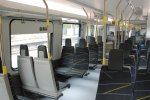
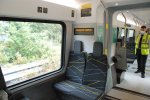



 They aren't wide enough for two average males to sit together without one sticking out into the aisle.