
-
Our new ticketing site is now live! Using either this or the original site (both powered by TrainSplit) helps support the running of the forum with every ticket purchase! Find out more and ask any questions/give us feedback in this thread!
You are using an out of date browser. It may not display this or other websites correctly.
You should upgrade or use an alternative browser.
You should upgrade or use an alternative browser.
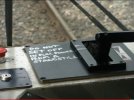
Manchester Metro T68
- Thread starter D_Sims97
- Start date
- Status
- Not open for further replies.
Sponsor Post - registered members do not see these adverts; click here to register, or click here to log in
R
RailUK Forums
WatcherZero
Established Member
- Joined
- 25 Feb 2010
- Messages
- 10,272
Wheelslip likely.
thank youWheelslip likely.
Neatro
Member
Could be wheelslip, could just be advice as the same advice is given still on the M500's not to accelerate full power from a standstill and they manage slippage automatically

185
On Moderation
- Joined
- 29 Aug 2010
- Messages
- 5,709
There were days when people were told not to drive double trams with the TBC handle in the top notch incase the power blew on the Alt & Bury lines.
WatcherZero
Established Member
- Joined
- 25 Feb 2010
- Messages
- 10,272
Yeah more substations were added over the years to help with the ever increasing number of units and others had their capacity increased.
Wheelslip will happen to any vehicle that has a high enough power to weight ratio, automatic sanders and computer aided anti-slip are mainly beneficial when the vehicle is in motion and encounters poor traction conditions.
Wheelslip will happen to any vehicle that has a high enough power to weight ratio, automatic sanders and computer aided anti-slip are mainly beneficial when the vehicle is in motion and encounters poor traction conditions.

Fishnchipsrule
Member
Was due to combination of wheelslip and power when the M5000s came in.

IIRC, and we’re talking ~10 years ago now when I was a mere trainee driver, it was only really the phase 2s that were particularly problematic due to their power output. That notice is indeed in the cab of a phase 2*.
It wasn’t wheel slip that was the issue, rather tripping the breakers causing a power outage. Double phase 1s had similar restrictions too.
To be honest, there was no real need for the notice as full power standing starts were, and still are frowned upon as all of the passengers tend to end up at the back…
*phase 2=T68a. They have a similar power output to an M5000 but a banana manages power output depending on weight. A T68 would always give you full power, a banana will only do so when fully loaded.
It wasn’t wheel slip that was the issue, rather tripping the breakers causing a power outage. Double phase 1s had similar restrictions too.
To be honest, there was no real need for the notice as full power standing starts were, and still are frowned upon as all of the passengers tend to end up at the back…
*phase 2=T68a. They have a similar power output to an M5000 but a banana manages power output depending on weight. A T68 would always give you full power, a banana will only do so when fully loaded.
Last edited:
WatcherZero
Established Member
- Joined
- 25 Feb 2010
- Messages
- 10,272
The T68A's had a Sandite dispenser from new as they were expected to be operating primarily on roads and expected to encounter more ice/oil spills, one of their design modifications over the previous T68, similarly coupler covers as they expected more RTC's.
The T68A's had a Sandite dispenser from new as they were expected to be operating primarily on roads and expected to encounter more ice/oil spills, one of their design modifications over the previous T68, similarly coupler covers as they expected more RTC's.
That's the first I've heard of sandite dispensers fitted to LRV's, I didn't think they had started to be fitted on in-service rail vehicles until the mid-late 2000's.
WatcherZero
Established Member
- Joined
- 25 Feb 2010
- Messages
- 10,272
Delivered from 1999 on so not that much earlier, dont think the M5000's had them from new though gaining them later and as with other complex vehicles with supplier part issues they werent always in an operational state particularly as they ultimately ended up operating the sub fleet just as much on the rail lines and modified the original fleet for street running.
anyone know why most T68 trams said this?
The T68A's had a Sandite dispenser from new as they were expected to be operating primarily on roads and expected to encounter more ice/oil spills, one of their design modifications over the previous T68, similarly coupler covers as they expected more RTC's.
They didn’t have sandite dispensers. They did have conventional sanders though, as did the phase 1s. Adhesion was a continual problem with both T68 and T68a vehicles throughout their lives, they were very light footed.
M5000s have much bigger sand boxes with much more efficient sanding gear though.
Delivered from 1999 on so not that much earlier, dont think the M5000's had them from new though gaining them later and as with other complex vehicles with supplier part issues they werent always in an operational state particularly as they ultimately ended up operating the sub fleet just as much on the rail lines and modified the original fleet for street running.
M5000's certainly don't have Sandite application, as 507001 has said they have conventional sanders and a number of later batch 7's (3125ish+) are fitted with friction modifiers replacing solid stick lubrication on the trailer bogie but they don't really benefit adhesion.
Last edited:
WatcherZero
Established Member
- Joined
- 25 Feb 2010
- Messages
- 10,272
Yeah sand, I said Sandite as im so used to saying that in relation to national rail, slip of the tongue.
Yeah sand, I say Sandite as im so used to saying that in relation to national rail.
Sandite is a totally different thing…
But yes, the phase 1s were built with sanders too.
The hopper can just about be seen in this picture, painted black and yellow.
And in this picture too.
== Doublepost prevention - post automatically merged: ==
similarly coupler covers as they expected more RTC's.
Also not exactly accurate. They were covered because the standards changed, not because more RTCs were expected.
Last edited:
oh how interesting!There were days when people were told not to drive double trams with the TBC handle in the top notch incase the power blew on the Alt & Bury lines.
- Status
- Not open for further replies.