• Our new ticketing site is now live! Using either this or the original site (both powered by TrainSplit) helps support the running of the forum with every ticket purchase! Find out more and ask any questions/give us feedback in this thread!

Lumo's green image

Status
Not open for further replies.

wilbur1985

Member
Joined
26 Dec 2024
Messages
36
Location
York
Sorry if this has already been mentioned somewhere but as we know lumo are getting class 222's for the Stirling service. This is interesting as lumo brands themselves as a green operator so I wonder what there plan is now

 
Sponsor Post - registered members do not see these adverts; click here to register, or click here to log in
R

RailUK Forums

Tazi Hupefi

On Moderation
Joined
1 Apr 2018
Messages
1,838
Location
Nottinghamshire
Technically Class 222s are electric, albeit with diesel producing it.

I hardly think this is an issue in any event, most people in 2025 accept that public transport, especially InterCity trains, are greener than most other alternatives.

They haven't got any choice either, Network Rail refuses to allow more electric trains to run on the route because of power constraints.

I also suspect the number of people who actually travel with Lumo specifically because of any green credentials is precisely nil. Price, speed and comfort will always be the ultimate factors.
 

wilbur1985

Member
Joined
26 Dec 2024
Messages
36
Location
York
Yeah that's fair enough. I guess not many people ride it for the green factor.
 

edwin_m

Veteran Member
Joined
21 Apr 2013
Messages
28,612
Location
Nottingham
As i posted on another thread, 222s have a high weight per seat and large engines that are probably running below their most efficient output for most of the time, so are likely to be amongst the highest emitting trains per passenger-mile. The discussion suggested that it would be in the same ballpark as if they were travelling in EVs with a low number of passengers per vehicle.

Against this Lumo is really competing with air rather than the car, so is still likely to be winning out on emissions.
 

Towers

Established Member
Joined
30 Aug 2021
Messages
2,974
Location
UK
Technically Class 222s are electric, albeit with diesel producing it.

I hardly think this is an issue in any event, most people in 2025 accept that public transport, especially InterCity trains, are greener than most other alternatives.

They haven't got any choice either, Network Rail refuses to allow more electric trains to run on the route because of power constraints.

I also suspect the number of people who actually travel with Lumo specifically because of any green credentials is precisely nil. Price, speed and comfort will always be the ultimate factors.
They really aren’t! A class 222 is powered solely by diesel, not even the most skilled of PR wibblers is getting away with pretending that they’re “electric”! :D

I agree fully that nobody cares, however!
 

Mike Machin

Member
Joined
19 Aug 2017
Messages
377
It’s still greener than the plane or long distance bus.
Long distance coaches/buses are the greenest form of transport and much more environmentally friendly than any train. Their overall lighter weight re in a very beneficial power to weight ratio allowing road coaches to outperform any diesel-powered train and just about any electric train too.

EVs are also generally more efficient than trains so unless there is a step-change in technology and a huge increase in electrification of the rail network, trains will rapidly b seen as the ‘dirty option’ for surface travel and will be shunned by the environmentally aware in favour of greener alternatives.
 

Towers

Established Member
Joined
30 Aug 2021
Messages
2,974
Location
UK
Long distance coaches/buses are the greenest form of transport and much more environmentally friendly than any train. Their overall lighter weight re in a very beneficial power to weight ratio allowing road coaches to outperform any diesel-powered train and just about any electric train too.

EVs are also generally more efficient than trains so unless there is a step-change in technology and a huge increase in electrification of the rail network, trains will rapidly b seen as the ‘dirty option’ for surface travel and will be shunned by the environmentally aware in favour of greener alternatives.
Not necessarily, I would suggest - if 250 people travel by train that’s perhaps 5 coaches worth, one train. If 250 people all travelled by car individually, as many do, are 250 EVs all weighing a couple of tons and carting mostly fresh air about still more efficient?

Then you have congestion and other environmental issues, and so on. A simple ‘per passenger’ calculation is far from the full story!
 

edwin_m

Veteran Member
Joined
21 Apr 2013
Messages
28,612
Location
Nottingham
Long distance coaches/buses are the greenest form of transport and much more environmentally friendly than any train. Their overall lighter weight re in a very beneficial power to weight ratio allowing road coaches to outperform any diesel-powered train and just about any electric train too.

EVs are also generally more efficient than trains so unless there is a step-change in technology and a huge increase in electrification of the rail network, trains will rapidly b seen as the ‘dirty option’ for surface travel and will be shunned by the environmentally aware in favour of greener alternatives.
Does that factor in tyre particulates?
 

dosxuk

Established Member
Joined
2 Jan 2011
Messages
2,434
EVs are also generally more efficient than trains so unless there is a step-change in technology and a huge increase in electrification of the rail network, trains will rapidly b seen as the ‘dirty option’ for surface travel and will be shunned by the environmentally aware in favour of greener alternatives.

Only those blinkered by emission calculations to not see any other environmental factors.

It's quite obvious to everyone else that the infrastructure required for everyone to drive who currently uses the train would cause far more environmental damage than a few diesel trains that will get replaced in the future.
 

Razorblades

Member
Joined
17 Dec 2021
Messages
450
Location
Copshaw Holm, Scottish Borders
Only those blinkered by emission calculations to not see any other environmental factors.

It's quite obvious to everyone else that the infrastructure required for everyone to drive who currently uses the train would cause far more environmental damage than a few diesel trains that will get replaced in the future.

Quite. In reality, the congestion, frequently caused or exacerbated by over-zealous traffic management measures, on huge parts of the existing road network seriously undermines any claims to environmental efficiency of long distance coaches/ buses as it is.
 

Bletchleyite

Veteran Member
Joined
20 Oct 2014
Messages
113,091
Location
"Marston Vale mafia"
Technically Class 222s are electric, albeit with diesel producing it.

I hardly think this is an issue in any event, most people in 2025 accept that public transport, especially InterCity trains, are greener than most other alternatives.

22x aren't. They are heavy fume belchers. It would be more environmentally sound to drive an EV.
 

Noddy

Established Member
Joined
11 Oct 2014
Messages
1,642
Location
UK
Only those blinkered by emission calculations to not see any other environmental factors. It's quite obvious to everyone else that the infrastructure required for everyone to drive who currently uses the train would cause far more environmental damage than a few diesel trains that will get replaced in the future.

Quite. In reality, the congestion, frequently caused or exacerbated by over-zealous traffic management measures, on huge parts of the existing road network seriously undermines any claims to environmental efficiency of long distance coaches/ buses as it is.

Are you sure about this? Claiming that replacing all trains with EVs is very different to the statement that Lumos service will be less environmentally friendly than driving in an EV.

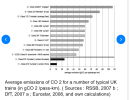
It was widely reported that in the mid 2000s that the Voyagers produced around 105 gCO2 per passenger km and that a 9 car 222 was around 85.

1751949250711.png

EDF reported earlier this year that the figure for electric cars is now around 50 gCO2 per km (and that’s not passenger km-average car occupancy is 1.5 so the figure per passenger km will be in the mid to low 30s). So lower than an electric train in the mid-2000s. An electric bus would be even lower.

It’s also highly likely that due to their engine age and shorter length of the 222s that the CO2 figure will have gone up in the last 20 years, although start-stop tech may mean a fall as less fuel is burned when stationary. Meanwhile the figure for electric vehicles will continue to drop and drop as the grid becomes greener and greener.

And that’s just CO2, it’s not considering the effects of NOx, which is directly harmful to public health. Imagine if you live next to the railway where 222s are accelerating everyday, or the refinery where the diesel is made and shipped from everyday.

Sadly for railways the green argument is being lost with the continued use of old diesel trains vs electrification elsewhere.
 
Last edited:

dosxuk

Established Member
Joined
2 Jan 2011
Messages
2,434
Claiming that replacing all trains with EVs is very different to the statement that Lumos service will be less environmentally friendly than driving in an EV.

Yes it is, and it was posted in reply to trains will rapidly b seen as the ‘dirty option’ for surface travel and will be shunned by the environmentally aware in favour of greener alternatives.

Besides, Lumo's Stirling operation is competing mainly with air - which the 222's will stack up favourably against. And for those who choose to drive, only a tiny fraction are going to be using an EV for that sort of length journey - in which case the 222's stack up favourably again.

The point is not that 222's are cleaner than EV's - they're not - the point is that the railway in general is better for the environment than shifting everyone to cars. Even if some current stock is worse than EV's, the environmental damage caused by needing more roads, more car parks and more charging stations means rail travel should still be encouraged. Even the super clean EV's dump tonnes of rubber particles onto the roads every year, so it's not like they're pollution free in operation either.

Can the rail industry do better - sure - but it's going to need some long-term thinking and planning in order to get a network that works as well for the environment as it can, and sadly that seems to be something lacking in this country right now.
 

Noddy

Established Member
Joined
11 Oct 2014
Messages
1,642
Location
UK
Yes it is, and it was posted in reply to trains will rapidly b seen as the ‘dirty option’ for surface travel and will be shunned by the environmentally aware in favour of greener alternatives.

Besides, Lumo's Stirling operation is competing mainly with air - which the 222's will stack up favourably against. And for those who choose to drive, only a tiny fraction are going to be using an EV for that sort of length journey - in which case the 222's stack up favourably again.

The point is not that 222's are cleaner than EV's - they're not - the point is that the railway in general is better for the environment than shifting everyone to cars. Even if some current stock is worse than EV's, the environmental damage caused by needing more roads, more car parks and more charging stations means rail travel should still be encouraged. Even the super clean EV's dump tonnes of rubber particles onto the roads every year, so it's not like they're pollution free in operation either.

Can the rail industry do better - sure - but it's going to need some long-term thinking and planning in order to get a network that works as well for the environment as it can, and sadly that seems to be something lacking in this country right now.

@Mike Machin was not saying we should replace all trains with EVs as you are inferring, just that (as you quote) trains will seen and shunned as the dirty option. I don’t agree that electric trains are a dirty option, but diesel trains absolutely are, and I certainly consider it when I make travel decisions.
 

Bletchleyite

Veteran Member
Joined
20 Oct 2014
Messages
113,091
Location
"Marston Vale mafia"
Besides, Lumo's Stirling operation is competing mainly with air - which the 222's will stack up favourably against.
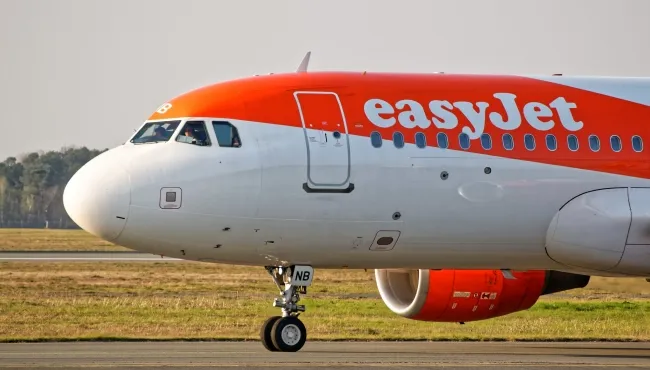
They actually don't, they are that bad. They are actually considerably worse than flying. Therefore people wishing to choose an environmentally sound journey on this route, or on XC, should fly.

For example, an A320neo is quoted as 89.9 grams per MILE, which is roughly 54 grams per kilometre. I actually thought they were about the same so I am quite shocked by this; if these references are correct this is a very strong reason Lumo should not be allowed to start this service and all 22x should be scrapped ASAP.

On the above chart it also looks like there needs to be a serious look at how electric trains are powered as those only match this, not beat it...


The A320 NEO family averaged 89.9 grams of Carbon per seat mile between March 2018 and March 2021, compared to 109.7g per seat mile from the A320 CEO in the same period. This represents an 18% reduction in overall emissions.
 

Noddy

Established Member
Joined
11 Oct 2014
Messages
1,642
Location
UK
On the above chart it also looks like there needs to be a serious look at how electric trains are powered as those only match this, not beat it...

Are you sure? Using the chart I posted earlier a 9 car 390 was about 55 and an 11 car was high 40s. But those figures were taken in the mid 2000s when electricity production was at around 450g CO2 per kWh. This year the average is 132g CO2 (and falling), so a 70 percent reduction, and therefore the 390s (and all other electric trains) CO2 per passenger km will have also dropped considerably during the same period.

But yes potentially (there are other pollutants, not just CO2) the plane is more environmentally friendly then the diesel trains we insist on using, and claim are green.
 
Last edited:

dan4291

Member
Joined
9 Dec 2019
Messages
414
Location
County Durham
What everyone seems to be forgetting regarding the 222's destined for Lumo are that they are a stop gap, with Hitachi bi (possibly tri) mode units on order to replace them in a few years, so emissions wise things will improve. What the main problem will be is the power supply on the northern WCML. Will Lumo have to run on diesel/battery hybrid power up north? It already happens on the ECML with TPE services towards Edinburgh having to run on diesel for part of the journey but there is at least an ongoing power supply upgrade project on the ECML so that will hopefully solve that issue. Is there plans to upgrade the power supply on the WCML?
 

Bletchleyite

Veteran Member
Joined
20 Oct 2014
Messages
113,091
Location
"Marston Vale mafia"
Are you sure? Using the chart I posted earlier a 9 car 390 was about 55 and an 11 car was high 40s. But those figures were taken in the mid 2000s when electricity production was at around 450g CO2 per kWh. This year the average is 132g CO2 (and falling), so a 70 percent reduction, and therefore the 390s (and all other electric trains) CO2 per passenger km will have also dropped considerably during the same period.

That's positive with regard to electrics and further electrification.

But yes potentially (there are other pollutants, not just CO2) the plane is more environmentally friendly then the diesel trains we insist on using, and claim are green.

Certainly at present anyone who is choosing between flying and Lumo's new WCML service (or driving an EV vs. that) should probably choose the non-rail mode.

== Doublepost prevention - post automatically merged: ==

What everyone seems to be forgetting regarding the 222's destined for Lumo are that they are a stop gap, with Hitachi bi (possibly tri) mode units on order to replace them in a few years, so emissions wise things will improve. What the main problem will be is the power supply on the northern WCML. Will Lumo have to run on diesel/battery hybrid power up north? It already happens on the ECML with TPE services towards Edinburgh having to run on diesel for part of the journey but there is at least an ongoing power supply upgrade project on the ECML so that will hopefully solve that issue. Is there plans to upgrade the power supply on the WCML?

Having seen just how bad the figures for 22x are above (far worse than I expected - to the point that one could argue* for removing the subsidy from XC and giving it to easyJet!), I would tend towards the idea that they should not be allowed to start until they have EMUs and the power supply has been upgraded. They didn't start on the ECML until they had the new rolling stock, after all. Is this using of old, polluting diesel units just a way of getting their foot in the door in case GBR/DfT decide to stop any new Open Access, perchance?

* Not a serious suggestion nor really one worthy of spinning off a thread, but certainly highlighting just how bad rail potentially is in carbon terms compared to other modes on non-electrified lines.
 

notadriver

Established Member
Joined
1 Oct 2010
Messages
3,735
What about the batteries in electric vehicles ? They only have a useful lifespan of around 5 years, are heavy and require heavy mining for the raw materials. On top of that there is extra wear on tyres and road surfaces due to their extra weight. And they are still only as safe as regular road vehicles.

I can see the use of electric buses and for urban operations but where electric or hybrid electric trams, trains both commuter and long distance are available, they should be used if possible in preferable to a place where an electric vehicle performs the hub to door journey.
 

Bletchleyite

Veteran Member
Joined
20 Oct 2014
Messages
113,091
Location
"Marston Vale mafia"
What about the batteries in electric vehicles ? They only have a useful lifespan of around 5 years

This is absolute tripe. Batteries in EVs last longer than the bodywork does now, unless a fault develops (but that can happen with any vehicle; EVs are more reliable than ICEs because they are much simpler). There was only a problem with the early Nissan Leafs which didn't have active battery cooling, but the first version of anything usually has flaws (how did the Class 141 go, for example? :) ).

This all bodes very well for batteries in trains, for that matter. Such an approach may help Lumo's green credentials even if they can't actually use the wires north of Preston. Charge on the wires, battery up Shap, put it all back in on the way down.

are heavy and require heavy mining for the raw materials. On top of that there is extra wear on tyres and road surfaces due to their extra weight. And they are still only as safe as regular road vehicles.

I can see the use of electric buses and for urban operations but where electric or hybrid electric trams, trains both commuter and long distance are available, they should be used if possible in preferable to a place where an electric vehicle performs the hub to door journey.

I'd suggest you join this thread where myths about EVs such as those in your post are rebutted:


Noddy

Established Member
Joined
11 Oct 2014
Messages
1,642
Location
UK
That's positive with regard to electrics and further electrification.

It is ridiculous to think that a class 43 HST produced less CO2 than a (at the time modern) Juniper or Electrostar, but that’s just how bad coal was!

== Doublepost prevention - post automatically merged: ==

That's positive with regard to electrics and further electrification.


Certainly at present anyone who is choosing between flying and Lumo's new WCML service (or driving an EV vs. that) should probably choose the non-rail mode.

== Doublepost prevention - post automatically merged: ==


Having seen just how bad the figures for 22x are above (far worse than I expected - to the point that one could argue* for removing the subsidy from XC and giving it to easyJet!), I would tend towards the idea that they should not be allowed to start until they have EMUs and the power supply has been upgraded. They didn't start on the ECML until they had the new rolling stock, after all. Is this using of old, polluting diesel units just a way of getting their foot in the door in case GBR/DfT decide to stop any new Open Access, perchance?

* Not a serious suggestion nor really one worthy of spinning off a thread, but certainly highlighting just how bad rail potentially is in carbon terms compared to other modes on non-electrified lines.

Agreed. Rails green credentials for both passenger and freight (non-electrified/battery) are going down the drain with the rapid pace of electrification and other technological advances in rival transportation systems.
 

Mike Machin

Member
Joined
19 Aug 2017
Messages
377
What about the batteries in electric vehicles ? They only have a useful lifespan of around 5 years, are heavy and require heavy mining for the raw materials. On top of that there is extra wear on tyres and road surfaces due to their extra weight. And they are still only as safe as regular road vehicles.

I can see the use of electric buses and for urban operations but where electric or hybrid electric trams, trains both commuter and long distance are available, they should be used if possible in preferable to a place where an electric vehicle performs the hub to door journey.
Batteries in EVs last much, much longer than five years, my present and previous MINI EVs both have an eight year battery warranty. The battery in my previous MINI Electric is the same as the BMW i3 and and many i3s are now getting on for 11 years old and their battery efficiency is generally around 95% of its original capacity and many, many i3s of that age have batteries that have retained around 98% of their original designed capacity.

Tyre wear can potentially be greater, but the vast majority of manufacturers mittigate against this by using new-generation tyres developed especially for EVs. There is also far, far less dust from the brakes of EVs as it is simply not necessary to use them in many cases as 'one pedal driving' can be employed which uses regenerative breaking to slow the vehicle, using the car's motor rather than relying on friction brakes. I recently commented to my partner that on a journey from Salisbury to the rural area near Winchester where I live, I hadn't needed to use the brakes at all during the journey and the regenerative braking of the motor actually tops-up the battery as a bonus.

Much of the mining for materials is highly-automated (not using child labour as the anti-EV brigade would have you believe) and has less environmental impact than extracting fossil fuels. And remember, the batteries can be re-purposed for energy banks for solar power and then recycled - not something that can be done with fossil fuels.

Hub-to-door by public transport is fine in urban areas, but living in an area without any public transport whatsoever it's not a realistic proposition for many people. With ALL land-based public transport combined, buses, coaches, trains and trams accounting for just 8% of journeys in the UK, the personal EV will definitely be a major contributor to meeting the nation's transport needs going forward.
 

ExRes

Established Member
Joined
16 Dec 2012
Messages
8,303
Location
Back in Sussex
For all those determined to insist that battery production is environmental, check out Bayan Obo in China
 

yorksrob

Veteran Member
Joined
6 Aug 2009
Messages
44,294
Location
Yorks
@Mike Machin was not saying we should replace all trains with EVs as you are inferring, just that (as you quote) trains will seen and shunned as the dirty option. I don’t agree that electric trains are a dirty option, but diesel trains absolutely are, and I certainly consider it when I make travel decisions.

I'd be more inclined to consider the system as a whole. It seems fairly pointless to say that one would go to Brighton on the train because it's electric, but not Hull because the train there is a diesel.

In reality, rail travel as a whole would be somewhere between diesel and electric in terms of carbon intensity.

== Doublepost prevention - post automatically merged: ==

Agreed. Rails green credentials for both passenger and freight (non-electrified/battery) are going down the drain with the rapid pace of electrification and other technological advances in rival transportation systems.

I think a rather large proportion of rail journeys are still electrically powered, so rails green credentials will hardly be going "down the drain" so long as grid decarbonisation continues.
 

Russel

Established Member
Joined
30 Jun 2022
Messages
5,419
Location
Lichfield
How much gas is burned to generate the electricity to power Lumos IETs?
 
Status
Not open for further replies.

Top