

Let's see what's happening in Lithuania this year railway wise. Quite a few things are happening in fact, so I'll try to cover them here.
New passenger trains
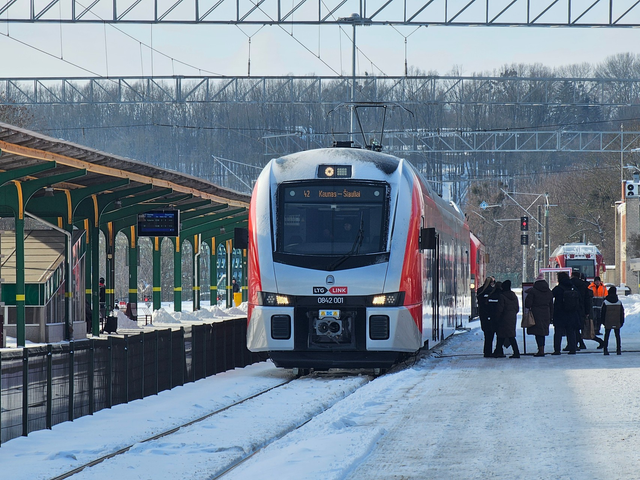
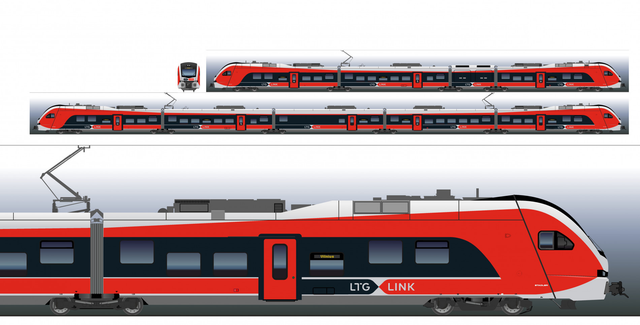
Stadler FLIRT EMUs and BEMUs (9 EMUs and 6 BEMUs) have been arriving and undergoing testing for some time now. Both types of trains were shown to public and I personally think they look good, especially inside with very spacious interior and seemingly pretty good materials. Didn't come by any info (including at a rumor level) about how the tests are going, so I would assume everything is ok. All trains should fully go into service in 2027 but LTG published some Instagram stories with an image of the new FLIRT titled "Already this summer, you'll be able to travel in great comfort" (or something along those lines) which implies we may expect some trial service in the summer, likely on Vilnius-Kaunas route where most of the tests are taking place right now during nights.
New Stadler FLIRT BEMU
Rendering
New freight locomotives
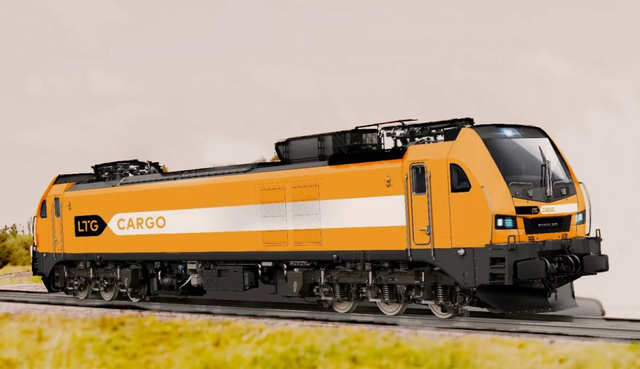
LTG Cargo signed a contract with Stadler Rail for 17 electric Co'Co' locomotives back in December of 2024. First ever electric freight locos to be used in Lithuania. The latest news we have is that LTG borrowed 109 million Euros from a local bank for the payment and that first locomotives would arrive in 2027. The locos are built on EURODUAL platform which would normally utilise both diesel-electric and pure electric traction but LTG opted for electric-only version which will basically eliminate these new locos from working on important routes like Kaunas-Klaipėda or anywhere on other non-electrified lines which I find a bit strange to say the least. Anyway, I hope they know what they're doing. Or perhaps they would buy additional ones with dual traction if the first ones will prove reliable?
Rendering of the Stadler Co'Co' loco with LTG Cargo livery
Electrification
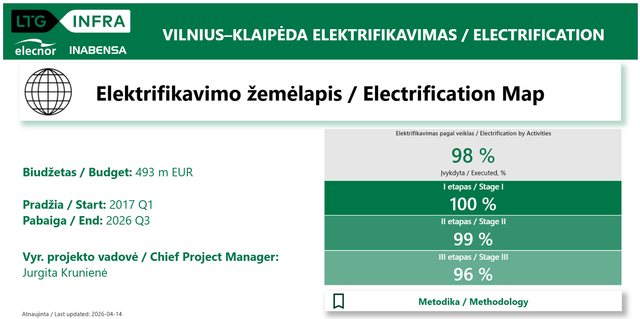
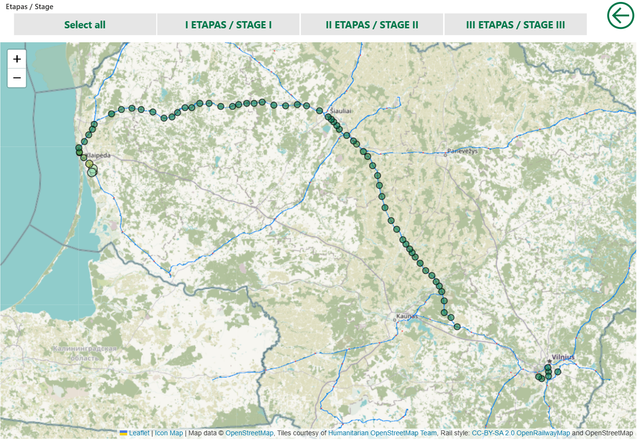
Kaišiadorys-Klaipėda (part of Vilnius-Klaipėda route) section electrification is nearly complete and should be ready later this year. Some trial runs were already performed in some newly electrified sections with the new Stadler FLIRTs. It's a big deal because it will allow the full route between Vilnius (and, in fact Belarus, once political tensions ease) and port city of Klaipėda to utilise electric traction for both passenger and freight trains. This will increase railway electrification level in Lithuania from ~6% at present to ~28%. So yeah, a big deal indeed. Can't wait to ride an electric train from Vilnius all the way to Klaipėda.
Interestingly, the electrification project started a while back, when LTG was moving Belarusian fertiliser in huge quantities between Belarus and port of Klaipėda which made up something like 30% of the entire freight turnover in Lithuania and one of the main reasons why the electrification project was initiated in the first place was the need to shift Belarusian fertiliser to the global markets more efficiently. Now that due to sanctions and political disagreements the fertilizer transit no longer goes via Lithuania, the whole electrification project seems far less viable but it still went ahead since various processes were too far underway to be cancelled. We'll see if the Belarus transit will resume (I personally hope it will) because now it travels via Russia and is benefitting it rather than Lithuania or EU.
Some data and map of the ongoing electrification
Rail Baltica
Those who have been following Rail Baltica with any level of depth over the past ~10 years would know that it's nothing short of a cluster*uck in Lithuania (much better in Estonia and all kinds of weird things happening in Latvia). Everything is late, project is quite badly mismanaged, over budget (or rather poorly estimated during initial estimates back in ~2017), general contractors have solvency problems, all kinds of new blockers and obstacles appear at random out of nowhere, etc. Anyway, let's see what's actually happening in Lithuania as of now.
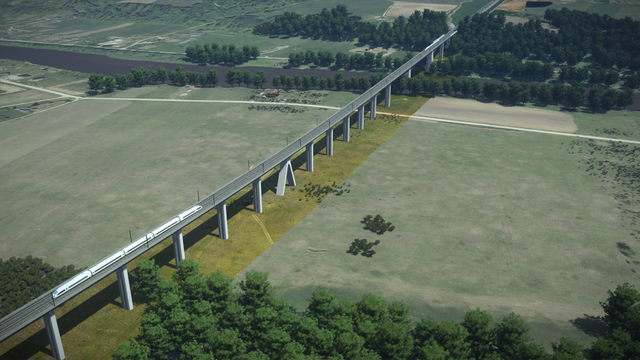
- Jonava bridge (the longest Rail Baltica bridge in Lithuania) construction is practically halted due to financial issues of the main contractor Rizzani de Eccher. The bridge should have been finished in 2024 but as of now it doesn't look like it will be done before 2030.
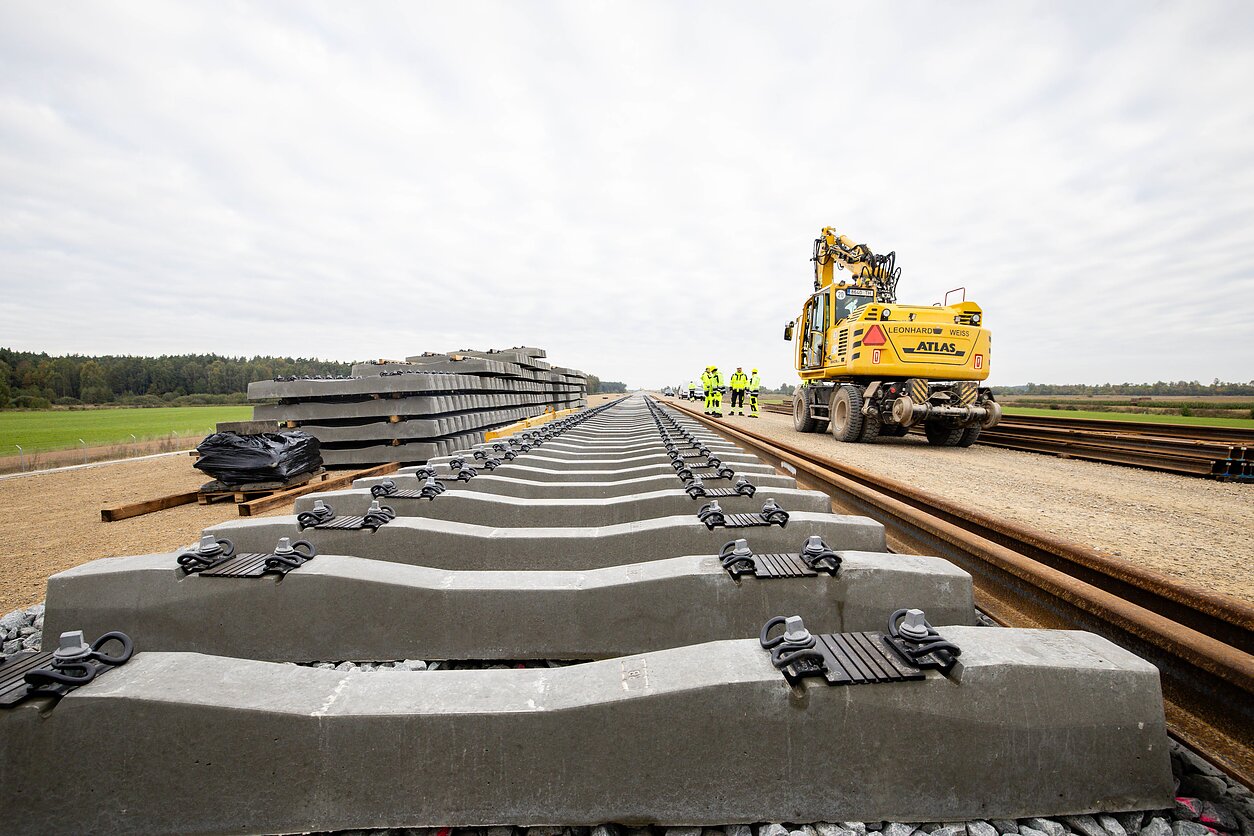
- Actual construction works of the line are taking place in a section roughly between the city of Jonava and city of Panevėžys (or rather ~12 km West of it) at various degrees of maturity. The fact that it's this section that is actually being built is a good indicator of poor management since it doesn't connect anything to anything yet since neither Kaunas node is complete nor link to Latvia will be built anytime soon.
- Kaunas-LT/PL border section is under design with DB E&C. It's unclear how long the design phase will take but the fact that they only signed the design contract just now indicates that things are late and construction probably won't even start before 2028 or so. We can speculate/estimate how long the construction work would take but I think it's already clear that we're probably not talking anytime before 2035 or even later.
- Panevėžys-LT/LV border section project design competition was announced in Dec 2025 which is another indication that the whole project is late and mismanaged. This section also probably won't get completed anytime before ~2035 judging by how things have been progressing so far.
- Signaling for Kaunas-LT/PL border slow line (nope, it doesn't have one now) since all legal obstacles have been cleared. We can expect signaling to be installed by 2030 or perhaps even a bit earlier if things won't get stuck again. Of course one might wonder why only now and not in 2015 when the slow 1435 mm line was actually built between LT/PL border and Kaunas? We can only speculate that Lithuania will want to demonstrate something by the 2030 project 'deadline'. Something that could pass as some kind of Rail Baltica service on 1435 mm infrastructure. Perhaps a direct PKP Warsaw-Kaunas train which currently terminates at Mockava due to absence of signaling further up North? Either way, it's a positive news indicating that we might expect some kind of improved services between Poland and Lithuania before 2030. It's just a shame that it's done in such an erratic and mismanaged manner without proper timelines and project management.
- Kaunas-Vilnius section remains effectively shelved, at least up until 2028 when there will be a new EU financing round. Shame, because this is of utmost importance to Lithuania from more than one perspective. I think Lithuania should force ahead with it at any cost instead of just waiting for something that may never come i.e. 85% EU financing.
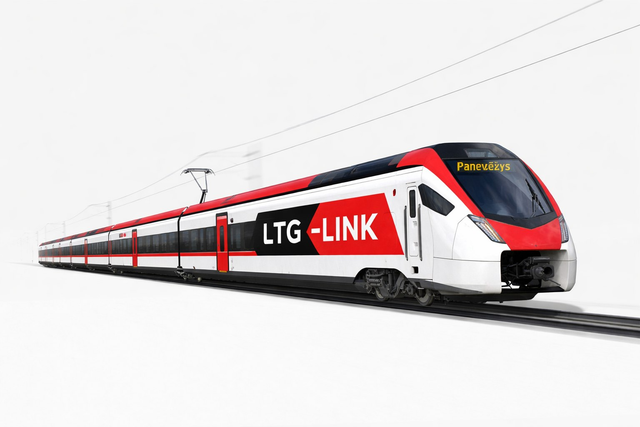
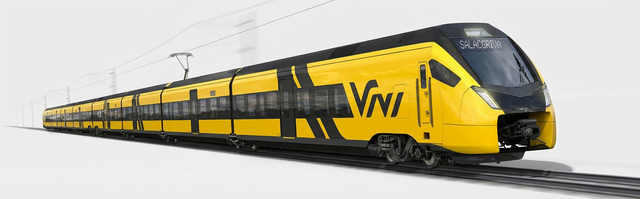
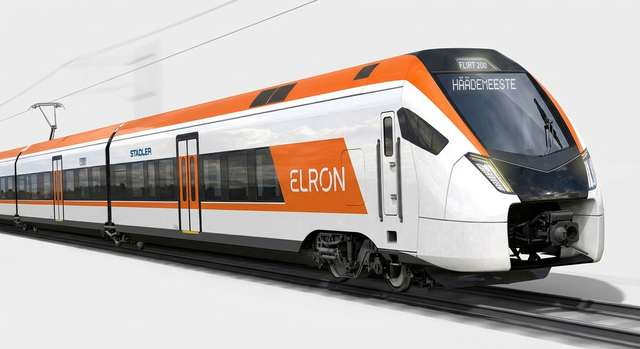
- Regional rolling stock procurement. All three Baltic countries announced joint rolling stock procurement project of 20 regional trains capable of 200 km/h operation. Lithuania plans to get 8 from that number. Details are a bit scarce but I understand that only Estonia is actually planning to buy the trains once the competition concludes. Lithuania and Latvia will use the additional trains 'option' which means they may or may not buy those trains at will. A bit like Shcroedinger's trains those. Anyway, this news is better than nothing I suppose. I hope they go for Stadler FLIRTs with the aerodynamic nose cone design.
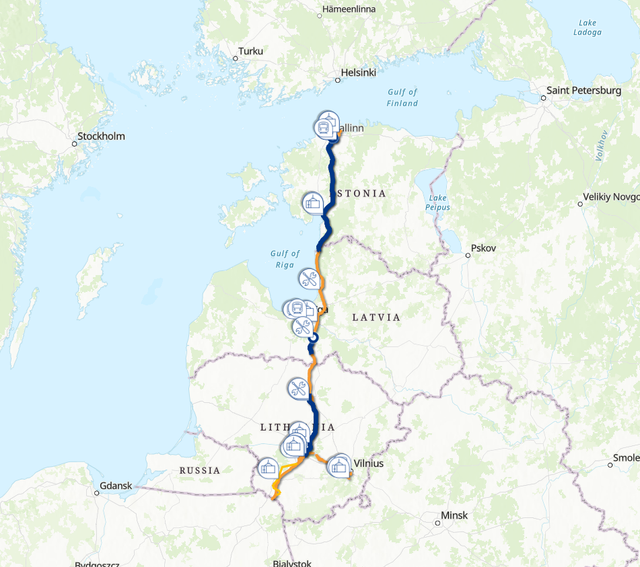
Rail Baltica project map (blue=construction work contracted out). You can easily tell that Estonia is leaps and bounds ahead of both Lithuania and Latvia. I almost feel sorry for the Estonians since they will have their part done many years before their other two Baltic neighbours and Latvia/Lithuania will essentially be a blocker for the Estonians. I would not expect Rail Baltica to be fully complete in Lithuania (including Kaunas-Vilnius) before ~2040-2045 based on how things have been progressing so far
Rendering of Jonava bridge
Renderings of what the regional 200 km/h Rail Baltica trains could look like in liveries of each national operator of Lithuania, Latvia and Estonia
Other rail news
- Vilnius-Kaunas route now has a few daily express non-stop services that complete the route in 59 minutes which is the first time in many years that they manage to fit this service in under 1 hour. Personally I'm doubtful of the necessity of such a service since it doesn't really add any value to anything other than a few saved minutes of travel time. Clock-facing (takt) timetables would be a far more useful feature since Lithuania remains one of the few EU countries not having this on any route.
- All local (i.e. non-international) train services are 50% off between 1st of April and 31st of May. Central Government announced that it's throwing in a subsidy for all tickets due to increase in fuel prices which has been causing havoc among driverss. It's been touted as a 'populist' move by political oppponents but personally I think this is actually a good move in a country which has the highest modal share of private passenger cars in all of EU and lowest modal share of railways. Many people haven't taken a train in decades (if ever at all) in this country and it's a perfect opportunity to do that right now since it actually became quite affordable as a result of this discount. If anything, I think they should keep it this way indefinitely, not only when fuel prices start to bite.
My take
Mixed feelings. On one hand there are ongoing railway projects worth several bn Eur which indicate that things are in fact improving, new modern (and really nice, from what I can tell) Stadler FLIRT trains are coming in, Rail Baltica is progressing despite tremendous obstacles and delays, Kaišiadorys-Klaipėda electrification is nearing completion. More stuff happening than ever before, in fact. On the other hand, the number of new Stadler trains is clearly not nowhere enough to actually transform train travel in Lithuania and, for example, have hourly frequency on Vilnius-Klaipėda route. Electric freight locomotives without dual traction on a network which is mostly non-electrified. Rail Baltica hopelessly mismanaged etc. It's one of those situations where things are clearly being improved but could have been improved so much more with better project management and better thinking. Lots of money already have been wasted and keep being wasted. Despite all that things will get better.
Over and out.
New passenger trains
Stadler FLIRT EMUs and BEMUs (9 EMUs and 6 BEMUs) have been arriving and undergoing testing for some time now. Both types of trains were shown to public and I personally think they look good, especially inside with very spacious interior and seemingly pretty good materials. Didn't come by any info (including at a rumor level) about how the tests are going, so I would assume everything is ok. All trains should fully go into service in 2027 but LTG published some Instagram stories with an image of the new FLIRT titled "Already this summer, you'll be able to travel in great comfort" (or something along those lines) which implies we may expect some trial service in the summer, likely on Vilnius-Kaunas route where most of the tests are taking place right now during nights.
New Stadler FLIRT BEMU
Rendering
New freight locomotives
LTG Cargo signed a contract with Stadler Rail for 17 electric Co'Co' locomotives back in December of 2024. First ever electric freight locos to be used in Lithuania. The latest news we have is that LTG borrowed 109 million Euros from a local bank for the payment and that first locomotives would arrive in 2027. The locos are built on EURODUAL platform which would normally utilise both diesel-electric and pure electric traction but LTG opted for electric-only version which will basically eliminate these new locos from working on important routes like Kaunas-Klaipėda or anywhere on other non-electrified lines which I find a bit strange to say the least. Anyway, I hope they know what they're doing. Or perhaps they would buy additional ones with dual traction if the first ones will prove reliable?
Rendering of the Stadler Co'Co' loco with LTG Cargo livery
Electrification
Kaišiadorys-Klaipėda (part of Vilnius-Klaipėda route) section electrification is nearly complete and should be ready later this year. Some trial runs were already performed in some newly electrified sections with the new Stadler FLIRTs. It's a big deal because it will allow the full route between Vilnius (and, in fact Belarus, once political tensions ease) and port city of Klaipėda to utilise electric traction for both passenger and freight trains. This will increase railway electrification level in Lithuania from ~6% at present to ~28%. So yeah, a big deal indeed. Can't wait to ride an electric train from Vilnius all the way to Klaipėda.
Interestingly, the electrification project started a while back, when LTG was moving Belarusian fertiliser in huge quantities between Belarus and port of Klaipėda which made up something like 30% of the entire freight turnover in Lithuania and one of the main reasons why the electrification project was initiated in the first place was the need to shift Belarusian fertiliser to the global markets more efficiently. Now that due to sanctions and political disagreements the fertilizer transit no longer goes via Lithuania, the whole electrification project seems far less viable but it still went ahead since various processes were too far underway to be cancelled. We'll see if the Belarus transit will resume (I personally hope it will) because now it travels via Russia and is benefitting it rather than Lithuania or EU.
Some data and map of the ongoing electrification
Rail Baltica
Those who have been following Rail Baltica with any level of depth over the past ~10 years would know that it's nothing short of a cluster*uck in Lithuania (much better in Estonia and all kinds of weird things happening in Latvia). Everything is late, project is quite badly mismanaged, over budget (or rather poorly estimated during initial estimates back in ~2017), general contractors have solvency problems, all kinds of new blockers and obstacles appear at random out of nowhere, etc. Anyway, let's see what's actually happening in Lithuania as of now.
- Jonava bridge (the longest Rail Baltica bridge in Lithuania) construction is practically halted due to financial issues of the main contractor Rizzani de Eccher. The bridge should have been finished in 2024 but as of now it doesn't look like it will be done before 2030.
- Actual construction works of the line are taking place in a section roughly between the city of Jonava and city of Panevėžys (or rather ~12 km West of it) at various degrees of maturity. The fact that it's this section that is actually being built is a good indicator of poor management since it doesn't connect anything to anything yet since neither Kaunas node is complete nor link to Latvia will be built anytime soon.
- Kaunas-LT/PL border section is under design with DB E&C. It's unclear how long the design phase will take but the fact that they only signed the design contract just now indicates that things are late and construction probably won't even start before 2028 or so. We can speculate/estimate how long the construction work would take but I think it's already clear that we're probably not talking anytime before 2035 or even later.
- Panevėžys-LT/LV border section project design competition was announced in Dec 2025 which is another indication that the whole project is late and mismanaged. This section also probably won't get completed anytime before ~2035 judging by how things have been progressing so far.
- Signaling for Kaunas-LT/PL border slow line (nope, it doesn't have one now) since all legal obstacles have been cleared. We can expect signaling to be installed by 2030 or perhaps even a bit earlier if things won't get stuck again. Of course one might wonder why only now and not in 2015 when the slow 1435 mm line was actually built between LT/PL border and Kaunas? We can only speculate that Lithuania will want to demonstrate something by the 2030 project 'deadline'. Something that could pass as some kind of Rail Baltica service on 1435 mm infrastructure. Perhaps a direct PKP Warsaw-Kaunas train which currently terminates at Mockava due to absence of signaling further up North? Either way, it's a positive news indicating that we might expect some kind of improved services between Poland and Lithuania before 2030. It's just a shame that it's done in such an erratic and mismanaged manner without proper timelines and project management.
- Kaunas-Vilnius section remains effectively shelved, at least up until 2028 when there will be a new EU financing round. Shame, because this is of utmost importance to Lithuania from more than one perspective. I think Lithuania should force ahead with it at any cost instead of just waiting for something that may never come i.e. 85% EU financing.
- Regional rolling stock procurement. All three Baltic countries announced joint rolling stock procurement project of 20 regional trains capable of 200 km/h operation. Lithuania plans to get 8 from that number. Details are a bit scarce but I understand that only Estonia is actually planning to buy the trains once the competition concludes. Lithuania and Latvia will use the additional trains 'option' which means they may or may not buy those trains at will. A bit like Shcroedinger's trains those. Anyway, this news is better than nothing I suppose. I hope they go for Stadler FLIRTs with the aerodynamic nose cone design.
Rail Baltica project map (blue=construction work contracted out). You can easily tell that Estonia is leaps and bounds ahead of both Lithuania and Latvia. I almost feel sorry for the Estonians since they will have their part done many years before their other two Baltic neighbours and Latvia/Lithuania will essentially be a blocker for the Estonians. I would not expect Rail Baltica to be fully complete in Lithuania (including Kaunas-Vilnius) before ~2040-2045 based on how things have been progressing so far
Rendering of Jonava bridge
Renderings of what the regional 200 km/h Rail Baltica trains could look like in liveries of each national operator of Lithuania, Latvia and Estonia
Other rail news
- Vilnius-Kaunas route now has a few daily express non-stop services that complete the route in 59 minutes which is the first time in many years that they manage to fit this service in under 1 hour. Personally I'm doubtful of the necessity of such a service since it doesn't really add any value to anything other than a few saved minutes of travel time. Clock-facing (takt) timetables would be a far more useful feature since Lithuania remains one of the few EU countries not having this on any route.
- All local (i.e. non-international) train services are 50% off between 1st of April and 31st of May. Central Government announced that it's throwing in a subsidy for all tickets due to increase in fuel prices which has been causing havoc among driverss. It's been touted as a 'populist' move by political oppponents but personally I think this is actually a good move in a country which has the highest modal share of private passenger cars in all of EU and lowest modal share of railways. Many people haven't taken a train in decades (if ever at all) in this country and it's a perfect opportunity to do that right now since it actually became quite affordable as a result of this discount. If anything, I think they should keep it this way indefinitely, not only when fuel prices start to bite.
My take
Mixed feelings. On one hand there are ongoing railway projects worth several bn Eur which indicate that things are in fact improving, new modern (and really nice, from what I can tell) Stadler FLIRT trains are coming in, Rail Baltica is progressing despite tremendous obstacles and delays, Kaišiadorys-Klaipėda electrification is nearing completion. More stuff happening than ever before, in fact. On the other hand, the number of new Stadler trains is clearly not nowhere enough to actually transform train travel in Lithuania and, for example, have hourly frequency on Vilnius-Klaipėda route. Electric freight locomotives without dual traction on a network which is mostly non-electrified. Rail Baltica hopelessly mismanaged etc. It's one of those situations where things are clearly being improved but could have been improved so much more with better project management and better thinking. Lots of money already have been wasted and keep being wasted. Despite all that things will get better.
Over and out.
Last edited:


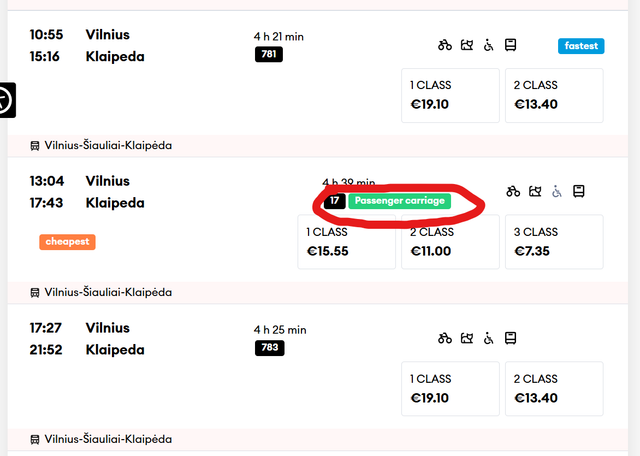




 . & when I looked for tomorrow, Thursday 16/7, Ltg added an extra midmorning train dep 10:15 I hadn’t seen before - but DB doesn’t show it.