
deltic
Established Member
- Joined
- 8 Feb 2010
- Messages
- 3,713
Wayve, Waymo and Baidu’s Apollo Go are all meant to pilot driverless taxis in London this year. Has anyone seen one on the road yet and/or know where they are garaged?

I've read trials don't start until spring, thats as much as I know.Wayve, Waymo and Baidu’s Apollo Go are all meant to pilot driverless taxis in London this year. Has anyone seen one on the road yet and/or know where they are garaged?

 www.bbc.co.uk
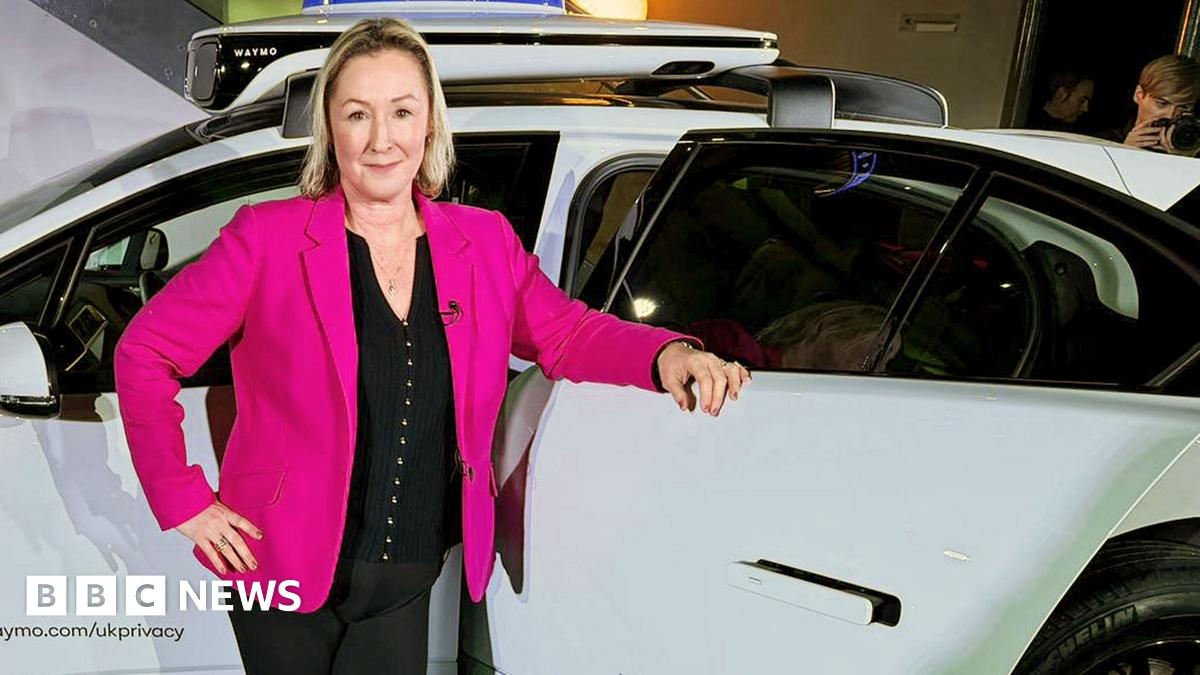
Another report (which I can't find now) mentioned them being "trained" to recognise things like zebra crossings, which are very different from the US. It mentioned that often, safe crossing is based on eye contact between pedestrian and driver, which obviously won't work with an autonomous car. Crossing at places away from a zebra also often depends on both eye contact and hand signals, which option will be lost.Waymo said a pilot service will launch in April and Local Transport Minister Lilian Greenwood said: "We're supporting Waymo and other operators through our passenger pilots, and pro-innovation regulations to make self-driving cars a reality on British roads."
The firm, which is owned by Google-parent Alphabet, showed off a fleet of cars it brought to the UK at London's Transport Museum on Wednesday.
Waymo's vehicles are currently being operated by a safety driver, mapping the streets.

Full article here.Self-driving taxi in London films itself running red light
The vehicle was driving Wayve’s co-founder Alex Kendall to Buckingham Palace to receive an OBE
Many people said the same when trains first came on the scene. Driving is a dangerous monotonous job, and around a third of deaths on the road involve someone driving for a living. That robots and AI will continue to replace such jobs is a good thing.Is it just me hoping that this needless, destructive gimmick has its five minutes of fame and then swiftly disappears into well deserved obscurity?
Absolutely no need for this sort of nonsense in our world, the future looks bleak enough as it is without the march of the robots coming for us as well. I see that Milton Keynes appears to be a testing ground for some sort of hideous four legged, wheeled food delivery contraptions.
Dystopian indeed.
If the car is held up by traffic within the junction it is still allowed to clear the junction when the lights change. A human driver will make a value judgement about the position of the car and will normally wait if the traffic flow won't be obstructed. An automated car will "know" that it is clear to goIn The Telegraph today:
Full article here.
Basically the car stopped alongside a bus, both beyond the white stop line, both moved forward when the road ahead cleared but after the traffic light had changed from green to red (for vehicles).
My fear for all these supposed 'advances' is that the drawbacks (ie pedestrian safety) are ignored by the techbros desperate to push their tech and their fanboys in Government wanting to be seen to be supportive and proactive. Remember Smart Motorways, so safe, so cancelled.
Many drivers aren't aware either, so it's unsurprising that pedestrians are cautious, considering they stand to come off worst from any misunderstanding.Pedestrians now have priority at every road junction without traffic lights, there are thousands in London.
The issue is many pedestrians aren't aware they have priority and even if a vehicle does stop they are often more minded to stay put until it is clear. At busy times you may also have a stream of pedestrians so have to negotiate a suitable time to proceed.
How does an automated vehicle take all that into account?
Yes, obviously the vehicles are programmed to reflect the laws applying in each country they operate. They are presently being "trained" in London and there have been no reports of any major issues to date although they presently have a driver with them. Unfortunately I don't think we have same requirements as some US states to report the number of times the driver has to take control which would give a good indication as to how they are progressing.Many drivers aren't aware either, so it's unsurprising that pedestrians are cautious, considering they stand to come off worst from any misunderstanding.
Laws and attitudes to pedestrians on the road are very different in the UK from the USA, where in most jurisdictions crossing away from a recognised crosswalk is disparaged as "jaywalking" and a punishable offence. Is the imported software of the cars sufficiently aware of this?
That is a downgrade for pedestrians. At a zebra crossing, I can cross within seconds. There are light controlled crossings in my area that take over a minute to stop the traffic. I usually nip across before the lights change, as do most other pedestrians that I observe. As far as I'm concerned, the maximum wait should be 30 seconds. If more than 30 seconds have elapsed since the lights went green for traffic, then they should go red as soon as someone presses the button.I wonder how long zebra crossings will last on busy roads. Certainly many in London have been replaced by light controlled crossings over the last couple of decades.
I disagree, I’m afraid.Many people said the same when trains first came on the scene. Driving is a dangerous monotonous job, and around a third of deaths on the road involve someone driving for a living. That robots and AI will continue to replace such jobs is a good thing.
Some people would like to smoke in pubs but society decided the risks outweigh the benefits. The same may apply to driving, thousands of people are killed or suffer life changing injuries linked to driving. If automation materially reduces that risk then society may say manual driving is banned except in controlled areas. Millions of jobs have been created and destroyed with the introduction of every new technology. AI will cause massive disruption but there will still be plenty of jobs to go around.I disagree, I’m afraid.
Aside from the fact that autonomous vehicles are fundamentally incompatible in the long term with human-driven vehicles, which bodes ill for the significant proportion of the motoring public who would actually quite like to retain the right to drive our own vehicles thanks very much, that old puff about “they said that when t’mills all closed” is a lazy argument.
In the Britain of several ages ago there was plenty of industrialisation still requiring manual labour, and other emerging industries in which folk found work. Where are modern Britain’s unskilled masses who currently drive buses, taxis, HGVs or deliver your post and parcels going to find equivalent employment in today’s economy? They aren’t all going to enjoy a bright new future in AI, I’m afraid.
That end of the employment spectrum faces a bleak future; we simply don’t want human labour any more and that will, inevitably, present society with a big problem at some point.
That end of the employment spectrum faces a bleak future; we simply don’t want human labour any more and that will, inevitably, present society with a big problem at some point.
Taking it to that extreme, an individual will lose the choice to have a vehicle available for when they need it. Rather they will be dependent upon an operator being prepared to make sufficient vehicles available. It is very unlikely that an operator will cater for peak requirement. Like the railway with trains, they won't want cars with 20 out of 24 hours downtime. So surge pricing will be used to match demand to capacity. Fine if you are sufficiently wealthy or can defer your travel. Tough if you are poor and need to get somewhere such as a medical appointment.Taking things to their extreme conclusion, robots doing all work with robots able to fix create and fix themselves meaning no work for humans at all would mean no need for money as money is only needed to pay other humans to do work for them. Before we get to that point, automation will lead to things being increasingly cheaper. Fully automated transport with limited or no human intervention would mean that a shared taxi should cost less per mile than running your own car, because the fixed costs of maintenance and ownership are spread across all users. This wouldn't be the case straight away as the operators will want to get back their investment and make money on top. But once automated transport becomes the only option because of safety concerns, there would be so much competition that costs would be driven down. Costs would be further reduced, eventually to negligible levels, as the fixed costs themselves become smaller and smaller as they become automated.
Taking it to another extreme, people’s working hours might become so flexible that the “rush hour” ceases to exist, as commuter travel demand spreads out throughout the day. This would be much better as it avoids that peak surge in demand, and should be incentivised.Taking it to that extreme, an individual will lose the choice to have a vehicle available for when they need it. Rather they will be dependent upon an operator being prepared to make sufficient vehicles available. It is very unlikely that an operator will cater for peak requirement. Like the railway with trains, they won't want cars with 20 out of 24 hours downtime. So surge pricing will be used to match demand to capacity. Fine if you are sufficiently wealthy or can defer your travel. Tough if you are poor and need to get somewhere such as a medical appointment.
Indeed, but there will always be a 'peak' against which operators will not invest / provide and individuals will have no ability to provide for themselves. Be that work related, event finishing times, Friday before holidays. That peak could be time or geography related. With a personal vehicle you can travel whenever you like even if the traffic is bad. With a shared car (even existing car-share schemes) that freedom is removed. You can't even ask a friend or neighbour because they will be in the same boat.Taking it to another extreme, people’s working hours might become so flexible that the “rush hour” ceases to exist, as commuter travel demand spreads out throughout the day. This would be much better as it avoids that peak surge in demand, and should be incentivised.
Indeed, but there will always be a 'peak' against which operators will not invest / provide and individuals will have no ability to provide for themselves. Be that work related, event finishing times, Friday before holidays. That peak could be time or geography related. With a personal vehicle you can travel whenever you like even if the traffic is bad. With a shared car (even existing car-share schemes) that freedom is removed. You can't even ask a friend or neighbour because they will be in the same boat.
As an aside, what would be the geographical restrictions on the system. Initially and ultimately. Is it the intention that I could get a driverless car from Kings Cross to Edinburgh? Saves sitting in the aisle with Jeremy C.

Though all these robo-taxis will need somewhere to park of course.Parking bans may well be the thing that kills personal ownership, as it will seem incredibly wasteful to sacrifice road space and land for parking.
Though all these robo-taxis will need somewhere to park of course.
Sounds like how meatspace piloted cars are parked around here to be honest.However, they could be parked in more out of the way locations and can be tightly packed both nose to tail and side by side. Many if not most of them would probably have just one seat or two seats and so wouldn't take up much space.


Although the systems will still require a certain level of centralised supervisory staff for stuff like robotaxis or automated public transport, and many HGV routes will be beyond the scope of automation for a long time (military cargo, difficult reversing procedures, need for human unloading etc.).In the Britain of several ages ago there was plenty of industrialisation still requiring manual labour, and other emerging industries in which folk found work. Where are modern Britain’s unskilled masses who currently drive buses, taxis, HGVs or deliver your post and parcels going to find equivalent employment in today’s economy? They aren’t all going to enjoy a bright new future in AI, I’m afraid.
Vehicle sharing might become the norm in urban areas, but is unlikely to be a user choice in rural areas. I have several family members living in isolated locations, where their nearest village is a couple of miles away, and the nearest (small) town is ten or fifteen miles away. Shopping or work can only be reached by car, as there are no bus services nearby. Booking an autonomous taxi and waiting for it to arrive from miles away for every trip would be completely impractical. Uber / Deliveroo style 20 minute deliveries are also unknown in places like that.Taking it to that extreme, an individual will lose the choice to have a vehicle available for when they need it. Rather they will be dependent upon an operator being prepared to make sufficient vehicles available. It is very unlikely that an operator will cater for peak requirement. Like the railway with trains, they won't want cars with 20 out of 24 hours downtime. So surge pricing will be used to match demand to capacity. Fine if you are sufficiently wealthy or can defer your travel. Tough if you are poor and need to get somewhere such as a medical appointment.
Situations like that could be handled by having a human on call at the warehouse and most of the "easy driving" done unsuperviseddifficult reversing procedures, need for human unloading etc.).

 www.bbc.co.uk
Human drivers and insurance companies would neverThey refuse to take any responsibility


