
And not just lockdowns potentially killing more people than covid - here's another summary of the evidence of potential harm from the "vaccines": https://stevekirsch.substack.com/p/the-evidence

-
Our new ticketing site is now live! Using either this or the original site (both powered by TrainSplit) helps support the running of the forum with every ticket purchase! Find out more and ask any questions/give us feedback in this thread!
You are using an out of date browser. It may not display this or other websites correctly.
You should upgrade or use an alternative browser.
You should upgrade or use an alternative browser.
Lockdown effects now killing/harming more people than Covid
- Thread starter Bungle73
- Start date
- Status
- Not open for further replies.
Sponsor Post - registered members do not see these adverts; click here to register, or click here to log in
R
RailUK Forums
DustyBin
Established Member
And not just lockdowns potentially killing more people than covid - here's another summary of the evidence of potential harm from the "vaccines": https://stevekirsch.substack.com/p/the-evidence
It’s worth pointing out that Steve Kirsch is widely regarded as an “anti-vaxxer”. That said, so is anybody who expresses concerns over vaccine safety and/or efficacy, and it doesn’t mean all of the evidence he presents should be disregarded.
There are plenty of articles online that basically discredit Kirsch, including this one from the Daily Beast:

Tech Tycoon Steve Kirsch Dangled a COVID Cure and Then Went Full Anti-Vaxxer
Steve Kirsch invented the optical mouse. Now he’s pioneering something a whole lot more dangerous.
Note however that the bar is set rather higher when it comes to attributing deaths to the vaccines than it is to Covid-19 itself:
“If you get vaccinated, and you have a heart attack two weeks later, or get into a car accident, that gets reported as having something to do with the vaccine, when it doesn’t,” said Dr. Peter Hotez, co-director of the Texas Children's Hospital Center for Vaccine Development and a Daily Beast contributor.
Hotez went on to highlight high vaccination rates among the elderly and other vulnerable populations, many of whom die of natural causes or of health problems unrelated to the vaccine. “What this guy’s doing is trying to make the claim that their deaths aren’t deaths from other causes, they’re deaths from COVID-19 vaccinations.”
The irony!
Eyersey468
Established Member
- Joined
- 14 Sep 2018
- Messages
- 2,605
So anything within 28 days of a positive test counts as a Covid death yet dying of a heart attack within 2 weeks of a jab isn't going to be investigated as possibly vaccine related?It’s worth pointing out that Steve Kirsch is widely regarded as an “anti-vaxxer”. That said, so is anybody who expresses concerns over vaccine safety and/or efficacy, and it doesn’t mean all of the evidence he presents should be disregarded.
There are plenty of articles online that basically discredit Kirsch, including this one from the Daily Beast:
Tech Tycoon Steve Kirsch Dangled a COVID Cure and Then Went Full Anti-Vaxxer
Steve Kirsch invented the optical mouse. Now he’s pioneering something a whole lot more dangerous.www.thedailybeast.com
Note however that the bar is set rather higher when it comes to attributing deaths to the vaccines than it is to Covid-19 itself:
The irony!

Razorblades
Member
That has been the 'consistent' approach followed since 2020. With this as an 'official' backdrop, is it any surprise that the vaccine-injured and their supporters are repurposed as 'anti-vaxxers.' Oh the twisted irony.So anything within 28 days of a positive test counts as a Covid death yet dying of a heart attack within 2 weeks of a jab isn't going to be investigated as possibly vaccine related?
Eyersey468
Established Member
- Joined
- 14 Sep 2018
- Messages
- 2,605
Yeah it's a big ironyThat has been the 'consistent' approach followed since 2020. With this as an 'official' backdrop, is it any surprise that the vaccine-injured and their supporters are repurposed as 'anti-vaxxers.' Oh the twisted irony.

kristiang85
Established Member
- Joined
- 23 Jan 2018
- Messages
- 2,745
So anything within 28 days of a positive test counts as a Covid death yet dying of a heart attack within 2 weeks of a jab isn't going to be investigated as possibly vaccine related?
Someone did an FOI request in Scotland in 2021 of deaths within 28 days of being vaccinated versus deaths within 28 days of testing positive for COVID. If I recall correctly, both numbers were broadly similar. This showed what a sham the 28 day rule was.
Eyersey468
Established Member
- Joined
- 14 Sep 2018
- Messages
- 2,605
The 28 day thing was a load of rubbish.Someone did an FOI request in Scotland in 2021 of deaths within 28 days of being vaccinated versus deaths within 28 days of testing positive for COVID. If I recall correctly, both numbers were broadly similar. This showed what a sham the 28 day rule was.
DustyBin
Established Member
This article articulates the point myself and quite a few others have made in regard to the ethics of our vaccination strategy:
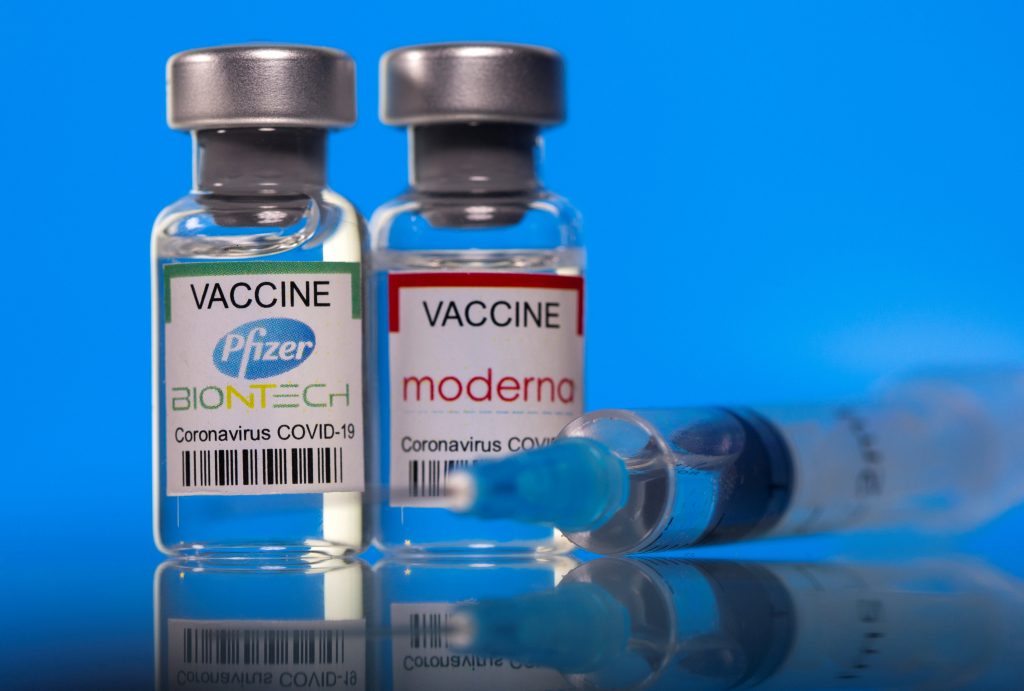
 dailysceptic.org
I'm really not sure how effective or not the vaccines are, and I'm really not sure how safe or unsafe they are. I actually don't think anybody is, and this is the issue, as Dr. Aseem Malhotra states:
Dr. Malhotra is no stranger to controversy, but he is without doubt a leading cardiologist so I don't believe his concerns should be dismissed. I very much hope that the vaccines prove to be safe, and if they're even reasonably effective then great, but the coercive behaviour was completely unacceptable as at the time "we" appear to have been simply hoping for the best.
Suspend All COVID-19 mRNA Vaccines Until Side-Effects are Fully Investigated, Says Leading Doctor Who Promoted Them on TV – The Daily Sceptic
Leading doctors have joined a call to suspend all COVID-19 mRNA vaccines until the mounting evidence of serious side-effects is fully investigated and the raw trial data are released for independent analysis.
dailysceptic.org
Suspend All COVID-19 mRNA Vaccines Until Side-Effects are Fully Investigated, Says Leading Doctor Who Promoted Them on TV
Leading doctors have joined a call to suspend all COVID-19 mRNA vaccines until serious side-effects are fully investigated and the raw trial data from Pfizer’s COVID-19 vaccine trial are released for independent analysis to help determine the true benefits and potential harms for different age groups.
Writing in the peer-reviewed Journal of Insulin Resistance, one of the U.K.’s most eminent Consultant Cardiologists Dr. Aseem Malhotra, who was one of the first to take two doses of the vaccine and promote it on Good Morning Britain on TV, says that since the rollout of the vaccine the evidence of its effectiveness and true rates of adverse events has changed.
In a two-part research paper entitled “Curing the pandemic of misinformation on COVID-19 mRNA vaccines through real evidence-based medicine”, real-world data reveal that in the non-elderly population the number needed to vaccinate to prevent one death from COVID-19 runs into thousands and that re-analysis of randomised controlled trial data (that first led to approval of the vaccines for Pfizer and Moderna) suggests a greater risk of suffering a serious adverse event from the vaccine than being hospitalised with COVID-19.
Dr. Malhotra writes: “Pharmacovigilance systems and real-world safety data, coupled with plausible mechanisms of harm, are deeply concerning, especially in relation to cardiovascular safety.”
Mirroring a potential signal from the Pfizer Phase 3 clinical trial, a significant rise in cardiac arrest calls to ambulances in England was seen in 2021 (an extra 14,000 compared to 2020) with similar data emerging from Israel in the 16-39 year old age group where there was a 25% increase in heart attacks or cardiac arrests associated with the Pfizer vaccine administration but not associated with COVID-19.
Citing the FDA’s own website he also highlights that testing positive for antibodies is an unreliable marker for immunity or protection against Covid post-vaccination.
He writes:
He concludes:It cannot be said that the consent to receive these agents was fully informed, as is required ethically and legally.
Authorities and sections of the medical profession have supported unethical, coercive and misinformed policies such as vaccine mandates and vaccine passports, undermining the principles of informed consent. These regrettable actions are a symptom of the ‘medical misinformation mess’: The tip of a mortality iceberg where prescribed medications are estimated to be the third most common cause of death globally after heart disease and cancer.
Underlying causes for this failure include regulatory capture – guardians that are supposed to protect the public are in fact funded by the very corporations that stand to gain from the sale of those medications. A failure of public health messaging has also resulted in wanton waste of resources and a missed opportunity to help individuals lead healthier lives with relatively simple – and low cost – lifestyle changes.
The unprecedented rollout of an emergency use authorisation vaccine without access to the raw data, with increasing evidence of significant harms, compounded by mandates that appear to serve no purpose other than to bolster the profits of the drug industry, have highlighted modern medicine’s worst failings on an epic scale, with additional catastrophic harms to trust in public health.
There is a strong scientific, ethical and moral case to be made that the current Covid vaccine administration must stop until all the raw data has been subjected to fully independent scrutiny. Looking to the future, the medical and public health professionals must recognise these failings and eschew the tainted dollar of the medical-industrial complex. It will take a lot of time and effort to rebuild trust in these institutions, but the health of both humanity and the medical profession depend on it.
Professor of Vascular Surgery and President of the International Vascular Society Dr. Sherif Sultan said:We must use this as an opportunity to transform the system to produce better doctors, better decision making, healthier patients and restore trust in medicine and public health. Until all the raw data on the mRNA COVID-19 vaccines have been independently analysed, any claims purporting that they confer a net benefit to humankind cannot be considered to be evidence based.
Professor of Medicine and Epidemiology at the University of Stanford Jay Bhattacharya said:Doctor Aseem Malhotra’s literature review and analysis is a cause for global concern. We fully believe that vaccines are one of the great discoveries in medicine that has improved life-expectancy dramatically. However, mRNA genetic vaccines are different, as long-term safety evaluation is lacking but mandatory to ensure public safety. These findings raise concerns regarding vaccine-induced undetected severe cardiovascular side-effects and underscore the established causal relationship between vaccines and myocarditis, a frequent cause of unexpected cardiac arrest in young individuals. Surveillance of potential vaccine side-effects and COVID-19 outcomes to identify public health trends and promptly investigate potential underlying causes needs immediate attention.
Dr. Amir Hannan MBE, General Practitioner and Chairman of the West Pennine Local Medical Committee, Greater Manchester said:Dr. Aseem Malhotra has written detailed narrative review of the literature on the uses and abuses of the mRNA Covid vaccines. Dr. Malhotra makes a good case that there is considerable heterogeneity across age groups and other comorbid conditions in the expected benefits and expected side-effect profiles of the vaccine. He finds that while there may be a case for older people to take the vaccine because the benefits may outweigh expected harm, that may not be the case for younger people. Dr. Malhotra’s paper calls for a pause in the use of the vaccine in younger people, such as the one recently adopted by Danish public health authorities and the Florida department of public health in the United States. He calls for investigation of side-effect profiles of mRNA vaccines and for a halt to any vaccine mandate programmes involving Covid vaccines. These papers should be considered carefully by all public health authorities who seek to adopt principles of evidence based medicine in their recommendations to the public regarding the Covid mRNA vaccines.
Dr. Campbell Murdoch, General Practitioner and Clinical Advisor to the Royal College of General Practitioners said:Dr. Aseem Malhotra should be congratulated for putting this all together to help inform the public, the medical profession, the regulators, Government, the pharmaceutical industry and wider society. Drug treatments and vaccinations can be an important part of helping to overcome disease and prevent illness but we must remain vigilant against over-reliance on the benefits and minimising or even suppressing the harms. Greater scrutiny of the data and those overseeing medical practice is needed to ensure the public and the profession remain safe. An urgent review is needed of the materials and information provided on the COVID-19 vaccines to help inform the public so that informed consent is gained through a shared decision-making process with education and training in light of the new evidence emerging.
Dr. Bob Gill, General Practitioner, activist and producer of documentary “The Great NHS Heist” said:Provision of safe and effective healthcare sits at the heart of medical services. As a GP this is central to every action I take with patients. The healthcare regulator in England, the Care Quality Commission, requires this from all providers of medical care.
As Dr. Malhotra describes, to be able to provide safe and effective care all healthcare professionals must practice evidence-based medicine. This is a combination of using the best available scientific evidence, the patient’s preferences, and the healthcare professional’s expertise. The combination of these three factors allows the patient to make an informed choice about what is best for their health.
In the case of the COVID-19 vaccination Dr Malhotra describes multiple systemic failures in the provision of safe and effective evidence-based medicine. Consequently, it has been impossible for patients and the public to make an informed choice about what is best for their health and life.
High quality healthcare requires organisations and individuals to act with complete integrity. Without this the delivery of safe and effective healthcare will always fail.
Errors in healthcare can provide an opportunity to improve. It is now time to reflect and learn from the experience of the COVID-19 vaccination. Healthcare must always help, not harm.
Dr. Renee Hoenderkamp, General Practitioner, writer and broadcaster said:This important two-part review of the impact of the international rollout of mRNA vaccination programme highlights significant concerns about the overstated benefits of vaccination especially in low-risk populations and the under-reporting of adverse events. Public information and consent to vaccination has not been balanced, neglecting discussion of individual risk versus benefit of having the shot. The quality of evidence provided by vaccine producers and lack of openness from the pharmaceutical industry risk long-lasting damage to confidence in public health interventions.
Part two of the review sets out how regulatory capture by pharmaceutical corporations and their immense financial power influences politicians and media to promote products at the expense of scientific scrutiny and unfettered access to research on which decisions of immense impact are made. Bias and conflicts of interest abound in the medical-industrial complex with well-documented adverse outcome for patients from over-medicalisation and prescription drugs. Coercive vaccine mandates based on biased and short trials with unpublished raw data are the culmination of the unchecked power of the pharmaceutical industry to the exclusion of effective lifestyle-factor risk reduction, which was ignored by media and politicians alike.
Given the declining virulence of the infection and mounting evidence of vaccine-related harms, there can be no justification to continued mass roll-out of booster programmes, given the short-term risks from the vaccine likely outweigh the benefits for the majority of the population and we remain ignorant of the long-term risk to health.
This is an important paper from Aseem. As a GP in a small practice I have two young patients with post-vaccine heart conditions confirmed. They were not counselled on the risk of this as part of an informed consent process. Surely any medical professional should want their patients to fully understand the risks and benefits of a medication they take, and welcome that discussion? As the evidence evolves and we see clearly that the risk from both COVID-9 and the vaccine designed to protect against it differs massively by age, sex, co-morbidity and previous infection, it becomes ever more important to give patients the information they need to make an informed decision. This important paper brings those risks and benefits into sharp focus and should allow the desperately needed discussion that has thus far been sorely missing from any examination of vaccination benefit and harms. Aseem opens up the discussion around both the harms and the ability to have a healthy discourse and I welcome it.
I'm really not sure how effective or not the vaccines are, and I'm really not sure how safe or unsafe they are. I actually don't think anybody is, and this is the issue, as Dr. Aseem Malhotra states:
It cannot be said that the consent to receive these agents was fully informed, as is required ethically and legally.
Authorities and sections of the medical profession have supported unethical, coercive and misinformed policies such as vaccine mandates and vaccine passports, undermining the principles of informed consent.
Dr. Malhotra is no stranger to controversy, but he is without doubt a leading cardiologist so I don't believe his concerns should be dismissed. I very much hope that the vaccines prove to be safe, and if they're even reasonably effective then great, but the coercive behaviour was completely unacceptable as at the time "we" appear to have been simply hoping for the best.
I came across this paper when seeing a Twitter thread by one of the better Covid statisticians out there, Gideon Meyerowitz-Katz. The thread is at https://twitter.com/GidMK/status/1574643846956584961, and critically reviews both Malhotra's analysis and the manner of it's publication. Meyerowitz-Katz's summary (final 3 tweets in thread) says it all to me:This article articulates the point myself and quite a few others have made in regard to the ethics of our vaccination strategy:
Suspend All COVID-19 mRNA Vaccines Until Side-Effects are Fully Investigated, Says Leading Doctor Who Promoted Them on TV – The Daily Sceptic
Leading doctors have joined a call to suspend all COVID-19 mRNA vaccines until the mounting evidence of serious side-effects is fully investigated and the raw trial data are released for independent analysis.
I'm really not sure how effective or not the vaccines are, and I'm really not sure how safe or unsafe they are. I actually don't think anybody is, and this is the issue, as Dr. Aseem Malhotra states:
Dr. Malhotra is no stranger to controversy, but he is without doubt a leading cardiologist so I don't believe his concerns should be dismissed. I very much hope that the vaccines prove to be safe, and if they're even reasonably effective then great, but the coercive behaviour was completely unacceptable as at the time "we" appear to have been simply hoping for the best.
But from a scientific perspective, I'm not sure what an opinion piece written by a cardiologist published in the Journal of Insulin Resistance adds to the vaccine discussion. It's not new evidence, and it's not even a systematic collation.
If this was a robust, well-done systematic review, with careful consideration of the totality of evidence, it might be helpful, but as an opinion piece citing the author's favourite studies and anonymous online blogs it doesn't really tell us much.
His paper tells us two things - the author's beliefs and why he holds them. For those who think highly of Dr Malhotra, this may be useful, but from a scientific perspective it's largely meaningless noise.

87electric
Established Member
- Joined
- 27 Jan 2010
- Messages
- 1,243
Very professional. Going by the sobriquet, “Health Nerd”.
I judge by content rather than appearance. And his critical examination of statistical claims in the literature has been very good at translating something understood by relatively few into a more general understanding.Very professional. Going by the sobriquet, “Health Nerd”.
DustyBin
Established Member
I came across this paper when seeing a Twitter thread by one of the better Covid statisticians out there, Gideon Meyerowitz-Katz. The thread is at https://twitter.com/GidMK/status/1574643846956584961, and critically reviews both Malhotra's analysis and the manner of it's publication. Meyerowitz-Katz's summary (final 3 tweets in thread) says it all to me:
You could just as easily ask what an opinion piece written by an epidemiologist specialising in diabetes on Twitter adds to the discussion!
Gideon Meyerowitz-Katz has written various articles in the Guardian and regularly references the "safe and effective" vaccines (which of course they may well be). His opinion however - and make no mistake that's all it is - is based on the very evidence that other experts are questioning i.e. the vaccine trial data.
Ultimately he's just another voice in the room with an opinion based on what appears to be questionable evidence. That doesn't make him wrong but it doesn't make him right either which, going back to my original argument, is why nobody should have been coerced into vaccination.
Perhaps, but his demonstrated expertise in identifying scientific fraud in the studies purporting to support Ivermectin means that his analysis of the claims in Dr Malhotra's paper is worth taking seriously. It is also worth using to help assess the credibility of the claims by Dr Malhotra - where there are a number of factors around the paper that are or should be considered red flags. Similarly - and I accept that our views differ here - I regard his ability to review statistical evidence as of a high standard, and his conclusions based on that data as more than mere opinion.You could just as easily ask what an opinion piece written by an epidemiologist specialising in diabetes on Twitter adds to the discussion!
Gideon Meyerowitz-Katz has written various articles in the Guardian and regularly references the "safe and effective" vaccines (which of course they may well be). His opinion however - and make no mistake that's all it is - is based on the very evidence that other experts are questioning i.e. the vaccine trial data.
Ultimately he's just another voice in the room with an opinion based on what appears to be questionable evidence. That doesn't make him wrong but it doesn't make him right either which, going back to my original argument, is why nobody should have been coerced into vaccination.
DustyBin
Established Member
Perhaps, but his demonstrated expertise in identifying scientific fraud in the studies purporting to support Ivermectin means that his analysis of the claims in Dr Malhotra's paper is worth taking seriously. It is also worth using to help assess the credibility of the claims by Dr Malhotra - where there are a number of factors around the paper that are or should be considered red flags. Similarly - and I accept that our views differ here - I regard his ability to review statistical evidence as of a high standard, and his conclusions based on that data as more than mere opinion.
Noted re Ivermectin; to be honest it's not something I'd particularly followed.
It's worth bearing in mind that I didn't present Dr Malhotra's paper as some kind of "slam dunk" as it absolutely isn't. My assertion isn't that the vaccines are unsafe or ineffective, rather that we didn't have anything like enough evidence either way when we decided to jab low risk groups in particular and actively coerce the unwilling. As you say we may have to agree to disagree to an extent at least, as regardless of Meyerowitz-Katz's ability to review statistical evidence, he has over the last couple of years set his stall out firmly in favour of mass vaccination and state intervention in health matters generally. He actually applauded the hard line taken by Australia for example.
We can play "pick your expert" all day long and that's the trouble as there's so much disagreement. Out of interest do you agree that the principle of informed consent was severely compromised (which is really the crux of my argument)?
On the question of “informed consent”, I don’t think the paper you cite does anything to demonstrate lack of informed consent, or provide any scientific argument to support the case that consent was ill-informed, or that the policies chosen were wrong.Noted re Ivermectin; to be honest it's not something I'd particularly followed.
It's worth bearing in mind that I didn't present Dr Malhotra's paper as some kind of "slam dunk" as it absolutely isn't. My assertion isn't that the vaccines are unsafe or ineffective, rather that we didn't have anything like enough evidence either way when we decided to jab low risk groups in particular and actively coerce the unwilling. As you say we may have to agree to disagree to an extent at least, as regardless of Meyerowitz-Katz's ability to review statistical evidence, he has over the last couple of years set his stall out firmly in favour of mass vaccination and state intervention in health matters generally. He actually applauded the hard line taken by Australia for example.
We can play "pick your expert" all day long and that's the trouble as there's so much disagreement. Out of interest do you agree that the principle of informed consent was severely compromised (which is really the crux of my argument)?
Indeed, given that he has cherry-picked evidence to support his known prior views, and his misrepresentation of yellow card/VAERS data, I’ve a slight tendency towards the view that his paper undermines the argument that informed consent was compromised, and is in fact a move towards what I’ve seen some commentators refer to as “misinformed refusal”.
That’s a pity, because the data about risk and benefit for some groups is unclear, and the role of vaccination (including with the limitations of the Covid vaccines) in containing an epidemic deserves proper attention.
If I recall correctly, some people were given a choice of take the vaccine or quit their job. Was that revoked for NHS staff in the end?It's worth bearing in mind that I didn't present Dr Malhotra's paper as some kind of "slam dunk" as it absolutely isn't. My assertion isn't that the vaccines are unsafe or ineffective, rather that we didn't have anything like enough evidence either way when we decided to jab low risk groups in particular and actively coerce the unwilling.

If I recall correctly, some people were given a choice of take the vaccine or quit their job. Was that revoked for NHS staff in the end?
I found this link https://www.ouh.nhs.uk/working-for-us/staff/documents/vcod-revocation-faq.pdf
On 31 January 2022, Secretary of State for Health and Social Care announced to the House of Commons that it was no longer proportionate to require COVID-19 vaccination as a condition of deployment for NHS workers
I’m going to guess that’s a yes?
DustyBin
Established Member
On the question of “informed consent”, I don’t think the paper you cite does anything to demonstrate lack of informed consent, or provide any scientific argument to support the case that consent was ill-informed, or that the policies chosen were wrong.
Indeed, given that he has cherry-picked evidence to support his known prior views, and his misrepresentation of yellow card/VAERS data, I’ve a slight tendency towards the view that his paper undermines the argument that informed consent was compromised, and is in fact a move towards what I’ve seen some commentators refer to as “misinformed refusal”.
That’s a pity, because the data about risk and benefit for some groups is unclear, and the role of vaccination (including with the limitations of the Covid vaccines) in containing an epidemic deserves proper attention.
Forget the paper for a minute as all we’ll do is go around in circles.
Here’s a definition of informed consent taken from the NHS website:
For consent to be valid, it must be voluntary and informed, and the person consenting must have the capacity to make the decision.
The meaning of these terms are:
If an adult has the capacity to make a voluntary and informed decision to consent to or refuse a particular treatment, their decision must be respected.
- voluntary – the decision to either consent or not to consent to treatment must be made by the person, and must not be influenced by pressure from medical staff, friends or family
- informed – the person must be given all of the information about what the treatment involves, including the benefits and risks, whether there are reasonable alternative treatments, and what will happen if treatment does not go ahead
- capacity – the person must be capable of giving consent, which means they understand the information given to them and can use it to make an informed decision

Consent to treatment
Find out what consent is, how it can be given, when it's needed, as well as situations when it's not needed.
 www.nhs.uk
As @Bikeman78 has helpfully reminded us, people were threatened with redundancy (or was it dismissal?) if they declined the vaccine. Many others accepted being vaccinated for other non-medical reasons; being able to travel abroad was a common one. Even those who got vaccinated purely for medical reasons did so on the basis of incomplete information (one could argue misinformation) as that’s all that was (is) available. How does any of that satisfy the definition of informed consent?
Just to be clear, I’m not arguing that nobody should have been vaccinated or that the programme should be halted with immediate effect. My point is that the principle of informed consent was compromised (to put it mildly) and medical ethics were abandoned which should be of great concern to all of us. I’m struggling to see how someone of your obvious intelligence can’t recognise this to be honest.
Last edited:
I think papers like Malhotra’s are absolutely at the heart of the question of informed consent. When they, amplified by very partisan media sources, misrepresent information, it is hard to see how a position formed by reference to that information could be considered “informed”.Forget the paper for a minute as all we’ll do is go around in circles.
Here’s a definition of informed consent taken from the NHS website:
Consent to treatment
Find out what consent is, how it can be given, when it's needed, as well as situations when it's not needed.
As @Bikeman78 has helpfully reminded us, people were threatened with redundancy (or was it dismissal?) if they declined the vaccine. Many others accepted being vaccinated for other non-medical reasons; being able to travel abroad was a common one. Even those who got vaccinated purely for medical reasons did so on the basis of incomplete information (one could argue misinformation) as that’s all that was (is) available. How does any of that satisfy the definition of informed consent?
Just to be clear, I’m not arguing that nobody should have been vaccinated or that the programme should be halted with immediate effect. My point is that the principle of informed consent was compromised (to put it mildly) and medical ethics were abandoned which should be of great concern to all of us. I’m struggling to see how someone of your obvious intelligence can’t recognise this to be honest.
When I received my vaccinations, I made an informed choice about the risk and benefit to myself. The same is true for when I gave consent for my teenage children to be vaccinated. Those decisions were based on the information available at the time I was being asked to make the decision, and in knowledge that side effects had been reported. That consent also considered the wider impact of Covid, and that the implications of my choices would affect not just myself, but others.
Expanding upon that, my children are in a group where the benefits of vaccination are less clear cut, hence the time taken by JCVI to make their decision. But, on the basis of their own minutes, that decision was always about whether the relative advantage was sufficiently in favour of vaccination, not whether there was an advantage in the first place. Reports of myocarditis have been tabled, and I took them seriously at the time. However, I also took seriously the evidence that myocarditis is a known side effect of Covid, and that the incidence of it in vaccine recipients was both low and of low severity. Indeed, if I were to rely on the way that Malhotra and others present myocarditis risk for that decision, I would be increasing the risk to my children, not reducing it.
That leaves the question of pressure on recipients. What we saw in the mass vaccination campaign was a social norm, defined and implemented as part of a campaign against a serious outbreak of disease that had killed very many people. In those circumstances, the idea that the decision was or could have been an entirely individual, atomic, choice is not credible - and nor is it supported by the NHS guidelines you posted, which I read to be clear that the decision must be that of an individual.
What you highlight are circumstances where certain groups of people were told that receiving that vaccination would be a condition of their employment. They retained their ability to choose, but had a further factor to consider in that their choice would have a non-medical consequence. That is no different in principle from where medical professionals are required to be vaccinated against other diseases as part of their job, and has long been considered ethical.
That leaves the final question, underlying the whole discussion, of whether governments and employers were right on a practical level to insist on staff receiving Covid vaccinations in the first place. Given the pressure on health services at the time, I consider that it was; I’m very aware that others will disagree.

Howardh
Established Member
- Joined
- 17 May 2011
- Messages
- 9,798
Turning 1000000 today (ok, two to the power six) and going for my second booster made me look back a couple of years to the situation this day in 2020.
Officially we had to stay seated in pubs, wear masks going to the loo, table service only (yeah, right , I recall one pub heaving with no masks and everyone crowding the bar...) and 10pm closing.
However I recall going into Manchester for a (half) evening out, Bolton was under special measures and all hospitality had been closed since 8 Sept. It lasted until we were placed with Manchester in a tier, and later that involved pubs selling food (pastygate?) with drinks.
Point is - are there any stats that state those lockdowns and restrictions then did any good after all we went through at that time? Admittedly the vaccines weren't ready (that started in December) and preluded a horrible winter with a seemingly never-ending lockdown until a slight release in April '21, where we were allowed, at last, to go and sit out in the cold with a pint and company. Midway through that I was in a very dark place entirely, watching my life slip away wondering if we would ever return.
Officially we had to stay seated in pubs, wear masks going to the loo, table service only (yeah, right , I recall one pub heaving with no masks and everyone crowding the bar...) and 10pm closing.
However I recall going into Manchester for a (half) evening out, Bolton was under special measures and all hospitality had been closed since 8 Sept. It lasted until we were placed with Manchester in a tier, and later that involved pubs selling food (pastygate?) with drinks.
Point is - are there any stats that state those lockdowns and restrictions then did any good after all we went through at that time? Admittedly the vaccines weren't ready (that started in December) and preluded a horrible winter with a seemingly never-ending lockdown until a slight release in April '21, where we were allowed, at last, to go and sit out in the cold with a pint and company. Midway through that I was in a very dark place entirely, watching my life slip away wondering if we would ever return.
Last edited:
kristiang85
Established Member
- Joined
- 23 Jan 2018
- Messages
- 2,745
Point is - are there any stats that state those lockdowns and restrictions then did any good after all we went through at that time?
Not that I've seen. And given the general pivot by politicians and commentators away from lockdowns, I'm pretty sure there will never be any evidence it made a difference.
We've had peaks and troughs of COVID this year that have naturally declined without restrictions; I daresay the same peaks and troughs in the restrictions era would have happened anyway.
DustyBin
Established Member
I think papers like Malhotra’s are absolutely at the heart of the question of informed consent. When they, amplified by very partisan media sources, misrepresent information, it is hard to see how a position formed by reference to that information could be considered “informed”.
My position isn't formed on the basis of Dr Malhotra's paper though, and nor could that of anyone else who decided to decline the vaccine during the initial rollout be, as at the time the same Dr Malhotra was an enthusiastic supporter of our vaccination strategy....
As I said previously "pick your expert" as they could all be accused of misrepresentation. You hold Gideon Meyerowitz-Katz in high esteem, I happen to view him as an ideologue who advocates excessive state interference in health matters, and who consistently circumvents the issues around the vaccine trial data.
When I received my vaccinations, I made an informed choice about the risk and benefit to myself. The same is true for when I gave consent for my teenage children to be vaccinated. Those decisions were based on the information available at the time I was being asked to make the decision, and in knowledge that side effects had been reported. That consent also considered the wider impact of Covid, and that the implications of my choices would affect not just myself, but others.
This is key (my bold). Were we really presented with all available information, or was what we were presented with cherry picked in order to nudge us into making the "correct" decision? I'm going with the latter. This applies not only to the vaccines but to Covid itself, where for the overwhelming majority of people the perceived risk exceeded the actual risk by an order of magnitude.
Expanding upon that, my children are in a group where the benefits of vaccination are less clear cut, hence the time taken by JCVI to make their decision. But, on the basis of their own minutes, that decision was always about whether the relative advantage was sufficiently in favour of vaccination, not whether there was an advantage in the first place. Reports of myocarditis have been tabled, and I took them seriously at the time. However, I also took seriously the evidence that myocarditis is a known side effect of Covid, and that the incidence of it in vaccine recipients was both low and of low severity. Indeed, if I were to rely on the way that Malhotra and others present myocarditis risk for that decision, I would be increasing the risk to my children, not reducing it.
This wasn't the case initially though and is, in my opinion (you'll obviously disagree!) a nonsensical position. The JCVI had previously advised against vaccination of healthy 12-15 year olds and were rounded on for doing so (cue hysterical articles in the Guardian for example). In fact I recall it all becoming rather political. The shifting of the goalposts and subsequent reversal of this advice may be purely coincidental of course....
That leaves the question of pressure on recipients. What we saw in the mass vaccination campaign was a social norm, defined and implemented as part of a campaign against a serious outbreak of disease that had killed very many people. In those circumstances, the idea that the decision was or could have been an entirely individual, atomic, choice is not credible - and nor is it supported by the NHS guidelines you posted, which I read to be clear that the decision must be that of an individual.
What we saw was a reaction to hysteria and fear of the government's own making. The fact that they had to resort to coercion is more a damning indictment of the evidence presented in favour of mass vaccination than it is public (un)willingness to do the right thing, especially when the vast majority of people were desperate to see the end of the pandemic.
In what way do the NHS guidelines not support the idea that individual choice was credible incidentally?
What you highlight are circumstances where certain groups of people were told that receiving that vaccination would be a condition of their employment. They retained their ability to choose, but had a further factor to consider in that their choice would have a non-medical consequence. That is no different in principle from where medical professionals are required to be vaccinated against other diseases as part of their job, and has long been considered ethical.
The difference is that they were already in employment and were told they had to receive a vaccine with emergency approval, and for which little trial data was available. A significant number of NHS workers (yes, NHS workers remember) felt that they were unable to give informed consent. The ethics of this are completely different to the situation you describe. The fact that the threat wasn't followed through (in the case of NHS workers) confirms that it was indeed an attempt to coerce.
That leaves the final question, underlying the whole discussion, of whether governments and employers were right on a practical level to insist on staff receiving Covid vaccinations in the first place. Given the pressure on health services at the time, I consider that it was; I’m very aware that others will disagree.
Needless to say I disagree; were there to be clear evidence that vaccinating all staff would reduce pressure on the health service I may feel differently. In the event however too many important factors were completely disregarded as a result of what I can only describe as dogma.
Last edited:
Eyersey468
Established Member
- Joined
- 14 Sep 2018
- Messages
- 2,605
@35B which other vaccines have medical staff been made to take as part of their job?
I agree with @DustyBin were we really given all the available data to make an informed decision or just cherry picked data to nudge us? To be honest while I can't prove it I suspect the latter. That is not to say I don't think nobody should have been vaccinated, I do think the vaccines have done a good job in protecting the vulnerable, however I am not convinced everyone needed 2 jabs and a booster.
I agree with @DustyBin were we really given all the available data to make an informed decision or just cherry picked data to nudge us? To be honest while I can't prove it I suspect the latter. That is not to say I don't think nobody should have been vaccinated, I do think the vaccines have done a good job in protecting the vulnerable, however I am not convinced everyone needed 2 jabs and a booster.
Hepatitis, for a start.@35B which other vaccines have medical staff been made to take as part of their job?
I agree with @DustyBin were we really given all the available data to make an informed decision or just cherry picked data to nudge us? To be honest while I can't prove it I suspect the latter. That is not to say I don't think nobody should have been vaccinated, I do think the vaccines have done a good job in protecting the vulnerable, however I am not convinced everyone needed 2 jabs and a booster.
Eyersey468
Established Member
- Joined
- 14 Sep 2018
- Messages
- 2,605
The difference is hepatitis jabs have many years of data behind them and are not in the experimental phase stillHepatitis, for a start.
We do need to disagree, our interpretations are inevitably based on prior beliefs.My position isn't formed on the basis of Dr Malhotra's paper though, and nor could that of anyone else who decided to decline the vaccine during the initial rollout be, as at the time the same Dr Malhotra was an enthusiastic supporter of our vaccination strategy....
As I said previously "pick your expert" as they could all be accused of misrepresentation. You hold Gideon Meyerowitz-Katz in high esteem, I happen to view him as an ideologue who advocates excessive state interference in health matters, and who consistently circumvents the issues around the vaccine trial data.
This is key (my bold). Were we really presented with all available information, or was what we were presented with cherry picked in order to nudge us into making the "correct" decision? I'm going with the latter. This applies not only to the vaccines but to Covid itself, where for the overwhelming majority of people the perceived risk exceeded the actual risk by an order of magnitude.
This wasn't the case initially though and is, in my opinion (you'll obviously disagree!) a nonsensical position. The JCVI had previously advised against vaccination of healthy 12-15 year olds and were rounded on for doing so (cue hysterical articles in the Guardian for example). In fact I recall it all becoming rather political. The shifting of the goalposts and subsequent reversal of this advice may be purely coincidental of course....
What we saw was a reaction to hysteria and fear of the government's own making. The fact that they had to resort to coercion is more a damning indictment of the evidence presented in favour of mass vaccination than it is public (un)willingness to do the right thing, especially when the vast majority of people were desperate to see the end of the pandemic.
In what way do the NHS guidelines not support the idea that individual choice was credible incidentally?
The difference is that they were already in employment and were told they had to receive a vaccine with emergency approval, and for which little trial data was available. A significant number of NHS workers (yes, NHS workers remember) felt that they were unable to give informed consent. The ethics of this are completely different to the situation you describe. The fact that the threat wasn't followed through (in the case of NHS workers) confirms that it was indeed an attempt to coerce.
Needless to say I disagree; were there to be clear evidence that vaccinating all staff would reduce pressure on the health service I may feel differently. In the event however too many important factors were completely disregarded as a result of what I can only describe as dogma.
On a couple of specifics. The role of Malhotra’s paper, and your opinion on Meyerowitz-Katz, are fundamentally the same - that information presented needs to be properly founded for the interpretation to be reliable. Garbage in must lead to garbage out; the dissection of Malhotra’s paper demonstrates an example of how the conclusions lack rigour.
On informed consent, I do consider that the information was available and shared, to the extent that it could be, and that the subsequent real world data supports the widespread use of vaccines. The decisions I, and millions of others, took were based on what was known at the time, which is the only possible basis. As an aside, reference to EUA and the current legal position of some vaccines as in trials does not reflect medical status, and is a well worn attempt by opponents of vaccination of all kinds to undermine confidence in any form of vaccine.
Finally, the question of mandation. My argument is not about whether it was or wasn’t the right policy response, but that it was within a legitimate range of ethical options, and based on precedent. There are many legal precedents, including through international human rights courts, supporting vaccine mandates and restricting the effective ability of individuals to choose whether or not to receive a vaccine. These are based on the point that vaccination is not solely for the benefit of the individual recipient, and that society has an interest as well as the individual.
Finally, we agree that there has been far too much dogma over the last 30 months. Dogmas have been evident across the whole spectrum of views on Covid and the appropriate responses, and still contaminate the interpretation of what were and were not sensible responses to this pandemic. When the dust eventually settles, my hunch is that the debate over mandatory vaccination of medical staff will not get into a top 10 list of dogma driven decisions.
== Doublepost prevention - post automatically merged: ==
Which was not entirely true when they were first mandated, and takes a legal definition of “experimental” and applies it in a medical context where it is actively misleading.The difference is hepatitis jabs have many years of data behind them and are not in the experimental phase still

VauxhallandI
Established Member
I do hope the locktivists are happy with what they have delivered.
Man dies as he couldn't get a face to face appointment with a GP. What happened to "one life is one too many"
 www.bbc.co.uk
Man dies as he couldn't get a face to face appointment with a GP. What happened to "one life is one too many"
Dying patient should have been seen in person
A man died after four telephone consultations with his GP surgery but no face-to-face assessment.
www.bbc.co.uk
Eyersey468
Established Member
- Joined
- 14 Sep 2018
- Messages
- 2,605
Aah but one life is one too many only applies when it is Covid, nothing else matters to the locktivistsI do hope the locktivists are happy with what they have delivered.
Man dies as he couldn't get a face to face appointment with a GP. What happened to "one life is one too many"
Dying patient should have been seen in person
A man died after four telephone consultations with his GP surgery but no face-to-face assessment.
I do hope the locktivists are happy with what they have delivered.
Man dies as he couldn't get a face to face appointment with a GP. What happened to "one life is one too many"
Dying patient should have been seen in person
A man died after four telephone consultations with his GP surgery but no face-to-face assessment.
I read this but I have to question one thing, I see it reads that the BBC understands this and that in regards to this case but do we really think that the BBC would see that they the media have caused too or will this be a sweep it under a carpet?
It goes back to the whole media perspective of all this, they asked daily for more restrictions not less and continued to do so, any hint of opening up was led with criticism but yet the media continued to pour fuel onto the fire. So this is an example of a case of someone not been seen to due to restrictions but how many more are out there? Also why the change of heart for the BBC (or other media for that matter) to come across as if they care about us? The media should have gave 2 sides to this but chose the one they favoured so here we are, but I have no sympathy at with the media, I have sympathy to whats happened to this person and others but sorry nothing for the media let alone the NHS/governments - they all share the blame and also own the responsibility too (oh whats that saying - actions have consequences).
I'm guessing that none of the other vaccine requirements were restrospective though? It's one thing saying you need to be vaccinated against x or we won't employ you. It's quite another to threaten to sack people already employed that don't want to take a new vaccine. It was suggested at the time that thousands of NHS would have walked out rather than be vaccinated. I'm not sure how that would help the ongoing staff shortage and patient backlog.What you highlight are circumstances where certain groups of people were told that receiving that vaccination would be a condition of their employment. They retained their ability to choose, but had a further factor to consider in that their choice would have a non-medical consequence. That is no different in principle from where medical professionals are required to be vaccinated against other diseases as part of their job, and has long been considered ethical.
== Doublepost prevention - post automatically merged: ==
Boris and his mates ignored the rules and, so far as I know, they all survived.Point is - are there any stats that state those lockdowns and restrictions then did any good after all we went through at that time?
- Status
- Not open for further replies.