• Our new ticketing site is now live! Using either this or the original site (both powered by TrainSplit) helps support the running of the forum with every ticket purchase! Find out more and ask any questions/give us feedback in this thread!

Lithium mining announced in Cornwall - possible freight demand?

Status
Not open for further replies.

brad465

Veteran Member
Joined
11 Aug 2010
Messages
11,456
Location
Taunton or Kent
As per the title:


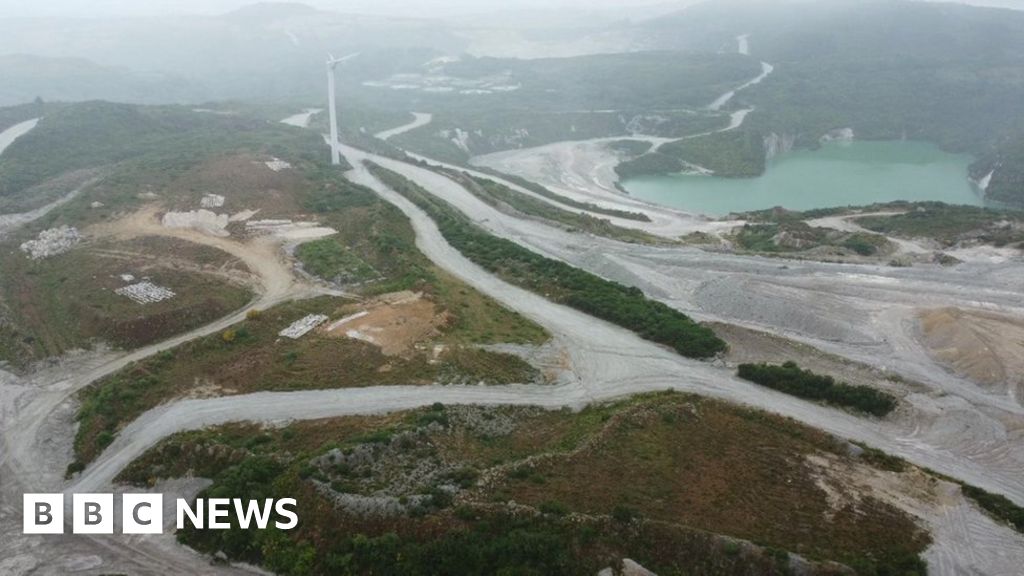
The mining of battery-grade lithium carbonate - a key component in electric cars - has been announced in Cornwall.
The joint venture between china clay company Imerys and British Lithium aims to operate the UK's "leading lithium hub" within five years.
Their target is to to supply 500,000 electric cars with the component per year by the end of the decade.
The development, in the St Austell area, could potentially create at least 300 direct jobs, the companies said.
It is estimated that there are enough resources that the life of a mine could exceed 30 years and produce 20,000 tonnes of lithium carbonate equivalent per year.
This would meet roughly two-thirds of Britain's estimated battery demand by 2030.

From a railway perspective I would expect this would revitalise freight in Cornwall from the peak of China Clay, but what sort of work, if any, might need doing to make it happen?
 
Sponsor Post - registered members do not see these adverts; click here to register, or click here to log in
R

RailUK Forums

edwin_m

Veteran Member
Joined
21 Apr 2013
Messages
28,642
Location
Nottingham
20,000 tonnes per year would be no more than one train every week, and for that to be viable by rail it would all have to go to the same place, probably with both origin and destination rail-served. It might be containerised to allow smaller volumes to go to a range of destinations, but as far as I'm aware there's no container terminal anywhere closer than Bristol.
 

Sir Felix Pole

Established Member
Joined
21 Oct 2012
Messages
2,165
Location
Wilmslow
I guess it depends where the battery factories are going to be located. One proposal is the former Royal Ordnance site at Puriton near Bridgwater in Somerset - it was rail connected and indeed the bridge over the M5 is still there. Presumably the china-clay loading sites in Cornwall can be adapted - no idea if there are any special handling requirements.
 

The Planner

Veteran Member
Joined
15 Apr 2008
Messages
19,676
20,000 tonnes per year would be no more than one train every week, and for that to be viable by rail it would all have to go to the same place, probably with both origin and destination rail-served. It might be containerised to allow smaller volumes to go to a range of destinations, but as far as I'm aware there's no container terminal anywhere closer than Bristol.
And that would only be 400t if it was one a week.
 

randyrippley

Established Member
Joined
21 Feb 2016
Messages
5,382
Isn't the first battery plant going to be Jaguar at Avonmouth? Or am I getting mixed up with Bridgwater?
Fairly short distance, how does that affect the economics? Presumably the lithium carbonate will be a fine powder, so will be shipped in bulk powder tanks.
Might almost be cheaper to use coastal shipping St Austell - Avonmouth/Bridgwater?
 

Bryson

Member
Joined
24 Jan 2022
Messages
118
Location
Yorkshire
Isn't the first battery plant going to be Jaguar at Avonmouth? Or am I getting mixed up with Bridgwater?
Fairly short distance, how does that affect the economics? Presumably the lithium carbonate will be a fine powder, so will be shipped in bulk powder tanks.
Might almost be cheaper to use coastal shipping St Austell - Avonmouth/Bridgwater?
The Lithium carbonate needs further processing to convert it into a suitable electrolyte (there are a few variations) we don't know where this might be carried out.

To add that Lithium carbonate has a wide range of commercial uses and not just battery production, I would imagine that UK Lithium will sell to whoever offers the best price and not only to Jaguar.
 

Sir Felix Pole

Established Member
Joined
21 Oct 2012
Messages
2,165
Location
Wilmslow
Tata (Jaguar Land Rover) are proposing Bridgwater - but of course want a large bung of public funds to do so.
 

Peter Mugridge

Veteran Member
Joined
8 Apr 2010
Messages
17,829
Location
Epsom
20,000 tonnes per year would be no more than one train every week, and for that to be viable by rail it would all have to go to the same place, probably with both origin and destination rail-served. It might be containerised to allow smaller volumes to go to a range of destinations, but as far as I'm aware there's no container terminal anywhere closer than Bristol.
...but how much stuff do they have to dig up and sift through to get that 20,000 tonnes of the final product? Is it being sifted through on site or elsewhere?
 

Bryson

Member
Joined
24 Jan 2022
Messages
118
Location
Yorkshire
...but how much stuff do they have to dig up and sift through to get that 20,000 tonnes of the final product? Is it being sifted through on site or elsewhere?
It appears that they are processing the granite removed from the quarry when accessing the china clay, if this is the case it is a by product of the existing quarry. The BBC article identifies that the Lithium extraction will be done in the St. Austell area.
 

Peter Mugridge

Veteran Member
Joined
8 Apr 2010
Messages
17,829
Location
Epsom
It appears that they are processing the granite removed from the quarry when accessing the china clay, if this is the case it is a by product of the existing quarry. The BBC article identifies that the Lithium extraction will be done in the St. Austell area.
Then I would agree that it doesn't seem to do anything for freight prospects in the area at all.
 

Snow1964

Established Member
Joined
7 Oct 2019
Messages
11,106
Location
West Wiltshire
Then I would agree that it doesn't seem to do anything for freight prospects in the area at all.
Probably not the Lithium

But the material it is extracted from, (effectively pulverised granite rock) can apparently be used to make strong insulating building blocks. So really a case of if construction & aggregates want to move tens of thousands of tonnes of rock.
 

Bryson

Member
Joined
24 Jan 2022
Messages
118
Location
Yorkshire
...but how much stuff do they have to dig up and sift through to get that 20,000 tonnes of the final product? Is it being sifted through on site or elsewhere?
Back of a fag packet calculation, using some published numbers:

20,000 tonnes of Lithium Carbonate can be obtained from about 49,400 tonnes of Lithium Oxide.
Granite contains 1%-2% Lithium oxide
So if the process were 100% efficient (it won't be) then you need 2,470,000 to 4,940,000 tonnes of granite depending on the actual composition of that formation- lets call it 2.5 to 5 million tonnes.
That's in the range 900 to 1800 cubic meters of rock per year.
 

edwin_m

Veteran Member
Joined
21 Apr 2013
Messages
28,642
Location
Nottingham
Back of a fag packet calculation, using some published numbers:

20,000 tonnes of Lithium Carbonate can be obtained from about 49,400 tonnes of Lithium Oxide.
Granite contains 1%-2% Lithium oxide
So if the process were 100% efficient (it won't be) then you need 2,470,000 to 4,940,000 tonnes of granite depending on the actual composition of that formation- lets call it 2.5 to 5 million tonnes.
That's in the range 900 to 1800 cubic meters of rock per year.
If there's someone some distance away with a rail connection that would have a need for a large quantity of granite in whatever state it is after the lithium oxide is extracted, then there might indeed be a market for rail. The lower figure above would produce somewhere around 10 trains per weekday at 1000 tonnes payload per train.
 

Bartsimho

Member
Joined
17 Jan 2023
Messages
623
Location
Chesterfield
If there's someone some distance away with a rail connection that would have a need for a large quantity of granite in whatever state it is after the lithium oxide is extracted, then there might indeed be a market for rail. The lower figure above would produce somewhere around 10 trains per weekday at 1000 tonnes payload per train.
I mean Granite can be used as an aggregate for Building and we need a lot of houses as well. so there is a possibility of it being used. Using this for House Building in the South West could be feasible especially the Exeter-Taunton axis where it would be for Bristol and Exeter commuting flows as both are growing cities with a squeeze on the housing market (as everywhere else has as well)
 

AndrewE

Established Member
Joined
9 Nov 2015
Messages
7,335
I mean Granite can be used as an aggregate for Building and we need a lot of houses as well. so there is a possibility of it being used. Using this for House Building in the South West could be feasible especially the Exeter-Taunton axis where it would be for Bristol and Exeter commuting flows as both are growing cities with a squeeze on the housing market (as everywhere else has as well)
Granite used for building is solid, in good condition, and would need loads of energy to calcine or crush it to get the lithum out. no good for building after that...
Rotted granite (where the feldspars have broken down to kaolin) is mined by high-pressure jets to wash out the kaolin (china clay) leaving the quartz (sand) and mica behind, hence the Cornish Alps. I think it is this waste which is "rich" in lithium and could be further processed to get it out, leaving a clean sand for export for building, but it won't be "aggregate." There is no way that deep mining of hard rock to extract Lithium will ever be viable.
The scrap sand might be worth sending by rail, although coastal shipping would probably compete for a lot of destinations. It took a long time for any slate waste from Blaenau to start being moved by rail.
 
Last edited:
Status
Not open for further replies.

Top