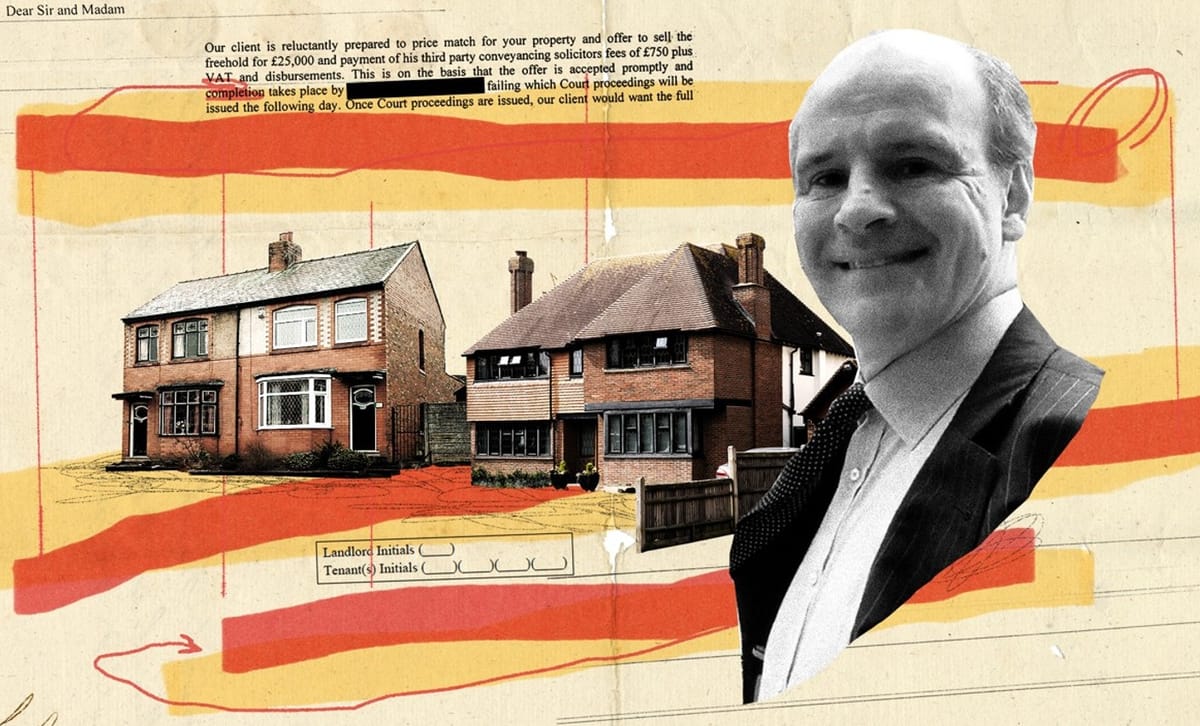
Is the problem with flats about the ownership model, or simply because of the inherent costs and difficulties associated with flats as a housing type?
A bit of both, but there are better models used in most countries that remove the possibility of unscrupulous freeholders taking advantage financially. Most countries use a system of condominium/tenement/commonhold ownership where the flat owner also owns a share of the physical building and owns their flat for an indefinite period, and typically owns the physical parts of their flat too rather than just a timebound right to live there.
I'd buy a flat in Scotland (if I wanted to live there), just not England.
Obviously I don't want to derail the thread, but I think zeroing in on "leasehold bad" is ignoring the elephant in the room.
There are certainly other reasons why people don't like flats, yes.
Ofcourse, buildings above 18m high are now functionally unbuildable in any case.
Completely false, unless you consider all the tower blocks going up in London, Manchester etc a mirage?
For the purposes of this thread, and with reference to the comments by
@Topological and
@Tomos y Tanc, I think the issue with flats is the relative desirability of a house as opposed to a flat. Densification may be a worthwhile aim, but its proponents need to engage with the preferences revealed by how people choose to live and make their preferred alternative more desirable.
To be fair there are ways to densify while sticking with freehold houses, such as three or even four storey townhouses which are quite popular these days.
I suppose it depends on the Lease? My property has a 999 Lease (in 1960) so when I moved in in 1988, I had 960-odd years left with a ground rent of £8pa and no review permitted. Unusual in a Scottish property (which operated a feu-based system) Sheffield developer Henry Boot estates introduced in on their new-builds. By 2000 the Scottish Government outlawed it, requiring Leaseholders to set an equitable charge for the disposal, and by 2014 I was told for £2k plus legal fees, I could buy out their interest - which I did. I think it cost them more to administer than it brought in revenue.
Scotland is much better at this sort of thing to be fair.
Worth adding that many houses I bought are leasehold, managed by an agency that takes care of all of the streetscene, the car parks for those who do not have drives and for the apartments that are in the same development. I actually feel the leasehold system serves the area well since it means that no house particularly lets the street down. Given how many are rented by students and or others who may be less inclined towards maintaining the street scene, having a management agency taking care of everything helps a lot. However, were the properties to be managed by a bad landowner then the story may be somewhat different.
It would be possible to use commonhold or similar to achieve that end without leaving things open to abuse by a profiteering freeholder, because there isn't one - the individual homeowners all own a share of it. That is the key.