

-
Our new ticketing site is now live! Using either this or the original site (both powered by TrainSplit) helps support the running of the forum with every ticket purchase! Find out more and ask any questions/give us feedback in this thread!
You are using an out of date browser. It may not display this or other websites correctly.
You should upgrade or use an alternative browser.
You should upgrade or use an alternative browser.
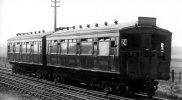
L&YR Electric Unit
- Thread starter Kubsamboll
- Start date
- Status
- Not open for further replies.
Sponsor Post - registered members do not see these adverts; click here to register, or click here to log in
R
RailUK Forums
Pintodog
New Member
I dont knowfor sure but this may be of interes: https://en.wikipedia.org/wiki/LYR_electric_units

Sun Chariot
Established Member
Hello @Kubsamboll this site has more info -
and it even has the same photo, which I recognise as one of the Liverpool to Southport route stock.
and it even has the same photo, which I recognise as one of the Liverpool to Southport route stock.
The L&Y third rail 'Lightweight' cars were built to run through services from the Southport and North Mersey (Aintree) branches of the L&Y third rail suburban network onto the Liverpool Overhead Railway to Dingle via the connection at Seaforth and Litherland station (the conventional L&Y third rail stock was presumably too heavy for the LOR's iron plate viaduct construction). Through running onto the LOR started in 1905, so I imagine the cars were built around the same time.


If you look where the blue arrow is to the left it says 'C WITH HEAD Ry' - that was the connection onto the LOR. Trains would use the line to the junction before Seaforth & Litherland to get to and from the Southport branch. Trains to Aintree would use the crossover just after the curve to get onto the branch through Linacre Raod and Ford, and then take the curve at Sefton Jnction that crossed over the CLC line to get to Aintree station (not 'Racecourse Station', that was a temporary station on an embankment that was only set up for race weekends, and the line was not electrified past the junction to Aintree).
The units had a very short operational life (on their intended route, at least), as the L&Y ceased through running from Aintree in 1908 and from Southport in 1914. Through running from the LOR to Aintree continued only for Grand National race weekends until the LOR ceased operation in 1956, using the LOR's stock.
If you look where the blue arrow is to the left it says 'C WITH HEAD Ry' - that was the connection onto the LOR. Trains would use the line to the junction before Seaforth & Litherland to get to and from the Southport branch. Trains to Aintree would use the crossover just after the curve to get onto the branch through Linacre Raod and Ford, and then take the curve at Sefton Jnction that crossed over the CLC line to get to Aintree station (not 'Racecourse Station', that was a temporary station on an embankment that was only set up for race weekends, and the line was not electrified past the junction to Aintree).
The units had a very short operational life (on their intended route, at least), as the L&Y ceased through running from Aintree in 1908 and from Southport in 1914. Through running from the LOR to Aintree continued only for Grand National race weekends until the LOR ceased operation in 1956, using the LOR's stock.
Last edited:
Sun Chariot
Established Member
Great info @Prime586 and, yes, the build date you suggested for the "lightweights" (1905) concurs with that quoted in the link I put into post #3
Some of them survived into LMS days.
It’s believed there is only a single known bit of film footage that features them (seen on Merseyside Memories DVD Vol.2 The Loop and Link).
Interesting that the L&Y map shows the Exchange-Southport line in blue. This is the colour used for the Merseyrail Northern Line to this day.
It’s believed there is only a single known bit of film footage that features them (seen on Merseyside Memories DVD Vol.2 The Loop and Link).
Interesting that the L&Y map shows the Exchange-Southport line in blue. This is the colour used for the Merseyrail Northern Line to this day.

Springs Branch
Established Member
Reportedly, the last survivors were used on the Southport - Crossens local service until 1945. A nice, easy retirement job for the lightweight cars.Some of them survived into LMS days.
Lloyds siding
Member
The pictures in your link are from the days when it was a four rail electrical system, when did it become third rail with track return?Hello @Kubsamboll this site has more info -
and it even has the same photo, which I recognise as one of the Liverpool to Southport route stock.
(The picture in your link of the original Liverpool-Southport stock, at the top of the page, is taken outside my old house at Hall Road.)
Sun Chariot
Established Member
How amazing that the photo was where you formerly livedThe pictures in your link are from the days when it was a four rail electrical system, when did it become third rail with track return?
(The picture in your link of the original Liverpool-Southport stock, at the top of the page, is taken outside my old house at Hall Road.)

Regret I'm an LNER fan, no knowledge of the L&YR, so I hope another forum member will know when the 4th rail to 3rd rail changeover happened.
Springs Branch
Established Member
In Vol. 2 of John Marshall's The Lancashire and Yorkshire Railway when talking about the initial electrification of the Southport line (p. 160):The pictures in your link are from the days when it was a four rail electrical system, when did it become third rail with track return?
The fourth rail seen in the photos looks to be at the level of the running rails and below that of the outside conductor rail - so presumably was always present just to improve the path for the return current and did not have any contact shoe beneath the rolling stock (otherwise the rail would need to be elevated). No electrical modifications to the trains would be needed when current return migrated from fourth rail to the running rails, and the conversion could be done 'at leisure' over a prolonged period."Conductor rails were of flat-bottom section rolled out of special high conductivity steel . . . mounted on 'reconstructed granite' insulators at 10-ft intervals, 3 ft 11½ in. from track centre with the surface 3 in. above rail level.
An identical fourth rail was mounted in the centre of the track and to this the running rails were bonded.
Subsequently this fourth rail was gradually removed and the running rails were bonded together to provide for return current"
Although Marshall mentions no dates to indicate what "gradually" meant, the fact that the photo of the 1906-vintage Lightweight "Dingle" cars has 4th rail track suggests it lasted at least a couple of years. Even after complete conversion of the line to 3rd rail operation, there might have been little urgency to recover the redundant fourth rail. It was just a 'metal strip' running down the 4-foot and didn't cause any inconvenience at points, crossings etc.
Last edited:
The LOR was originally a third rail system with the conducutor rail in the centre of the running rails which were the earth return, and at the same height. To enable through running with the L&Y, it was converted to an outer conductor rail, with the centre rail becoming an earth return rail, bonded to the running rails.

Note that although the centre rail is raised up on insulators, it is also lower in profile than the runnng rails and new outer conductor rail, so overall it comes out as the same height. In the pictures showing the L&Y with 4 rails the centre rail also appears to be mounted on raised pads or insulators - it's not mounted on normal chairs to the sleepers like the running rails.This implies that there must have been some requirement to isolate it from the running rails at some point in it's design.
The centre rails remained in situ on the LOR until the 1920s. This makes me wonder of the L&Y installed the centre earth rail on the Southport line during the electrification work as a means of 'future proofing' the line for interoperation with the LOR, with both lines eventually removing the centre rail when it became clear it was no longer required.
Note that although the centre rail is raised up on insulators, it is also lower in profile than the runnng rails and new outer conductor rail, so overall it comes out as the same height. In the pictures showing the L&Y with 4 rails the centre rail also appears to be mounted on raised pads or insulators - it's not mounted on normal chairs to the sleepers like the running rails.This implies that there must have been some requirement to isolate it from the running rails at some point in it's design.
The centre rails remained in situ on the LOR until the 1920s. This makes me wonder of the L&Y installed the centre earth rail on the Southport line during the electrification work as a means of 'future proofing' the line for interoperation with the LOR, with both lines eventually removing the centre rail when it became clear it was no longer required.
Springs Branch
Established Member
Interestingly, this link to the L&YR Society web page from Post #3 also includes some early photos of the L&Y's Manchester - Bury electrification of 1916 showing a fourth current return rail in use there too. This example certainly looks like a 'non-contact' earthing bar running down the middle of the 4-foot.The centre rails remained in situ on the LOR until the 1920s. This makes me wonder of the L&Y installed the centre earth rail on the Southport line during the electrification work as a means of 'future proofing' the line for interoperation with the LOR, with both lines eventually removing the centre rail when it became clear it was no longer required.
There's also a diagram of the Manchester - Bury side contact rail arrangement on the Suburban Electric Railway Association's website at http://www.emus.co.uk/zone/manchester/manchester.htm showing the profile of the central rail.
So presumably the L&Y's attachment to fourth rails for traction current return continued until at very least 1915 when it was still installing them on the new Bury scheme. Maybe it was the LSWR's demonstrated success with pure 3rd rail operation south of London after World War 1 that convinced the L&Y (or LMS) and the LOR that they could dispense with the 4th rail?
And although they used a 4th rail initially on the 1200V DC Manchester - Bury route, they had not bothered just a few years earlier on the experimental 3500V DC overhead Holcombe Brook - Bury line (or was that choice down to Dick Kerr, who presumably were the main drivers of that scheme?)
Last edited:
- Status
- Not open for further replies.