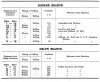
After nationalisation in 1948 the surviving records of the old companies were brought together as British Transport Historical Records, run by BR. At one of the many re-organisations it was decided that running an archive was not really a part of running a railway and BTHR was hived off. Some of the records directly connected with engineering matters and a lot of the visual material went to the National Railway Museum (now in York), but the overwhelming majority of material was taken over by the Public Record Office and run at first from the same building that BR used, and then, from its opening, from the new building at Kew in West London. The PRO continued to add to the archive and to make the material accessible, subject to the 30-year rule. That continued until privatisation, when the collecting criteria became much more narrowly defined. The PRO continued to use the old classification system that BTHR had developed, simply subsuming everything into the "RAIL" class. The PRO was later re-named the National Archives, but it operates from the same, though much expanded, buildings in Ruskin Avenue, Kew. The web-site is at <http://www.nationalarchives.gov.uk/> and you can get access to the full catalogue on line. The class-mark for all the London & North Western Railway holdings is "RAIL410" and the so-called "piece number" for the Gradient Tables (actually here the 1910 issue) is the 1291 I cited. You need a reader's ticket to use TNA (the present abbreviation, replacing the old PRO usage), and details of how to get that are on line too.