
-
Our new ticketing site is now live! Using either this or the original site (both powered by TrainSplit) helps support the running of the forum with every ticket purchase! Find out more and ask any questions/give us feedback in this thread!
You are using an out of date browser. It may not display this or other websites correctly.
You should upgrade or use an alternative browser.
You should upgrade or use an alternative browser.
Jubilee line train cancellations
- Thread starter Silent
- Start date
- Status
- Not open for further replies.
Sponsor Post - registered members do not see these adverts; click here to register, or click here to log in
R
RailUK Forums

Dstock7080
Established Member
answered below
Last edited:

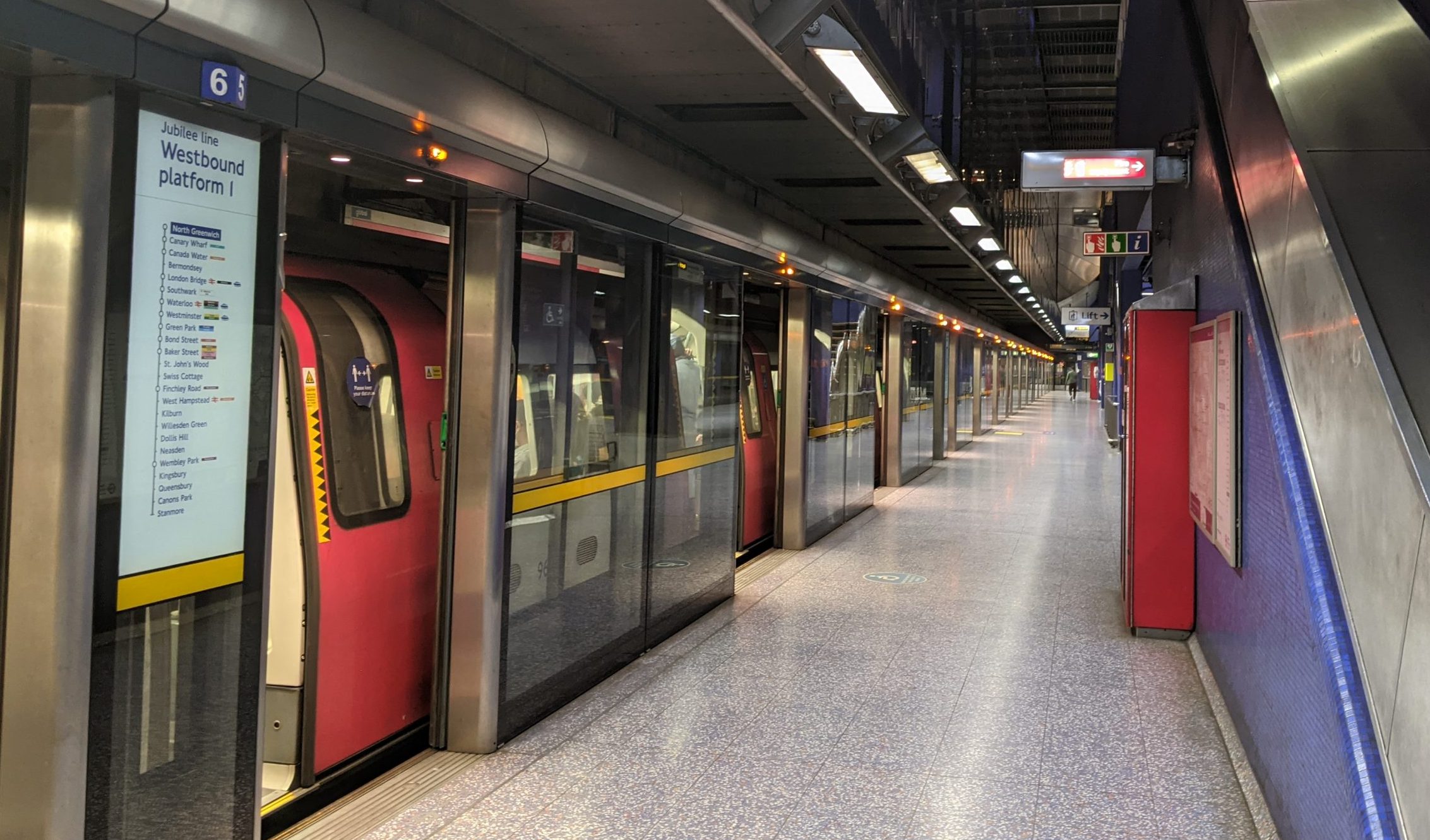
Although it looks visually in better condition than the 1992 stock it makes me think mechanically it might not be in much better condition.One has to wonder if we might see the 1996 stock replaced earlier than expected.
Some reasons for delays in recent months on the line:
 www.fromthemurkydepths.co.uk
Jubilee line problems: TfL offer update on train, signal and tunnel issues - Murky Depths
Work to refurbish Jubilee line trains and fix the lines ventilation have seen issues according to Transport for London
www.fromthemurkydepths.co.uk
I certainly complained vociferously about the phrase "shortage of train operators" as I got abused standing on a platform waiting to pick up my train one evening when the service was delayed. I'm sure I wasn't the only one, so LU don't use it any more.As per this FoI, “train cancellations” means “a shortage of train operators.”

RacsoMoquette
Member
Can be ascertain from this situation that the 1996 Tube Stock was poorly constructed? Or is it due to neglect by TFL? The 1996TS has never seemed terribly reliable, remember the 2019 major shearing of an integral coupling component? And now this period of poor reliability? If only Alstom had won the PFI provisions of “Life Cycle Cost” to the ”Northern Line Service Provision” the much more reliable and seemingly better built 1995TS seemed to benefit greatly from this set-up. While the 1996TS was financed with a “Cheapest First Cost” initiative as Alstom only won the steak for maintenance of the Northern Line fleet. This essentially meant that after the full 1996TS fleet had entered service, Alstom could hand the fleet over to TFL and basically forget about them for the forthcoming twenty years, and the consequences of this arrangement have begun to show for the last ten years! But more severely in the last five years!One has to wonder if we might see the 1996 stock replaced earlier than expected.

bramling
Veteran Member
Can be ascertain from this situation that the 1996 Tube Stock was poorly constructed? Or is it due to neglect by TFL? The 1996TS has never seemed terribly reliable, remember the 2019 major shearing of an integral coupling component? And now this period of poor reliability? If only Alstom had won the PFI provisions of “Life Cycle Cost” to the ”Northern Line Service Provision” the much more reliable and seemingly better built 1995TS seemed to benefit greatly from this set-up. While the 1996TS was financed with a “Cheapest First Cost” initiative as Alstom only won the steak for maintenance of the Northern Line fleet. This essentially meant that after the full 1996TS fleet had entered service, Alstom could hand the fleet over to TFL and basically forget about them for the forthcoming twenty years, and the consequences of this arrangement have begun to show for the last ten years! But more severely in the last five years!
I’m not sure how true the story is about 96 stock being built down. The 95 stock was always going to benefit from being the later build of the two, so incorporating refinements, not least the traction package is completely different.
What I think has helped is that the 95 stock being maintained by Alstom and subject to a rigorous performance contract has focussed minds. It’s fair to say the 95 stock has been well looked after, whereas the 96 stock less so.
It’s also worth mentioning that the 95 stock had a fairly gentle start in life, with not particularly demanding availability required for many years. Whereas the 96 stock has been more intensively worked, and there’s never quite been enough of them for the density of service now required.
Finally, the Jubilee line has had automatic working a little longer than the Northern. So just like the trains being that little bit older, it’s always going to be the Jubilee that hits issues first.
RacsoMoquette
Member
Were the 1996 and 1995TS built under a family specification? I mean they were assembled at Washwood Health (Though many parts were sourced externally e.g body shells and doors) Were they just generic orders, or did they belong to a family? Could they be related to the Coradia Junipers? As they were built at the same facility around the same time as those Tube Stocks?

ThameslinkUser
Member
As it stands, if the Central were to get new trains, it will be 2024 stock.
The other querk about the "traditional" way LUL purchases & then maintains kit itself is that they are generally tied & use the OEM for failure workshop repairs & overhauls at a standard rate per item - so the more failures/ overhauls the more LUL pays the contractor during the asset life. Similar with "interventions" where the OEM is often the design authority and has a strong influence on the scope.Can be ascertain from this situation that the 1996 Tube Stock was poorly constructed? Or is it due to neglect by TFL? The 1996TS has never seemed terribly reliable, remember the 2019 major shearing of an integral coupling component? And now this period of poor reliability? If only Alstom had won the PFI provisions of “Life Cycle Cost” to the ”Northern Line Service Provision” the much more reliable and seemingly better built 1995TS seemed to benefit greatly from this set-up. While the 1996TS was financed with a “Cheapest First Cost” initiative as Alstom only won the steak for maintenance of the Northern Line fleet. This essentially meant that after the full 1996TS fleet had entered service, Alstom could hand the fleet over to TFL and basically forget about them for the forthcoming twenty years, and the consequences of this arrangement have begun to show for the last ten years! But more severely in the last five years!
I think the TOC's / ROC setup is rather different (including the TFL overground)

43096
On Moderation
- Joined
- 23 Nov 2015
- Messages
- 18,739
Obviously the bodyshell design for Tube stock is unrelated to the the Junipers. However, the traction system for the 95 stock is Alstom's Onix IGBT system - there's a good explanation by @SansHache here: https://www.railforums.co.uk/threads/alstom-onix-traction-system.177784/#post-3862544 (indeed that whole thread is worth reading).Were the 1996 and 1995TS built under a family specification? I mean they were assembled at Washwood Health (Though many parts were sourced externally e.g body shells and doors) Were they just generic orders, or did they belong to a family? Could they be related to the Coradia Junipers? As they were built at the same facility around the same time as those Tube Stocks?
The 95 stock has the earlier GTO traction system, which was often described as having been derived from the GEC-built Networkers (Class 465/2, 466 and I assume Class 365).

Correction:Obviously the bodyshell design for Tube stock is unrelated to the the Junipers. However, the traction system for the 95 stock is Alstom's Onix IGBT system - there's a good explanation by @SansHache here: https://www.railforums.co.uk/threads/alstom-onix-traction-system.177784/#post-3862544 (indeed that whole thread is worth reading).
The 95 stock has the earlier GTO traction system, which was often described as having been derived from the GEC-built Networkers (Class 465/2, 466 and I assume Class 365).
96 Stock has the older GTO electronics, because its spec had to be locked-in earlier so that the Jubilee Line Extension could be designed around it.
95 Stock has the newer IGBT electronics, despite being numbered with the previous year.
43096
On Moderation
- Joined
- 23 Nov 2015
- Messages
- 18,739
D’oh, sorry! You are quite correct.Correction:
96 Stock has the older GTO electronics, because its spec had to be locked-in earlier so that the Jubilee Line Extension could be designed around it.
95 Stock has the newer IGBT electronics, despite being numbered with the previous year.
- Status
- Not open for further replies.