Electric trains (which is what bi-mode would be when under the wires) are more effecient though. If they were not then there would be little benefit in any elecritication while the fossil fuels are still used for generating the electricity.and then theres the extra fuel used for generating the extra electricity to run these extra IEPs. OK, it wont be much, but it still adds up.

-
Our new ticketing site is now live! Using either this or the original site (both powered by TrainSplit) helps support the running of the forum with every ticket purchase! Find out more and ask any questions/give us feedback in this thread!
You are using an out of date browser. It may not display this or other websites correctly.
You should upgrade or use an alternative browser.
You should upgrade or use an alternative browser.
IEP - signed
- Thread starter Pumbaa
- Start date
- Status
- Not open for further replies.
Sponsor Post - registered members do not see these adverts; click here to register, or click here to log in
R
RailUK Forums

HSTEd
Veteran Member
- Joined
- 14 Jul 2011
- Messages
- 20,283
Now take off the loss you are making by having IEPs, and you actually find you are losing money, not saving money. Remember the £20,000 per vehicle per day increase in leasing costs, compared to something like a pendy. So no doubt an even bigger increase compared to the HST.
Alright then.... build additional Class 222s and use those.
Reduced access charges, reduced maintenance and a far superior timetable even with the ED formation (lighter train with 5250hp instead of 4500hp) on top of the drastically reduced fuel consumption
And I think £20,000 per vehicle day is clearly wrong... because that would come to £7m/year, which is patently ridiculous.
And you seem to all be operating under the delusion that continued use of the HSTs under the wires is practical.... it is not, you will be paying enormous amounts to refit an old train that is close to falling apart for continued operation, with reduced capacity compared to current values.
junglejames
Established Member
- Joined
- 8 Dec 2010
- Messages
- 2,069
Out of interest, how much more time would it take to go via Bristol?
ie
London, Reading, Bristol Parkway, Bristol Temple Meads, Taunton agains London, Reading, Taunton?
Would it be unviabale?
Currently the trains via Bath and Bristol Temple Meads, take about 30-45mins extra dont they?
Id have to check the timetable again, but I know there is quite an increase via Bristol.
junglejames
Established Member
- Joined
- 8 Dec 2010
- Messages
- 2,069
Electric trains (which is what bi-mode would be when under the wires) are more effecient though. If they were not then there would be little benefit in any elecritication while the fossil fuels are still used for generating the electricity.
Yes i know they are more efficient. You know i know that. Everybody knows that. However im looking at the whole journey, and saying that even with the extra efficiency between London and Newbury, the HST would still win overall. I was just pointing out a couple of extras that work in the HSTs favour. The fact its not simply, zero emissions from London to Newbury with the IEP. The fact there is still some fuel used
--- old post above --- --- new post below ---
The 67s already drag mk4 sets around at 100mph, which is the line speed north of Edinburgh. But we will have to just disagree, for me the bi-mode is a waste of money. traction swapping or dragging is the correct way forward. I just can't see how having 5 loco's is worse than have at least 8 sets with multiple diesel engines to maintain and a lot of energy wasted carrying fuel and the enginer while they are under the wires. But hey I am an engineer rather than dft!
67s wouldnt be the answer. Rubbish locos.
--- old post above --- --- new post below ---
Fuel now .... While you will make a small saving in fuel by using 7 smaller engines compared to 2 big engines in a HST,
Nooo. Youve just played into Bakers hands!!
2 large engines use less fuel than 7 small engines, assuming both setups are producing the same number of horses from the engines.
Failed Unit
Established Member
Not everyone. Don't speak for me please.
Sorry - I should have said the vast majority.

HSTEd
Veteran Member
- Joined
- 14 Jul 2011
- Messages
- 20,283
First off all, with you harping on about IEP and bi-mode trains in general, I have to say ....
You are Stuart Baker and I claim my £5!
To power these QSK-19s (7 per train by your figures), how much extra weight is that? Remember, you have the weight of the engines, the fuel tank (and fuel) oil and all the other gubbins needed.
A QSK-19 weighs in at 1800kg in a ready to run condition, if we add in roughly 500kg for the main generator and other bits and pieces, that takes us to roughly 2300kg per engine.
This translates to 16100kg of engine carried aboard.
The fuel tanks have a capacity of roughly 1300L each.
7 motor vehicles means 9100L of fuel which translates to 7280kg weight.
So 23380kg of traction equipment.
Since a QSK-19 uses 20L/hr at idle.... these figures are pretty much meaningless...... the engines have similar efficiencies to each other because they are similar speed engines with similar power:weight ratios and similar fuel quality.Fuel now .... While you will make a small saving in fuel by using 7 smaller engines compared to 2 big engines in a HST, how much more are you spening on maintanence (extra people employed and more parts needed)? Just over 2 years ago, I posted some numbers on here (they were originally posted on WNXX from where I borrowed them). A HST will use roughly 600 litres of fuel an hour, where as a QSK-19 uses 60-80l per hour.
There is also an option for Cl185 style eco-mode for high speed cruising that does not require all 5250hp.
As for maintenance, since the QSK-19 is a far more widely used engine parts for it can be acquired more easily and at lower cost, especially as the engines can be detached from the train and replace with a ready unit far more easily, allowing trains to maintain higher operational tempos than otherwise.
Finally, tilting. I've noticed that you have suggested that new trains should have tilt equipment included as standard, but ....
For a start, this raises track access charges by roughly 25% (class 220 carriage is 8.72ppm* where as a 221 carriage is 12.09ppm*). It's also more equipment that needs to be maintained in case it's possibly used in the future, and most importantly, more weight that needs to be lugged around, increasing fuel useage, and therefore running costs.
No.... I said any new IC EMUs should be tilt capable, I said nothing of the sort about these bi-modes.... we have enough stock to convert into tilting bi-modes in the Class 221s.
As others have suggested, let's stick with EMUs or LHCS where a diesel loco can be bolted on for the parts not covered by the OHLE. Less messing around ....
* 2010 prices, possibly different now.
Well as you brought up track access charges.....
If we assume a Cl91 hauled DVT ended formation with eight Mark 4 carriages (the most modern LHCS we have and thus a good example of what LHCS will be like if ordered now) has the same capacity as this nine car multiple unit....
Loco hauled formation: 147.5p/mile
ED Multiple Unit: 94p/mile
North of Edinburgh where you haev your Class 67s attached in place of the Class 91 the situation is similar, and then these formations will not be able to use the differentials put in place for DMUs or HSTs thanks to having a Class 67 in the formation.
If regular fast 67 workings are in place over the HML or the Edinburgh-Aberdeen line, we might start to see things like CS negative differentials appear to reduce track damage.
junglejames
Established Member
- Joined
- 8 Dec 2010
- Messages
- 2,069
Alright then.... build additional Class 222s and use those.
Reduced access charges, reduced maintenance and a far superior timetable even with the ED formation (lighter train with 5250hp instead of 4500hp) on top of the drastically reduced fuel consumption
And I think £20,000 per vehicle day is clearly wrong... because that would come to £7m/year, which is patently ridiculous.
And you seem to all be operating under the delusion that continued use of the HSTs under the wires is practical.... it is not, you will be paying enormous amounts to refit an old train that is close to falling apart for continued operation, with reduced capacity compared to current values.
When you mention the positives of the 222s, what are you comparing against? HSTs? If so, maintenance wont be reduced (DMUs are more expensive to maintain), and fuel used will be more when away from the wires. OK, it would be less overall.
However, why? Why go for a tilt enabled body for a train which wont tilt? Why not have a decent sized EMU (180 type body) and drag away from the wires? That way you have less maintenance costs, and less fuel costs full stop.
Plus, you would seem to be wrong about Mk3s falling apart. They would not be using them now if that were the case. Chiltern would not be power dooring them if that were the case. The railway industry would not be talking about 2035 if that were the case.
They are not falling apart, and the power cars have very good, very new engines inside them. The traction motors and bogies also seem to be very much up to the job still.
Running HSTs under the wires isnt exactly very green, but it actually has many benefits if you look at it in another way. Keep running the HSTs, and dont spend any money on IEPs. If you take the money saved by not gauge clearing any routes for IEP, and the stupendous amounts saved in leasing costs, then over a few years, you could pay to put the knitting up on virtually all other routes needed, in order to scrap bi modes fully.
You could then just build a fleet of pure EMUs. 23 metres long. No stupid 26m coaches. Penzance wouldnt be so easy to electrify up to, but you could easily use some diesel locos to drag the EMUs to Penzance.
This scenario would cost the same amount as buying IEPs, but with the added benefit of plenty of knitting.
What would you rather spend the extra money on? IEP, or widespread electrification?
Failed Unit
Established Member
You are seriously suggesting carrying 23000kg of unneeded wieght for nearly 400 miles is a good thing, what a waste of energy!
junglejames
Established Member
- Joined
- 8 Dec 2010
- Messages
- 2,069
As for maintenance, since the QSK-19 is a far more widely used engine parts for it can be acquired more easily and at lower cost, especially as the engines can be detached from the train and replace with a ready unit far more easily, allowing trains to maintain higher operational tempos than otherwise.
You think we will get parts cheaper for these QSKs compared to the HSTs MTU? I highly doubt it. You are also forgetting the major advantage of the HST. Power cars can be swapped over in service very easily. Any major problem on one of these bi modes, and you are changing trains. MUs can be a pain if anything major crops up. Not so easy to swap coaches around.
Well as you brought up track access charges.....
If we assume a Cl91 hauled DVT ended formation with eight Mark 4 carriages (the most modern LHCS we have and thus a good example of what LHCS will be like if ordered now) has the same capacity as this nine car multiple unit....
Loco hauled formation: 147.5p/mile
ED Multiple Unit: 94p/mile
North of Edinburgh where you haev your Class 67s attached in place of the Class 91 the situation is similar, and then these formations will not be able to use the differentials put in place for DMUs or HSTs thanks to having a Class 67 in the formation.
If regular fast 67 workings are in place over the HML or the Edinburgh-Aberdeen line, we might start to see things like CS negative differentials appear to reduce track damage.
Your figures again dont seem right. I doubt there would be that much difference between a 225 and the IEP. You also fail to mention the many benefits of a DVT in the formation. Oh, and the 225s have 9 Mk4s.
Next, why 67s? You would not use 67s. They are rubbish.
HSTEd
Veteran Member
- Joined
- 14 Jul 2011
- Messages
- 20,283
Actually the idea that DMUs use more fuel than similarly sized loco hauled formations is the fact that DMUs have massively superior power to weight ratios.When you mention the positives of the 222s, what are you comparing against? HSTs? If so, maintenance wont be reduced (DMUs are more expensive to maintain), and fuel used will be more when away from the wires. OK, it would be less overall.
I have calculations that appear to show that this 9 car EDMU would have similar fuel consumption off wire as the HST would, thanks to its reduced power output compared to normal Class 222s and the capability to go eco-mode at low power demands, as well as the fact it is 40-50t lighter than the equivalent 2+8 HST.
DMUs are also more expensive to maintain largely because of the aforementioned drastically increased power outputs, and a DEMU can infact have less brake wear and thus less brake maintenance because it can generate a far larger fraction of its total braking effort using near maintenance free rheostatic braking than the HST can hope to.
However, why? Why go for a tilt enabled body for a train which wont tilt? Why not have a decent sized EMU (180 type body) and drag away from the wires? That way you have less maintenance costs, and less fuel costs full stop.
Because we want to reopen the body shell production line anyway to produce the eVoyager project, and this EDMU can use many of the same parts derived for this project. This reduces the cost per body shell.
A Class 180 type bodyshell would have to be designed and built from scratch, incurring additional enormous design costs.
And using loco hauls probably increases maintenance, since you now have to maintain two traction systems instead of one, especially as static converters at the heart of these systems have maintenance requirements that are not strongly coupled to how long they have been operating recently.
Plus, you would seem to be wrong about Mk3s falling apart. They would not be using them now if that were the case. Chiltern would not be power dooring them if that were the case. The railway industry would not be talking about 2035 if that were the case.
They are not falling apart, and the power cars have very good, very new engines inside them. The traction motors and bogies also seem to be very much up to the job still.
There is a difference between limited squadron service on the cornwall trains into 2035 and widespread operational service, as during the retirement process they will be able to select the coaches and power cars in the best possible condition to make up the remaining fleet. The larger the retained fleet is the less this can be effective at reducing maintenance.
What would you rather spend the extra money on? IEP, or widespread electrification?
The additional cost of bi-mode units compared to buying EMUs and very expensive diesel locomotives (and if you do this on a large scale you will need a new fleet to take up the operation) will not buy very much wiring at all.
junglejames
Established Member
- Joined
- 8 Dec 2010
- Messages
- 2,069
The London to Bristol journey time will be reduced when the IEP is introduced and with the possibility of line speed improvements in the future on the GWML, the difference won't be as significant as it is now.
This hasnt been confirmed that journey times will be improved. Looking at thw DfTs suggested time savings, the only way they could do this is by taking out some stops.
Line speed improvements seem more like a fantasy that every single line has. Nothing confirmed about this at all.
So if you are taking out the stations stops going via Bristol, we have to compare against the very fastest current timings to Penzance. You are still losing about 30mins, perhaps a tiny bit less, going via Bristol.
HSTEd
Veteran Member
- Joined
- 14 Jul 2011
- Messages
- 20,283
You think we will get parts cheaper for these QSKs compared to the HSTs MTU? I highly doubt it. You are also forgetting the major advantage of the HST. Power cars can be swapped over in service very easily. Any major problem on one of these bi modes, and you are changing trains. MUs can be a pain if anything major crops up. Not so easy to swap coaches around.
That is just a shortcoming of the MUs that many people have experience with, as Voyager type MUs are entirely self contained within each carriage there is no reason you could not build one that would simply allow coaches to be swapped around as required by simply uncoupling the jumpers and splicing the formation.
Your figures again dont seem right. I doubt there would be that much difference between a 225 and the IEP. You also fail to mention the many benefits of a DVT in the formation. Oh, and the 225s have 9 Mk4s.
Yes, I know 225s have 9 Mark 4s..... I used 8 to prevent someone playing the "9 car MU has less capacity than nine hauled coaches" card.
I am using the proposed ED Class 222 as an exemplar because its the closest of what we have data for to the IEP.
I actually would rather we buy ED Class 222s myself.
There are no benefits in revenue terms from having a DVT in the formation.... only a very small fraction of passengers on the train actually use it, and it does not really generate any extra income. (How many people travel on the train because they have checked baggage? Many people prefer to keep bags with them anyway).
Next, why 67s? You would not use 67s. They are rubbish.
Because that is the only locomotive we currently have available that can actually manage the task you want to assign.
--- old post above --- --- new post below ---
You are seriously suggesting carrying 23000kg of unneeded wieght for nearly 400 miles is a good thing, what a waste of energy!
And you are suggesting carrying 50-70t of unneeded weight for over a 100 miles using rather more expensive diesel power (and with no access to regenerative braking?).
(70-90t locomotive minus 23000kg, the rest of its weight is superfluous)
EDIT:
And if the off wires performance is only required to match a single Cl67 or Eurolight hauling formation, you have no need for 7 engines..... as the power can be 25% less than the loco hauled EMU formation thanks to reduced weight.... the value drops to 3 or 4 engines... which drops the weight penalty for Bi-mode operation becomes more like 12t.
12t for 400 miles nuder electric power with regenerative braking.
or
60-80t for 100 miles under diesel power with no regenerative braking.
Electric wins every time
Last edited:
It's not just a result of removing station calls but the IEP will offer better acceleration and this will reduce the journey time between London and Bristol by 22 minutes. With journey time of just over 1 hour 20 minutes between Bristol and London, and about 30 minutes between Bristol and Taunton the difference will be quite a bit less than 30 minutes. 125 mph between Bristol and Brigwater is under consideration and once ERTMS is installed on the GWML it certainly won't be imposisble for futher line speed improvements on this route and this will further reduce any time difference.This hasnt been confirmed that journey times will be improved. Looking at thw DfTs suggested time savings, the only way they could do this is by taking out some stops.
Line speed improvements seem more like a fantasy that every single line has. Nothing confirmed about this at all.
So if you are taking out the stations stops going via Bristol, we have to compare against the very fastest current timings to Penzance. You are still losing about 30mins, perhaps a tiny bit less, going via Bristol.
Last edited:
Failed Unit
Established Member
HSTEd - yes that is exactly what I am saying. You can remove the loco. But if you are dragging an EMU then why have the engines? Remember many East Coast diagrams spend a lot of time off the wires. So you waste loads of energy. Take the following diagram.
0830 Edinburgh - London. (great waste of energy dragging unneeded diesel here)
1400 London - Aberdeen
So 800 miles of dragging unneeded equipment just for 130 miles of use! So much for going green!
Remember on the IEP the engines will still be dragging around the electric stuff.
0830 Edinburgh - London. (great waste of energy dragging unneeded diesel here)
1400 London - Aberdeen
So 800 miles of dragging unneeded equipment just for 130 miles of use! So much for going green!
Remember on the IEP the engines will still be dragging around the electric stuff.

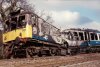
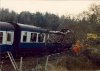
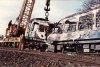
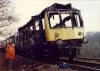
Just another little pointer, not all underfloor engines are a good idea as this 108 just west of Totnes proves - A point pointed out with the Voyager fire 2 weeks ago on the WCML and EMTs 222.
Anyone remember this!
Anyone remember this!
Attachments

junglejames
Established Member
- Joined
- 8 Dec 2010
- Messages
- 2,069
Actually the idea that DMUs use more fuel than similarly sized loco hauled formations is the fact that DMUs have massively superior power to weight ratios
No it isnt. Its down to science. 2 large engines will use less fuel than 7 smaller engines. As ive said before, im comparing horsey outputs that are the same. Also, as the engines are smaller, they will have to be higher revving. High speed diesels are more fuel thirsty and require extra maintenance than slower revving diesels.
DMUs are also more expensive to maintain largely because of the aforementioned drastically increased power outputs, and a DEMU can infact have less brake wear and thus less brake maintenance because it can generate a far larger fraction of its total braking effort using near maintenance free rheostatic braking than the HST can hope to.
Again, wrong. Its because of the extra amount of equipment that needs looking after, and also because the engines will probably be higher revving.
Brakes wise, you are right, but this wouldnt swing the advantage other to MUs. Also, if you compared new against new, then this advantage is lost. Purchase the new EMUs and locos, as you would be eventually, and that will also use regen braking.
Because we want to reopen the body shell production line anyway to produce the eVoyager project, and this EDMU can use many of the same parts derived for this project. This reduces the cost per body shell.
A Class 180 type bodyshell would have to be designed and built from scratch, incurring additional enormous design costs
Enormous design costs? What for a train which as good as exists? I await your figures from Bombardier and Alstom with baited breath. Obviously both companies have told you how much they will be charging you for their respective trains?
And using loco hauls probably increases maintenance, since you now have to maintain two traction systems instead of one, especially as static converters at the heart of these systems have maintenance requirements that are not strongly coupled to how long they have been operating recently.
An EMU needs less maintenance than a bi mode. The diesel engine will not push the costs beyond the cost of the bi mode. The expensive parts are the diesel engines and associated equipment. On the bi mode you also have extra costs from the complicated nature of the train.
There is a difference between limited squadron service on the cornwall trains into 2035 and widespread operational service, as during the retirement process they will be able to select the coaches and power cars in the best possible condition to make up the remaining fleet. The larger the retained fleet is the less this can be effective at reducing maintenance.
Im not on about FGWs Cornish services. Im on about what the ROSCOs and other engineers have said. They are planning to keep the fleet going fully for many more years to come. As I said. They are not falling apart. Oh, and Chiltern themselves have said their refurbs cost less than building a brand new train.
The additional cost of bi-mode units compared to buying EMUs and very expensive diesel locomotives (and if you do this on a large scale you will need a new fleet to take up the operation) will not buy very much wiring at all.
I intend for a new fleet of diesels anyway. However you are wrong. You obviously havent taken onboard the figures I gave you. (per day or per month, the figure is quite astounding.) You also havent taken onboard the cost of gauge clearing the routes for IEP. That itself comes into millions upon millions of pounds.
However, you will notice, that I mentioned keeping HSTs for the forseeable future, just to allow the savings to stack up even more. This allows even more knitting to be done.
HSTEd
Veteran Member
- Joined
- 14 Jul 2011
- Messages
- 20,283
HSTEd - yes that is exactly what I am saying. You can remove the loco. But if you are dragging an EMU then why have the engines? Remember many East Coast diagrams spend a lot of time off the wires. So you waste loads of energy. Take the following diagram.
0830 Edinburgh - London. (great waste of energy dragging unneeded diesel here)
1400 London - Aberdeen
So 800 miles of dragging unneeded equipment just for 130 miles of use! So much for going green!
Remember on the IEP the engines will still be dragging around the electric stuff.
So you are against the use of multiple units at all then?
If you attach a locomotive to an EMU you have lots of extra bodyweight and an entire second traction chain in use that you would not have if you just attached rather lightweight engines to the EMU train.
12t of superfluous equipment for 400 miles under regenerated electric power or 60-80t of superfluous equipment for 130 miles under unregenerated braking diesel power.
What's the point of committing to a new fleet of diesels that would have a lifespan of at least 40 years when fossil fuels may be in the history books before that time?I intend for a new fleet of diesels anyway.
What's the point of committing to a new fleet of diesels that would have a lifespan of at least 40 years when fossil fuels may be in the history books before that time?
Ask Chiltern, they're in the market for some new diesels.
Failed Unit
Established Member
So you are against the use of multiple units at all then?
If you attach a locomotive to an EMU you have lots of extra bodyweight and an entire second traction chain in use that you would not have if you just attached rather lightweight engines to the EMU train.
12t of superfluous equipment for 400 miles under regenerated electric power or 60-80t of superfluous equipment for 130 miles under unregenerated braking diesel power.
No, I have no problem with multiple units, but I have a problem with the bi-mode it is simply not needed.
Look at the diagrams as I said, it is 800 miles of wasted energy not 400!
Likewise the engines the IEP puts on extra unneeded weight anyway! So why is it acceptable to have underfloor engines which are not needed damage 800 miles of track but not have a loco on 130 miles?
HSTEd
Veteran Member
- Joined
- 14 Jul 2011
- Messages
- 20,283
But that is wrong.No it isnt. Its down to science. 2 large engines will use less fuel than 7 smaller engines. As ive said before, im comparing horsey outputs that are the same. Also, as the engines are smaller, they will have to be higher revving. High speed diesels are more fuel thirsty and require extra maintenance than slower revving diesels.
If the Class 67 is out because of its insane weight your only real alternative is the Eurolight... with an engine that revs at 1800rpm to develop its optimum power.
For 50 points guess what the optimum power output rev count is for the QSK-19.... 1800rpm.
The Class 67 pays a heavy price for its slow revving diesel in that it is ten tonnes heavier than the Eurolight's power unit.
Again, wrong. Its because of the extra amount of equipment that needs looking after, and also because the engines will probably be higher revving.
Brakes wise, you are right, but this wouldnt swing the advantage other to MUs. Also, if you compared new against new, then this advantage is lost. Purchase the new EMUs and locos, as you would be eventually, and that will also use regen braking.
How will a diesel locomotive use regenerative braking?
There is no design for a Cl180 using an electric transmission, let alone an electric power one, since the vast majority of parts in an ED Class 222 is identical to a regular one, and the ED components will have a design cost defrayed by an expanded eVoyager project..... it is ready to begin production in these terms.Enormous design costs? What for a train which as good as exists? I await your figures from Bombardier and Alstom with baited breath. Obviously both companies have told you how much they will be charging you for their respective trains?
An EMU needs less maintenance than a bi mode. The diesel engine will not push the costs beyond the cost of the bi mode. The expensive parts are the diesel engines and associated equipment. On the bi mode you also have extra costs from the complicated nature of the train.
Indeed, ut instead of having a bi-mode power train to maintain and procure you have an electric power train and a separate diesel power train.
Are you really saying a bi-mode power train will be more maintained intensive than a diesel AND an electric power train?
Im not on about FGWs Cornish services. Im on about what the ROSCOs and other engineers have said. They are planning to keep the fleet going fully for many more years to come. As I said. They are not falling apart. Oh, and Chiltern themselves have said their refurbs cost less than building a brand new train.
Unless you are suggesting the Chiltern rebuilds will last 40 years I'm not sure how the outright cost is important.
--- old post above --- --- new post below ---
No, I have no problem with multiple units, but I have a problem with the bi-mode it is simply not needed.
Look at the diagrams as I said, it is 800 miles of wasted energy not 400!
Likewise the engines the IEP puts on is extra unneeded weight anyway!
393 miles from London to Edinburgh under wiring.
The route to Aberdeen is at-least a hundred miles from Edinburgh.
The return trip may bring it up to 800 miles but it also pushes the distance under diesel power to 200 miles.

tbtc
Veteran Member
Whats also funny is how a pendy lover quickly picks up on any little tit bit, however small, to try and make those that dont like them seem stupid.
Anyway, TBTC, I hate to break it to you, but you have just picked up the wrong tit bit.
What is it people dont like about pendys? Answer, the interior.
What have people commented on, regarding whats good about the pendy? Answer, the electrikity parts.
What MU have most people claimed has the best interior? Answer, the 180.
What have people been asking for instead of IEPs? Nope, not a pendy, but a 180/390 MU. ie a 180 type body, and the electrikity bits from the 390.
When people say they want more 390s, this is what they mean. Its been branded about so much, that its assumed everybody knows what is meant by 'more 390s instead of IEP'. No tilt, and no aluminium bodies. Instead the best bits from the 180, combined with the best bits from the 390 (the bits made in Preston)
Thanks for speaking on behalf of "people".
The problem is this: The argument that 390s would be significantly cheaper than IEP is because 390s are an existing design. So any additional ones would require little in the way of design and ought to work straight out of the box.
An electric 180/ fatter 390 combination would have some design advantages over a 390, but would require designing and testing, just like IEP. So if "the people" see that a 390 would be cheaper than IEP, but then use this to justify wanting a 180/390 combination then... the logic doesn't work.
It's a bit like the "Borrismaster" buses in London, where the design costs are being added to the cost of the first production run (hence the £300,000 cost per bus). Over a longer order those costs are spread over more vehicles - hence more 390s being cheaper.
junglejames
Established Member
- Joined
- 8 Dec 2010
- Messages
- 2,069
HSTEd.
It isnt 50-70 tonnes off unnecessary weight with the loco option, as the loco is working. It is necessary weight. Unlike the bi mode which is taking around all that extra weight which wont be working.
Also, if a brand new IEP can have regen braking, why cant a brand new EMU? Even a diesel loco could have it.
Anyway, lets just say it was unnecessary weight on the loco, and for some strange reason EMUs can no longer have regen, but IEP can. It still doesnt help, because the EMU and loco option is still using less fuel. Argue about weights and regen all you like (even though you are wrong), it still doesnt help the green argument.
HSTEd, if your aim is to receive the Japanese version of a knighhood, then just say. We can stop all this arguing now, and the rest of us shall lobby the Japanese on your behalf. We shall even lie out of our back teeth for you. It will probably be easier.
It isnt 50-70 tonnes off unnecessary weight with the loco option, as the loco is working. It is necessary weight. Unlike the bi mode which is taking around all that extra weight which wont be working.
Also, if a brand new IEP can have regen braking, why cant a brand new EMU? Even a diesel loco could have it.
Anyway, lets just say it was unnecessary weight on the loco, and for some strange reason EMUs can no longer have regen, but IEP can. It still doesnt help, because the EMU and loco option is still using less fuel. Argue about weights and regen all you like (even though you are wrong), it still doesnt help the green argument.
HSTEd, if your aim is to receive the Japanese version of a knighhood, then just say. We can stop all this arguing now, and the rest of us shall lobby the Japanese on your behalf. We shall even lie out of our back teeth for you. It will probably be easier.

Donny Dave
Established Member
Nooo. Youve just played into Bakers hands!!
2 large engines use less fuel than 7 small engines, assuming both setups are producing the same number of horses from the engines.
How much fuel does an EMU use though for an 800 mile round trip?

junglejames
Established Member
- Joined
- 8 Dec 2010
- Messages
- 2,069
What's the point of committing to a new fleet of diesels that would have a lifespan of at least 40 years when fossil fuels may be in the history books before that time?
What are we doing with IEP bi modes?
Or do you intend to one day run around with these diesel engines never running? Talk about unnecessary weight. Oh, and remember, Hitachi/ Agility still cannot be sure taking the diesel engines off is possible. But even if we could, thats one hell of a lot of money spent on a train which we dont intend to use fully for its enitire lifespan.
HSTEd
Veteran Member
- Joined
- 14 Jul 2011
- Messages
- 20,283
So if I can do the work with 12t of weight... why is having 70-90t of weight anything but wasting 60-80t?HSTEd.
It isnt 50-70 tonnes off unnecessary weight with the loco option, as the loco is working. It is necessary weight. Unlike the bi mode which is taking around all that extra weight which wont be working.
Also, if a brand new IEP can have regen braking, why cant a brand new EMU? Even a diesel loco could have it.
The EMU can indeed have regenerative braking... but a diesel locomotive can't have it for one important reason..... where does it regenerate energy to.
But it's not.... you are lugging 60t of locomotive that is not usefully producing power and constitutes an entire superfluous traction chain and te weight of 18m of body that is not neccesary.Anyway, lets just say it was unnecessary weight on the loco, and for some strange reason EMUs can no longer have regen, but IEP can. It still doesnt help, because the EMU and loco option is still using less fuel. Argue about weights and regen all you like (even though you are wrong), it still doesnt help the green argument.
The bi-mode IEP units can be converted to EMUs by removing the engines as electrification is extended. You can't electrify everything at the same time so by introducing bi-mode it allows the trains to get an immediate benefit when under the wires and for the engines to be removed in the future when the route they run on is fully electrified.What are we doing with IEP bi modes?
Or do you intend to one day run around with these diesel engines never running? Talk about unnecessary weight. Oh, and remember, Hitachi/ Agility still cannot be sure taking the diesel engines off is possible. But even if we could, thats one hell of a lot of money spent on a train which we dont intend to use fully for its enitire lifespan.
Last edited:
HSTEd
Veteran Member
- Joined
- 14 Jul 2011
- Messages
- 20,283
What are we doing with IEP bi modes?
Or do you intend to one day run around with these diesel engines never running? Talk about unnecessary weight. Oh, and remember, Hitachi/ Agility still cannot be sure taking the diesel engines off is possible. But even if we could, thats one hell of a lot of money spent on a train which we dont intend to use fully for its enitire lifespan.
Why would it not be possible to remove the diesels? If the TMS gives difficulties you could just remove the engine and replace the ECU with one that reports that the engines are present and working correctly.
As long as the driver never demands diesel power everything is fine.
PhilipW
Member
The bi-mode IEP units can be converted to EMUs by removing the engines as electrification is extended. You can't electrifying everything at the same time so by introducing bi-mode it allows the trains to get an immediate benefit when under the wires and for the engines to be removed in the future when the route they run on is fully electrified.
This is the first time I have ever heard the argument that it is easy to convert a Bi-Mode to a straight EMU.
Is this really true ? Is it really easy to just remove the diesel engine and the fuel tank ? ... and that's all ?
I would love to believe that it is that simple, but somehow it does not ring true.
- Status
- Not open for further replies.