• Our new ticketing site is now live! Using either this or the original site (both powered by TrainSplit) helps support the running of the forum with every ticket purchase! Find out more and ask any questions/give us feedback in this thread!

IEP: 26 metres is too long

Status
Not open for further replies.

jimm

Established Member
Joined
6 Apr 2012
Messages
5,279
RAGNARØKR;1307094 said:
The IEP is too long, at 25 metres, and whilst the width is the same as mark 3, this is being achieved at the cost of a major infrastructure upgrade. A shorter vehicle would have provided go-anywhere capability and additional width

And your evidence for this claim of a major infrastructure upgrade is what?

There is a lot of work going on along the GWML to improve clearances, but this is to improve vertical clearances for overhead wires, not lateral clearances, which would be the issue with IEP, if it was an issue, which, thanks to Mr Brunel's broad gauge and the clearances created by the wide trackbed that needed, it won't be in most places.

The MK3 is not a go-anywhere vehicle, so a shorter IEP vehicle wouldn't be either. And the IEP is 26m, not 25m.

You have already been over this ground before in this thread you started http://www.railforums.co.uk/showthread.php?t=72620

Unless you can actually think of something new to say on the topic, please don't bother.
 
Sponsor Post - registered members do not see these adverts; click here to register, or click here to log in
R

RailUK Forums

RAGNARØKR

Member
Joined
1 Jun 2010
Messages
571
Location
Göteborg
And your evidence for this claim of a major infrastructure upgrade is what?

There is a lot of work going on along the GWML to improve clearances, but this is to improve vertical clearances for overhead wires, not lateral clearances, which would be the issue with IEP, if it was an issue, which, thanks to Mr Brunel's broad gauge and the clearances created by the wide trackbed that needed, it won't be in most places.

The MK3 is not a go-anywhere vehicle, so a shorter IEP vehicle wouldn't be either. And the IEP is 26m, not 25m.

You have already been over this ground before in this thread you started http://www.railforums.co.uk/showthread.php?t=72620

Unless you can actually think of something new to say on the topic, please don't bother.
You can work out what has to be done to accommodate a longer vehicle by applying the simple geometrical formula relating chords and diameters of circles.

Under the old restriction C1, the maximum width of 2.82 was permissible for vehicles with a bogie centre spacing of 14.17 metres. Mark 3 have a bogie spacing of 16 metres so the width had to be reduced by 10cm to 2.74 to fit, and even then it was restricted where curvature was tight. The bogie spacing on the IEP, whose length incidentally is given as 25 metres, will be around 19 metres, which means a further increase in overthrow, since overthrow is proportional to the square of the bogie spacing.

Since the advertised width is 2.75 metres, a lot of paring away to the infrastructure will have to be done to make it fit, and paring away does not come cheap. Brunel's broad gauge trackbed is not really to the point, because the clearance problems arise at places such as turnouts and stations on sharp curves, not on the main run of track. The final cost will not be known until the work is finished.

A go-anywhere vehicle to fit most of the present infrastructure could probably be longer than 20 metres but less than 23 metres, and possibly a bit wider than the mark 3, which would not be a bad thing.
 

RAGNARØKR

Member
Joined
1 Jun 2010
Messages
571
Location
Göteborg
Mod Note: This post and the two following have been split from this thread.

I mean past performance on all of the recent train builds. I especially mean the Voyager and the Pendolino which are direct replacements for Intercity stock. Why have none of them surpassed a MKIII or MKIV in terms of comfort? If we had a fleet of super comfortable new trains I would have less cynicism and more belief in the designers. We dont, so i dont!

I suspect very strongly that the IEP will be a sub Voyager bodge up. Anyway, I dont think the 395's are that comfortable. While the speed is high I find the seats thin and the comfort low.

The IEP is too long, at 25 metres, and whilst the width is the same as mark 3, this is being achieved at the cost of a major infrastructure upgrade. A shorter vehicle would have provided go-anywhere capability and additional width. Given the exceptionally high cost of the vehicles, the seats will have to be crammed to make the train pay its way. Whatever is done, these are not going to be as spacious and comfortable as, for example, third class in LMS or SR stock of the early 1930s, or BR mark 1 or mark 2.

If you want to travel in a spacious comfortable train, the nearest things available are the Danish IC3.
 

HSTEd

Veteran Member
Joined
14 Jul 2011
Messages
20,367
RAGNARØKR;1308115 said:
Given the exceptionally high cost of the vehicles, the seats will have to be crammed to make the train pay its way. Whatever is done, these are not going to be as spacious and comfortable as, for example, third class in LMS or SR stock of the early 1930s, or BR mark 1 or mark 2.

If you want to travel in a spacious comfortable train, the nearest things available are the Danish IC3.

YOu are living in some fantasy land.

As many seats as possible would be crammed into the vehicles no matter how expensive or cheap they are.

And we haven't seen an LHCS order in the west for significantly less than the IEP is charging per vehicle anyway, indeed loco hauled vehicles in America sometimes cost more than this now.
 

jimm

Established Member
Joined
6 Apr 2012
Messages
5,279
RAGNARØKR;1308054 said:
You can work out what has to be done to accommodate a longer vehicle by applying the simple geometrical formula relating chords and diameters of circles.

Under the old restriction C1, the maximum width of 2.82 was permissible for vehicles with a bogie centre spacing of 14.17 metres. Mark 3 have a bogie spacing of 16 metres so the width had to be reduced by 10cm to 2.74 to fit, and even then it was restricted where curvature was tight. The bogie spacing on the IEP, whose length incidentally is given as 25 metres, will be around 19 metres, which means a further increase in overthrow, since overthrow is proportional to the square of the bogie spacing.

Since the advertised width is 2.75 metres, a lot of paring away to the infrastructure will have to be done to make it fit, and paring away does not come cheap. Brunel's broad gauge trackbed is not really to the point, because the clearance problems arise at places such as turnouts and stations on sharp curves, not on the main run of track. The final cost will not be known until the work is finished.

A go-anywhere vehicle to fit most of the present infrastructure could probably be longer than 20 metres but less than 23 metres, and possibly a bit wider than the mark 3, which would not be a bad thing.

What a surprise, you haven't answered the question. None of what you say amounts to evidence of the "major infrastructure upgrade" you claim is happening. Tell us where Network Rail is doing/planning the work for this "major infrastructure upgrade". Doing so does not require formulae, just locations where the "major infrastructure upgrade" is happening or going to happen.

As for "The final cost will not be known until the work is finished", I don't think that approach will get past the Network Rail board's budgeting meetings - or the Government.

Where are all these turnouts and platforms on sharp curves on the GWML? Parts of Bristol Temple Meads are well known as a potential problem area for longer vehicles - they've never been great for Mk3s - but one station does not amount to a "major infrastructure upgrade". Brunel didn't like sharp curves to begin with, not did the BR engineers who, over the course of the 1960s and 1970s, removed them from the East Coast.

The trackbed's "not the point"? The broad gauge resulted in bridges, tunnels and other structures with big lateral clearances. Here is a Class 180 with 23m vehicles passing under an original Brunel bridge on a curve - a 26m coach might just squeeze through there without a new bridge being needed, the kind of thing I would think would be required in a "major infrastrucutre upgrade"...

http://www.flickr.com/photos/willc2009/7035165355/

And why is a "go-anywhere' vehicle needed anyway? The Mk4s have hardly ever strayed from the East Coast in their entire lives. Same applies to Pendolinos on the West Coast. Extra width in a coach of something between 20m and 23m, compared with a Mk3? A couple of centimetres...big deal.
 

tbtc

Veteran Member
Joined
16 Dec 2008
Messages
18,061
Location
Reston City Centre
why is a "go-anywhere' vehicle needed anyway? The Mk4s have hardly ever strayed from the East Coast in their entire lives. Same applies to Pendolinos on the West Coast. Extra width in a coach of something between 20m and 23m, compared with a Mk3? A couple of centimetres...big deal.

Good point - we have some posters saying that the Mk4s shouldn't be replaced by IEP on the ECML because they were perfect for the ECML and have never left it, yet one poster who thinks that the replacement should be capable of working any old branchline too?
 

43074

Established Member
Joined
10 Oct 2012
Messages
2,253
And why is a "go-anywhere' vehicle needed anyway? The Mk4s have hardly ever strayed from the East Coast in their entire lives. Same applies to Pendolinos on the West Coast. Extra width in a coach of something between 20m and 23m, compared with a Mk3? A couple of centimetres...big deal.

Yes, but remember the Mark 4s were designed for the East Coast Main Line, and (apart from Skipton/Bradford/Glasgow Central) do not stray away from the ECML London to Leeds or Edinburgh routes.

From what I gather, the IEP will be used on everything from London to Kings Lynn (where 4x20m vehicles is the maximum anyway) to London to Inverness on bi-mode - therefore a ''go-anywhere'' train is more ideal for IEP.
 

dosxuk

Established Member
Joined
2 Jan 2011
Messages
2,443
RAGNARØKR;1308054 said:
The bogie spacing on the IEP, whose length incidentally is given as 25 metres, will be around 19 metres, which means a further increase in overthrow, since overthrow is proportional to the square of the bogie spacing.

"Around 19m" bogie spacing is similar to the that of the majority of the 373 carriages, being 18.7m long.
 

swt_passenger

Veteran Member
Joined
7 Apr 2010
Messages
34,308
RAGNARØKR;1308054 said:
The final cost will not be known until the work is finished.

Situation normal then.

However the estimated year on year costs during CP4, and a synopsis of the work required on the relevant lines, is available in the CP4 enhancement plans, and their is also an overall estimate for CP5 in the CP5 initial plans.

The idea that NR have no idea of either what needs doing, or the costs, appears a little far fetched?

Another thought - the infrastructure costs on the ECML for example will include both electrical supply strengthening, (as there'll be more electric trains running in total), and platform lengthening and therefore signalling alterations for longer trains. Both of those would be necessary whatever means of achieving longer trains was chosen, whether IEP or not...
 

RAGNARØKR

Member
Joined
1 Jun 2010
Messages
571
Location
Göteborg
What a surprise, you haven't answered the question. None of what you say amounts to evidence of the "major infrastructure upgrade" you claim is happening. Tell us where Network Rail is doing/planning the work for this "major infrastructure upgrade". Doing so does not require formulae, just locations where the "major infrastructure upgrade" is happening or going to happen.
I am not W S Atkins or Mott McDonald and they would charge a tidy sum for an estimate.

As for "The final cost will not be known until the work is finished", I don't think that approach will get past the Network Rail board's budgeting meetings - or the Government.
It has not stopped major projects from going ahead in the past and then turning out.
Where are all these turnouts and platforms on sharp curves on the GWML?
Parts of Bristol Temple Meads are well known as a potential problem area for longer vehicles - they've never been great for Mk3s - but one station does not amount to a "major infrastructure upgrade". Brunel didn't like sharp curves to begin with, not did the BR engineers who, over the course of the 1960s and 1970s, removed them from the East Coast.
Paddington and its approaches, Bristol and its approaches, Didcot, on the Cotwold line to Hereford, west of Exeter, and all the routes over which IEPs may need to be diverted over or cascaded to in the future.

The trackbed's "not the point"? The broad gauge resulted in bridges, tunnels and other structures with big lateral clearances. Here is a Class 180 with 23m vehicles passing under an original Brunel bridge on a curve - a 26m coach might just squeeze through there without a new bridge being needed, the kind of thing I would think would be required in a "major infrastrucutre upgrade"...

http://www.flickr.com/photos/willc2009/7035165355/

And why is a "go-anywhere' vehicle needed anyway? The Mk4s have hardly ever strayed from the East Coast in their entire lives. Same applies to Pendolinos on the West Coast. Extra width in a coach of something between 20m and 23m, compared with a Mk3? A couple of centimetres...big deal.
The illustration, on a stretch of main line designed for running at speed, is not the kind of location where problems are liable to arise. The curves there are of large radius. It is when curves are down to 200 metres that longer vehicles can present problems eg at the approaches to major terminals, eg Victoria, which was only cleared for mark 3 stock relatively recently. That was a major upgrade.

Mark 3 is 8 cm narrower than the maximum permissible. That is worth having.

The reasons why go-anywhere vehicles are desirable is that they can travel over diversionary routes and be cascaded to other services. The benefit for the owners is that they have "residual value". Elsewhere in this forum there are discussions on what to do with Voyagers, 225s, HSTs etc, where suggestions often founder on route limitation issues. Similar limitations have also kept the Pacers in service for longer than most people would have wished.
--- old post above --- --- new post below ---
"Around 19m" bogie spacing is similar to the that of the majority of the 373 carriages, being 18.7m long.
Which are confined to the Eurostar route.

Incidentally these are 2.82 wide as less tolerance has to be allowed due to the articulation and TGV-type suspension system.
--- old post above --- --- new post below ---
YOu are living in some fantasy land.

As many seats as possible would be crammed into the vehicles no matter how expensive or cheap they are.

And we haven't seen an LHCS order in the west for significantly less than the IEP is charging per vehicle anyway, indeed loco hauled vehicles in America sometimes cost more than this now.
If the operator has a balance of new vehicles (for the base load traffic) and older ones for the peaks, the entire economics of the operation is less tight and passengers can enjoy a decent amount of space.

It is only in the past 30 years that train operators have taken to cramming in seats to the point of discomfort. If you look at diagrams of British trains built between the end of the first world war and about 1980, you will see that considerably more space was allocated per passenger. Something has happened to change the economics of passenger train operation. What those factors might be would be the subject of an interesting discussion.
 

tbtc

Veteran Member
Joined
16 Dec 2008
Messages
18,061
Location
Reston City Centre
RAGNARØKR;1308710 said:
It is only in the past 30 years that train operators have taken to cramming in seats to the point of discomfort. If you look at diagrams of British trains built between the end of the first world war and about 1980, you will see that considerably more space was allocated per passenger. Something has happened to change the economics of passenger train operation. What those factors might be would be the subject of an interesting discussion.

The same would happen whether we were building IEP or loco hauled or a next generation of Pacers though - this is irrelevant to this discussion about IEP
--- old post above --- --- new post below ---
"Around 19m" bogie spacing is similar to the that of the majority of the 373 carriages, being 18.7m long.

RAGNARØKR;1308710 said:
Which are confined to the Eurostar route

...but also ran on the ECML as far as York/ Leeds and presumably are cleared for some diversions too?
 

jopsuk

Veteran Member
Joined
13 May 2008
Messages
12,774
tested up the pre-upgrade WCML too, weren't they? At least hauled.
 

RAGNARØKR

Member
Joined
1 Jun 2010
Messages
571
Location
Göteborg
The same would happen whether we were building IEP or loco hauled or a next generation of Pacers though - this is irrelevant to this discussion about IEP
--- old post above --- --- new post below ---
Not altogether because a dual mode EMU is inherently more complex and therefore expensive than hauled vehicles especially when a strategy of retaining older serviceable vehicles cuts into the average capital cost per seat on the railway or route concerned.
...but also ran on the ECML as far as York/ Leeds and presumably are cleared for some diversions too?
373 are articulated. This means they are more stable and occupy a smaller kinematic envelope. Neverthless you will find that due to the larger overthrow they will be restrictions as to precisely where they can run and under what circumstances.

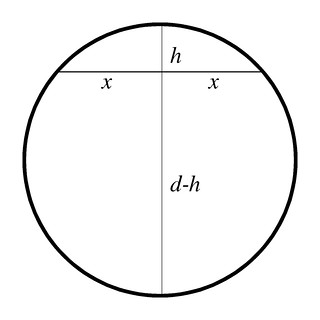
You cannot buck the laws of geometry. (x) squared = d x (d-h)

3252265733_4c4d65ccaf_n.jpg


h represents the overthrow between bogies when a vehicle is on curved track. There is a similar effect beyond the bogie centres where the ends of the vehicles establish the outer curve of the swept path. Prudence would indicate a conservative approach to the specification of rolling stock lengths and widths.
 
Last edited:

jimm

Established Member
Joined
6 Apr 2012
Messages
5,279
RAGNARØKR;1308710 said:
I am not W S Atkins or Mott McDonald and they would charge a tidy sum for an estimate.

It has not stopped major projects from going ahead in the past and then turning out.
Where are all these turnouts and platforms on sharp curves on the GWML? Paddington and its approaches, Bristol and its approaches, Didcot, on the Cotwold line to Hereford, west of Exeter, and all the routes over which IEPs may need to be diverted over or cascaded to in the future.

The illustration, on a stretch of main line designed for running at speed, is not the kind of location where problems are liable to arise. The curves there are of large radius. It is when curves are down to 200 metres that longer vehicles can present problems eg at the approaches to major terminals, eg Victoria, which was only cleared for mark 3 stock relatively recently. That was a major upgrade.

Mark 3 is 8 cm narrower than the maximum permissible. That is worth having.

The reasons why go-anywhere vehicles are desirable is that they can travel over diversionary routes and be cascaded to other services. The benefit for the owners is that they have "residual value". Elsewhere in this forum there are discussions on what to do with Voyagers, 225s, HSTs etc, where suggestions often founder on route limitation issues. Similar limitations have also kept the Pacers in service for longer than most people would have wished.

And still no answer as to where all the work for this "major infrastructure upgrade" of yours is going to be happening. Those are your words, not mine, nor anyone else's, never mind any engineering consultants. So back them up.

Sharp curves at Paddington - you mean the platform ends, I take it? Doesn't mean you need to rebuild the entire station, does it?

Where at Didcot? You have to be joking about this location.

The Cotswold Line? Again you must be joking, or do you mean Worcester Foregate Street station? One station (on the non-Brunel bit of the route) is not an entire line - all of which east of Worcester (and on north up to Stourbridge) was built for broad gauge. And no-one has suggested that IEP won't go through the tunnels west of Malvern, which is the only other location I can think of with tight clearances.

West of Exeter? Again former broad gauge. A few curved platforms here and there. Nothing "major".

Diversionary routes? Again, all former GW or GW-clearance infrastructure on routes out of Paddington, bar going to Exeter via Honiton. And no decision has been made on whether to order IEPs for the West Country anyway.

Cascades? Well the Mk4s haven't been cascaded off the East Coast after 25 years - however many fantasy moves for them are proposed on this forum. HSTs are still working the GW main line after 36 years, so they haven't run into your non-existent cascade issue just yet. Pacers are still in service because no-one wanted to pay for replacements.

Victoria? A bit of work at one location without major disruption to operations there. What was done on the rest of the Brighton line to accommodate 442s? Nothing "major" that I'm aware of.

The photograph is not on a stretch of main line designed for running at speed. There is a 60mph limit in force and the curve at Moreton-in-Marsh is pretty much the sharpest one on the Cotswold Line except for Aston Magna. The key point is that on a curve under that bridge, - a bit of original 1850s Brunel infrastructure - there is plenty of room for a 26m coach, whether you like it or not. No "major infrastructure upgrade" needed.

My definition of major is laying waste to swathes of bridges, tunnels, platforms, etc for mile upon mile to create bigger clearances, which is simply not going to be required on the GWML - unless you know different and can actually tell us where all this work is going to happen. If it is "major" work then it can't be so hard to tell us, can it?

Or is it just that Network Rail don't think any adjustments required on the GMML are that drastic, which is why they haven't told us about this "major infrastructure upgrade". Never mind that the expected future use of 26m rolling stock has been designed into GW infrastructure projects for some time now.
 
Last edited:

AndyLandy

Established Member
Joined
30 Oct 2011
Messages
1,323
Location
Southampton, UK
RAGNARØKR;1308996 said:
Not altogether because a dual mode EMU is inherently more complex and therefore expensive than hauled vehicles especially when a strategy of retaining older serviceable vehicles cuts into the average capital cost per seat on the railway or route concerned.

I don't think that's it, to be honest. We worry about things like locomotives occupying precious platform space, or overrunning blocks. I don't think it would matter if IEP trains were free, we'd still pack the seats in so that we could have as many passengers as possible per trainset, given that platform accommodation and pathing constraints are the significant limiting factors in train size and frequency.
 

RAGNARØKR

Member
Joined
1 Jun 2010
Messages
571
Location
Göteborg
I don't think that's it, to be honest. We worry about things like locomotives occupying precious platform space, or overrunning blocks. I don't think it would matter if IEP trains were free, we'd still pack the seats in so that we could have as many passengers as possible per trainset, given that platform accommodation and pathing constraints are the significant limiting factors in train size and frequency.
Most parts of the British railway system are still filled up with short trains. But what has happened since 1970 to bring about this state of affairs?
 

AndyLandy

Established Member
Joined
30 Oct 2011
Messages
1,323
Location
Southampton, UK
RAGNARØKR;1309108 said:
Most parts of the British railway system are still filled up with short trains. But what has happened since 1970 to bring about this state of affairs?

There are large numbers of short trains on local and regional services, but I doubt you'll find many Intercity services that are short formed*, certainly on the services where IEP is destined for.

Whilst I'm sure you could knock out some regional services to generate more Intercity paths, apart from the disruption you'd cause to those local areas, you'd still hit pathing limits at the London end of the route. Maybe you could terminate some IC services at Reading/Bedford/Milton Keynes/Stevenage, but I suspect most passengers are actually trying to get into London and that still wouldn't help.

*CrossCountry excepted, 4-car trains on those services is madness.
 

RAGNARØKR

Member
Joined
1 Jun 2010
Messages
571
Location
Göteborg
And still no answer as to where all the work for this "major infrastructure upgrade" of yours is going to be happening. Those are your words, not mine, nor anyone else's, never mind any engineering consultants. So back them up.

Sharp curves at Paddington - you mean the platform ends, I take it? Doesn't mean you need to rebuild the entire station, does it?
It is crossovers on the approaches to stations - that was the problem at Victoria. Rebuilding in those locations is a huge job.
Where at Didcot? You have to be joking about this location.
Where the Oxford branch turns off at Didcot the curve is so tight that the wheels are squealing.
The Cotswold Line? Again you must be joking, or do you mean Worcester Foregate Street station? One station (on the non-Brunel bit of the route) is not an entire line - all of which east of Worcester (and on north up to Stourbridge) was built for broad gauge. And no-one has suggested that IEP won't go through the tunnels west of Malvern, which is the only other location I can think of with tight clearances.
Station approaches, again. If the task is as trivial as you are suggesting then 26 metre stock would have been introduced decades ago. And why stop at 26 metres?
West of Exeter? Again former broad gauge. A few curved platforms here and there. Nothing "major".
Straightening curved platforms is a major task.
Diversionary routes? Again, all former GW or GW-clearance infrastructure on routes out of Paddington, bar going to Exeter via Honiton. And no decision has been made on whether to order IEPs for the West Country anyway.
Which is exactly the diversion which might be required.
Cascades? Well the Mk4s haven't been cascaded off the East Coast after 25 years - however many fantasy moves for them are proposed on this forum. HSTs are still working the GW main line after 36 years, so they haven't run into your non-existent cascade issue just yet. Pacers are still in service because no-one wanted to pay for replacements.
IF the stock had been suitable for cascading then the main lines would have received newer stock, and the older stock, after the fifteen years or so it takes for amortisation, would have gone on the routes where the economics mean it is not worth buying new stock for. That is what always used to happen and it kept the books looking in good shape. The most lucrative routes got the newest stock and the fringes of the system were kept going with stock several decades old and long since bought and paid for. Look at photographs of main line trains at any time up to around 1965 and you will see that they either uniform sets or uniform sets with two or three elderly vehicles added at the front or rear to provide extra capacity at peak times.
Victoria? A bit of work at one location without major disruption to operations there. What was done on the rest of the Brighton line to accommodate 442s? Nothing "major" that I'm aware of.

The photograph is not on a stretch of main line designed for running at speed. There is a 60mph limit in force and the curve at Moreton-in-Marsh is pretty much the sharpest one on the Cotswold Line except for Aston Magna. The key point is that on a curve under that bridge, - a bit of original 1850s Brunel infrastructure - there is plenty of room for a 26m coach, whether you like it or not. No "major infrastructure upgrade" needed.

My definition of major is laying waste to swathes of bridges, tunnels, platforms, etc for mile upon mile to create bigger clearances, which is simply not going to be required on the GWML - unless you know different and can actually tell us where all this work is going to happen. If it is "major" work then it can't be so hard to tell us, can it?

Or is it just that Network Rail don't think any adjustments required on the GMML are that drastic, which is why they haven't told us about this "major infrastructure upgrade". Never mind that the expected future use of 26m rolling stock has been designed into GW infrastructure projects for some time now.
Reconstructions in confined urban locations are not a trivial matter. And you don't know what Network Rail thinks any more than I do, unless you are party to its confidential internal discussions and correspondence. But the fact that the mark 3 stock was not developed into a longer vehicle in the 1980s is, I would suggest, an indication that the infrastructure issues were and are not trivial. The vehicle length problem kicks in when curves are down to 300 metres or so, which is in and around stations. Since these are of their nature in urban areas on tight sites, the easy option has been followed - leave them alone and accept the restriction on vehicle length that they impose. As recently as 1956, stock was still being built to the shorter mark 1 length of 57 feet because of the curvature issue. The 442 stock is still problematical on the Brighton line due to the platform gaps at curves, but the IEP at least seems to have addressed that, how effectively remains to be seen as it has resulted in large areas of the vehicles being away from the main saloons.

As an example of the kind of problem that can arise, Turbostars have to stop about a coach length away from the bufferstops at platform one at Brighton. You can take an overall look, as you have done, and yes, the GW line was built to the broad gauge by Brunel who hated curves, then you look at the fine detail and it is another story. Have a look at the diagrams which show where classes 165/166 are capable of running or could be made capable of running without much work being done to improve clearances. They are surprisingly restricted even on former GW routes.
--- old post above --- --- new post below ---
There are large numbers of short trains on local and regional services, but I doubt you'll find many Intercity services that are short formed*, certainly on the services where IEP is destined for.
There seem to be an awful lot of three car trains still running into Paddington. And HSTs with two locomotives are still well short of the platform ends. SDO can deal with short platforms en route.

Incidentally Paddington platforms have lost three car lengths due to the concourse being converted into a shopping mall, and it is not the not the only place where this has happened. Presumably this platform space could be recovered and the shopping mall relocated by extending the mezzanine deck.
 
Last edited:

AndyLandy

Established Member
Joined
30 Oct 2011
Messages
1,323
Location
Southampton, UK
RAGNARØKR;1309127 said:
There seem to be an awful lot of three car trains still running into Paddington. And HSTs with two locomotives are still well short of the platform ends. SDO can deal with short platforms en route.

Incidentally Paddington platforms have lost three car lengths due to the concourse being converted into a shopping mall, and it is not the not the only place where this has happened. Presumably this platform space could be recovered and the shopping mall relocated by extending the mezzanine deck.

There are certainly commuter services in and out of Paddington, but making them 9-12 coaches long probably won't buy you much. You'll likely just end up carrying thin air into Paddington, whilst the HSTs are packed to the rafters.

You're right about the HST power cars, there's some additional capacity to be gained there if you replace them with MU driving cars with passenger accommodation. SDO would allow you serve shorter platforms where HST power cars previously overhung the platform, but won't help if the train won't fit in the block, such that a driver can't see his signal, or the train overruns onto a turnout, preventing access to another line. Recovering platform space at Paddington would equally not help if there are many other stations en-route where a longer train can't fit in the block.
 

The Ham

Veteran Member
Joined
6 Jul 2012
Messages
12,040
RAGNARØKR;1309127 said:
IF the stock had been suitable for cascading then the main lines would have received newer stock, and the older stock, after the fifteen years or so it takes for amortisation, would have gone on the routes where the economics mean it is not worth buying new stock for.

If you are talking about the ECML and the IC225's being cascaded, where else on the network would have been suited for long trains with IC speeds?

Also, what new trains would have been more suitable for the ECML than the IC225's to the extent it was worth "making" them workable elsewhere?
 

AndyLandy

Established Member
Joined
30 Oct 2011
Messages
1,323
Location
Southampton, UK
If you are talking about the ECML and the IC225's being cascaded, where else on the network would have been suited for long trains with IC speeds?

Also, what new trains would have been more suitable for the ECML than the IC225's to the extent it was worth "making" them workable elsewhere?

Ironically, I think the IEP is the closest answer you'll get to that. A high speed, fast accelerating EMU will have lots of cascade potential in 30-40 years time. A lot will depend on what we do with other routes, but places like the GEML, the MML (if it doesn't get them to begin with), the Chiltern mainline (once electrified), CrossCountry routes (once electrified). Even the SWML expresses or TransPennine routes might be viable candidates for IEP cascades in the distant future.
 

RAGNARØKR

Member
Joined
1 Jun 2010
Messages
571
Location
Göteborg
If you are talking about the ECML and the IC225's being cascaded, where else on the network would have been suited for long trains with IC speeds?

Also, what new trains would have been more suitable for the ECML than the IC225's to the extent it was worth "making" them workable elsewhere?
Anywhere they would fit. Only it has now been realised that it does not need to be replaced on the ECML as planned previously.

The operator is not compelled to run them at IC speeds in full length formations. The GE is the obvious place. Then the mark 3 stock on that route can be cascaded down a bit further. They would not be bad on routes where the present DMUs lead to regular overcrowding. They could in turn be cascaded and the Pacers drop out at the bottom. Which is what is possible when a bit of loco haulage is not regarded with horror.
--- old post above --- --- new post below ---
There are certainly commuter services in and out of Paddington, but making them 9-12 coaches long probably won't buy you much. You'll likely just end up carrying thin air into Paddington, whilst the HSTs are packed to the rafters.

You're right about the HST power cars, there's some additional capacity to be gained there if you replace them with MU driving cars with passenger accommodation. SDO would allow you serve shorter platforms where HST power cars previously overhung the platform, but won't help if the train won't fit in the block, such that a driver can't see his signal, or the train overruns onto a turnout, preventing access to another line. Recovering platform space at Paddington would equally not help if there are many other stations en-route where a longer train can't fit in the block.
How many stations are there with a short platform-length block? And can't that be mostly catered for with the re-signalling?

Trains generally are shorter than they were in the 1960s so unless there has been infrastructure work which has shortened the blocks, this should not be a problem. Reading, Didcot, Swindon have long platforms and could previously accommodate the trains which came from Paddington before the platforms were shortened to make room for a shopping mall.

But there is no excuse for filling up a busy main line with short commuter trains - that is just a bad use of resources.
 
Last edited:

RobShipway

Established Member
Joined
20 Sep 2009
Messages
3,337
RAGNARØKR;1309388 said:
Anywhere they would fit. Only it has now been realised that it does not need to be replaced on the ECML as planned previously.

The operator is not compelled to run them at IC speeds in full length formations. The GE is the obvious place. Then the mark 3 stock on that route can be cascaded down a bit further. They would not be bad on routes where the present DMUs lead to regular overcrowding. They could in turn be cascaded and the Pacers drop out at the bottom. Which is what is possible when a bit of loco haulage is not regarded with horror.
--- old post above --- --- new post below ---
How many stations are there with a short platform-length block? And can't that be mostly catered for with the re-signalling?

Trains generally are shorter than they were in the 1960s so unless there has been infrastructure work which has shortened the blocks, this should not be a problem. Reading, Didcot, Swindon have long platforms and could previously accommodate the trains which came from Paddington before the platforms were shortened to make room for a shopping mall.

But there is no excuse for filling up a busy main line with short commuter trains - that is just a bad use of resources.

Yes, but you have stations like Iver or Burnham on the GWML that could only accommodate up to 8 car trains only if that, they could not accommodate anything longer unlike Slough. Maidenhead, Twyford, Reading, Swindon etc.... that can accommodate more.
 

The Ham

Veteran Member
Joined
6 Jul 2012
Messages
12,040
RAGNARØKR;1309388 said:
How many stations are there with a short platform-length block? And can't that be mostly catered for with the re-signalling?

probably a lot more than would need modifying to take IEP. Also it's not just a case of move a signal and job done.

But there is no excuse for filling up a busy main line with short commuter trains - that is just a bad use of resources.

There is if there isn't the demand for long distance travel. As a three car service running end to end in 45minutes every 30 minutes is going to carry a lot more people over a day than a 8 coach IC train running end to end in 4 hours on a bi hourly service. Even if you were to use one of the paths every other hour to make an hourly IC service that wouldn't increase the number of passengers as much as lengthening the commuter service (and the reason that isn't done is because there is no spare stock, which will only be available if the line is electrified which is only justifiable if the IC are able to use it too).
 

jimm

Established Member
Joined
6 Apr 2012
Messages
5,279
RAGNARØKR;1309127 said:
It is crossovers on the approaches to stations - that was the problem at Victoria. Rebuilding in those locations is a huge job.
Where the Oxford branch turns off at Didcot the curve is so tight that the wheels are squealing.Station approaches, again. If the task is as trivial as you are suggesting then 26 metre stock would have been introduced decades ago. And why stop at 26 metres?
Straightening curved platforms is a major task.
Which is exactly the diversion which might be required.IF the stock had been suitable for cascading then the main lines would have received newer stock, and the older stock, after the fifteen years or so it takes for amortisation, would have gone on the routes where the economics mean it is not worth buying new stock for. That is what always used to happen and it kept the books looking in good shape. The most lucrative routes got the newest stock and the fringes of the system were kept going with stock several decades old and long since bought and paid for. Look at photographs of main line trains at any time up to around 1965 and you will see that they either uniform sets or uniform sets with two or three elderly vehicles added at the front or rear to provide extra capacity at peak times.Reconstructions in confined urban locations are not a trivial matter. And you don't know what Network Rail thinks any more than I do, unless you are party to its confidential internal discussions and correspondence. But the fact that the mark 3 stock was not developed into a longer vehicle in the 1980s is, I would suggest, an indication that the infrastructure issues were and are not trivial. The vehicle length problem kicks in when curves are down to 300 metres or so, which is in and around stations. Since these are of their nature in urban areas on tight sites, the easy option has been followed - leave them alone and accept the restriction on vehicle length that they impose. As recently as 1956, stock was still being built to the shorter mark 1 length of 57 feet because of the curvature issue. The 442 stock is still problematical on the Brighton line due to the platform gaps at curves, but the IEP at least seems to have addressed that, how effectively remains to be seen as it has resulted in large areas of the vehicles being away from the main saloons.

As an example of the kind of problem that can arise, Turbostars have to stop about a coach length away from the bufferstops at platform one at Brighton. You can take an overall look, as you have done, and yes, the GW line was built to the broad gauge by Brunel who hated curves, then you look at the fine detail and it is another story. Have a look at the diagrams which show where classes 165/166 are capable of running or could be made capable of running without much work being done to improve clearances. They are surprisingly restricted even on former GW routes.
--- old post above --- --- new post below ---
There seem to be an awful lot of three car trains still running into Paddington. And HSTs with two locomotives are still well short of the platform ends. SDO can deal with short platforms en route.

Incidentally Paddington platforms have lost three car lengths due to the concourse being converted into a shopping mall, and it is not the not the only place where this has happened. Presumably this platform space could be recovered and the shopping mall relocated by extending the mezzanine deck.

What an awfully long way to say 'no, I have no evidence whatever to back up my claim that a "major infrastructure upgrade" is required before IEP can turn a wheel on the GWML'.

Which crossovers on which approaches to which stations? When was Victoria closed for days on end for this 'huge job'?

The avoiding line at Didcot "is so tight that wheels are squealing". No, it is not tight, it was designed for fast running - just look on a map - hence no squealing wheels. No plan to rebuild it, no "major infrastructure upgrade".

Which station approaches on the Cotswold Line? Names of stations? There aren't that many to choose from. If you mean the connecting line between the Worcester stations, again no plan to rebuild it, no "major infrastructure upgrade". Who said anything about going beyond 26m? Even the Russians have stuck at 26.4m coaches running on broad gauge track with a generous structure loading gauge.

Working on a few platforms is not a "major infrastructure upgrade". Who said they need straightening? And where? Often all that is required is minor adjustment to avoid steps or bits of bodywork striking the structure. Or can you actually name stations where platforms are to be straightened?

The Honiton route can already take 23m vehicles, so getting to 26m is not likely to be a massive challenge on a route built by the LSWR as a fast express route (no tight curves and squealing wheels there) - if IEP needs to go there, which at the moment, has still to be decided.

If the stock had been suitable for cascading? Why would it need cascading if it was built as main line express stock and is still fit for that job after refurbishment and doing it well as it nears the end of its designed life. Where would it be used anyway? There aren't that many places that I can think of where an influx of Mk3s and Mk4s would be a great deal of use apart from the Great Eastern (oh, they did cascade Mk3s to the Great Eastern…). XC got new trains so didn't need a cascade. Long loco-hauled formations would be overkill for most of the inter-urban routes currently operated by 158s and 170s. Short formations of coaches would cost more to operate than dmus.

IEP is not going to be used on your pet subject, the Brighton line, so what's that route got to do with your purported "major infrastructure upgrade" on the GWML for IEP?

The short 56ft 11in Mk1 non-corridor suburban coaches were built because of very tight clearances in the tunnels around Kings Cross connecting the MML and ECML to the Widened Lines, and on the Widened Lines themselves, not because of curvature per se.

The "surprising" restrictions on Turbos are due to the odd platform or other structure here and there - those maps are drawn up based on known pinch points, not because they drove a set around the country to find out where it hit things. No real need to bother when the sets were designed to work specific routes - where they are still working 20 years on.

I wouldn't take the maps as gospel anyway - a 166 has been to Weymouth in the past, see http://www.clpg.co.uk/sptrns3.htm - even if it is not on the map of cleared routes, while the one dated 2010 for 150s shows them not being cleared for East Anglia, where they worked for many years.

By the by, according to the RSSB paper that includes the maps, the 180 and 222 actually have structure clearance capabilities comparable to a Mk2 coach, whatever the maps say about routes they are cleared on. Who needs your shorter coaches?
 

The Ham

Veteran Member
Joined
6 Jul 2012
Messages
12,040
Just as an aside, if you go for shorter coaches as wide as possible, it is more likely that they will have 3+2 seating over 2+2 seating to get the number of seats in the train. Which would make the seats narrower than is proposed for IEP.

If 3+2 seating is not used a much bigger infrastructure project(s) would be required to enable more trains to run on the network to take the same number of passengers. This would also increase the staff costs.

All in all it would result in much higher costs than a potentially expensive train and tweaks to the network (many of which are happening anyway for freight clearance and as part of the resignalling projects).
 

tbtc

Veteran Member
Joined
16 Dec 2008
Messages
18,061
Location
Reston City Centre
Just as an aside, if you go for shorter coaches as wide as possible, it is more likely that they will have 3+2 seating over 2+2 seating to get the number of seats in the train. Which would make the seats narrower than is proposed for IEP

I think that RAGNARØKR must love 142s with 3+2 seats :lol:
 

RAGNARØKR

Member
Joined
1 Jun 2010
Messages
571
Location
Göteborg
What an awfully long way to say 'no, I have no evidence whatever to back up my claim that a "major infrastructure upgrade" is required before IEP can turn a wheel on the GWML'.

Which crossovers on which approaches to which stations? When was Victoria closed for days on end for this 'huge job'?

The avoiding line at Didcot "is so tight that wheels are squealing". No, it is not tight, it was designed for fast running - just look on a map - hence no squealing wheels. No plan to rebuild it, no "major infrastructure upgrade
From your response it is obvious that I don't think I am making myself clear.

So I shall go back to be beginning. There are several gauges that have to be complied with before a vehicle can run on the railway. The first is the "static gauge" - which is the cross section of an infinitely short vehicle ie nothing can be larger than that. At the start of BR this was defined as the C1 loading gauge and allowed a maximum width of 9ft 3in at 4ft 0 1/2in above rail level. This 9ft 3in included an allowance for projections such as door handles.

This was then translated into two vehicle types with lengths of 63ft 6in and a bogie spacing of 46ft 6in and a shorter vehicle 57ft 0in. The latter was the go-anywhere vehicle and large numbers were built in various forms including both passenger and parcels vehicles, as it was recognised that the longer vehicle could not go everywhere on the system.

In the course of the development of the mark 3 vehicle it was realised that by recessing door handles, and with a slight tapering of the ends, the same width of 2.74 metres could be achieved in a longer vehicle, subject to route restrictions and this was the basis of Restriction C3. With a vehicle of this length the geometrical issues come into play, since what counts is the "swept volume" - the envelope through which the vehicle must be able to pass through. This is determined by the simple geometry of the circle, in which (x) squared= h(d-h)

3252265733_4c4d65ccaf_n.jpg


This means that the width of the vehicle must be reduced by an amount proportional to the square of the distance between the bogie centres. A similar adjustment must be made to the vehicle width outside the bogie centres. In the case of the mark 3, this reduction was 8 cm. Later on, mark 3 vehicles were built to the 20 metre length and to the full width of the static loading gauge ie 2.82 metres ie with a wider bodyshell than the mark 1.

If you obtain the formulae, put them on a spreadsheet and test out various lengths of vehicles and bogie spacings, you will find that each successive increment of length beyond 20 metres leads to a larger width reduction. A 21 metre vehicle needs to be just 2 cm narrower than the 20 metre vehicle, but a 23 metre vehicle loses 8 cm and a further 3 metres would lose more still - you can work that out for yourself. If you apply the formulae you will also discover that a longer vehicle of the same width as a mark 1 is theoretically possible with a longer overhang at each end.

One of the reasons why such vehicles were never built may be because of the stress it puts on the coupling and gangways - the mark 3 gangways are apparently subject to a lot of wear and tear due to the large relative movement between adjacent vehicles, with the bogie centres 3.5 metres in from the vehicle ends.

There are two further factors, however, that have to be taken into account. The first is that allowance has to be made for the movement of the vehicle on its suspension system. The second is that allowance has to be made for the movement of the track, which has a tendency to creep out of position, especially on curves. So tolerances have to be built in to accommodate this. Recent developments have made it possible to monitor this movement more accurately and so the allowance can be reduced somewhat. The same reduction in tolerances may also permit a wider static loading gauge.

IEP is in fact going to be 2.75 metres wide ie 1 cm more than mark 3. But the point is that, whichever way this issue is looked at, vehicle could be longer than 20 metres but nearly as wide and still have a go-anywhere capability. That surely is worth having since it would offer the possibility of system-wide standardisation.

It is obvious that I have not made myself clear, because you refer to the Oxford avoiding line designed for fast running. The tight Oxford turnoff I am talking about is the one through Didcot station. This is the sort of thing that is found when the matter is looked at in closer detail.

The picture you linked to of the Cotwold line was of track of a far larger radius than that which determines gauging restrictions. But unless you are working in the appropriate department of Network Rail, you do not have the information any more than I do, that is if it even exists at the moment. As for the works required at Victoria, the station approaches will have been relaid at least once since mark 3 stock was introduced and the accommodation works will have presumably been done then. And I have still never seen mark 3 stock, or photographs of mark 3 stock, on the eastern side of the station. Perhaps you know otherwise. If it would have been possible to operate 23 metre vehicles freely over the Southern lines, the ROSCOs would not have ordered over a thousand EMU vehicles to the 20 metre length for these routes. Assuming one day that the Southern routes were re-electrified on the 25kV system, how much additional infrastructure work would be needed to enable IEPs to run over these lines? Such a requirement is not beyond the bounds of possibility.

 
Status
Not open for further replies.

Top