
• Our new ticketing site is now live! Using either this or the original site (both powered by TrainSplit) helps support the running of the forum with every ticket purchase! Find out more and ask any questions/give us feedback in this thread!

How secure is the future availability of hydrogen?

Status
Not open for further replies.

Andrew*Debbie

Member
Joined
1 Feb 2017
Messages
323
Location
Llanfairpwllgwyngyll ...
It seems hydrogen is now blameless as it is seen as green.

Several "blue" hydrogen projects have made the UK Government's shortlist of potential carbon capture projects. If they all go ahead there will be plenty of low carbon hydrogen available in a few years time.

mods note - split from here.

Nearly all hydrogen comes from steam reformed natural gas. This is sometimes called blue hydrogen.


Natural gas prices at £5.43/thm and rising should be the end of hydrogen powered anything. Steam reforming is about 70% effiecent. Compressing the H2 is lossy.. The fuel cells recover about 50% of the engergy, with the rest going overboard as waste heat.

Running a fleet of trains on hydrogen would be crazy expensive. Mainaince is going to be expensive. Depots will need to be refitted to work safely with Hydrogen.


Using today's technolgy a BEMU can go maybe 30-50 miles beyond the wires. That won't work everywhere, but would greatly extend electric running at a much lower cost than Hydrogen.
 
Last edited by a moderator:
Sponsor Post - registered members do not see these adverts; click here to register, or click here to log in
R

RailUK Forums

Invincible

Member
Joined
23 Apr 2022
Messages
854
Location
Surrey
Running a fleet of trains on hydrogen would be crazy expensive. Mainaince is going to be expensive. Depots will need to be refitted to work safely with Hydrogen.
Yet they have done it in Germany. Not sure how much it is subsidised?. Costs will reduce.
""By 2035, around 15 to 20 percent of the regional European market could run on hydrogen,” according to Alexandre Charpentier, a rail expert at consultancy Roland Berger"
They are begining to increase green hydrogen production on wind farms, also imports from Morocco and Canada.
 
Last edited:

xotGD

Established Member
Joined
4 Feb 2017
Messages
7,873
Nearly all hydrogen comes from steam reformed natural gas. This is sometimes called blue hydrogen.
Only if the plant is equipped with carbon capture.

Without carbon capture, hydrogen produced from natural gas reforming is referred to as 'grey hydrogen'. Most existing production in the UK falls into this category.

For definitions of the different colours of hydrogen, here's a link:


Andrew*Debbie

Member
Joined
1 Feb 2017
Messages
323
Location
Llanfairpwllgwyngyll ...
From the Al Jazeera link " hydrogen is currently “95 percent derived from the transformation of fossil fuels, almost half of which come from natural gas”."


I wonder if Germany will opt to leave them on a siding over the winter. The country is resorting to coal just to keep the lights on.
 

HSTEd

Veteran Member
Joined
14 Jul 2011
Messages
20,326
Only if the plant is equipped with carbon capture.

Without carbon capture, hydrogen produced from natural gas reforming is referred to as 'grey hydrogen'. Most existing production in the UK falls into this category.

For definitions of the different colours of hydrogen, here's a link:

There is also no standardisation of colours.

For example what they define as "white hydrogen" has also been called "gold hydrogen".

Ultimately, hydrogen is going to be strictly worse than direct consumption of electricity - either from the grid or batteries.

It has utterly appalling end to end efficiency, and unless they really try some sort of absurd solar-dominated super-storage energy system seasonal storage will not be that attractive.
 

AngusH

Member
Joined
27 Oct 2012
Messages
598
I agree, the colors thing is getting excessive, too many colors...


The ideal must be to use electrolysis powered by solar power and or wind
Which should be environmentally friendly and so 'green'
(Ignoring the actual production of the solar panels or turbines of course).
It should also be relatively cheap, with any luck.


I'm not sure how much, if any, hydrogen is being produced this way, does anyone have good numbers?

There's been news of a new prototype plant being constructed in Scotland, but I'm not sure how far along it is.


I'm still hopeful, because hydrogen seems to be a good choice for storing energy from intermittent renewables without using batteries or building large dams.
 

xotGD

Established Member
Joined
4 Feb 2017
Messages
7,873
I agree, the colors thing is getting excessive, too many colors...


The ideal must be to use electrolysis powered by solar power and or wind
Which should be environmentally friendly and so 'green'
(Ignoring the actual production of the solar panels or turbines of course).
It should also be relatively cheap, with any luck.


I'm not sure how much, if any, hydrogen is being produced this way, does anyone have good numbers?

There's been news of a new prototype plant being constructed in Scotland, but I'm not sure how far along it is.


I'm still hopeful, because hydrogen seems to be a good choice for storing energy from intermittent renewables without using batteries or building large dams.
The largest operating electrolytic hydrogen plants are around 10 MW (input electrical power) scale. Projects in the 100 to 200 MW scale are u der development.

Still substantially smaller than a typical natural gas reforming plant.

And the cost of electrolytic green hydrogen is currently much higher than that of blue hydrogen. This is predicted to changes the technology continues to develop and scales up.
 

HSTEd

Veteran Member
Joined
14 Jul 2011
Messages
20,326
The largest operating electrolytic hydrogen plants are around 10 MW (input electrical power) scale. Projects in the 100 to 200 MW scale are u der development.
I believe there is a 130MW Electrolysis plant at Aswan in Egypt.
And a similar unit at a dam (I can't remember the name) in Northern India.

(EDIT: Apparently both units ceased production during the 80s Oil Glut)
 

Nicholas Lewis

Established Member
Joined
9 Aug 2019
Messages
8,009
Location
Surrey
Electrolysis is a straightforward process as long as you've got the energy to run it so to answer the title it is very secure. Will we be able to afford it is another question!
 

Nicholas Lewis

Established Member
Joined
9 Aug 2019
Messages
8,009
Location
Surrey
Futures market is at £6/therm tonight. Pre Covid it was ~50p.
highest is £7.68 for Dec 22 delivery although i believe there is outright pure speculation driving the prices now and the reality is the majority of gas was bought by energy suppliers at far far lower costs although as those long term contracts expire things will get a lot more tricky.
 

Bald Rick

Veteran Member
Joined
28 Sep 2010
Messages
35,817
highest is £7.68 for Dec 22 delivery although i believe there is outright pure speculation driving the prices now and the reality is the majority of gas was bought by energy suppliers at far far lower costs although as those long term contracts expire things will get a lot more tricky.

quite so. Going slightly off topic, but I gather that many airlines and, ahem, rail companies hedges expire soon.
For example easyJet are hedged at $619/t for 71% of their fuel to the end of the year, and have 49% of the first half of next year at $701/t. But the current market price is currently around $1200/t, and they will need to be buying that soon. This will push the price of air fares up considerably from the new year and into spring.
 

mike57

Established Member
Joined
13 Mar 2015
Messages
2,395
Location
East coast of Yorkshire
I am not convinced about Hydrogen for transport:
  • Inefficencies in the production process, how much of the initial input energy appears at the wheel? I would suspect less than 20%
  • The storage solutions involve high pressures, and if there is a leak the resulting explosion is nasty, remember the school experiments with a small test tube of Hydrogen
  • Hydrogen embrittlement of metals is a problem, raises new design problems
To me it feels like a dead end, maybe niche applications, but for rail use, assuming the only way to prepare 'green' hydrogen is electrolysis, surely you are better transmitting the energy to the train to be used directly (either in a battery, or even better by means of a sliding contact). For the really remote areas just stick with fossil fuels, its a tiny percentage of overall emmisions, and the costs and difficulties of changing just dont make sense, the money would be better spent in other areas.

There would need to be a massive investment in infrastucture to deliver Hydrogen on the scale that would be needed for widespread transport use, and given the inefficencies an even bigger increase in electricity production.

In terms of security of supply if we rely on overseas producers then we will always be at the mercy of external political events, we have already been caught out by this over the years, oil in the 70s, gas today, so if we did invest heavily in Hydrogen then we would need to back that up with local production. To get caught 'with our pants down' for a third time would just make us look like idiots to future historians
 

tomuk

Established Member
Joined
15 May 2010
Messages
2,009
One source of energy to 'waste' on producing hydrogen could be wind energy that is lost because there over production i.e it's too windy when we don't need it.

Q4 2020 Electricity Insights report:
Over the year as a whole, wind farms supplied 69 TWh of electricity, but this could have
been much more. 6% of Britain’s wind output had to be curtailed – or wasted – because
it couldn’t be transported to consumers on the electricity network. 3.8 TWh of electricity
was lost to curtailment over the year, enough to power every home in Wales
Whether this actually makes sense is another matter, keeping the energy as electrical energy is of course preferred but can battery storage scale up.

As regards the outreaches of the network where Hydrogen is proposed the actual emissions if you carried on with diesel would be tiny. Is ths just hydrogen looking for a problem to solve?

Why not combine electrolysis of hydrogen with carbon capture to make synthetic fuel the logistics would be a lot simpler.
 

Bald Rick

Veteran Member
Joined
28 Sep 2010
Messages
35,817
One source of energy to 'waste' on producing hydrogen could be wind energy that is lost because there over production i.e it's too windy when we don't need it.

Q4 2020 Electricity Insights report:

Whether this actually makes sense is another matter, keeping the energy as electrical energy is of course preferred but can battery storage scale up.

As regards the outreaches of the network where Hydrogen is proposed the actual emissions if you carried on with diesel would be tiny. Is ths just hydrogen looking for a problem to solve?

Why not combine electrolysis of hydrogen with carbon capture to make synthetic fuel the logistics would be a lot simpler.

That was then. We now have 2.4GW more interconnector capacity than two years ago, with the another 2.4GW in service by next year, that enables us to export that excess generation to places that can make use of it.

There have also been half a million EVs / Plug in Hybrids sold in this country since then, many of which will be charging at night, which even on conservative assumptions will be lifting overnight demand by 0.3 GW compared to then.

Perhaps the biggest issue is grid capacity from Scotland to England. Fortunately National Grid are in the planning stages for 2 X HVDC links down the North Sea to deliver just that.
 

HSTEd

Veteran Member
Joined
14 Jul 2011
Messages
20,326
That was then. We now have 2.4GW more interconnector capacity than two years ago, with the another 2.4GW in service by next year, that enables us to export that excess generation to places that can make use of it.
Whilst interconnector capacity has improved somewhat, we are still at least one order of magnitude below where we would need to be for it to matter in a decarbonised energy system.

As it stands interconnectors are going to be irrelevant.
 

Invincible

Member
Joined
23 Apr 2022
Messages
854
Location
Surrey
I am not convinced about Hydrogen for transport:
  • Inefficencies in the production process, how much of the initial input energy appears at the wheel? I would suspect less than 20%
  • The storage solutions involve high pressures, and if there is a leak the resulting explosion is nasty, remember the school experiments with a small test tube of Hydrogen
  • Hydrogen embrittlement of metals is a problem, raises new design problems
To me it feels like a dead end, maybe niche applications, but for rail use, assuming the only way to prepare 'green' hydrogen is electrolysis, surely you are better transmitting the energy to the train to be used directly (either in a battery, or even better by means of a sliding contact). For the really remote areas just stick with fossil fuels, its a tiny percentage of overall emmisions, and the costs and difficulties of changing just dont make sense, the money would be better spent in other areas.

There would need to be a massive investment in infrastucture to deliver Hydrogen on the scale that would be needed for widespread transport use, and given the inefficencies an even bigger increase in electricity production.

In terms of security of supply if we rely on overseas producers then we will always be at the mercy of external political events, we have already been caught out by this over the years, oil in the 70s, gas today, so if we did invest heavily in Hydrogen then we would need to back that up with local production. To get caught 'with our pants down' for a third time would just make us look like idiots to future historians
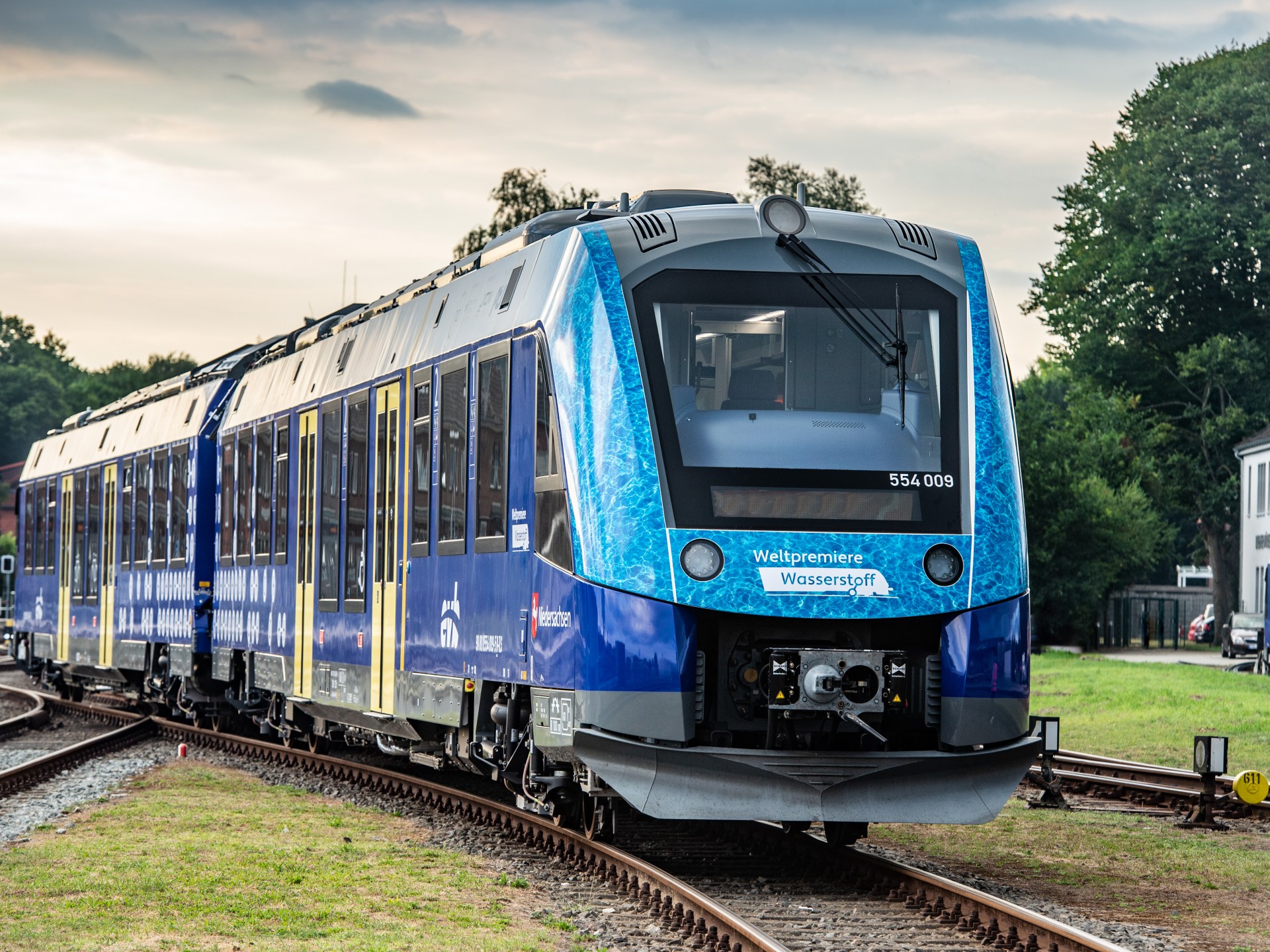
From AP the German Hydrogen train service says although the initial source is not green it will save importing diesel. But claims it will go green with local production in 3 years.
"Alstom says the Coradia iLint trains have a range of up to 1,000 kilometers (621 miles) and a maximum speed of 140 kph (87 mph). By using hydrogen produced with renewable energy the trains will save 1.6 million liters (more than 422,000 gallons) of diesel fuel a year.

The hydrogen is currently produced as a byproduct in chemical processes, but German specialty gas company Linde plans to manufacture it locally using only renewable energy within three years."
 

Bald Rick

Veteran Member
Joined
28 Sep 2010
Messages
35,817
Whilst interconnector capacity has improved somewhat, we are still at least one order of magnitude below where we would need to be for it to matter in a decarbonised energy system.

As it stands interconnectors are going to be irrelevant.

We will have to disagree on that!
 

Class 317

Member
Joined
7 Jul 2020
Messages
567
Location
Cotswolds
Using Hydrogen for anything except very exceptional situations where no realistic alternative exists is frankly bonkers given the very low return efficiency. The return efficiency is the % of energy stored versus the energy returned for use. It's around 50% for hydrogen and 90% plus for batteries.

Also the conversion efficiency of converting electricity into hydrogen is around 35% and this can't be improved as it's due to the reaction that splits the hydrogen from water itself.

The overall efficiency of using Hydrogen is likely to fall around the 25% mark.

In contrast batteries keep getting a few % more efficient each year meaning extended range or a smaller weight of batteries are required.

Taking the far north line as an examples often sited as a potential for hydrogen. Battery trains are likely to be able to do the job cheaper and better in the future.
Charging could happen in the layover at each end of the journey and if required in the middle.
The battery D train is going to have very short fast charge top ups during the day to extend range from 8 hours to 16 hours. I think they mentioned a 3min charge once an hour or something similar.
A battery train designed from the ground up to be optimised for efficiency should be able to achieve much better range than a conversion of a 1970's design.
 

ShadowKnight

Member
Joined
22 Oct 2019
Messages
240
Location
Liverpool
Not everything is about efficiency.
Practicality needs to be considered.
Why spend the extra time and money put a charging point every so often on the far north line and Also have a battery tender to carry the same amount of energy that a tank of hydrogen carries that can be refuelled back at the home depot/stabling point?

Another thing is that if everything were to be electrically powered/charged in a decade there would need to have an insane amount of investment and expansion to the electrical grid with work starting on this a decade ago.

Your comment on batteries getting ever lighter and more efficient every year, so we shouldn't try with hydrogen is akin to what grant shapps said about scrapping EWR, "well electric cars are a thing so why bother with EWR?".

I don't think putting all your eggs in one basket is beneficial particularly as batteries and hydrogen both have their own strengths and weaknesses with little crossover between them.
 

E27007

Member
Joined
25 May 2018
Messages
1,042
Is Hydrogen fuel in the strict sense?
Coal is fuel , coal is burnt and consumed, you cannot recreate the coal from the ashes.
Hydrogen , if is starts out as water and is seperated by electroysis, when the hydrogen is consumed it returns to the previous state ie water
 
Last edited:

Class 317

Member
Joined
7 Jul 2020
Messages
567
Location
Cotswolds
Hydrogen is far less energy dense than batteries so likely to require far more storage space on each train.

With respect efficiency is everything. To use hydrogen rather than batteries means using 4 times the electricity with a corresponding increase in both the renewable energy sources required to generate it and grid capacity to distribute it. This alone is likely to make hydrogen uneconomic.

As it happens the grid has been and still is expanding its capacity to service the required electrification revolution required to get to net zero. Smart tech is already reducing the peaks placed on it.

In terms of littering the far north line with chargers probably only one halfway along would be required for resilience as well as at each end. The likely cost is probably not going to be more than the cost of a hydrogen filling station or 2 that would be required if this was used.

== Doublepost prevention - post automatically merged: ==

@E27007 Hydrogen is an energy storage medium not a fuel source. The fuel source is whatever powers the electrolysis or reforming process in the case of grey hydrogen made from reformed natural gas.

The best way of thinking of it is that hydrogen is a energy transfer medium.
 
Last edited:

ShadowKnight

Member
Joined
22 Oct 2019
Messages
240
Location
Liverpool
The hydrogen enery density thing is a yes and no answer, volumetrically (per m3) it is very less dense, however by gravimetrically (per kg) hydrogen is one of the most energy dense fuels there are.

This is why particularly with vehicles hydrogen gas tanks at high pressures (hundreds of bar) is advantageous to batteries being able to store more kw of energy compared to a similar space taken up by a battery. Hydrogen ain't simple as it first seems when you look at it either way
 

Bald Rick

Veteran Member
Joined
28 Sep 2010
Messages
35,817
Why spend the extra time and money put a charging point every so often on the far north line and Also have a battery tender to carry the same amount of energy that a tank of hydrogen carries that can be refuelled back at the home depot/stabling point?

Why spend the extra time and money installing bespoke hydrogen storage and fuelling points in Inverness and the far North, when a battery can be easily recharged from the OLE that will exist at Inverness and a charging point at the termini?


Another thing is that if everything were to be electrically powered/charged in a decade there would need to have an insane amount of investment and expansion to the electrical grid with work starting on this a decade ago.

If every non electric train was converted to electric in the next decade, then the country would need to find an addition 0.7% of electricity generation, roughly an extra 2.2 TWh per year. Put another way that’s the expected annual output of around 50 offshore wind turbines. We are currently installing these at the rate of roughly 2 per week.

Generation and grid capacity is not remotely an issue For electrifying the railway.
 
Status
Not open for further replies.

Top