Are there too many people crossing the road for a zebra crossing? Would cars ever get through? I can't see anything wrong with the existing light controlled crossing - it is hardly the longest wait of such crossings.Tbh a lot of the footpath work has been done, judging by Google Street View. The only big thing that's missing is a Zebra crossing between the Overground and Underground stations, on one side or the other of Heritage Lane.

-
Our new ticketing site is now live! Using either this or the original site (both powered by TrainSplit) helps support the running of the forum with every ticket purchase! Find out more and ask any questions/give us feedback in this thread!
You are using an out of date browser. It may not display this or other websites correctly.
You should upgrade or use an alternative browser.
You should upgrade or use an alternative browser.
How feasible is a West Hampstead Interchange station?
- Thread starter philosopher
- Start date
- Status
- Not open for further replies.
Sponsor Post - registered members do not see these adverts; click here to register, or click here to log in
R
RailUK Forums
It's shown as a "proper" interchange on the tube and rail map, so it is effectively advertised as a single station. Most people would be aware that Hampstead is not known for it's gang violence or whatever, so I think this is a non-problem.You know that, the infrequent traveller from out of town is just going to see "you have to walk through the streets of outer London" and not be all that keen.
The question would be how many more would change if it was effectively one station and advertised as such.
You know that, the infrequent traveller from out of town is just going to see "you have to walk through the streets of outer London" and not be all that keen.
Thing is, there’s not many infrequent travellers from ‘out of town’ who will be making a transfer there. Given the the services that stop there, travellers will almost entirely be frequent travellers, or from ‘in town’.
Even then, and to put this into context, the first train trip my daughter did without adult supervision was Thameslink to West Hampstead then switch to the Jubilee. If the interchange is good enough for a 14 year old girl ‘out of towner’ who rarely uses the train, then it’s good enough for anyone.

D365
Veteran Member
- Joined
- 29 Jun 2012
- Messages
- 13,201
Long story short: a dedicated West Hampstead interchange would simply be a "nice to have".
Ditto on the "let's not build infrastructure for prejudiced Little Englanders and their comfort levels" - it should be for Londoners to use daily. Yes a few underground passageways would be great - but with what's there now, solidly a nice to have.You know that, the infrequent traveller from out of town is just going to see "you have to walk through the streets of outer London" and not be all that keen.
The question would be how many more would change if it was effectively one station and advertised as such.
But I admit it is unlikely to make sense except as part of a much bigger London Ring project (fast stops at Clapham Junction, Willesden, and West Hampstead, a people mover between Willesden and OOC), and that project would be too big to get past the moaning from the north about spending on London (even if it made their journeys south better).
It's also quite bitty - 3 Thameslink 'platforms' (in the US sense) - two of which are narrow, and then 2 for the Overground - and then the Jubilee (a wide island admittedly) on the other side of West End Lane.

Mikey C
Established Member
- Joined
- 11 Feb 2013
- Messages
- 8,285
And easier than the Camden Town to Camden Road interchange, that I often use(in passing - quite good interchanges done onto the North London line towards Richmond and beyond. Cheaper too avoiding Z1)
ChiefPlanner
Established Member
The JLE "ticket hall" (quaint word that !) , is a bit tight for space - and I guess was bigger at some time in the past , but retailed off. An improvement would be opening that up a bit.
I guess interchanges will change with Crossrail opening up and driving present interchanges off Tlk to spacious Farringdon (point made already) - so a review of traffic flows would be appropriate in a year or so.
Any one hankering for connectivity to Chiltern (Met section) can satisfy that with dropping back a station to Finchley Road and getting on the Met from there. A move done several times over the years. Not much of that I guess. Matters considerably helped over the recent past , by some JLE services starting at West Hampstead , using the reversing siding and giving a nice empty train.
Not much else I can say really.
I guess interchanges will change with Crossrail opening up and driving present interchanges off Tlk to spacious Farringdon (point made already) - so a review of traffic flows would be appropriate in a year or so.
Any one hankering for connectivity to Chiltern (Met section) can satisfy that with dropping back a station to Finchley Road and getting on the Met from there. A move done several times over the years. Not much of that I guess. Matters considerably helped over the recent past , by some JLE services starting at West Hampstead , using the reversing siding and giving a nice empty train.
Not much else I can say really.
I was actually thinking of it being for keeping the out of towners out of central London - ie getting to Clapham for SWR and Southern,, getting to OOC etc etc.Ditto on the "let's not build infrastructure for prejudiced Little Englanders and their comfort levels" - it should be for Londoners to use daily. Yes a few underground passageways would be great - but with what's there now, solidly a nice to have.
Its not for prejudiced people, its for people who dont know the area. And considering how much fuss there is about making people change trains it seems reasonable that making them leave the system to change trains is an even bigger disincentive.
But due to the cost it would only make sense as part of a network of orbital interchange improvements.

The question for me is not whether you have to pass through multiple ticket gates for a short interchange. That's well established at major stations for transferring between mainline and tube/DLR etc. It's also not whether you have to go 'outside' in the sense of the route not being covered the whole way. The bigger concern for me is having to cross roads. I don't mean roads full stop; a very lightly used residential or access road is not a particular concern. What makes an interchange far less attractive FOR ME, is having to cross BUSY roads, especially if that requires long waits at crossing lights, or making death-defying runs between moving vehicles where official signage seems to take you an unreasonable distance beyond the most direct surface route. This is a problem for pedestrian/vehicle interactions everywhere, not just in relation to public transport interchange, and certain tools from the 'shared space' toolkit can be employed to give the pedestrian more priority and create a more pleasant and settling environment. One long-term opportunity for W. Hampstead Jubilee Line station might be to reconstruct the entrance on the west side of West End Lane, with new platform access created under the bridge. That would avoid crossing the B510 on the level for interchange with Overground and Thameslink, and plausibly could improve accessibility at this site.I was actually thinking of it being for keeping the out of towners out of central London - ie getting to Clapham for SWR and Southern,, getting to OOC etc etc.
Its not for prejudiced people, its for people who dont know the area. And considering how much fuss there is about making people change trains it seems reasonable that making them leave the system to change trains is an even bigger disincentive.
But due to the cost it would only make sense as part of a network of orbital interchange improvements.
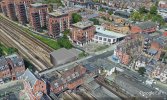
I don't hate it - the Jubilee is awkward, and likely the busiest. But wouldn't you lose the turnback? Is it that well used these days? Given there is Willesden? Otherwise, why not. That part feels much safer and less confined with the 'town square' and better road crossing.
And finally open a western exit at Finchley Road which was supposed to help the O2, but would now serve the development there.
And finally open a western exit at Finchley Road which was supposed to help the O2, but would now serve the development there.
This I can agree with. Talk of London's stabbing epidemic is Katie Holmes BS to freak out her base and frankly, racially attack an Asian Mayor. Let's not even indulge it as a valid concern here.I was actually thinking of it being for keeping the out of towners out of central London - ie getting to Clapham for SWR and Southern,, getting to OOC etc etc.
Its not for prejudiced people, its for people who dont know the area. And considering how much fuss there is about making people change trains it seems reasonable that making them leave the system to change trains is an even bigger disincentive.
But due to the cost it would only make sense as part of a network of orbital interchange improvements.
It really isnt. Lots of the stories make the news and many people see that and form a negative opinion (however much you remind them there are 9 million people in London...). Whether or not their concern is justified a service provider has to accept that concern.Talk of London's stabbing epidemic is Katie Holmes BS to freak out her base and frankly, racially attack an Asian Mayor. Let's not even indulge it as a valid concern here.
There is also the issue that however much you tell someone "its just down the road, you can't miss it" there will be a good number of people who wont fancy that and just find another way to travel, particularly if they have baggage. We need to attract those that dont currently travel, and part of that is making train travel as easy and stress free as possible.
I imagine the 'raft' structure might be constructed fairly easily above the southbound running lines, turnback siding and its junction pointwork to support the entrance building above, but clearly there would have to be sufficient space beneath for stairs and lifts down to the platform level. I don't know how much use is made of the siding today, but, as you say, if it had to be removed to make space, there's always Willesden Green to use instead, just over 2km, and two busy stops, further north.I don't hate it - the Jubilee is awkward, and likely the busiest. But wouldn't you lose the turnback? Is it that well used these days? Given there is Willesden? Otherwise, why not. That part feels much safer and less confined with the 'town square' and better road crossing.
Mikey C
Established Member
- Joined
- 11 Feb 2013
- Messages
- 8,285
Seeing how busy the Overground services through West Hampstead have become when compared to the half hourly 2 car 416s I remember, there's no shortage of people using the services currently. Indeed the station has been rebuilt to cope with the numbers.It really isnt. Lots of the stories make the news and many people see that and form a negative opinion (however much you remind them there are 9 million people in London...). Whether or not their concern is justified a service provider has to accept that concern.
There is also the issue that however much you tell someone "its just down the road, you can't miss it" there will be a good number of people who wont fancy that and just find another way to travel, particularly if they have baggage. We need to attract those that dont currently travel, and part of that is making train travel as easy and stress free as possible.
swt_passenger
Veteran Member
- Joined
- 7 Apr 2010
- Messages
- 34,318
I had the same idea as you but didn’t post it. Maybe they could add a secondary route (both stairs and a lift) to the west side of the bridge, but keep it relatively small scale and keep within the area between the turnback crossovers. People not interchanging and walking to/from the station could carry on using the existing entrance east side street level entrance.I imagine the 'raft' structure might be constructed fairly easily above the southbound running lines, turnback siding and its junction pointwork to support the entrance building above, but clearly there would have to be sufficient space beneath for stairs and lifts down to the platform level. I don't know how much use is made of the siding today, but, as you say, if it had to be removed to make space, there's always Willesden Green to use instead, just over 2km, and two busy stops, further north.
centraluser
Member
- Joined
- 1 Jan 2013
- Messages
- 68
Assuming that land could be found for platforms, calling more than two or three Chiltern services an hour would reduce the peak time capacity of the lines in/out of Marylebone by too much to be acceptable. There is simply no need given the new interchanges with Crossrail and the future options at Old Oak Common for interchanges there.
but, as you say, if it had to be removed to make space, there's always Willesden Green to use instead, just over 2km, and two busy stops, further north.
costs an extra unit, AIUI.
ChiefPlanner
Established Member
costs an extra unit, AIUI.
If a bit of mileage reduction is needed for the Tube (generally) - reversing trains at places like West Hampstead is seriously sensible - the days of maximising "train miles" (in other words carrying lots of off peak fresh air) , is behind us.
End to end running to (in this case) - Stanmore , is not good economics - (and many other places)
Or heading off to different branches at the extremities. In the case of the Jubilee, I'd have these trains turn out onto the Met fast lines beyond West Hampstead to Wembley where they'd transfer back to the centre pair again to pick up local calls to Harrow before taking over the Uxbridge branch. All the platforms they would use could then be adjusted correctly for tube floor height, including the section into Uxbridge shared with the Piccadilly. www.townend.me/files/metropolitan.pdfIf a bit of mileage reduction is needed for the Tube (generally) - reversing trains at places like West Hampstead is seriously sensible - the days of maximising "train miles" (in other words carrying lots of off peak fresh air) , is behind us.
End to end running to (in this case) - Stanmore , is not good economics - (and many other places)

THC
Member
I'm sure that TfL looked into splitting the Jubilee at Wembley and taking over the local lines to Harrow, freeing up the Met to run fast between the two, at the same time the third platform at Stanmore was being planned. I think the prevailing orthodoxy was against creating more branches so the idea was dropped.Or heading off to different branches at the extremities. In the case of the Jubilee, I'd have these trains turn out onto the Met fast lines beyond West Hampstead to Wembley where they'd transfer back to the centre pair again to pick up local calls to Harrow before taking over the Uxbridge branch. All the platforms they would use could then be adjusted correctly for tube floor height, including the section into Uxbridge shared with the Piccadilly. www.townend.me/files/metropolitan.pdf
THC
Railwaysceptic
Established Member
- Joined
- 6 Nov 2017
- Messages
- 1,738
Several Jubilee Line trains terminate at Wembley Park, using the turnback siding.If a bit of mileage reduction is needed for the Tube (generally) - reversing trains at places like West Hampstead is seriously sensible - the days of maximising "train miles" (in other words carrying lots of off peak fresh air) , is behind us.
End to end running to (in this case) - Stanmore , is not good economics - (and many other places)
JohnElliott
Member
- Joined
- 15 Sep 2014
- Messages
- 275
From a purely selfish point of view I'd like it if I could change from Overground to Thameslink at West Hampstead without going out-of-station, because at the Overground station it seems to be pure random chance whether the barriers will accept my paper ticket or not.
From a purely selfish point of view I'd like it if I could change from Overground to Thameslink at West Hampstead without going out-of-station, because at the Overground station it seems to be pure random chance whether the barriers will accept my paper ticket or not.
you know the answer there is to use a non-paper ticket…
A service provider has to accept and pander to people's concerns if they are not justified? I.e. build infrastructure for the unfounded paranoia of a minority (of users) ?It really isnt. Lots of the stories make the news and many people see that and form a negative opinion (however much you remind them there are 9 million people in London...). Whether or not their concern is justified a service provider has to accept that concern.
There is also the issue that however much you tell someone "its just down the road, you can't miss it" there will be a good number of people who wont fancy that and just find another way to travel, particularly if they have baggage. We need to attract those that dont currently travel, and part of that is making train travel as easy and stress free as possible.
Which I don't even believe is the case, it's you projecting your own thoughts.
But do you want to read that back and see how irrational it sounds? We should address un-justified (aka imaginary) social concerns through civil engineering?
Yes, thats what service providers do all the time.A service provider has to accept and pander to people's concerns if they are not justified? I.e. build infrastructure for the unfounded paranoia of a minority (of users) ?
Which I don't even believe is the case, it's you projecting your own thoughts.
But do you want to read that back and see how irrational it sounds? We should address un-justified (aka imaginary) social concerns through civil engineering?
I could just as easily say you are projecting your own impression of the area onto others that know nothing except what they read in the press (which isnt going to be telling them London is safe as that isnt a story)
To most people it’s not an interchange if you have to leave the station, particularly if that means walking the streets of an unfamiliar urban area.
It's really not far, and the new traffic lights and the western ticket hall on Thameslink further reduces the walk.
I do get that it might not immediately jump out as an interchange for people thinking in their head how to get somewhere, but route planners will offer it - and that likely helps.
Regular travellers will have always known, just as people used to shortcut from Farringdon to Blackfriars by Thameslink than use the circle line, long before it returned to tube maps.
Maybe put up more signs, like the walking route from Euston to St Pancras, on lampposts or markings on the pavement, if necessary - although I think signage is already good. There really aren't any opportunities to take a wrong turn.
== Doublepost prevention - post automatically merged: ==
You know that, but to out of towners it is wandering down the streets of outer London, and nothing like as acceptable as an in station interchange.
Does it come up as an interchange on journey planners?
If they think that people are getting stabbed/shot all the time, will they even dare venture onto a train? With no onboard staff, surely the train is more dangerous* than the streets? I bet many shops and takeaways are 24 hours there, so it will always be busy enough that you're not going to encounter any issues on a short walk at street level.
* Relatively speaking, but in reality the risk is tiny for anywhere - given most attacks are not random. Street robberies must be way down now people rarely carry cash and a mobile has limited value.
Fair challenge, but I think trains are felt to be a safer environment (except Southeastern Metro maybe!) but if they could avoid walking the streets of London then they are avoiding London - its just trains and walking through a station. A station is brightly lit, not as chaotic, and dry!If they think that people are getting stabbed/shot all the time, will they even dare venture onto a train?
I am thinking of the people who we need to start getting trains, not those who already cross London regularly.
Looking at the surrounding area, the 1980s offices opposite the Thameslink entrances might get redeveloped sooner or later. A link directly to the NLL new footbridge could be included fairly straightforwardly
I admire your optimism. The area between the NLL station and the tube station was redeveloped a few years ago, and no Link was built there. And that was railway land.
Fair point, but that would have needed a lot more work: a bridge over the railway and then some means of getting to the platforms. Doing something from Thameslink to NLL would be far more straightforward. Not likely to happen or particularly necessary, but plausibleI admire your optimism. The area between the NLL station and the tube station was redeveloped a few years ago, and no Link was built there. And that was railway land.
- Status
- Not open for further replies.