• Our new ticketing site is now live! Using either this or the original site (both powered by TrainSplit) helps support the running of the forum with every ticket purchase! Find out more and ask any questions/give us feedback in this thread!

Holyhead & Anglesey Stations

Status
Not open for further replies.

Llwyfan1

New Member
Joined
9 Oct 2025
Messages
3
Location
Ynys Mon
Hello all, I'm looking for some information on station colours under L.N.W.R.

I've bought a cottage that looks directly into Holyhead Station, almost on Platform 1 ! I'd like to take the exterior house colour back to the original LNWR colours...

Can anyone confirm the colours used on the islands stations in the good old days of steam, please ?

Thank you :smile:
 
Last edited by a moderator:
Sponsor Post - registered members do not see these adverts; click here to register, or click here to log in
R

RailUK Forums

WesternLancer

Veteran Member
Joined
12 Apr 2019
Messages
15,301
Hello all, I'm looking for some information on station colours under L.N.W.R. I've bought a cottage that looks directly into Holyhead Station, almost on Platform 1 ! I'd like to take the exterior house colour back to the original LNWR colours... can anyone confirm the colours used on the islands stations in the good old days of steam please ?
Sounds interesting!

There’s an interesting and thorough website I’ve seen that features lots of different railway company’s paint schemes for buildings they owned that might be what you need.

I can’t recall the site name but I’ll try and search for it.

== Doublepost prevention - post automatically merged: ==

I’m not sure if this is the site I was thinking of but a good start maybe


LNWR on this page


Seeing this old thread @GCRS might have some advice.
 
Last edited:

webbfan

Member
Joined
31 Dec 2019
Messages
120
Location
leicestershire
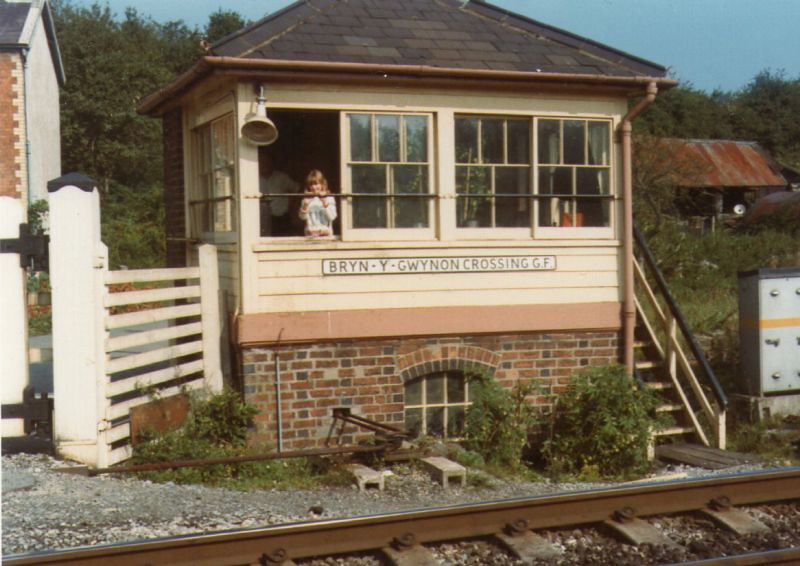
From LNWR Liveries, Same as signal boxes, buff and brown aka light and dark buff.

Window frames normally white but surrounds, sills, doors and ironwork were brown. Other woodwork such as bargeboards were buff. Of course at times and in places there were exceptions, however that was the standard.

For those that have photos that show variations to described colours, it was standard practice for painting contractors to be instructed to apply undercoats in contrasting colours to that of the top coat so that a cursory inspection would reveal any skimping of the final coat 8-)
 

Llwyfan1

New Member
Joined
9 Oct 2025
Messages
3
Location
Ynys Mon
Sounds interesting!

There’s an interesting and thorough website I’ve seen that features lots of different railway company’s paint schemes for buildings they owned that might be what you need.

I can’t recall the site name but I’ll try and search for it.

== Doublepost prevention - post automatically merged: ==

I’m not sure if this is the site I was thinking of but a good start maybe


LNWR on this page


Seeing this old thread @GCRS might have some advice.
Really helpful ! Thanks so much !
 

Llwyfan1

New Member
Joined
9 Oct 2025
Messages
3
Location
Ynys Mon
From LNWR Liveries, Same as signal boxes, buff and brown aka light and dark buff.
Window frames normally white but surrounds, sills, doors and ironwork were brown. Other woodwork such as bargeboards were buff. Of course at times and in places there were exceptions, however that was the standard.
For those that have photos that show variations to described colours, it was standard practice for painting contractors to be instructed to apply undercoats in contrasting colours to that of the top coat so that a cursory inspection would reveal any skimping of the final coat 8-)
Many thanks for your help !
 

WesternLancer

Veteran Member
Joined
12 Apr 2019
Messages
15,301
Slightly daft question from me as i assume the answer is yes but was your house originally built by the railway company?

Really helpful ! Thanks so much !
actually I think that was the website I was thinking of now I look at it again on a lager screen than my phone scree which is what i looked at before

this is what it says about LNWR :
(note I think I have read that back in the day 'white' didn't mean 'pure brilliant white' as we know it from modern paints. This is because the turpentine that was used in paint in those days meant that white was always slightly yellow. I guess there are heritage paint experts who know more about that)

LONDON & NORTH WESTERN RAILWAY​

The LNWR standardized it’s the color scheme for buildings early on as it did pretty much everything, and it never changed thereafter. There is more than a suspicion that they simply picked the cheapest pigments and used those!

Planking, valencing, etc. were painted in one of two colors, ‘stone or ‘cream’…the former was a buff shade and was by far the most widely used. Used with these was a darker shade, either Light Brown or Dark Brown. Window frames were always white. These colors were used on all buildings, including signal boxes.

Station poster boards were painted black with white framing, and an enameled plate in dark blue with white lettering was screwed to the top spelling out the company name in full on two lines. Station signs & notices were black with white lettering & framing, as were running in boards.

BC 381C references for the colors​

  • Stone 361
  • Cream 352
  • Light Brown 414
  • Dark Brown 411

PAINTS FOR MODELLERS​

I use Stone and Dark Brown for LNWR buildings as that seems to have been the commonest combination. I use Tamiya ‘Flesh’ for the stone/buff, with Tamiya ‘Flat Brown’ for the dark brown. For the cream, I would use Precision SR buildings cream and for Light Brown Precision GWR dark stone.

also - the LNWR Society might be a good source of knowledge people on the topic if you have not already been in contact with them / didn't know about the society


The London & North Western Railway Society​

The L&NWR Society is an Educational Charity with the following objective: “To advance the education of the public in all aspects of the London & North Western Railway, including the study and preservation of information, drawings, photographs, models and other material pertaining to the railway company and related organisations and subjects.”
Thus the Society aims to foster interest in all aspects of the LNWR , its constituent companies and joint lines. Formed in 1973 the Society achieved charitable status in 2005. In September 2023 we changed our charitable status to become a CIO (Charitable Incorporated Organisation)

Our Society​

The Society publishes four fully illustrated Journals and four Newsletters each year, plus occasional Portfolios on a single subject.
We arrange several events each year, including Open Meetings throughout the year, our AGM in early summer and a Steam-up in September. We also attend a number of model railway and model engineering exhibitions. There are four documentary services which are available to members: Library, Archive, Photographic and Drawing.
Whilst not being a preservation society, we try to encourage preservation by assisting with information and attempting to find suitable homes for any items discovered that may be worth preserving, or that may provide components for preservation projects.
A large number of the Society’s members build models and the Society assists model manufacturers whenever possible. We actively encourage and support the preservation of LNWR artefacts large and small.
 
Last edited:

webbfan

Member
Joined
31 Dec 2019
Messages
120
Location
leicestershire
There is more than a suspicion that they simply picked the cheapest pigments and used those!
Don't think so, Stations were public facing structures so would be kept in top condition. Anything looking shabby would be dealt with immediately, as would the Stationmaster.
Wouldn't be suprised if at Euston the pigeons were trained to use the staff toilets.
 

WesternLancer

Veteran Member
Joined
12 Apr 2019
Messages
15,301
Don't think so, Stations were public facing structures so would be kept in top condition. Anything looking shabby would be dealt with immediately, as would the Stationmaster.
Wouldn't be suprised if at Euston the pigeons were trained to use the staff toilets.
Doesn’t pigment determine colour rather than durability? Though I suppose it implies other ingredients might have been cheap too. Though it does seem unlikely. But the author has clearly made a keen study of the topic.
 

webbfan

Member
Joined
31 Dec 2019
Messages
120
Location
leicestershire
May I politely and gently suggest the author does a bit more studying of the topic. The LNWR were very conscious of their image to the public and in the press. They just didn't do anything that looked cheap - they would pay the minimum but if something was likely to make money they were quick to pay good money. Keeping Stations looking smart would encourage passengers to use their services so worth spending money.
 

WesternLancer

Veteran Member
Joined
12 Apr 2019
Messages
15,301
May I politely and gently suggest the author does a bit more studying of the topic. The LNWR were very conscious of their image to the public and in the press. They just didn't do anything that looked cheap - they would pay the minimum but if something was likely to make money they were quick to pay good money. Keeping Stations looking smart would encourage passengers to use their services so worth spending money.
I suspect that’s a fair point.

Are there any LNWR stations on preserved railways that have been restored to their original livery scheme? I can't think of one which seems to me to be a bit of an omission given they were one of the really big pre grouping companies.
 
Last edited:

webbfan

Member
Joined
31 Dec 2019
Messages
120
Location
leicestershire
Plenty of ex-LNWR stations (especially WCML) but as far as I know none are on preserved lines. Battlefield line was joint LNWR-Midland but all original stations built by Midland unfortunately.
 
Status
Not open for further replies.

Top