• Our new ticketing site is now live! Using either this or the original site (both powered by TrainSplit) helps support the running of the forum with every ticket purchase! Find out more and ask any questions/give us feedback in this thread!

Henley-on-Thames every 15 minutes

Status
Not open for further replies.

JonathanH

Veteran Member
Joined
29 May 2011
Messages
23,374
That's true for pretty much any modern train – and especially if you compare a modern train with 2+2 seating to a 1990s train with 3+2 seating.
Isn't the idea that fewer seats mean more room for standing passengers?

I must admit that I usually sit down when travelling on the Henley branch even though it is only 12 minutes from end to end, but is this the kind of line where the trains should have fewer seats and more standing room given the short journey time, thereby negating any need for interventions to allow a more frequent service?
 
Sponsor Post - registered members do not see these adverts; click here to register, or click here to log in
R

RailUK Forums

bramling

Veteran Member
Joined
5 Mar 2012
Messages
20,411
Location
Hertfordshire / Teesdale
Isn't the idea that fewer seats mean more room for standing passengers?

I must admit that I usually sit down when travelling on the Henley branch even though it is only 12 minutes from end to end, but is this the kind of line where the trains should have fewer seats and more standing room given the short journey time, thereby negating any need for interventions to allow a more frequent service?

It’s all a bit academic when for most of the time a 2-car DMU is more than adequate.

It’s only really the “Royal” that’s the issue, and only that for some of the days, and perhaps the odd other event like the festival.

Am I understanding correctly that the main issue this year has simply been that there weren’t spare 165s without pulling something from elsewhere to allow lengthening the weekday service to the maximum possible length? If that’s the case then any discussion about infrastructure or even stock interior configurations is a bit overkill?
 

BerkshireRails

On Moderation
Joined
4 Apr 2021
Messages
889
Location
United Kingdom
That's true for pretty much any modern train – and especially if you compare a modern train with 2+2 seating to a 1990s train with 3+2 seating.
A 720 has a similar capacity pair of 165s.
That is for the most complex train in service in this country.
Even the Class 450s once adjusted for inflation come out at around 2 million per car. Class 450 Cost Inflation Calculator
Am I understanding correctly that the main issue this year has simply been that there weren’t spare 165s without pulling something from elsewhere to allow lengthening the weekday service to the maximum possible length? If that’s the case then any discussion about infrastructure or even stock interior configurations is a bit overkill?
That is correct, during the Regatta they had to pull one of the Basingstoke's
Isn't the idea that fewer seats mean more room for standing passengers?

I must admit that I usually sit down when travelling on the Henley branch even though it is only 12 minutes from end to end, but is this the kind of line where the trains should have fewer seats and more standing room given the short journey time, thereby negating any need for interventions to allow a more frequent service?
However the same units get used on longer runs, so if you want to do that you need a dedicated fleet like the 230s for those short branches with less seating capacity and more standing capacity.
Too short for a dynamic loop. You would be seeing adverse aspects and not be running at anywhere near linespeed unless it was low.
Line speed is 50mph, on the Regatta Line however around Wargrave it drops to 10/30DMU for Shiplake viaduct.
track_diagram_3064.png
track_diagram_2704.png
The diagrams are from Network Rails open data.
 
Last edited:

AlastairFraser

Established Member
Joined
12 Aug 2018
Messages
4,163
If the Sprinter fails, the Turbos it is coupled to would presumably drag it clear? (As noted the unit would be modified to operate with the Turbos and would only ever be used in the centre of trains)

Only very rarely does a failure of a unit render a train dead and unable to move.
Especially as a three car sprinter is functionally three single car units tied together.
Depends on the failure
You can not get 3tph with your idea due the fact that the Total time spent turning around on the Henley Branch is 12 minutes in an hour and takes 12 minutes to complete a single run on the Branch from Twyford to Henley, it takes another 12 minutes to get back to Twyford, so a total theoretical capacity of 2.5tph. You idea will not be any cheaper, because you still need to add in two sets points, three new signals (two at Henley and one at Twyford), two new platforms, the one at Henley will require a 10-15 metre platform extension to permit seven car turbos in both platforms, however Twyford would be the issue which could only fit four cars. You have to factor in Junction Margins, which will probably be 1 minute, which will eat 4 minutes into your turnaround time, which you can't use, so capacity will drop to 2.3tph.
Just to clarify, my proposal was to operate with tram trains or pure light rail vehicles, with line of sight signalling. There would be no need for all the extra signalling infrastructure if it was converted to LRV operation.
That might be a lower, but certainly not a low cost solution! And of course having two trains to operate the service would double Traincrew costs.
Oh maybe not truly not low cost, but a DOO light rail vehicle costs much less to operate than a Turbo.
 

BerkshireRails

On Moderation
Joined
4 Apr 2021
Messages
889
Location
United Kingdom
Just to clarify, my proposal was to operate with tram trains or pure light rail vehicles, with line of sight signalling. There would be no need for all the extra signalling infrastructure if it was converted to LRV operation.
Your not doing line of sight signalling on a bi-directional single line, hence for single line running trams still use signalling. For example at Mitcham Junction with signals protecting the single lines in both directions. 20241010_181742.jpg
Oh maybe not truly not low cost, but a DOO light rail vehicle costs much less to operate than a Turbo.
The turbo is already DOO on the Henley-on-Thames Branch, so the only cost saving is from the traction supply.
 

Mgameing123

Member
Joined
29 Apr 2023
Messages
1,058
Location
Denmark
But they only run the 7 car trains on one day a year.

The work would need to be useful at least 6 days a week all year to be worth doing.

Electrification would be a better use of money so 8 car EMUs could provide a peak time service to Paddington (subject to pathing!) all year
I would support that! We could even look at extending the Elizabeth Line to Henley on Thames considering 2 tph already terminate at Maidenhead so it won’t be too much of an inconvenience in terms of pathing atleast.

== Doublepost prevention - post automatically merged: ==

Aren't the Henley and Marlow branches pretty much exactly the use case for BEMUs like the 230s?
Would wiring the branches and operation with EMUs allow for increases over the current frequencies that batteries couldn't (e.g. due to charging time)?
The benefit of electrication is if you want to provide through services which probably isn’t going to happen anytime soon on the Bourne End Branch (unless the line to Wycombe was built) but I can definitely see it work on the Henley on Thames branch.
 

BerkshireRails

On Moderation
Joined
4 Apr 2021
Messages
889
Location
United Kingdom
I would support that! We could even look at extending the Elizabeth Line to Henley on Thames considering 2 tph already terminate at Maidenhead so it won’t be too much of an inconvenience in terms of pathing atleast.
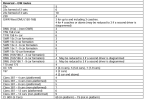
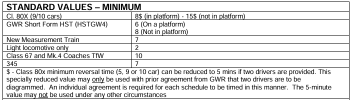
A 345 requires 7 minutes to turnaround and currently they only have 3 minutes to turnaround, so a loop will be required on the branch to allow a 2tph Maidenhead extension to Henley and you have to deal with the Junction and Platform Margins at Twyford. Through Henley services MUST use platform 4, the Up Relief at Twyford.

Twyford TPR.png
Network Rail Train Planning Rules Wales & Western, which is open data.
 

AlastairFraser

Established Member
Joined
12 Aug 2018
Messages
4,163
Your not doing line of sight signalling on a bi-directional single line, hence for single line running trams still use signalling. For example at Mitcham Junction with signals protecting the single lines in both directions.
I'm pretty sure I've seen a form of line of sight signalling for bi-di single lines on other light rail systems somewhere. Will have to see if I can find it.
The turbo is already DOO on the Henley-on-Thames Branch, so the only cost saving is from the traction supply.
Bear in mind tram/LRV drivers are typically less expensive to employ than heavy rail drivers.
I would support that! We could even look at extending the Elizabeth Line to Henley on Thames considering 2 tph already terminate at Maidenhead so it won’t be too much of an inconvenience in terms of pathing atleast.
It would be a nightmare, because you'd be blocking just the London bound or both relief lines at Twyford while the train crosses over from/to the Henley branch, and extending Shiplake/Wargrave stations to fit Class 345s would be very difficult with the railway bridge constraining Wargrave and the level crossing constraining Shiplake.
 

BerkshireRails

On Moderation
Joined
4 Apr 2021
Messages
889
Location
United Kingdom
It would be a nightmare, because you'd be blocking just the London bound or both relief lines at Twyford while the train crosses over from/to the Henley branch, and extending Shiplake/Wargrave stations to fit Class 345s would be very difficult with the railway bridge constraining Wargrave and the level crossing constraining Shiplake.
The 345s to feature Selective Door Operation for stations like Hanwell and Twyford, which could be used at Wargrave and Shiplake instead of full platform lengthening's, Wargrave in the Up direction is clear of bridges for a large enough distance to allow the platform to be extended to fit a full 345 in, at Shiplake if you close the foot crossing at the Up end of the station it should be possible to lengthen the platform enough so a 345 can be clear of the Road level crossing at the Down end of the station. Shiplake and Wargrave can currently fit 6 cars. Twyford foot crossing would also need to be resolved most likely by closure. 20250202_140922.jpgClass 345 SDO map at Woolwich.
 

AlastairFraser

Established Member
Joined
12 Aug 2018
Messages
4,163
The 345s to feature Selective Door Operation for stations like Hanwell and Twyford, which could be used at Wargrave and Shiplake instead of full platform lengthening's, Wargrave in the Up direction is clear of bridges for a large enough distance to allow the platform to be extended to fit a full 345 in, at Shiplake if you close the foot crossing at the Up end of the station it should be possible to lengthen the platform enough so a 345 can be clear of the Road level crossing at the Down end of the station. Shiplake and Wargrave can currently fit 6 cars. Twyford foot crossing would also need to be resolved most likely by closure.
So, if you go through years of processes to get all that sorted, you now have a service that is still extremely awkward operationally (due to the relief lines crossings at Twyford) and provides a massive excess of capacity outside of the peaks.

Don't get me wrong, I'm all in favour of improvements to Regatta Line services, but it's utter insanity to extend the Elizabeth Line to Henley. A light rail/tram-train solution for the Thames Valley branches makes much more sense.
 

Mgameing123

Member
Joined
29 Apr 2023
Messages
1,058
Location
Denmark
A 345 requires 7 minutes to turnaround and currently they only have 3 minutes to turnaround, so a loop will be required on the branch to allow a 2tph Maidenhead extension to Henley and you have to deal with the Junction and Platform Margins at Twyford. Through Henley services MUST use platform 4, the Up Relief at Twyford.

View attachment 183300
Network Rail Train Planning Rules Wales & Western, which is open data.
How about hourly + shuttle? So like when Elizabeth Line is on the line then shuttle is parked on Twyford Bay Platform. Then once Elizabeth Line is back at Twyford then shuttle departs and once shuttle is back at Twyford then Elizabeth Line departs.
 

BerkshireRails

On Moderation
Joined
4 Apr 2021
Messages
889
Location
United Kingdom
So, if you go through years of processes to get all that sorted, you now have a service that is still extremely awkward operationally (due to the relief lines crossings at Twyford) and provides a massive excess of capacity outside of the peaks.

Don't get me wrong, I'm all in favour of improvements to Regatta Line services, but it's utter insanity to extend the Elizabeth Line to Henley. A light rail/tram-train solution for the Thames Valley branches makes much more sense.
For a decent light rail or tram service your looking at double tracking the full Regatta line apart from through Shiplake and maybe across the Viaduct.
a) Provide an attractive service
b) Have enough capacity for the Regatta
c) Allow extension to Reading

Elizabeth Line Maidenhead to Henley extension

Down Direction
XX:15 & XX:45 Depart Maidenhead
XX:27 & XX:57 Arrive Twyford (Gets to Twyford at XX:22 & XX:52 but has to wait 5 minutes for Platform 4 to become free with the margins).
XX:28 & XX:58 Depart Twyford
XX:01 & XX:31 Arrive & Depart Wargrave
XX:04 & XX:34 Arrive & Depart Shiplake
XX:15 & XX:45 Arrive Henley (Gets to Henley at XX:09 & XX:39 but will need to be looped to allow the Up service past so including the Loop you get to Henley around XX:15 & XX:45)

Up Direction
XX:09 & XX:39 Depart Henley
XX:13 & XX:43 Arrive & Depart Shiplake
XX:16 & XX:46 Arrive & Depart Wargrave
XX:21 & XX:51 Arrive Twyford
XX:22 & XX:52 Depart Twyford
XX:29 & XX:59 Arrive Maidenhead
XX:00 & XX:30 Depart Maidenhead
How about hourly + shuttle? So like when Elizabeth Line is on the line then shuttle is parked on Twyford Bay Platform. Then once Elizabeth Line is back at Twyford then shuttle departs and once shuttle is back at Twyford then Elizabeth Line departs.
Using the XX:15 off Maidenhead passes Twyford at XX:23 which would then get to Henley at XX:35 + 7 minutes Turnaround so it can depart at XX:42 which would pass Twyford at XX:54 and reach Maidenhead at XX:01+1.
Then this gives 29 minutes for the Shuttle to Run the Henley Branch, which could leave at XX:55 and get to Henley at XX:07 + 3 minutes Turnaround so it can depart at XX:10 and get to Twyford at XX:22.
So in theory yes it does work, however it will not be that reliable with the current 12 minutes run time however if Electrification can reduce the run time down to 10-11 minutes then it becomes a much more reliable and possible service. It would require adjusting the timings of the Maidenheads slightly as well as an additional 2-3 units.

 

AlastairFraser

Established Member
Joined
12 Aug 2018
Messages
4,163
For a decent light rail or tram service your looking at double tracking the full Regatta line apart from through Shiplake and maybe across the Viaduct.
a) Provide an attractive service
b) Have enough capacity for the Regatta
c) Allow extension to Reading
Double tracking or longer loops are much cheaper and easier to construct to light rail standards.
You could run a basically continuous shuttle during the Regatta without lots of extra rolling stock being necessary.

Extension to Reading is not practical or necessary.
While Reading does need a tram system, it should not interact with the extremely congested Great Western Main Line (GWML), especially as the capacity cost of running a 75mph max tram train on the 90mph minimum GWML (the relief lines are 90mph, while the fasts are 125mph) would be immense.

You can provide a decent journey time Reading to Henley by increasing the Henley line frequency to 3/4tph, because the current lengthly journey times result from longer interchange times at Twyford (which receives 4tph to/from Reading).

If you run 4tph on the Henley line during Monday-Sat daytimes, you can nearly always assure that there is no longer than a 10 min wait at Twyford to interchange onto services heading towards
Reading or Paddington.
 

BerkshireRails

On Moderation
Joined
4 Apr 2021
Messages
889
Location
United Kingdom
Double tracking or longer loops are much cheaper and easier to construct to light rail standards.
You could run a basically continuous shuttle during the Regatta without lots of extra rolling stock being necessary.

Extension to Reading is not practical or necessary.
While Reading does need a tram system, it should not interact with the extremely congested Great Western Main Line (GWML), especially as the capacity cost of running a 75mph max tram train on the 90mph minimum GWML (the relief lines are 90mph, while the mains are 125mph) would be immense.

You can provide a decent journey time Reading to Henley by increasing the Henley line frequency to 3/4tph, because the current lengthly journey times result from longer interchange times at Twyford (which receives 4tph to/from Reading).

If you run 4tph on the Henley line during Monday-Sat daytimes, you can nearly always assure that there is no longer than a 10 min wait at Twyford to interchange onto services heading towards
Reading or Paddington.
They will cost virtually the same amount for the Pway side of things. You will still need extra rolling stock for the Henley Regatta to match the demand. Assuming you get the 399s, you would require 5 units to match the ~1,000 passengers a 7-car turbo can carry, both seated and standing. This would give a frequency of 10 trams per hour per direction, if they all ran as single units. With the amount of downtime, this high frequency might prove an issue for the Shiplake Level crossing and the single-track section through Shiplake station. Shiplake Viaduct might also be a challenge for double tracking, which will also limit capacity.

An extension to Reading is practical with an additional pair of tracks, as you could service places like Charvil and Woodly, which currently have no rail service on your way to Reading.

You still have to run on the GWML to get to the depot, as logically you would expand Reading TCD over on the fields for the Tram-Trains.
 

AlastairFraser

Established Member
Joined
12 Aug 2018
Messages
4,163
They will cost virtually the same amount for the Pway side of things.
Not at all. Tram track is typically much more lightweight, and I'm demonstrated how you can save on signalling.
Assuming you get the 399s, you would require 5 units to match the ~1,000 passengers a 7-car turbo can carry, both seated and standing. This would give a frequency of 10 trams per hour per direction, if they all ran as single units.
Of course you'd use double units during Regatta, just like every other light rail system does in the peaks.
Shiplake Viaduct might also be a challenge for double tracking, which will also limit capacity.
Possibly with heavy rail, but with lightweight trams, it's less likely to be an issue.
An extension to Reading is practical with an additional pair of tracks, as you could service places like Charvil and Woodly, which currently have no rail service on your way to Reading.
Lmao.
Good luck trying to compulsory purchase half of Sonning, sections of Thames Valley Park and then building an extra 2 tracks on viaduct skirting the edge of the Thames. NR said no to a station at Thames Valley Park because of GWML congestion, if there are ever another pair of tracks from London west towards Reading, these will likely be for high speed services and bypass the old GWML completely!
You still have to run on the GWML to get to the depot, as logically you would expand Reading TCD over on the fields for the Tram-Trains.
If you were to use tram-trains on the Thames Valley branches, Reading is a completely illogical place to place a depot. It's a very complex station to path empty stock movements through, and it's quite a long way from most of the branches.

There would likely be a small depot somewhere in the Slough area for rolling stock maintenance, because 1) this is roughly equidistant from the furthest east/west of the Thames Valley branches and 2) there is disused/underoccupied railway owned land in the area.
 

BerkshireRails

On Moderation
Joined
4 Apr 2021
Messages
889
Location
United Kingdom
Not at all. Tram track is typically much more lightweight, and I'm demonstrated how you can save on signalling.
Tram-Track is still around £1 million per single-track KM. You still need signal for the Junctions.
Of course you'd use double units during Regatta, just like every other light rail system does in the peaks.

Possibly with heavy rail, but with lightweight trams, it's less likely to be an issue.
However, it still needs investigating.
Lmao.
Good luck trying to compulsory purchase half of Sonning, sections of Thames Valley Park and then building an extra 2 tracks on viaduct skirting the edge of the Thames. NR said no to a station at Thames Valley Park because of GWML congestion, if there are ever another pair of tracks from London west towards Reading, these will likely be for high speed services and bypass the old GWML completely!
There are six paths on the Mains which could be available for extra long-distance services per hour. They will be supportive of a tram stop as the next best thing. Also, these extra tracks would start at either Twyford Gardens or Twyford West and run to Charvill, where they would then run on-street. Thames Valley Trams
If you were to use tram-trains on the Thames Valley branches, Reading is a completely illogical place to place a depot. It's a very complex station to path empty stock movements through, and it's quite a long way from most of the branches.

There would likely be a small depot somewhere in the Slough area for rolling stock maintenance, because 1) this is roughly equidistant from the furthest east/west of the Thames Valley branches and 2) there is disused/underoccupied railway owned land in the area.
Trams would access the Reading depot with on-street running. Also, the Greenford Branch has no point in being a tram-train. Although that land exists it isn't really as good as you would think. Also storing the trams at Reading would allow for other benefits like the Basingstoke branch and North Downs Line could gain a tram-train service as well.
 
Last edited:

Benjwri

Established Member
Joined
16 Jan 2022
Messages
3,325
Location
London
Also, these extra tracks would start at either Twyford Gardens or Twyford West and run to Charvill, where they would then run on-street. Thames Valley Trams
This is now getting fairly off topic with some kind of tram proposal like this. To stick just to looking at the Henley bit all you’re doing is significantly increasing journey times. Getting out of Reading on that will take far longer than the 5 minutes to Twyford. What about anyone coming from London, as a significant amount of people do? Their journey time will be extended even more.

As a side note you seem to be suggesting bulldozing half of Reading Town Centre.
 

The Planner

Veteran Member
Joined
15 Apr 2008
Messages
19,718
A 345 requires 7 minutes to turnaround and currently they only have 3 minutes to turnaround, so a loop will be required on the branch to allow a 2tph Maidenhead extension to Henley and you have to deal with the Junction and Platform Margins at Twyford. Through Henley services MUST use platform 4, the Up Relief at Twyford.

View attachment 183300
Network Rail Train Planning Rules Wales & Western, which is open data.
You would agree to drop from the 7 minute standard value for a 345. You would get that down to 4 with not a lot of hassle at Henley.
 

BerkshireRails

On Moderation
Joined
4 Apr 2021
Messages
889
Location
United Kingdom
You would agree to drop from the 7 minute standard value for a 345. You would get that down to 4 with not a lot of hassle at Henley.
The GWR Up Didcot Stopper, passes Twyford at XX:18 & XX:48 so you would be unable to make use of the shorter journey time as Headway through Twyford 2 1/2 to 3 ,minutes. Also shortening turnaround time reduces reliability on Elizabeth Line.
 

TT-ONR-NRN

Veteran Member
Joined
30 Dec 2016
Messages
12,884
Location
Cambridge
The GWR Up Didcot Stopper, passes Twyford at XX:18 & XX:48 so you would be unable to make use of the shorter journey time as Headway through Twyford 2 1/2 to 3 ,minutes. Also shortening turnaround time reduces reliability on Elizabeth Line.
Sometimes less is more. You seem very much a fan of making wild changes for the sake of it.
And in a world where money and resources are limited, unfounded projections made simply because they'd be a nice change don't wash. There has to be a proven need/demand for something.
 

stevieinselby

Established Member
Joined
6 Jan 2013
Messages
1,711
Location
Selby
A 720 has a similar capacity pair of 165s.
Quite.
A class 720 is 122m, a 2+2 class 165 combo is 94m.
Even with the extra cabs in the 165 combo, and even with both having 2+3 seating, it just shows how much less seating space there is in modern units.
 

BerkshireRails

On Moderation
Joined
4 Apr 2021
Messages
889
Location
United Kingdom
Quite.
A class 720 is 122m, a 2+2 class 165 combo is 94m.
Even with the extra cabs in the 165 combo, and even with both having 2+3 seating, it just shows how much less seating space there is in modern units.
I was comparing a 2 car + 3 car 165 and 720.
Sometimes less is more. You seem very much a fan of making wild changes for the sake of it.
And in a world where money and resources are limited, unfounded projections made simply because they'd be a nice change don't wash. There has to be a proven need/demand for something.
I personally think the best idea is electrifaction and operate as a shuttle with 387s and maybe a dynamic loop at Wargrave for the regatta and other events like railtours, however that isn't essential. This Loop would be around £50-60million.
 

Zomboid

Established Member
Joined
2 Apr 2025
Messages
2,310
Location
Oxford
Expenditure for a one (maybe two) day a year service and hypothetical railtours isn't getting beyond a crayon fuelled cheese dream if the price tag ends in "million".
 

The Planner

Veteran Member
Joined
15 Apr 2008
Messages
19,718
The GWR Up Didcot Stopper, passes Twyford at XX:18 & XX:48 so you would be unable to make use of the shorter journey time as Headway through Twyford 2 1/2 to 3 ,minutes. Also shortening turnaround time reduces reliability on Elizabeth Line.
It wouldn't need 7 minutes. Its only 345s requiring that. 4 minute turnarounds are standard for other stock.

== Doublepost prevention - post automatically merged: ==

I was comparing a 2 car + 3 car 165 and 720.

I personally think the best idea is electrifaction and operate as a shuttle with 387s and maybe a dynamic loop at Wargrave for the regatta and other events like railtours, however that isn't essential. This Loop would be around £50-60million.
Who is paying?
 

lawried123

Member
Joined
6 Apr 2021
Messages
142
Location
Finchampstead
It would be better to put the loop in the Wargrave area and have it as a dynamic loop, as it would be halfway through the running time, making it easier to path. It would be really hard to get an attractive 4tph with two bays and Henley and Twyford, as they would have to follow one another on the single line. The units arrive at Henley at XX:27 & XX:57 and depart at XX:00 & XX:30, and arrive at Twyford at XX:12 & XX:42 and depart at XX:15 & XX:45.

The 345s to feature Selective Door Operation for stations like Hanwell and Twyford, which could be used at Wargrave and Shiplake instead of full platform lengthening's, Wargrave in the Up direction is clear of bridges for a large enough distance to allow the platform to be extended to fit a full 345 in, at Shiplake if you close the foot crossing at the Up end of the station it should be possible to lengthen the platform enough so a 345 can be clear of the Road level crossing at the Down end of the station. Shiplake and Wargrave can currently fit 6 cars. Twyford foot crossing would also need to be resolved most likely by closure. View attachment 183302Class 345 SDO map at Woolwich.
Seeing that diagram, does anyone know why westbound trains cut out the back doors at Twyford when platform 3 is perfectly long enough for 9 car trains.
 

JohnRegular

Member
Joined
12 Dec 2016
Messages
313
I personally think the best idea is electrifaction and operate as a shuttle with 387s and maybe a dynamic loop at Wargrave for the regatta and other events like railtours, however that isn't essential. This Loop would be around £50-60million.
That might be the ideal, but given the apparent success of BMU trials it would seem to me that batteries are going to be a much cheaper and easier solution, that can most likely be implemented sooner and with less fuss and controversy.

Use the money and resources for electrification elsewhere on the network (Didcot-Oxford, Chippenham-Bristol, even the Severn Beach Line) and the case for wires on the Henley branch can be revisited in the future.

Don't let the perfect be the enemy of the good!
 

cactustwirly

Established Member
Joined
10 Apr 2013
Messages
8,424
Location
UK
They will cost virtually the same amount for the Pway side of things. You will still need extra rolling stock for the Henley Regatta to match the demand. Assuming you get the 399s, you would require 5 units to match the ~1,000 passengers a 7-car turbo can carry, both seated and standing. This would give a frequency of 10 trams per hour per direction, if they all ran as single units. With the amount of downtime, this high frequency might prove an issue for the Shiplake Level crossing and the single-track section through Shiplake station. Shiplake Viaduct might also be a challenge for double tracking, which will also limit capacity.

An extension to Reading is practical with an additional pair of tracks, as you could service places like Charvil and Woodly, which currently have no rail service on your way to Reading.

You still have to run on the GWML to get to the depot, as logically you would expand Reading TCD over on the fields for the Tram-Trains.
You seem completely off your rocker.
I know this is speculative, but your suggestions are cloud cuckoo land.

There is a bus service doing all of this, so why would millions be spent on what is a semi rural branchline, which outside of Regatta week barely fills a 2 car turbo
 
Status
Not open for further replies.

Top