• Our new ticketing site is now live! Using either this or the original site (both powered by TrainSplit) helps support the running of the forum with every ticket purchase! Find out more and ask any questions/give us feedback in this thread!

Havant Area Signalling (26-30 October)

Swedenorer

Member
Joined
28 Sep 2025
Messages
314
Location
Hants
Have just had a leaflet through the door announcing a five day line block Chichester, Petersfield and Portsmouth, between 26th - 30th October to replace aging signaling equipment.

Now considering Havant was completely resignalled in an expensive and notoriously wildly over running project in - I think - 2007, and the route to Chichester in 1992, what is life expired?

Is it that the 2007 project was just the wrong thing?
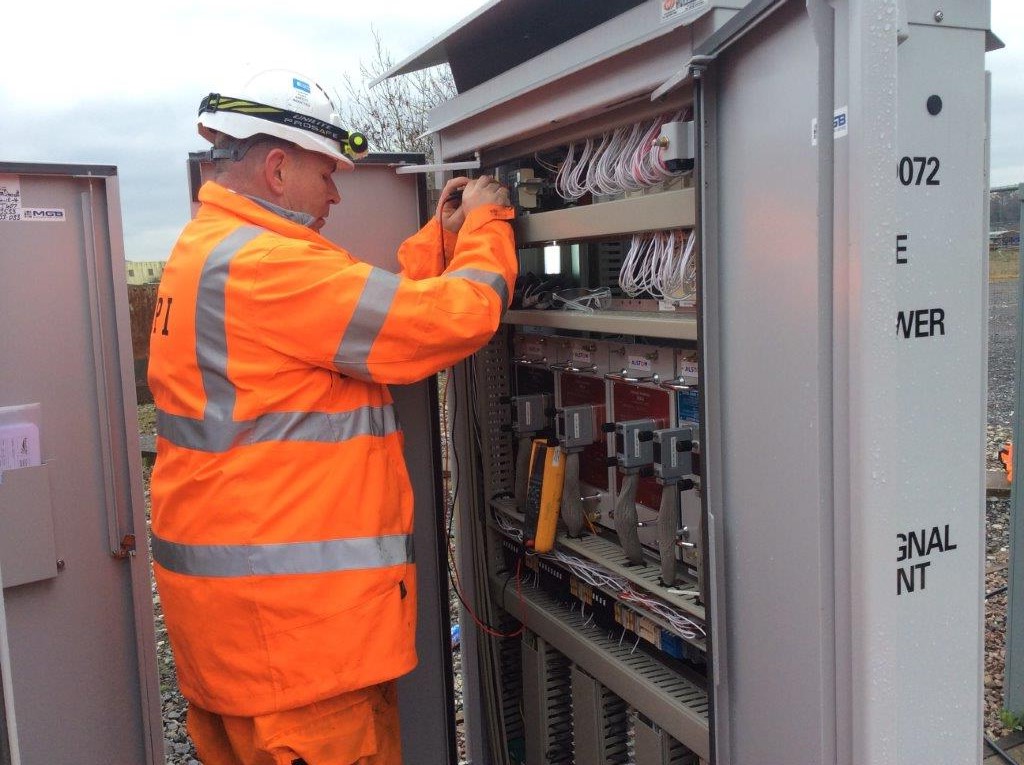
The work is part of our £120 million Havant re-signalling programme, the next phase of the wider Portsmouth Direct Upgrade.

The Havant Relock & Recontrol project, the main reason for the blockade, will replace ageing signalling and interlocking equipment in the Havant area and modernise the way the railway is controlled.

Control of the railway will move from Havant Area Signalling Centre to our Basingstoke Regional Operational Centre (ROC).

The work includes:
  • installing 61 axle counters (equipment that detects when trains enter and leave sections of track)
  • installing 23 automatic warning system (AWS) and nine train protection and warning system (TPWS) components, which provide drivers with warnings and help to keep the railway safe
  • refurbishing cable routes and installing new fibre and power cabling to provide the connections needed for the signalling system
  • installing new signalling equipment and associated infrastructure
  • carrying out testing and preparatory work for the wider re-signalling programme
  • carrying out track, third rail, switch, level crossing and other infrastructure maintenance while the railway is closed
 
Last edited by a moderator:
Sponsor Post - registered members do not see these adverts; click here to register, or click here to log in
R

RailUK Forums

satters

Member
Joined
25 Mar 2020
Messages
59
Location
Stourbridge
also that 20 years for electronics means obsolescence, whereas relay equipment will last many more decades, and mechanical even more still, yet there is always now the drive to use electronics despite the shortcomings in short life and failures
 

Swedenorer

Member
Joined
28 Sep 2025
Messages
314
Location
Hants
Thanks for the link and the confirmation of my suspicion - yes I have been clobbered by that unreliability quite a few times. Funnily enough I was told by a railway staff member when the project was in preparation that he thought it was a poor solution. But to only get 19 years out of it...
 

swt_passenger

Veteran Member
Joined
7 Apr 2010
Messages
34,296
Thanks for the link and the confirmation of my suspicion - yes I have been clobbered by that unreliability quite a few times. Funnily enough I was told by a railway staff member when the project was in preparation that he thought it was a poor solution. But to only get 19 years out of it...
They’ve still got a major ROC to fill of course, I wonder how that affects their decision making process…
 

MarkyT

Established Member
Joined
20 May 2012
Messages
7,586
Location
Torbay
There was a Railtrack initiative to broaden the signalling supplier base, which led to Siemens setting up new teams to customise their German Simis W equipment for British use.

The SIMIS architecture of that time was very cable-intensive, concentrating i/o in equipment rooms covering a large area, not unlike former remote relay interlockings.

This contrasts with the more typical modern UK approach, using distributed trackside functional modules (object controllers) in cabinets much closer to the trackside objects themselves. Experience from the Portsmouth scheme led to Siemens losing a major framework contract for further sites in the south east.

Siemens later regrouped and re-entered the UK market by purchasing the rail control business of Invensys, including former Westinghouse product lines (SSI and successors) and a couple of former BR signalling design offices.

== Doublepost prevention - post automatically merged: ==

They’ve still got a major ROC to fill of course, I wonder how that affects their decision making process…
It clearly means control will likely migrate there, but just having the space there waiting wouldn't have hastened the work, which is primarily to address performance and eliminate unusual equipment that is now difficult to support.

SIMIS W was first installed at Bournemouth, then around Portsmouth, but despite ambitious plans for further rollout, the technology was never used elsewhere.
 
Last edited by a moderator:

swt_passenger

Veteran Member
Joined
7 Apr 2010
Messages
34,296
It clearly means control will likely migrate there, but just having the space there waiting wouldn't have hastened the work, which is primarily to address performance and eliminate unusual equipment that is now difficult to support. SIMIS W was first installed at Bournemouth, then around Portsmouth, but despite ambitious plans for further rollout, the technology was never used elsewhere.
Is Bournemouth going to need early replacement too?
 

MarkyT

Established Member
Joined
20 May 2012
Messages
7,586
Location
Torbay
Is Bournemouth going to need early replacement too?
Likely yes, eventually, but I doubt the performance pressures are so great. It's a simpler layout, and presumably recovered parts from Portsmouth might become spares for Bournemouth.
 

Sun Chariot

Established Member
Joined
16 Mar 2009
Messages
6,687
Location
2 miles and 50 years away from the Longmoor Milita
Have just had a leaflet through the door announcing a five day line block Chi, Pfield, Pompey 26th - 30th October to replace aging signaling equipment
Thanks for the insight. We are just round the corner from Bedhampton station, yet no leaflet through our door. I'll get myself very familiar with RRB timings...
 
Last edited:

Swedenorer

Member
Joined
28 Sep 2025
Messages
314
Location
Hants
Bedhampton Crossing closing for the week too...

Given the time and cost over-runs of the 2007 scheme I wonder what the return on that investment was - if any.
 

MadMac

Established Member
Joined
13 Jun 2008
Messages
1,501
Location
Moorpark, CA
Siemens showed up at my L.A. office hawking their wares while the Portsmouth debacle was in full swing. They realised the game was up when I mentioned that I understood they were having some issues there…..
 

Bigfoot

Established Member
Joined
2 Dec 2013
Messages
1,424
The old equipment from Portsmouth being resignalled is going to be refurbished/reused in the Bournemouth area, spares are hard to come by/non existant currently.
 

Belperpete

Established Member
Joined
17 Aug 2018
Messages
3,657
There was a Railtrack initiative to broaden the signalling supplier base, which led to Siemens setting up new teams to customise their German Simis W equipment for British use.
Railtrack HQ decreed that SSI, the interlocking system that had been jointly developed by BR and it's two main UK suppliers, was a dead duck. They were not going to buy any more, it was too expensive. In future, they were only going to buy cheaper, off-the-peg overseas systems.

The big problem was that was not what their engineers wanted. Those on the Southern in particular were not happy at having two non-standard trial systems foisted on them. The result was that the suppliers were caught between a rock and a hard place. While Railtrack HQ wanted off the peg systems, their engineers were demanding that they be reverse-engineered to behave as much like SSI as possible. It was like buying a VW Polo, and reverse engineering it into a Rolls Royce - you will spend far more money and considerably more time than if you had just bought a Rolls Royce in the first place. And that is more or less what happened with these trial schemes, they went way over budget and over time while the systems were extensively re-engineered.

It also didn't help that Railtrack wanted the UK data structures developed from first principles, rather than copy from existing relay or SSI practice. They wanted a clean break from the bad old days of BR.

And when the schemes went way over budget, and didn't seem to be giving the savings hoped for, then Railtrack HQ lost interest. And with nobody in Railtrack pushing them, the schemes withered on the vine. The two systems that had been commissioned were got into a "usable" state, while the third (ebilock) was abandoned before it could be commissioned. There was no incentive to do any more.

I was working for Adtranz at the time, who were doing the ebilock pilot. I had worked on various overseas ebilock schemes, so knew the system. Ebilock used an architecture very similar to SSI, with distributed lineside object controllers. However, being more modern, the object controllers were a lot more sophisticated than their SSI equivalents. Both hardware and data design were a lot simpler and quicker, as the design tools were more sophisticated, using mainly templated designs and data. Construction too was quicker, as it used plug and play wiring assemblies, with almost no free wiring. The system showed a lot of potential. Our office in Stockholm could turn out ebilock schemes far faster than we could using UK technologies of the day.

However, the adaptation had gone way over budget and time, for the reasons already described. And their Southern Zone engineers didn't want another "Portsmouth" on their hands. So the plug was pulled.

The amount of manhours and money that had been expended for nothing doesn't bear thinking about.
 

Swedenorer

Member
Joined
28 Sep 2025
Messages
314
Location
Hants
And when the schemes went way over budget, and didn't seem to be giving the savings hoped for, then Railtrack HQ lost interest. And with nobody in Railtrack pushing them, the schemes withered on the vine. The two systems that had been commissioned were got into a "usable" state, while the third (ebilock) was abandoned before it could be commissioned. There was no incentive to do any more.

However, the adaptation had gone way over budget and time, for the reasons already described. And their Southern Zone engineers didn't want another "Portsmouth" on their hands. So the plug was pulled.

The amount of manhours and money that had been expended for nothing doesn't bear thinking about.
That's what always mystified me about the Havant Scheme anyway. It was sold with the usual claptrap about improved services, resilience etc etc. but to this outsider the only savings made seemed to be the running costs of one signal box and maybe a couple of staff. By that time the Direct was already down to 2 tph IIRC and there wwre no plans as far as I know to suddenly run increased services. Was the existing system life expired? And if so would a simple like for like replacement have been just as good?
 

MarkyT

Established Member
Joined
20 May 2012
Messages
7,586
Location
Torbay
That's what always mystified me about the Havant Scheme anyway. It was sold with the usual claptrap about improved services, resilience etc etc. but to this outsider the only savings made seemed to be the running costs of one signal box and maybe a couple of staff. By that time the Direct was already down to 2 tph IIRC and there wwre no plans as far as I know to suddenly run increased services. Was the existing system life expired? And if so would a simple like for like replacement have been just as good?
A 'prototype' or pilot' scheme for a new technology is something foisted on a project that needs to be done anyway by some means. As is always the case with renewals, the scheme would have been very comprehensively justified on age and condition grounds, and there may have been recurring reliability problems, or particular safety concerns relating to certain parts of the installations. A standard like-for-like replacement of the time would have been an SSI scheme, as being built now, I understand, using modern equivalents.
 

MarkyT

Established Member
Joined
20 May 2012
Messages
7,586
Location
Torbay
Railtrack HQ decreed that SSI, the interlocking system that had been jointly developed by BR and it's two main UK suppliers, was a dead duck. They were not going to buy any more, it was too expensive. In future, they were only going to buy cheaper, off-the-peg overseas systems.

The big problem was that was not what their engineers wanted. Those on the Southern in particular were not happy at having two non-standard trial systems foisted on them. The result was that the suppliers were caught between a rock and a hard place. While Railtrack HQ wanted off the peg systems, their engineers were demanding that they be reverse-engineered to behave as much like SSI as possible. It was like buying a VW Polo, and reverse engineering it into a Rolls Royce - you will spend far more money and considerably more time than if you had just bought a Rolls Royce in the first place. And that is more or less what happened with these trial schemes, they went way over budget and over time while the systems were extensively re-engineered.

It also didn't help that Railtrack wanted the UK data structures developed from first principles, rather than copy from existing relay or SSI practice. They wanted a clean break from the bad old days of BR.

And when the schemes went way over budget, and didn't seem to be giving the savings hoped for, then Railtrack HQ lost interest. And with nobody in Railtrack pushing them, the schemes withered on the vine. The two systems that had been commissioned were got into a "usable" state, while the third (ebilock) was abandoned before it could be commissioned. There was no incentive to do any more.

I was working for Adtranz at the time, who were doing the ebilock pilot. I had worked on various overseas ebilock schemes, so knew the system. Ebilock used an architecture very similar to SSI, with distributed lineside object controllers. However, being more modern, the object controllers were a lot more sophisticated than their SSI equivalents. Both hardware and data design were a lot simpler and quicker, as the design tools were more sophisticated, using mainly templated designs and data. Construction too was quicker, as it used plug and play wiring assemblies, with almost no free wiring. The system showed a lot of potential. Our office in Stockholm could turn out ebilock schemes far faster than we could using UK technologies of the day.

However, the adaptation had gone way over budget and time, for the reasons already described. And their Southern Zone engineers didn't want another "Portsmouth" on their hands. So the plug was pulled.

The amount of manhours and money that had been expended for nothing doesn't bear thinking about.
I agree the Ebilock platform was very promising, and in adapting the products to the UK market, ADtranz was in a much better position than Siemens at the time, with an established ex-BR project/drawing office organisation already under their control instead of the entirely new teams the German entrant had to build in the UK, yet the plug was pulled as you say.
 

Top