It could be the case that the Off-Peak Return (SVR) is the regulated fare in this instance, as that doesn't appear to be changing in September.I think the anytime day return from Reading to London Paddington is increasing in September as well (£60.70 to £63.80), so not sure how that fits with regulation, which presumably only allows one increase a year?

-
Our new ticketing site is now live! Using either this or the original site (both powered by TrainSplit) helps support the running of the forum with every ticket purchase! Find out more and ask any questions/give us feedback in this thread!
You are using an out of date browser. It may not display this or other websites correctly.
You should upgrade or use an alternative browser.
You should upgrade or use an alternative browser.
GWR fare increases
- Thread starter mickey
- Start date
- Status
- Not open for further replies.
Sponsor Post - registered members do not see these adverts; click here to register, or click here to log in
R
RailUK Forums
The DfT released a list of Regulated Fares back in 2012 and I doubt it has changed much since then.

 www.whatdotheyknow.com
,
www.whatdotheyknow.com
,
Taking a quick look, if I'm reading it correctly, for Maidenhead to London Terminals the Anytime Single and Anytime Day Return appear to be regulated.
From Reading it's the Off Peak Return and Season tickets that are regulated
This would explain why the Anytime fares from Maidenhead and the Off Peak Return from Reading are not changing. I've not checked season ticket prices from Reading but they shouldn't be changing either.
Regulated Flows - a Freedom of Information request to Department for Transport
I would like to request a copy of the most up to date list of all regulated fares flows for the UK rail network. I would like included both those flows regulated as commuter fares and those flows designated as the "regulated fare", for which there should be one for every journey combination...
Taking a quick look, if I'm reading it correctly, for Maidenhead to London Terminals the Anytime Single and Anytime Day Return appear to be regulated.
From Reading it's the Off Peak Return and Season tickets that are regulated
This would explain why the Anytime fares from Maidenhead and the Off Peak Return from Reading are not changing. I've not checked season ticket prices from Reading but they shouldn't be changing either.

redreni
Established Member
Reading is in the Network area but also an important part of the former Intercity network. I'm pretty sure the station was run by the Intercity sector in the BR days, and by FGW on privatisation. Whether that would help explain why the off-peak return rather than the Anytime return is regulated (if that is the case), I don't know? Anyone commuting from Reading to London would have used Intercity services rather than Network SouthEast, though, so there's some logic there?It could be the case that the Off-Peak Return (SVR) is the regulated fare in this instance, as that doesn't appear to be changing in September.
But even under full-on franchise-era privatisation, the government knew that by preventing TOCs raising fares as much as they might have wanted to, it either decreased the amount it could charge bidders for the franchise when it next went out to tender, or increased the amount of subsidy it would need to offer to attract bids. The government did so anyway. Unless I'm missing something obvious, there's nothing about the ownership model that fundamentally changes the need for government to strike a balance between operational subsidy and fares revenue?Fares regulation is a myth now, as should be expected when the "regulator" is also the recipient of all fares revenue.
Isn't the more likely explanation for the emerging consensus that fares regulation is no longer a thing simply that Hendy has a high level understanding of how and when the regulated fares were set and of how daft the fares structure is, thinks it's stupid and wants it changed?
As far as I'm concerned the government has always been right to limit fares increases and should continue to do so, for precisely the same reasons it long has. If it doesn't, people will object. They will try to look as though they're not listening and the increases might as well just be accepted as inevitable, but for as long as this remains a democracy (so at least another year or two), it's not inevitable. It does need concerted and ideally organised efforts to oppose unfair fares, though.
There's also the 'via Staines' fares to consider as well, I've not checked but suspect the Anytime Singles/Returns might be regulated.Reading is in the Network area but also an important part of the former Intercity network. I'm pretty sure the station was run by the Intercity sector in the BR days, and by FGW on privatisation. Whether that would help explain why the off-peak return rather than the Anytime return is regulated (if that is the case), I don't know? Anyone commuting from Reading to London would have used Intercity services rather than Network SouthEast, though, so there's some logic there?
Thames Trains, rather than Great Western, was the fare better prior to the merger of the franchises.Reading is in the Network area but also an important part of the former Intercity network. I'm pretty sure the station was run by the Intercity sector in the BR days, and by FGW on privatisation. Whether that would help explain why the off-peak return rather than the Anytime return is regulated (if that is the case), I don't know?
In 2003, the fares from Reading to Paddington were:
Standard Day Return £21.70
Network Awaybreak Return £16.80
Cheap Day Return £10.90
Seven Day Season £66.60
I suspect at some point the Regulated fare has been switched, but there will also have been distortion from the 'fares basket' era.
Yes, but that doesn't mean fares will be suppressed. GBR will have financial targets within its settlement to deliver revenue, and will have to agree that with government. The government will give overall direction but if GBR feels that a particular flow can yield more revenue then it will target that one for increases. The government can't set individual fares, or sensibly restrict GBR's ability to apply flexibility in where it increases fares.Unless I'm missing something obvious, there's nothing about the ownership model that fundamentally changes the need for government to strike a balance between operational subsidy and fares revenue?
The GBR consultation said:
https://www.gov.uk/government/consu...britains-future#fares-ticketing-and-retailing
Legislative changes will enable and empower GBR to deliver industry-wide modernisation and reform of the complex and fragmented fares landscape inherited from privatisation, where even minor changes meant securing agreement across multiple train operators with their own commercial interests. This will enable GBR to simplify the ticketing system and make it easy for passengers to find the right fare. While the intent of this legislation is to enable GBR to deliver these benefits, the Secretary of State will also retain specific oversight over the affordability of the railway – as set out below.
Last edited:

Kite159
Veteran Member
No doubt GBR will follow in the lead of TfW and increase the off-peak tickets so they don't offer much saving (10p) over the anytime tickets before dropping them in the name of keeping things nice and simples.
No confusing restrictions on what times you can use said ticket, they will spin it as
No confusing restrictions on what times you can use said ticket, they will spin it as

There is a long way to go before that happens, given the anytime day return from Reading to London is more than twice as expensive as the off-peak day return. It also isn't how Project Oval is set up.No doubt GBR will follow in the lead of TfW and increase the off-peak tickets so they don't offer much saving (10p) over the anytime tickets before dropping them in the name of keeping things nice and simples.
No confusing restrictions on what times you can use said ticket, they will spin it as
However, given Project Oval and single leg pricing, the difference between the off-peak day return and off-peak return does look like a tempting target for alignment for the fare setter.
didcotdean
Member
- Joined
- 25 Jun 2013
- Messages
- 169
After this round, for Didcot to Paddington there is only 10p difference between the off-peak day return and off-peak return.

How does that work for local flows without an Off-Peak Return? Even TfL - often cited as a bastion of simple ticketing - provide an off-peak discount. Surely the intention cannot be to bring CDRs up to the cost of the SDR for local flows?However, given Project Oval and single leg pricing, the difference between the off-peak day return and off-peak return does look like a tempting target for alignment for the fare setter.
It is notable that these changes affect a number of flows where people are unlikely to be using GWR, because they involve travel to/from stations between Slough and Paddington which GWR only serve on their handful of overnight Reading-London stoppers. There is a strong case for saying that TfL should gain control of such fares.
That is interesting….It is notable that these changes affect a number of flows where people are unlikely to be using GWR, because they involve travel to/from stations between Slough and Paddington which GWR only serve on their handful of overnight Reading-London stoppers. There is a strong case for saying that TfL should gain control of such fares.
Has GWR increased these fares as a way of raising income with passengers thinking it’s TfL’s fault because TfL provide the majority of trains? Although I suppose that given the service is mostly operated by TfL they will get most of the fares anyway.
Or has this been initiated by TfL and they will just blame GWR if there are complaints? We know TfL are strapped for cash and u see Government orders to raise more revenue so is this a sneaky way of them doing it without increasing fares within London?
It feels more like GWR just haven't thought particularly hard about the extent of their changes and applied them on a blanket basis to all Thames Valley fares (unless the increase is wider than this?).That is interesting….
Has GWR increased these fares as a way of raising income with passengers thinking it’s TfL’s fault because TfL provide the majority of trains? Although I suppose that given the service is mostly operated by TfL they will get most of the fares anyway.
On the other hand, perhaps I'm not giving them enough credit. It's possible they did consider it, but decided to increase the fares across the board anyway so as to avoid creating new splitting opportunities (regardless of whether those would involve travelling on GWR).
I would be very surprised, but I suspect some judicious FoI requests would indicate it one way or the other.Or has this been initiated by TfL and they will just blame GWR if there are complaints? We know TfL are strapped for cash and u see Government orders to raise more revenue so is this a sneaky way of them doing it without increasing fares within London?
== Doublepost prevention - post automatically merged: ==
I have written to my MP. Let's see what they say.
Last edited:
hb1
New Member
Over the weekend, the price of an anytime single from Pangbourne to London Paddington (for an anytime single) has increased from £32.10 to £35.20. I cannot locate any information online about this near 10% fare hike. Can anyone explain? Thank you.
An unwelcome surprise, but here is no requirement to publicise fare increases in advance, which for unregulated fares are generally implemented at three reviews in March, May or September. In practice, these fares have been in the system for the last four weeks.Over the weekend, the price of an anytime single from Pangbourne to London Paddington (for an anytime single) has increased from £32.10 to £35.20. I cannot locate any information online about this near 10% fare hike. Can anyone explain? Thank you.
DfT / GWR want to increase revenue and have therefore applied increases to unregulated fares this September on top of other increases over the last two years. The GWR operation is saddled with the high cost of the class 800 fleet.
See https://www.railforums.co.uk/threads/gwr-fare-increases.287542/
I think it has been established in previous threads that on these flows, it is the off-peak return which is the regulated fare, rather than the more obvious anytime ones.
Last edited:
I also wrote to my MP about the changes, and they contacted both GWR and Lord Hendy, however without much success. It was confirmed that this is a measure to reduce their subsidy. There were no details on why this specific area has been targeted, except perhaps it’s in the Network Railcard area. Lord Hendys reply was in my opinion mostly waffle on GBR fare changes. See statements below.
“GWR” said:Under the terms of our National Rail Contract and Annual Business Plan we are tasked with reducing the levels of taxpayers subsidy required to keep the railway operational, and as a result maximise revenue and act in a good and efficient manner.
The absolute fare levels that we set are intended to balance the needs of the customer and the taxpayer to ensure a fair split of the burden of the railway’s operation between these two. GWR’s operations are currently heavily subsidised by the taxpayer, with all revenue from ticket sales returned to the Government.
Anytime, Off-Peak and Super Off Peak fares are mostly regulated by the Department for Transport, and Government sets the fares increase (which for March 2025 was 4.6% as set by the Chancellor). Fares outside of this are managed by the relevant train operator.
You are right that the fares in the Thames Valley have increased; we implemented changes in September of last year and again this June as part of our subsidy reduction efforts. While percentage increases differ slightly by departure point, I can confirm our fares align with those charged by comparable operators (including publicly-owned services) for similar distance journeys to London.
It's worth noting that these tickets qualify for Network Railcard discounts (subject to time limitations), offering an additional third off standard prices, though your constituent may already be taking advantage of this benefit.
“Lord Hendy” said:I understand your constituent’s concerns surrounding the rail fares system, the confusing array of fares, discounts and ticket types and the impact this has on passengers. This Government has set out its ambition to simplify the fares and ticketing system and drive innovation across the network.
We are overhauling the fares and ticketing system to make it easier for passengers to trust that they are buying the right ticket and getting the best fare. With the move to Great British Railways (GBR) passengers will be able to receive a more consistent offer across the network. We need to balance affordability for both passengers and taxpayers as we reform fares and deliver GBR, ensuring everyone gets a fair deal.
As you may be aware, some rail fares are regulated to cap the percentage increase in fare prices each year. Beyond these fares, train operators have flexibility in setting the prices of their fares. Regulated fares make up around 45 per cent of rail fares and include commuter fares, such as season tickets and shorter-distance peak returns, alongside longer-distance off-peak
returns. Where there are no return fares, the single fare is regulated.
We have reached out to Great Western Railway (GWR) about recent fares increases. While we cannot identify the specific increase that your constituent has mentioned, GWR has confirmed that that it has increase the cost of off-peak day returns in the Thames Valley area in June. These fares are not regulated by the Government and were increased as GWR look to reduce the
level of Government subsidy. The percentage increase varies slightly depending on journey origin, but I can confirm that these fares remain comparable to those offered by other operators for destinations of a similar distance to London.
Post-pandemic, the amount of taxpayer subsidy provided to the railway industry has increased from under a quarter in 2018/19 to almost half of total income in 2023/24. To secure the long-term viability of the railway, it is essential that rail fares balance the cost to passengers against the cost to taxpayers.

Novacaster
New Member
Hi I travel from Tiverton parkway to London Paddington every Friday (usually the cheapest day) and always book well ahead to get best prices but just noticed that the advance ticket prices in December have shot up. I bought a one way to Paddington on the 5 Dec for £44 but now the same ticket on the 12th Dec is £149.50 when I thought that this was a mistake and maybe tickets had not been released yet so queried this with customer services. They said that tickets had been released but there was no advanced tickets available. I have only been travelling to London for the last 8 months is it usual for GWR to suddenly hike their advanced ticket prices by 200% over December

hexagon789
Veteran Member
It's probably connected to the engineering work that weekend, with trains between London Paddington and Exeter/Plymouth/Penzance being diverted via Bristol and reduced in frequency.Hi I travel from Tiverton parkway to London Paddington every Friday (usually the cheapest day) and always book well ahead to get best prices but just noticed that the advance ticket prices in December have shot up. I bought a one way to Paddington on the 5 Dec for £44 but now the same ticket on the 12th Dec is £149.50 when I thought that this was a mistake and maybe tickets had not been released yet so queried this with customer services. They said that tickets had been released but there was no advanced tickets available. I have only been travelling to London for the last 8 months is it usual for GWR to suddenly hike their advanced ticket prices by 200% over December
Either the timetable hasn't been fully confirmed, hence no Advances, or they are wanting to cap demand on fewer and slower trains by not offering cheaper tickets.
Novacaster
New Member
Thanks Hexagon I hope you are correct will watch the prices over the next few days to see if anything changes.It's probably connected to the engineering work that weekend, with trains between London Paddington and Exeter/Plymouth/Penzance being diverted via Bristol and reduced in frequency.
Either the timetable hasn't been fully confirmed, hence no Advances, or they are wanting to cap demand on fewer and slower trains by not offering cheaper tickets.
hexagon789
Veteran Member
Fingers crossed for youThanks Hexagon I hope you are correct will watch the prices over the next few days to see if anything changes.
Is it actually true to say that fares from Thames Valley stations "align with those charged by comparable operators (including publicly-owned services) for similar distance journeys to London"? I'm not sure that is correct when it comes to anytime fares on the route.
However, what is clear is that "To secure the long-term viability of the railway, it is essential that rail fares balance the cost to passengers against the cost to taxpayers." is a sign that further real terms fare increases are inevitable.
However, what is clear is that "To secure the long-term viability of the railway, it is essential that rail fares balance the cost to passengers against the cost to taxpayers." is a sign that further real terms fare increases are inevitable.
I think they're referring to Off-Peak fares, where I would admit that they are likely to be in the same ballpark. It's a real cop-out though - if they think the fares are too low and are being 'corrected' to the market rate, they should have the courage to say it.Is it actually true to say that fares from Thames Valley stations "align with those charged by comparable operators (including publicly-owned services) for similar distance journeys to London"? I'm not sure that is correct when it comes to anytime fares on the route.
This deeply disingenuous line is wheeled out to justify every fare increase. It's utterly meaningless, you could use it to try and justify a 100% increase!However, what is clear is that "To secure the long-term viability of the railway, it is essential that rail fares balance the cost to passengers against the cost to taxpayers." is a sign that further real terms fare increases are inevitable.
It means that as costs rise, so the fares will also rise. And as government policy is to reduce rather than increase subsidy, it's entirely unsurprising.This deeply disingenuous line is wheeled out to justify every fare increase. It's utterly meaningless, you could use it to try and justify a 100% increase!
In terms of the off-peak fares being discussed, sadly yes it is. Specifically for the Maidenhead-Slough corridor, the comparison is with Chiltern from Wycombe and Beaconsfield (many people driving to meet the train can use either, and in disruption it’s often the official advice given). The fact that Chiltern is horrifically overexpensive is largely irrelevant. Similarly with Bracknell on the southern rather than northern side, albeit there’s a cheaper fare there after 4pm.Is it actually true to say that fares from Thames Valley stations "align with those charged by comparable operators (including publicly-owned services) for similar distance journeys to London"? I'm not sure that is correct when it comes to anytime fares on the route.
Sadly from GWR’s reply above the policy of fleecing Thames Valley customers looks set to continue into next year. If as also suggested it’s to offset the costs of IETs it’s even more ridiculous as they don’t even benefit these stations!
Last edited:
redreni
Established Member
Thanks for asking the question. What a pathetic answer!I also wrote to my MP about the changes, and they contacted both GWR and Lord Hendy, however without much success. It was confirmed that this is a measure to reduce their subsidy. There were no details on why this specific area has been targeted, except perhaps it’s in the Network Railcard area. Lord Hendys reply was in my opinion mostly waffle on GBR fare changes. See statements below.
When one contemplates the value for money of subsidising public transport, the proportion of operating costs that the fares cover really is neither here nor there. It's the amount of subsidy compared to the wider economic and social benefit.
The corollary to not accounting for externalities like pollution, injury and death when calculating the cost of having people drive everywhere, is not accounting for the amelioration of these externalities if you subsidise public transport and then people choose to use it rather than drive or take an Uber.
We need to rebalance fares vs subsidies, alright. The fares are much too high!
Elizabeth Line and local GWR services in the Thames Valley are, in my experience, generally very lightly loaded a lot of the time. There's plenty of scope to get more people onto these trains. Jacking the fares up by between 11 and 18 per cent in a single year won't do that.
I even gave them 4 examples with figures and links."while we cannot identify the specific increase..." - really? Er, how hard can it be?
A non-GWR specific thread on fares increases from 7th September can be found here:
 www.railforums.co.uk
Fares Increases From 7th September 2025
Split from https://www.railforums.co.uk/threads/gwr-fare-increases.287542/page-3#post-7460501 Not GWR, but I don't see this mentioned elsewhere - Great Northern have raised the price of their weekend Super Off Peak tickets, including travelcards, by about 4% from yesterday. For Ely, that's an...
www.railforums.co.uk

CarltonA
Member
I see that the Slough - Reading off-peak return fare has now disappeared from the TVMs. Anytime railcard discounted return is now 9.05.
Only 30p difference in the peak and off-peak contactless singles as well.I see that the Slough - Reading off-peak return fare has now disappeared from the TVMs. Anytime railcard discounted return is now 9.05.
Now being covered over on the BBC:
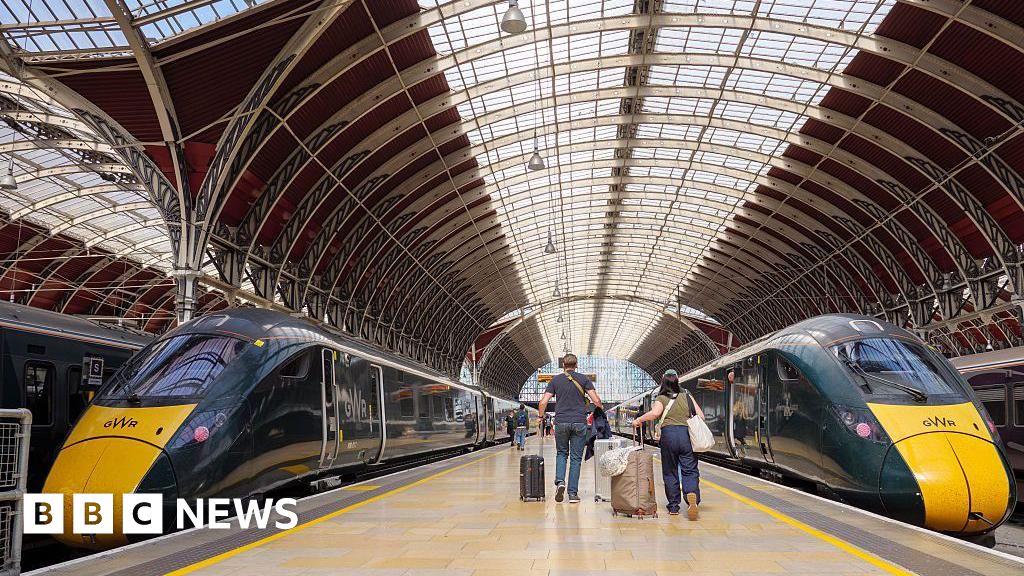
 www.bbc.co.uk
GWR train fares rise nearly 10% for Thames Valley commuters - BBC News
The cost of an anytime single ticket to Paddington has now risen by just under 15% since January.
www.bbc.co.uk
A nearly 10% increase in rail fares for some services in the Thames Valley has been described as "crazy" by commuters.
Some Great Western Railway (GWR) ticket prices rose from 8 September, including for travellers from Newbury, Reading and Oxford.
Anytime single tickets to London Paddington were among those to increase by 9.9%, while other fares from Thames Valley stations rose by 5%.
GWR said the rises affected fewer than 4% of fares they set, and were intended to "strike the right balance between affordable public transport and responsible stewardship of public funds".
- Status
- Not open for further replies.