Deepgreen
Established Member
Couldn't find this anywhere so if there is a thread already, could the moderators please merge?
This is on the BBC news site today: https://www.bbc.co.uk/news/articles/c20ej7rkj3ko
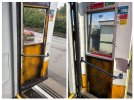
GWR have been fined £1m in connection with the death of a woman who leaned out of a droplight and was killed when hitting a tree branch.
While I accept that a breach occurred and that the death was a tragedy, it does make me wonder how far the railway (and other bodies) may be expected to go to protect people from themselves. The story goes on to report that the woman was "intoxicated" when she boarded the train. So, in order to protect drunk people in public places, where does the process end? Can there be any limit to the extent to which personal responsibility is eroded? I pose these questions as a prompt for discussion. In this case, GWR had not yet implemented a requirement to increase protection, but what constitues a reasonable timescale when immediate compliance would presumably require stock withdrawal and service cuts, thus penalising passengers?
This is on the BBC news site today: https://www.bbc.co.uk/news/articles/c20ej7rkj3ko
GWR have been fined £1m in connection with the death of a woman who leaned out of a droplight and was killed when hitting a tree branch.
A major rail operator has been fined £1m for breaching health and safety law when a young woman suffered a fatal injury after placing her head outside a droplight window.
Bethan Roper, 28, was killed on a Great Western Railway (GWR) train near Twerton in Bath on 1 December 2018 when her head struck a tree branch.
Regulator the Office of Rail and Road (ORR) prosecuted GWR on the grounds it was aware of the issue of droplight windows, and had not yet implemented steps identified in a risk assessment undertaken two months before Ms Roper's death.
GWR was fined and also ordered to pay £78,000 after pleading guilty to two counts of breaching health and safety law.
While I accept that a breach occurred and that the death was a tragedy, it does make me wonder how far the railway (and other bodies) may be expected to go to protect people from themselves. The story goes on to report that the woman was "intoxicated" when she boarded the train. So, in order to protect drunk people in public places, where does the process end? Can there be any limit to the extent to which personal responsibility is eroded? I pose these questions as a prompt for discussion. In this case, GWR had not yet implemented a requirement to increase protection, but what constitues a reasonable timescale when immediate compliance would presumably require stock withdrawal and service cuts, thus penalising passengers?