
I'm not knowledgeable about timings, while this make timings shorter or longer? I don't know whether 387s are faster or slower than 365s.Up until this coming timetable 387s have always been timed with 365 timings. This is changing this month, as far as I know 387s and 700s are now being timed the same. It will be interesting to see if this affects performance.

-
Our new ticketing site is now live! Using either this or the original site (both powered by TrainSplit) helps support the running of the forum with every ticket purchase! Find out more and ask any questions/give us feedback in this thread!
You are using an out of date browser. It may not display this or other websites correctly.
You should upgrade or use an alternative browser.
You should upgrade or use an alternative browser.
Great Northern Fleet - 379s introduction
- Thread starter Mollman
- Start date
Sponsor Post - registered members do not see these adverts; click here to register, or click here to log in
R
RailUK Forums

bramling
Veteran Member
I'm not knowledgeable about timings, while this make timings shorter or longer? I don't know whether 387s are faster or slower than 365s.
In theory, should be slightly faster.
However, just picking a random schedule, 2109 from King's Cross, here is the timings from King's Cross to the first station stop at Letchworth
365 2109 to 2136 with 1H performance allowance (27 minutes)
387 2109 to 2135H with 1 performance allowance (26H minutes)
However, if we take the performance allowance out, it becomes
365 - 25H
387 - 25H
I'll have a more thorough look tomorrow when I have more time!
As regards performance more generally, departing King's Cross there wasn't much difference between a 365 and 387 until about Alexandra Palace. From there a 387 would reach 100 mph by New Southgate, whereas a 365 would take until Oakleigh Park or New Barnet depending on how the neutral section at Wood Green Feeder Station was handled by the driver. If the 365s were allowed to coast for longer this could add quite a bit extra to when 100 mph was reached. 387s took longer to power up again after the neutral section, but would regain the lost speed quicker.
Watching 365 performance was always interesting as compared to 387 or 700 it felt they were working that little bit harder. 317/321 were even more interesting, as they *really* had to work hard on this section, and with much more variability between different units - an average 317 pair would reach 100 by about Hatfield, whereas a bad pair might not achieve it at all.
Last edited:
I don't pay any attention to class 387/700 performance but I used to pay a lot of attention (and have a lot of data) on performance of classes 312/317/321/365, also the diesel loco classes that worked the Peterborough parlies in their later diesel hauled days.As regards performance more generally, departing King's Cross there wasn't much difference between a 365 and 387 until about Alexandra Palace. From there a 387 would reach 100 mph by New Southgate, whereas a 365 would take until Oakleigh Park or New Barnet depending on how the neutral section at Wood Green Feeder Station was handled by the driver. If the 365s were allowed to coast for longer this could add quite a bit extra to when 100 mph was reached. 387s took longer to power up again after the neutral section, but would regain the lost speed quicker.
Watching 365 performance was always interesting as compared to 387 or 700 it felt they were working that little bit harder. 317/321 were even more interesting, as they *really* had to work hard on this section, and with much more variability between different units - an average 317 pair would reach 100 by about Hatfield, whereas a bad pair might not achieve it at all.
The climb from Wood Green to Potters Bar is a near perfect place to compare traction performance because it is nearly 8 miles at a near consistent gradient of 1/200. Furthermore the initial departure from Kings Cross means that most traction reaches Wood Green doing a speed not far from the speed that it will balance out at on a 1/200 gradient.
In my experience the balancing speed would be about 80-82 mph for class 312, 83-85 mph for class 321, 87-90 mph for class 317 and 97-100 mph for class 365. It is also worth pointing out that, other things being equal, 12 cars will be faster than 8 cars which will be faster than 4 cars.
I agree that driving technique through neutral sections does make a difference. Two other important factors are tunnels and other traffic. In the two tunnels near New Southgate passing a southbound train in the tunnel reduces speed, in the two tunnels near Hadley Wood catching up with a slow line train in the tunnel reduces speed. In my experience it was usually better to follow an HST than a class 91 because the HST did not need to share the traction current.
Regarding neutral sections the most significant is just south of Welwyn Garden City because it is in a dip where the line crosses the River Lea, and the train is already travelling at line speed after descending from Potters Bar. Good technique there makes a real difference to speed coming out of the neutral section and hence the climb up to the Welwyn tunnels.
Finally, I'd agree that the class 317s were the most interesting, especially when they were subbing for unavailable class 365s, but also on the few GN peak time fast trains where they were the booked traction. I regard them as one of the best kept secrets of early 21st century railway operation!
Last edited:

D365
Veteran Member
- Joined
- 29 Jun 2012
- Messages
- 13,195
Or to keep Porterbrook on their toes?It’s almost certain to be targeting the 379s.

43096
On Moderation
- Joined
- 23 Nov 2015
- Messages
- 18,869
As already stated Porterbrook have a lease for the 387s through to 2028.Or to keep Porterbrook on their toes?

Fincra5
Established Member
- Joined
- 6 Jun 2009
- Messages
- 2,636
Just when the GN was getting more colourfulInternal email says the 3 ex GWR 387s are getting external relivery
== Doublepost prevention - post automatically merged: ==
387s aren't allowed above 100mph on the ECML.Interesting that the tender states ‘100MPH’ when the 387s are 110MPH so I’d imagine this would not be able to keep GN timings? or is this negligible.
I couldn’t help thinking this tender also fits the Renatus 321s.. minus the AC/DC part.
It’s almost certain to be targeting the 379s.

XCTurbostar
Established Member
- Joined
- 13 Sep 2014
- Messages
- 2,574
Green with White stickers!Internal email says the 3 ex GWR 387s are getting external relivery
Many thanks.Just when the GN was getting more colourful
== Doublepost prevention - post automatically merged: ==
387s aren't allowed above 100mph on the ECML.

Sutton in Ant
Member
I have read on the Southern website about the coastaway service which is going to have consisted on 377s and 387s. I think now that Great Northern will want to target the 379s and those 387s will be coming to Southern Railway to do the London to Coast services and the coast services as well and the 377s will mainly do the metro routes.
bramling
Veteran Member
I have read on the Southern website about the coastaway service which is going to have consisted on 377s and 387s. I think now that Great Northern will want to target the 379s and those 387s will be coming to Southern Railway to do the London to Coast services and the coast services as well and the 377s will mainly do the metro routes.
The problem with the 379s is the numbers don’t quite match up. It would have worked better pre Covid as there could have been a straight swap for the 387/1s with the 365s doing the rest. Now the GN Electrostar fleet seems to be a minimum of 35 units, so taking on the 379s leaves an awkward mixed fleet. It isn’t a massive issue, but it’s still messy.
SolomonSouth
Member
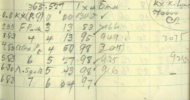
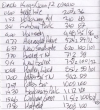
The RPS archives suggest the opposite - back in the 2000's a 365 reached Finsbury Park in 3 minutes 13 seconds, and Alexandra Palace in 4 minutes 50 seconds. By AP, it was doing about 98-99 mph (accounting for subjectivity of interpretation).In theory, should be slightly faster.
However, just picking a random schedule, 2109 from King's Cross, here is the timings from King's Cross to the first station stop at Letchworth
365 2109 to 2136 with 1H performance allowance (27 minutes)
387 2109 to 2135H with 1 performance allowance (26H minutes)
However, if we take the performance allowance out, it becomes
365 - 25H
387 - 25H
I'll have a more thorough look tomorrow when I have more time!
As regards performance more generally, departing King's Cross there wasn't much difference between a 365 and 387 until about Alexandra Palace. From there a 387 would reach 100 mph by New Southgate, whereas a 365 would take until Oakleigh Park or New Barnet depending on how the neutral section at Wood Green Feeder Station was handled by the driver. If the 365s were allowed to coast for longer this could add quite a bit extra to when 100 mph was reached. 387s took longer to power up again after the neutral section, but would regain the lost speed quicker.
Watching 365 performance was always interesting as compared to 387 or 700 it felt they were working that little bit harder. 317/321 were even more interesting, as they *really* had to work hard on this section, and with much more variability between different units - an average 317 pair would reach 100 by about Hatfield, whereas a bad pair might not achieve it at all.
A 387 took 3 minutes 49 to reach Finsbury Park and 5 minutes 24 to reach Alexandra Palace. By AP, it was doing about 96-97 mph (accounting for subjectivity of interpretation).
For reference, a 317 was doing 90 by Alexandra Palace. Don't know how the 700 compares. If you know, let me know.
Maybe the 365s faded with age, but it is a minimal performance difference either way - I don't see the 387s getting any significant time reduction unless they get cleared for 110mph (which of course the 365s could not do and were 100mph units).
Attachments
Fincra5
Established Member
- Joined
- 6 Jun 2009
- Messages
- 2,636
Simples you keep the 387/3s.The problem with the 379s is the numbers don’t quite match up. It would have worked better pre Covid as there could have been a straight swap for the 387/1s with the 365s doing the rest. Now the GN Electrostar fleet seems to be a minimum of 35 units, so taking on the 379s leaves an awkward mixed fleet. It isn’t a massive issue, but it’s still messy.
The electrostar "Arura" programme is to make everything compatible. Finally.

Halish Railway
Established Member
One thing about possibly swapping 387s for 379 is that Great Northern might be able to increase revenue by drumming up demand for first class tickets given that the 379s have a very good 2+1 seated first class section. If they're able to get a cheaper lease for 379s than what the 387s are currently on whilst increasing ticket revenue then it may prove to be a good financial move.
bramling
Veteran Member
The RPS archives suggest the opposite - back in the 2000's a 365 reached Finsbury Park in 3 minutes 13 seconds, and Alexandra Palace in 4 minutes 50 seconds. By AP, it was doing about 98-99 mph (accounting for subjectivity of interpretation).
I have to inject some scepticism into this, as the line speed is 95 mph until the north end of Wood Green Tunnel. It may well have been the case that 365s could reach 100 mph by Alexandra Palace with a liberal interpretation of speed limits, however this practice has been pretty much non existent for some years now, and certainly throughout the time the 387s have been around.
So for a fair comparison we can only really make a direct comparison in the small number of years when the 365 and 387 fleets worked side-by-side. Certainly in that time I never clocked a 365 at more than 95 by Alexandra Palace.
This is where the (unfortunately-sited) neutral section comes into play. What would tend to happen is full power would be selected at the north end of Wood Green Tunnel. If the driver had managed to hold the train at 95 mph then this would result in 100 mph being achieved sooner. If speed dropped to 90 mph then 100 would take longer. It was always quite exciting to watch the GPS and see the speed creeping up, and a result if 100 mph was achieved by Oakleigh Park.
Anecdotally, I believe the 365s did fade a bit over time. Certainly those who drove them have alluded to this. Though I found little variability (except when motors were out). Certainly minimal variability between units compared to 317/321, where a bad unit really felt like it was running in slo-mo!
A 387 took 3 minutes 49 to reach Finsbury Park and 5 minutes 24 to reach Alexandra Palace. By AP, it was doing about 96-97 mph (accounting for subjectivity of interpretation).
For reference, a 317 was doing 90 by Alexandra Palace. Don't know how the 700 compares. If you know, let me know.
In theory I believe a 700 should have the edge over a 387, though in practice there doesn’t seem much if anything between them.
Maybe the 365s faded with age, but it is a minimal performance difference either way - I don't see the 387s getting any significant time reduction unless they get cleared for 110mph (which of course the 365s could not do and were 100mph units).
It may well be the case that any performance benefit is kept for recovery.
There are 2 significant factors here that invalidate this comparison.The RPS archives suggest the opposite - back in the 2000's a 365 reached Finsbury Park in 3 minutes 13 seconds, and Alexandra Palace in 4 minutes 50 seconds. By AP, it was doing about 98-99 mph (accounting for subjectivity of interpretation).
A 387 took 3 minutes 49 to reach Finsbury Park and 5 minutes 24 to reach Alexandra Palace. By AP, it was doing about 96-97 mph (accounting for subjectivity of interpretation).
One is departure platform. The class 365s departed from platform 9, with a start close to Gasworks Tunnel, and a run straight out onto the fast line via B road. For EMU performance platform 9 was like have pole position on the grid. On the other hand the class 387s started from platform 2, further away from Gasworks Tunnel and necessitating use of A road through Gasworks Tunnel before getting onto the down fast.
The other is running brake tests. Possibly these weren't a thing for the class 365s. I'd find it hard to believe that Finsbury Park passing time if it included a properly conducted running brake test.
Running brake tests are a requirement for all trains. It doesn’t take that much out of the time as you only need to reduce speed by 10mph before accelerating againThe other is running brake tests. Possibly these weren't a thing for the class 365s. I'd find it hard to believe that Finsbury Park passing time if it included a properly conducted running brake test.
They are now, but they weren't when the class 365s were new. So if the class 365 log is from a long time ago (and we are not given a date) it would not have included a running brake test. A quick search hasn't helped me to find when they became mandatory.Running brake tests are a requirement for all trains.
But the impact on overall journey time can vary significantly between departure platforms, which can have a significant impact on where the running brake test is conducted. This happens at both Kings Cross and Cambridge. Going out of Kings Cross it helps not to have to do the running brake test on Holloway Bank, which on the 1977-2020 layout is what happened with A road departures.It doesn’t take that much out of the time as you only need to reduce speed by 10mph before accelerating again
I can assure you that running brake tests were mandatory in the rule book but probably weren’t enforced by the management team as rigorously back then.They are now, but they weren't when the class 365s were new. So if the class 365 log is from a long time ago (and we are not given a date) it would not have included a running brake test. A quick search hasn't helped me to find when they became mandatory.
But the impact on overall journey time can vary significantly between departure platforms, which can have a significant impact on where the running brake test is conducted. This happens at both Kings Cross and Cambridge. Going out of Kings Cross it helps not to have to do the running brake test on Holloway Bank, which on the 1977-2020 layout is what happened with A road departures.
There is also no specific place to do a running brake test, only asap after departure. I’ve known Drivers do them at 15 mph in Gasworks Tunnel
What definitely changed was trains being fitted with data recorders. I've traced the start of that to 2002. In the early days of class 365s driver performance was not recorded.I can assure you that running brake tests were mandatory in the rule book but probably weren’t enforced by the management team as rigorously back then.
You make my point for me. A 15 mph brake test in Gasworks Tunnel and a full power ascent of Holloway Bank gives a much quicker passing time at Finsbury Park than doing the brake test at 40 mph part way up Holloway Bank.There is also no specific place to do a running brake test, only asap after departure. I’ve known Drivers do them at 15 mph in Gasworks Tunnel
Last edited:
bramling
Veteran Member
What definitely changed was trains being fitted with data recorders. I've traced the start of that to 2002. In the early days of class 365s driver performance was not recorded.
I’m pretty sure class 365s would have had incident recorders from new. Certainly other stock from around the same time did, for example 321s and 165s. Indeed even 1990s London Underground stock had them.
More primitive than the full OTMR suite though, and in the 1990s definitely not subject to scrutiny.
I remember the 365s being retrofitted with the full OTMR as some space in the luggage racks was lost IIRC. This would have been around the 2002 time you state.
Certainly running brake tests were rarer in the 90s.
I never knew what was inside those boxes!I remember the 365s being retrofitted with the full OTMR as some space in the luggage racks was lost IIRC.
Snow1964
Established Member
The problem with the 379s is the numbers don’t quite match up. It would have worked better pre Covid as there could have been a straight swap for the 387/1s with the 365s doing the rest. Now the GN Electrostar fleet seems to be a minimum of 35 units, so taking on the 379s leaves an awkward mixed fleet. It isn’t a massive issue, but it’s still messy.
I think there might have been realisation in DfT that cutting fleet size overall, means some fleets need to move around, and what was envisaged even 1-4 years ago needs revising
The cascade of 707s from SWR to SE to release 377s to Southern to allow 313s is in trouble and stalled, and mid week commuters numbers going back to normal is straining idea of 313s ending and stretching fleet.
Similarly if going to electrify to Oxford, or from Filton to Bristol then can turn a number of diesel or bi-mode services over to electric, so GWR will need more 387s.
There is a glut of spare electric trains, compared to the aging diesel fleet, and even the DfT probably worked out a few short electric extensions mean can avoid replacing significant parts of approx 500 class 150, 153, 155, 156 vehicles which are now about 35 years old. Also Politicians like vote winners like getting your line electrified, there are no votes in saying your 35 year old diesel train will be replaced by a 20 year old hand me down from elsewhere.
Initially I thought the tender was simply to squeeze lease prices, now I think it might be dual purpose, and a partial interim solution to massive pending crunch where lots of other leases have been extended to 2028 with no active plan on what happens if passenger numbers go up before then.
Sutton in Ant
Member
I could see that if Great Northern were to get the 379s, Southern Rail would be the one getting the 387/1s which I believe would be used for coast away services and the other 377s would be used for metro or Tonbridge services. The 387 170 to 173 would go back to GWR, but I think the 377/5s could also play a part. But, I shall see with bated breath.

NSEWonderer
Established Member
https://twitter.com/wallygridboy/status/1659203201953042433?s=46&t=OxOSTwUjZmBbdtDO_oZS4g
Looks like one has arrived for GN?

Looks like one has arrived for GN?

Mzzzs
Member
The 3 Off lease ones are with GN now.https://twitter.com/wallygridboy/status/1659203201953042433?s=46&t=OxOSTwUjZmBbdtDO_oZS4g
Looks like one has arrived for GN?
NSEWonderer
Established Member
Ah

bramling
Veteran Member
https://twitter.com/wallygridboy/status/1659203201953042433?s=46&t=OxOSTwUjZmBbdtDO_oZS4g
Looks like one has arrived for GN?
It has been suggested that the 3x GWR units are to cover for project work to the substantive GN fleet, such as refurbishments, ETCS etc. This is a salient issue as the new timetable will increase the number of 387 diagrams slightly.
D365
Veteran Member
- Joined
- 29 Jun 2012
- Messages
- 13,195
The tender is separate to the 3 ex-GWR units.
Which has a separate discussion here.It has been suggested that the 3x GWR units are to cover for project work to the substantive GN fleet, such as refurbishments, ETCS etc. This is a salient issue as the new timetable will increase the number of 387 diagrams slightly.

Class455
Established Member
- Joined
- 19 May 2016
- Messages
- 1,520
That’s exactly what I thought too. The 379’s can be complimented by the 387/3’s, and quite possibly the loans of 387172/173/174 becoming permanent if GWR no longer need them. Project Aurora making them all compatible would make things a lot easier. That will still give GN 39 units, whilst the 387/1’s are free to move to Southern. If Southern were to receive half the 377/5 fleet back from Southeastern as well (should that happen once the remaining 707 eventually move from SWR), that would then give Southern a total of 45 extra units which would be enough to fill the pre-covid void left by the 455’s. I’m not saying that Southern services are going to be restored to pre covid frequencies because it’s highly unlikely the DfT would be willing to do that but in case there’s ever a shift, Southern would be ready.Simples you keep the 387/3s.
The electrostar "Arura" programme is to make everything compatible. Finally.
You’ve also got the Uckfield line to consider too as surely additional electrostars would be needed for that if they wanted to either electrify the line or use battery power. Isn’t there a target to decarbonise the GTR fleet by 2030?