• Our new ticketing site is now live! Using either this or the original site (both powered by TrainSplit) helps support the running of the forum with every ticket purchase! Find out more and ask any questions/give us feedback in this thread!

Grammar schools

Status
Not open for further replies.

ChiefPlanner

Established Member
Joined
6 Sep 2011
Messages
8,311
Location
Herts
The problem was that all too often a grammar and secondary modern were replaced by either comprehensives that were secondary moderns in all but name or comprehensives that were grammars in all but name.

Those who could afford to moved into the catchment areas of the latter with the result that selection by ability became selection by whose parents who could afford the expensive houses nearby.

A big factor in causing failed comprehensives was a concurrent fashion for abolishing streaming. Ie with streaming, if there were six classes in a year the classes were divided into an ability "league" with promotion/relegation possible between classes (obviating the one off guillotine of the 11 plus).

With streaming abolished, you ended up with six mixed ability classes with teaching aimed at the average pupil. Result. Bright kids bored, not being stretched and turning destructive. Least bright kids not understanding, so bored and turning destructive. Teacher ends up spending much of the lesson trying to keep order and stop mayhem and poor results for everyone.

Agree totally - that is how it was. Nobody benefitted in the medium term.
 
Sponsor Post - registered members do not see these adverts; click here to register, or click here to log in
R

RailUK Forums

Senex

Established Member
Joined
1 Apr 2014
Messages
2,956
Location
York
With streaming abolished, you ended up with six mixed ability classes with teaching aimed at the average pupil. Result. Bright kids bored, not being stretched and turning destructive. Least bright kids not understanding, so bored and turning destructive. Teacher ends up spending much of the lesson trying to keep order and stop mayhem and poor results for everyone.
Grammar schools had a pretty good record of retaining staff. I wonder how far the consequences of the abolition of streaming in the comprehensives that you refer to helped to bring about the very high level of wastage in the teaching profession that still continues — too many new young teachers leave within a few years of starting in the job. Or does that have at least as much to do with much lower general standards of behaviour amongst school-age children? Certainly in the old grammar schools the cases were teachers had to spend more time and effort trying to keep order than actually teaching and stimulating the able pupils were few and far between (though I'm sure we can all remember some staff who weren't very good on the order front ...).
 

GusB

Established Member
Joined
9 Jul 2016
Messages
8,113
Location
Elginshire
The problem was that all too often a grammar and secondary modern were replaced by either comprehensives that were secondary moderns in all but name or comprehensives that were grammars in all but name.

Those who could afford to moved into the catchment areas of the latter with the result that selection by ability became selection by whose parents who could afford the expensive houses nearby.

A big factor in causing failed comprehensives was a concurrent fashion for abolishing streaming. Ie with streaming, if there were six classes in a year the classes were divided into an ability "league" with promotion/relegation possible between classes (obviating the one off guillotine of the 11 plus).

With streaming abolished, you ended up with six mixed ability classes with teaching aimed at the average pupil. Result. Bright kids bored, not being stretched and turning destructive. Least bright kids not understanding, so bored and turning destructive. Teacher ends up spending much of the lesson trying to keep order and stop mayhem and poor results for everyone.
That's how it was done in my secondary school. Classes 1/1 to 1/3 were "band 1" and split alphabetically. 1/4 was mixed because there was only one class that had chosen German as a foreign language, and 1/5 was "band 2" French. It was possible for people to move between bands.
Academic ability and social background had no bearing on how disruptive a class could be, however; the posher kids could be every bit as troublesome and there was a great deal of snobbery towards those who came from certain primary schools.
 

Xenophon PCDGS

Veteran Member
Joined
17 Apr 2011
Messages
35,391
Location
A typical commuter-belt part of north-west England
When I first attended a Grammar School in 1956, my parents wished me to study the classical languages of both Latin and Greek as complementary to Mathematics. It was St Bede's College in Manchester and I was placed in the Classics stream from all years from Upper Third to Upper Sixth. In my years there, the college was one where boarders from all areas of the United Kingdom who hoped to study for the priesthood attended and there were times when I was the only day boy in the class. In the Religious Education classes, I received a wonderful grounding in Theology, which I enjoyed, as that subject was an essential part of the education for those boarding students wishing to eventually enter their seminaries. The teaching staff there at that time were of a very high quality and today at the age of 75, I can appreciate how much teaching encouragement there must have been. I always looked forward to my days there and the sports teachers brought the best of my cricketing ability to the fore.

In those far-off days, the GCE grades were those of Distinction, Credit and Pass. Through the educational guidance received, I obtained 12 passes at the Ordinary Level and 5 passes at the Advanced Level, many with Distinction. Those days at St Bede's College certainly proved a most admirable platform for my entrance to Manchester University in 1962 and in 1966, I graduated with a First in Mathematics.
 

Typhoon

Established Member
Joined
2 Nov 2017
Messages
3,540
Location
Kent
I went to a secondary modern school and I'm not thick.
I wish I could say you were unique - far from it! I went to a Primary school not known for academic prowess. Four of us passed to go to Grammar school, a high water mark for the school. The rest herded off to Secondary Modern schools, no second chances for them! Little more than 5% academically able, I don't think so.
Academic ability and social background had no bearing on how disruptive a class could be, however; the posher kids could be every bit as troublesome and there was a great deal of snobbery towards those who came from certain primary schools.
I know the feeling, only one other pupil from my Primary school that went to the same Grammar school as me; once they knew which Primary school I went to, few would talk to me. Not only because of the school but because of the area - turn of the century houses built for workers at the local factories rather than semis in tree lined streets. I found many of those in my class came from the same primary school where they spent a lot of time preparing for the Kent Tests (the equivalent of 11+ but taken every year) while in my school we learnt things - in one year I remember we learnt about the history and geography of the River Thames (a couple of minutes from the school) rather than how to identify which shape is the odd one out. Now, of course, that doesn't happen - schools in Kent are (supposedly) not permitted to prepare pupils for the Kent Tests hence parents employ private tutors (or send their children to fee paying primary schools where preparation does appear to take place). It became obvious pretty quickly that some pupils were not over-bright, didn't really care and wanted to play the clown. Several left as soon as they could (15 - one left on his birthday); I knew that some of those who had been in my primary school, same age or older would have given education a fair crack, maybe they would have been able to excel at languages or science, but did not have the opportunity. Some, at least, have done alright for themselves but may have done better if exposed to different disciplines (equally, may have benefitted the country).

A big factor in causing failed comprehensives was a concurrent fashion for abolishing streaming. Ie with streaming, if there were six classes in a year the classes were divided into an ability "league" with promotion/relegation possible between classes (obviating the one off guillotine of the 11 plus).
That is the failing of comprehensives - there is no reason why a comprehensive has to be mixed ability (in all subjects). There are various ways of allowing pupils to work to their strengths. When I worked in a school we practiced setting for certain subjects, several classes (or a whole year group) were timetabled for the same subject at the same time and then grouped by ability. This meant that a pupil who is strong at a certain subject can be placed with others of a similar ability but for one where they are weaker, they can be offered support by learning at a less fast rate. Just because a pupil is deemed to be 'academic' does not mean they are good at all 'academic' subjects. Several of my classmates were deemed not very bright because they were no good at French or Latin!

While I was at school they changed this rule and I got 5 O levels. The grammar schools didn't like this and started putting it around that our exams were easier than the ones they took.
That's nonsense, sometimes the assessment or question structure is slightly different but that's all. The problem is that certain Grammar schools under-perform, always have done. They hand pick their intake and then only do marginally better than some non-selective schools. Its time their feet was held to the fire.

Certainly in the old grammar schools the cases were teachers had to spend more time and effort trying to keep order than actually teaching and stimulating the able pupils were few and far between (though I'm sure we can all remember some staff who weren't very good on the order front ...).
After a lifetime in education I can confidently say that the worst two teachers I came across taught me in my first two years of Grammar School. Both mature men, neither new to the profession (one long serving). Your point about wastage is well made but this is partly down to Ofsted, unnecessary paper work and some parents who take their child's side at every turn (and school's who then won't support the teacher). If I was forty years younger, I'd have given up.
 

Cletus

Established Member
Joined
11 Dec 2010
Messages
2,397
Location
Dover
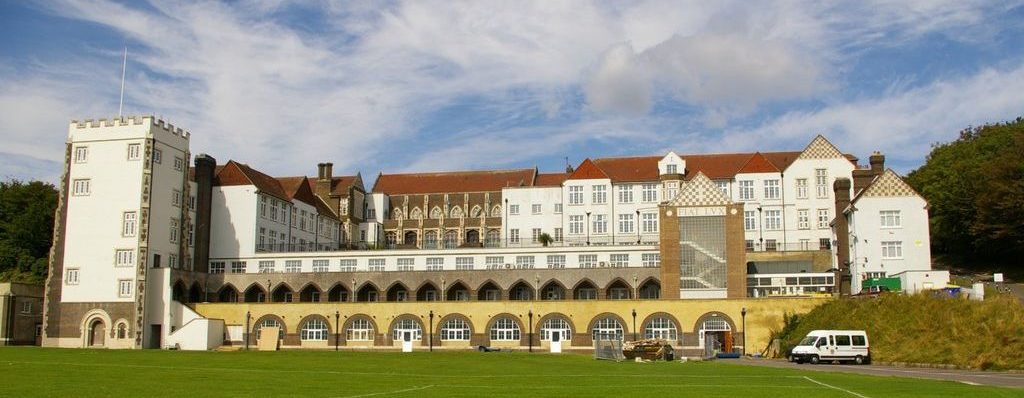
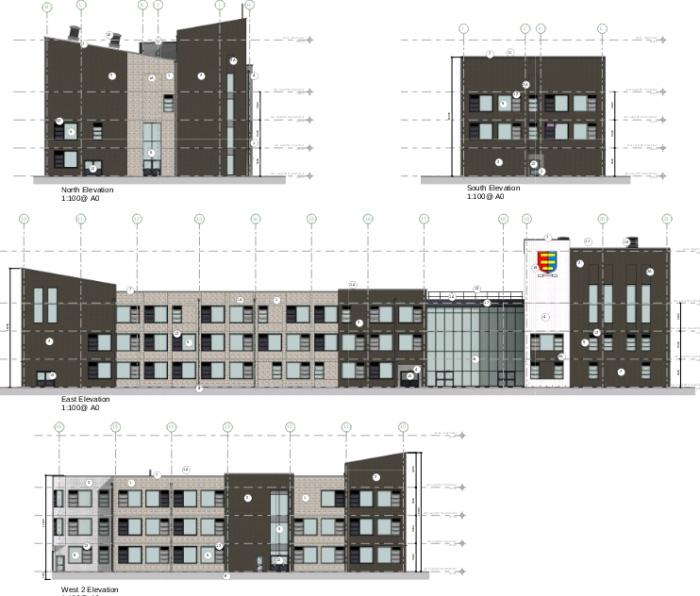
For fans of Grammar School architecture. here the boy's grammar in Dover, soon to be replaced and demolished.

5562328-1024x420-1024x398.jpg


(from https://oldpharosians.org.uk/ )
 

najaB

Veteran Member
Joined
28 Aug 2011
Messages
33,592
Location
Scotland
In the 70s-era comprehensive that I went to (during the 2010s), there were signs in various parts warning of asbestos.
That's not uncommon. I'd say pretty much any large building constructed between the early 1900s and 1970 or so will have copious amounts of asbestos in various places. Perfectly safe until you want to do work that requires drilling, cutting or the removal/installation of wiring or plumbing. At which point you better have deep pockets because the costs are going to be astronomical.
 

DB

Guest
Joined
18 Nov 2009
Messages
5,036
It looks like an architectural dogs dinner, tbh. A mix of various bits of buildings, must be a nightmare to keep running.

But considerably more attractive than the featureless box shown in the replacement image!
 

Chester1

Established Member
Joined
25 Aug 2014
Messages
4,440
I went to one of the 200 or so surviving grammar schools. It had a bit of a middle class tilt but there were plenty of kids on free school meals too.

There was a slightly elitist element to the culture but I think that probably worked out well for most students. You were told you had all the ability you needed to achieve your goals (and that more or less it was your fault if you didn't). A lot of the extra circular stuff was with private schools and that bred a healthy competitive attitude towards people from rich families. You tried (and often succeeded) to beat them, which avoided the chip on the shoulder many have towards people from privileged backgrounds.

There are benefits and disadvantages to the system over comprehensive. Historically the system helped many break into the top parts of business and society. I don't think its a coincidence that every Prime Minister between 1964 and 1997 (and every Tory leader from 1964 to 2005) was state educated, with John Major being the only comprehensive educated. After the generation that were grammar school educated between the 40s and 70s retired the toffs took over again. The comprehensive system probably produces fairer results within most of society though.
 

Bevan Price

Established Member
Joined
22 Apr 2010
Messages
8,319
I attended a grammar school, and it certainly was not full of posh, rich kids. The teachers were mostly good, and seemingly tried to do their best for everyone. Discipline was firm, but fair - mostly written punishments, with only a small minority of the worst offenders qualifying for a visit to the headmaster to receive a sore bottom.

It was not the fault of grammar schools that secondary modern schools were often grossly-underfunded, and unable to give their pupils a decent education. Even our grammar school was not exactly lavishly funded - it consisted of "temporary" wooden huts & buildings, erected 40+ years previously, and intended only to last a few years.
 

krus_aragon

Established Member
Joined
10 Jun 2009
Messages
6,105
Location
North Wales
One thing I was never taught at school was was a grammar school is. My county was an early embracer of the comprehensive approach, converting all its schools in the 1950s. I heard occasional mentions of them and this "eleven-plus" thing on the news as I grew up, but never encountered one.

(Part of the reason for this switch is that rural Anglesey was strapped for cash and didn't have the money to refurbish school buildings for two parallel streams. It wasn't exclusively post-war poverty: they had been trying to go comprehensive since the 1930s.)

Some old habits died hard though: my father attended one of the new comprehensives in the 60s, and was disappointed that he wasn't allowed to study woodwork: top set had to study Latin instead!

When digging around for more information on local grammar schools in Wales, I found that they had all been converted by the 1980s. So it's well and truly a moot subject on this side of the dyke.
 

eMeS

Member
Joined
12 Jun 2011
Messages
954
Location
Milton Keynes, UK
One thing I was never taught at school was was a grammar school is. My county was an early embracer of the comprehensive approach, converting all its schools in the 1950s. I heard occasional mentions of them and this "eleven-plus" thing on the news as I grew up, but never encountered one.

(Part of the reason for this switch is that rural Anglesey was strapped for cash and didn't have the money to refurbish school buildings for two parallel streams. It wasn't exclusively post-war poverty: they had been trying to go comprehensive since the 1930s.)

Some old habits died hard though: my father attended one of the new comprehensives in the 60s, and was disappointed that he wasn't allowed to study woodwork: top set had to study Latin instead!

When digging around for more information on local grammar schools in Wales, I found that they had all been converted by the 1980s. So it's well and truly a moot subject on this side of the dyke.
In my first year at grammar school(1950-1), I learnt not only Latin, but also carpentry. The Latin (& English) continued for another 3 years to GCE "O" Level standard. Sadly, I only learnt French for two years, and my parents had been advised that Latin was more useful than German.
In my second year, we did metalwork instead of carpentry. Several years later I made good use of the machine tools in the metal workshop and made my own gramophone pickup arm - designed for minimum tracking error. In the 1st & 2nd years the arts master introduced us to an artist who was featured recently on TV, but sadly my ageing memory has forgotten who it was... The gym was well provided with wall-bars and other equipment, but this was rarely used, and most lessons were floor exercises and similar. (In this respect, school was better than physical training in the RAF where I did National Service 1957-9, and where the gaps between sessions were far too long, the exercises were over strenuous and we were useless for two days after each session.)
In my last year I did some "original" research on why common middle school physics experiments often gave the "wrong" results.

In my later years I joined the Dramatic Society on the stage staff, and the Dramatic Society had use of a decent theatre; I rapidly advanced from assistant stagehand through lighting electrician to stage manager. This was total luxury compared to what I found later, where stagehands were very much unpaid slaves allowing would be "actors" to strut their stuff while us slaves got the local public hall ready for them, and cleared up afterwards.
 

Old Yard Dog

Established Member
Joined
21 Aug 2011
Messages
1,823
As the son of a bus driver, I was very glad of a grammar school education which helped me get to university and thereafter get a decent job. Sadly my old school was subsequently downgraded to a co-ed comprehensive which, coupled with the fall in the number of catholic children in West Yorkshire, led to its eventual closure. No use was found for the relatively new school buildings which soon became a vandalized eyesore. A sad victim of political correctness.
 

RuralRambler

Member
Joined
7 Aug 2020
Messages
152
Location
Brentford
Some old habits died hard though: my father attended one of the new comprehensives in the 60s, and was disappointed that he wasn't allowed to study woodwork: top set had to study Latin instead!

Indeed, the "comps" often weren't as comprehensive as they should have been. Similar happened to me. You had to choose O levels by selecting one subject out of each "block". Sometimes, some subjects were only in one "block". I wanted to take computing and Latin but they were in the same "block" so I had to choose one or the other. Then, because I was in top set for Maths, I had to take RE (all the Maths top set had to do RE as an extra O level). I remember class mates complaining that they couldn't take both Art and Woodwork because they were in the same block. Yet, you could take all 3 sciences and 2 languages alongside Maths & English.
 

jfollows

Established Member
Joined
26 Feb 2011
Messages
10,080
Location
Wilmslow
The grammar school I went to in the 1970s didn't offer much choice at all at O level. Everyone did Maths, Physics, Chemistry, English, French & Latin. Then one more out of German, Ancient Greek, Russian, Geography or History.

Except the school couldn't find an O level History curriculum & exam that it agreed with, so if you did History you "only" got an internal school exam instead of O level.

The view was that everyone continued to A levels and University, so as long as the university entrance requirements were ticked ("foreign language O level" from Oxbridge) the job was done.

I did German, which was the best choice then and now I think. It was the only one I really had to work for in order to get an A, which I wanted.

I was then able to get a Music O level in the sixth form first year, which was fun.

But I didn't apply to university until after my A levels, so the school was relatively right, O levels didn't really matter.

I'd have thought any school today would have to offer a wider choice of subjects for GCSE than I had for O level back in the 1970s.
 

krus_aragon

Established Member
Joined
10 Jun 2009
Messages
6,105
Location
North Wales
Indeed, the "comps" often weren't as comprehensive as they should have been. Similar happened to me. You had to choose O levels by selecting one subject out of each "block". Sometimes, some subjects were only in one "block". I wanted to take computing and Latin but they were in the same "block" so I had to choose one or the other. Then, because I was in top set for Maths, I had to take RE (all the Maths top set had to do RE as an extra O level). I remember class mates complaining that they couldn't take both Art and Woodwork because they were in the same block. Yet, you could take all 3 sciences and 2 languages alongside Maths & English.
Most schools still put optional subjects in blocks, so that lessons (and teachers) can be timetabled efficiently. My school's policy was to have one block exclusively modern foreign languages, effectively forcing everyone to study one. (Getting out of that option block was a rare thing, and required your parents to come in and make their case to the headmaster, iirc.)

In my cohort, those that didn't select IT in the "technologies" block all studied a short-course in IT, as it was considered important enough that everyone should do it.

The grammar school I went to in the 1970s didn't offer much choice at all at O level. Everyone did Maths, Physics, Chemistry, English, French & Latin. Then one more out of German, Ancient Greek, Russian, Geography or History.

...

I'd have thought any school today would have to offer a wider choice of subjects for GCSE than I had for O level back in the 1970s
At my comprehensive, two decades ago, everyone would be studying for the following GCSEs:

English Language and Welsh Language (1st or 2nd language course, as appropriate)
Maths, Science (double award)
Four optional subjects

Those options would include one technology, one MFL, and two other subjects (e.g. art, geography, history, additional MFL, business studies, religious studies, PE)

Those in the top language sets would also be entered for English/Welsh Literature exams. So most students would be studying for 9-11 GCSEs.

These days (with no formal KS3/Year 9 tests) many schools in Wales are starting GCSE material early to put pupils in for exams in year 10. Top sets in Science may study triple award (so effectively a GCSE for each science) and study Further Maths in addition to GCSE Maths. The Further Maths qualification is a very useful bridge to A-level: having taught it a few years back I know I would have benefited from getting an early look at all the new and unusual concepts I'd be doing in A-level Maths, many of which didn't really sink in until University.

 

matacaster

On Moderation
Joined
19 Jan 2013
Messages
1,646
Location
Huddersfield
Whilst one would like to commend the egalitarian principles of comprehensive schools in theoretically giving everyone an equal opportunity, in practice the country needs a certain number of high flyers. Clearly this should not be based on class, but on intelligence, ability etc. Everyone has limitations, just some reach their limits before others and cannot go any further. Good teaching and engagement by pupils helps them to achieve their potential, but only succeeds if the child wants to learn. Obviously the more good teaching a child gets the faster they will likely develop and here money can make difference. Unhappily not streaming children into ability by subject just leads to dumbing down and a subsequent shortage of great scientists, mathematicians etc. Trying to teach a class of 30 of mixed ability does not bring out the best in students. Mixed in-school lessons with part of week spent following on-line learning plans is a far better option for the future and will happen trust me.
 

Lucan

Established Member
Joined
21 Feb 2018
Messages
1,247
Location
Wales
Reading through this, eg some reporting "horrible" experiences of grammar schools, with snobbery and brutal teaching, it only shows how much schools vary. The old grammer schools did lift many bright kids from poor backgrounds into higher jobs. The opportunity was there but in many cases it was the kids' parents holding them back, jealous in case their kids were brighter than themselves. I remember seeing that a lot in my school days - eg bright boys I knew being told to leave school at 15 and "get a job", or leave after A levels and go into the family firm as a dogsbody instead of university.

The grandparents on both sides of my family were dirt poor, one family living in an almost unbelievable dockside slum and the other (with 6 kids, father was an Irish immigrant) on the upper floor of a small Victorian terrace. Yet the latter six including my mother got to grammar schools and then responsible jobs, although my mother as one of them was not well paid. My parents were poor (my father started as a docker like his father) but I got into a grammar school, and from that university, and from that a good career. Likewise my maternal cousins, including a government under-secretary. If it had not been for the grammar school opportunities we had, we would most likely have followed our fathers and grandfathers into unloading ships and making soap.

My grammar school teachers were mostly very good. I did have to waste years learning French and German (I have used them for a total of about 5 minutes since) but as well as academic subjects we were taught woodwork and metalwork which have been extremely useful. I am a senior engineer but I can talk to the guys in the workshops at their level.

The wrong with the grammar school system was the near lack of any promotion/demotion with other schools. The 11+ was too final. There were kids at my school who were not interested in the academic learning and should have been removed. OTOH I have worked with some brilliant guys who failed the 11+ but made up ground later.

My wife should have gone to grammar school but was "discouraged". At a secondary modern she was not taught anywhere near her ability anything. The school was dreadful. Instead, she was used like an assistant teacher - at 14 she was teaching two other girls to read and write, girls the teacher had dismissed as "unteachable". Even my son at a grammar school finds himself being used to teach the slower ones. My wife still exchanges letters with one of her "pupils" today.
 

PeterC

Established Member
Joined
29 Sep 2014
Messages
4,766
The wrong with the grammar school system was the near lack of any promotion/demotion with other schools. The 11+ was too final. There were kids at my school who were not interested in the academic learning and should have been removed. OTOH I have worked with some brilliant guys who failed the 11+ but made up ground later.
My school in the 60s always had a small 13+ intake and another at 6th form level. The 13+ boys did create organisational issues as they were coming in to classes where everybody had had 2 years of French and 1 year of a second foreign language. A change of headmaster in my time meant that different solutions were tried for this in terms of streaming and timetabling.

Some of the new 6th formers found it a bit of a shock coming from schools where sitting 6 O levels was considered good to one where you were expected to sit mocks for 10 and were considered thick if you were put forward for less than 8.

We had to study for English language and literature as separate exams, maths, physics, chemistry, history, geography, French, Second Foreign Language (German, Spanish or Latin) plus one other with choices including biology or a third language. For A level we had to take at least 3 subjects although some boys did do an extra term for their 4th subject or to cram for Oxbridge entrance.
 
Status
Not open for further replies.

Top