
-
Our new ticketing site is now live! Using either this or the original site (both powered by TrainSplit) helps support the running of the forum with every ticket purchase! Find out more and ask any questions/give us feedback in this thread!
You are using an out of date browser. It may not display this or other websites correctly.
You should upgrade or use an alternative browser.
You should upgrade or use an alternative browser.
Geneva
- Thread starter 72C
- Start date
- Status
- Not open for further replies.
Sponsor Post - registered members do not see these adverts; click here to register, or click here to log in
R
RailUK Forums
The walk would be at least 20-25 minutes, I would think, at a brisk pace; more with baggage ... and it's not that direct. There is a tram - number 16 or 17 if memory serves - which would be quicker and considerably less stressful.
There are plans to build a line, largely underground, to connect the two stations, but I am not sure if they are still on track (so to speak!)
There are plans to build a line, largely underground, to connect the two stations, but I am not sure if they are still on track (so to speak!)
Last edited:
The underground link is a long way off, even if still on track. The tram you need is the 16 which goes from the stop under the railway bridge to the right as you come out of the main exit from Geneva station (not the main tram stop directly in front of the station). Take it towards Moillesulaz, and get off at Amandoliers/SNCF. Eau Vives will be to your left on a side street. You buy your ticket from the machine at the stop, and will want a "Tout Geneve" ticket which is about 3 Francs.
The Geneva public transit site (in French) is here: http://www.tpg.ch/fr/index.php
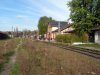
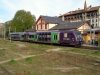
I've never taken the train from Eau Vives though I have friends who live in the area and I know Geneva well. Eau Vives (you may already know this) is part of the French system not the Swiss, and somewhat run down. I've attached a couple of shots. You may need to change at Annemasse just across the border into France.
Annecy is lovely, by the way.
The Geneva public transit site (in French) is here: http://www.tpg.ch/fr/index.php
I've never taken the train from Eau Vives though I have friends who live in the area and I know Geneva well. Eau Vives (you may already know this) is part of the French system not the Swiss, and somewhat run down. I've attached a couple of shots. You may need to change at Annemasse just across the border into France.
Annecy is lovely, by the way.
Attachments
Legally the Eaux Vives line is neither French nor 'Swiss'. The Swiss section is the Chemin de fer de l'Etat de Genève (Geneva State Railway).
Here's an extract from an article an article of mine that has been published in the SNCF Society Journal:
the Annemasse Genève Eaux Vives line, which is set to be the line most affected by the CEVA project. This line was the only part of the original planned loop from Haute Savoie into Genève Cornavin to be built, and was opened in 1888. Just 6km long it crosses the border 2km after leaving Annemasse, then runs for 4km through back yards of the expanded Geneva suburbs, through the station at Chêne Bourg serving what was once a separate town but is now a suburb of Geneve.
Although at face value an SNCF line, the 4km section in Switzerland belongs to the Canton (State) of Geneva and is therefore arguably one of the smallest state railways in the world! Its legal title is Chemin de fer de lEtat de Geneve (Geneva state railway).
The line parallels Geneva tram route 12, which itself ran beyond the border (and present terminus) at Moillesulaz into Annemasse until 1958. Chêne Bourg station was closed in the mid 1980s and replaced by a station in the French suburb of Ambilly which is squeezed in between Annemasse and the Swiss border. The line was 100% steam worked until the arrival of SNCF diesel railbuses and railcars in the 1950s, and subsequently electrified in 1986. Despite the regular shuttles being railcar, some peak period steam services ran through to the mid-1960s. For such a short line, it has seen a remarkable number of different classes of diesel and electric railcars used since the 1950s, culminating in the use of some of the latest French TER Rhône Alpes double deck EMUs. The associated branch from Annemasse to La Roche sur Foron does not immediately affect Switzerland but does carry passengers from Geneva travelling to Annecy or St Gervais, particularly at summer weekends and for skiing in winter.
Gordon
Technical Adviser SNCF Society
Family resident near Geneva since 1949
Here's an extract from an article an article of mine that has been published in the SNCF Society Journal:
the Annemasse Genève Eaux Vives line, which is set to be the line most affected by the CEVA project. This line was the only part of the original planned loop from Haute Savoie into Genève Cornavin to be built, and was opened in 1888. Just 6km long it crosses the border 2km after leaving Annemasse, then runs for 4km through back yards of the expanded Geneva suburbs, through the station at Chêne Bourg serving what was once a separate town but is now a suburb of Geneve.
Although at face value an SNCF line, the 4km section in Switzerland belongs to the Canton (State) of Geneva and is therefore arguably one of the smallest state railways in the world! Its legal title is Chemin de fer de lEtat de Geneve (Geneva state railway).
The line parallels Geneva tram route 12, which itself ran beyond the border (and present terminus) at Moillesulaz into Annemasse until 1958. Chêne Bourg station was closed in the mid 1980s and replaced by a station in the French suburb of Ambilly which is squeezed in between Annemasse and the Swiss border. The line was 100% steam worked until the arrival of SNCF diesel railbuses and railcars in the 1950s, and subsequently electrified in 1986. Despite the regular shuttles being railcar, some peak period steam services ran through to the mid-1960s. For such a short line, it has seen a remarkable number of different classes of diesel and electric railcars used since the 1950s, culminating in the use of some of the latest French TER Rhône Alpes double deck EMUs. The associated branch from Annemasse to La Roche sur Foron does not immediately affect Switzerland but does carry passengers from Geneva travelling to Annecy or St Gervais, particularly at summer weekends and for skiing in winter.
Gordon
Technical Adviser SNCF Society
Family resident near Geneva since 1949
- Status
- Not open for further replies.